• About

Seeking and Serving

~ seek and serve Christ in all persons

Seeking and Serving

Tag Archives: church

On the Power of Every Perfect Gift…

06 Wednesday Oct 2021

Posted by jandrewsweckerly in reflection

≈ Leave a comment

Tags

blessing, church, every perfect gift, gift, giving, God, gratitude, stewardship, talent, team, time, treasure

Photo credit: https://www.tens.org/

Ministry is a funny endeavor because you can have a to-do list planned for any given day, but between drop-ins, unexpected calls, or pastoral events, your to-do list gets completely set aside.  Yesterday I had one of those days where I left the office thinking, “Man!  I only got a couple of things done today!  I’m so frustrated!”  But then I remembered that even though I personally only got a couple of things done, my staff picked up a lot of the floating to-do items and together, we actually got a lot of things done.  Suddenly a seemingly wasted day felt like a day of accomplishment.

The last two years have been years of transition for our staff.  A full-time priest left the staff right as COVID hit and was not replaced.  This past summer, we had an administrative staffing gap.  Suddenly, if things were getting done, they really were dependent upon my personally accomplishing them – which is never a sustainable model.  It was not until yesterday that a wave of gratitude overwhelmed me as I realized how much can be achieved when you are a part of team.

This week, we will kick off our stewardship season at Hickory Neck Episcopal Church, whose theme is Every Perfect Gift.  My experience this week made me remember how even our giving to church is a team effort.  We work hard to do our part – giving a tithe or other generous financial gift, our time, and our talent.  But our part does not sustain the work of ministry.  In order to reflect the fullness of the body of Christ, each of us needs to give Every Perfect Gift – those parts that make the whole better. 

As you think about your giving to the church, maybe your finances are making it such that you cannot give as much as you would like.  Or maybe you are giving in earnest, but feel like you are pulling more weight than others.  Or maybe you are taking a hard look at your budget and time and are considering how you can do more this year.  Just remember two things:  1) your gift is perfect and is a reflection of your gratitude to God for your many blessings – making your giving sacred; and 2) you are a part of a community where everyone does their part – where we all make an impact on our community because when we all share our every perfect gift, our collective effort is stunning.  You are in my prayers this year as you consider how you might share your perfect gifts with Hickory Neck!

Sermon – Mark 7.1-8, 14-15, 21-23, P17, YB, August 29, 2021

08 Wednesday Sep 2021

Posted by jandrewsweckerly in Sermons

≈ Leave a comment

Tags

actions, church, community, disciples, faith, identity, Jesus, membership, ritual, Sermon, words

My mom and stepdad have been longtime members of what many of us would call a megachurch – a very large United Methodist Church in Alabama. Having worshiped with them many times, the church truly is “mega”:  multiple services of varying styles, a professional band, a TV production company, a large youth center, an indoor playground, a coffee shop, a gym with fitness classes, and a big campus.  But the thing that impresses me most about their church is their clear sense of identity.  When my family started attending regularly, two people came to visit them in their home, and they had a very frank conversation about expectations for membership.  At that meeting my mom and her husband were asked to commit to at least one ministry each, were asked about what kind of education they wanted to join, and they were asked to tithe – to make a commitment to give 10% of their earnings to the church, as is the Biblical tradition. 

I remember when my mom told me this story having a visceral reaction:  that would have felt WAY to “pressure-y” for most Episcopalians.  But as time has passed, I have come to admire their church’s clarity.  The Episcopal Church does a poor job of defining membership.  Our commitment to professing “All are welcome!” seems to translate into no defining characteristics of membership.  In fact, as a priest, one of the questions I dread the most is “How do I join your church?”  That should be a very easy question, and yet when I talk to new members, the answer has to be two-fold:  the technical answer (as long as you attend three services a year and are a financial contributor, you’re considered a member – the answer from the wider Episcopal Church which I loathe!), and the more practical answer we have crafted here at Hickory Neck:  you fill out a form, you commit to supporting the church financially, you commit to feeding yourself (through study, prayer, regular worship), and you commit to feeding others (through giving your time to the church and to the wider community on behalf of the church). 

Our gospel lesson today seems to be wading through a similar debate.  The Pharisees and scribes are totally perplexed by how some of Jesus’ disciples are not washing their hands before eating – a totally valid concern in these days of COVID!  But handwashing was not just about hygiene.  The ritual washing of hands was about identity, or “membership” as we understand it today.  The Jews of this time are in an “oppressed minority, living in an occupied land.”  Their question is asked with the backdrop of colonialism, cultural and religious diversity, and competing claims on identity.[i]    Their question is both simple and complex:  why aren’t the disciples living like members of our community? 

For many a reader of this text, all sorts of erroneous conclusions have been drawn – primarily the antisemitic understanding that the laws of the Jews are superseded by laws of Jesus.[ii]  But that is not what is happening in this text.  Jesus does not have any issue with ritual cleansing:  he of all people understands the consequences of following God.  But Jesus is saying something more nuanced about identity and membership.  Jesus is saying that no matter how we traditionally mark ourselves as “other,” even if something is “the way we’ve always done it,” what is more important is how we live our faith.  So, if we are doing all the right things:  washing our hands the right way, bowing at all the right times, crossing ourselves when we’re supposed to, saying “Amen” during the sermon – or avoiding saying “Amen” during the sermon – none of that matters if our insides are defiled.  As Jesus quotes from Isaiah, “This people honors me with their lips, but their hearts are far from me…”[iii] 

Today’s invitation is to ponder what membership in this body of faith means.  Are we honoring Jesus with our lips, but our hearts are far from Jesus?  Are we following the external “rules” but fostering evil intentions in our heart?  Our work this week is making sure that when we go out into the world to love and serve the Lord, we love and serve the Lord in ways that show people Christ through our words and actions; that when we wash our hands, we do not wash them simply to keep ourselves safe, but to keep our neighbors safe; and that when we talk about how much we love this church on the hill, we do so in a way that does not show mask our individual struggles with avarice, deceit, slander, pride, and folly.  Telling the world you are a proud member of Hickory Neck Episcopal Church is just fine; but our invitation is to be clear with others that, as that old tune says, “He’s still working on me,” is also a part of membership in the body of Christ.  Amen. 


[i] Debie Thomas, “True Religion,” August 22, 2021, as found at https://www.journeywithjesus.net/lectionary-essays/current-essay?id=2944 on August 27, 2201.

[ii] Idea suggested by Matt Skinner on the Sermon Brainwave podcast, “#799: 14th Sunday after Pentecost (Ord. 22B) – Aug. 29, 2021,” August 22, 2021, as found at https://www.workingpreacher.org/podcasts/799-14th-sunday-after-pentecost-ord-22b-aug-29-2021 on August 25, 2021.

[iii] Mark 7.6b.

To Everything There is a Season…

25 Wednesday Aug 2021

Posted by jandrewsweckerly in reflection

≈ Leave a comment

Tags

call, church, discernment, God, Jesus, love, season, vulnerable

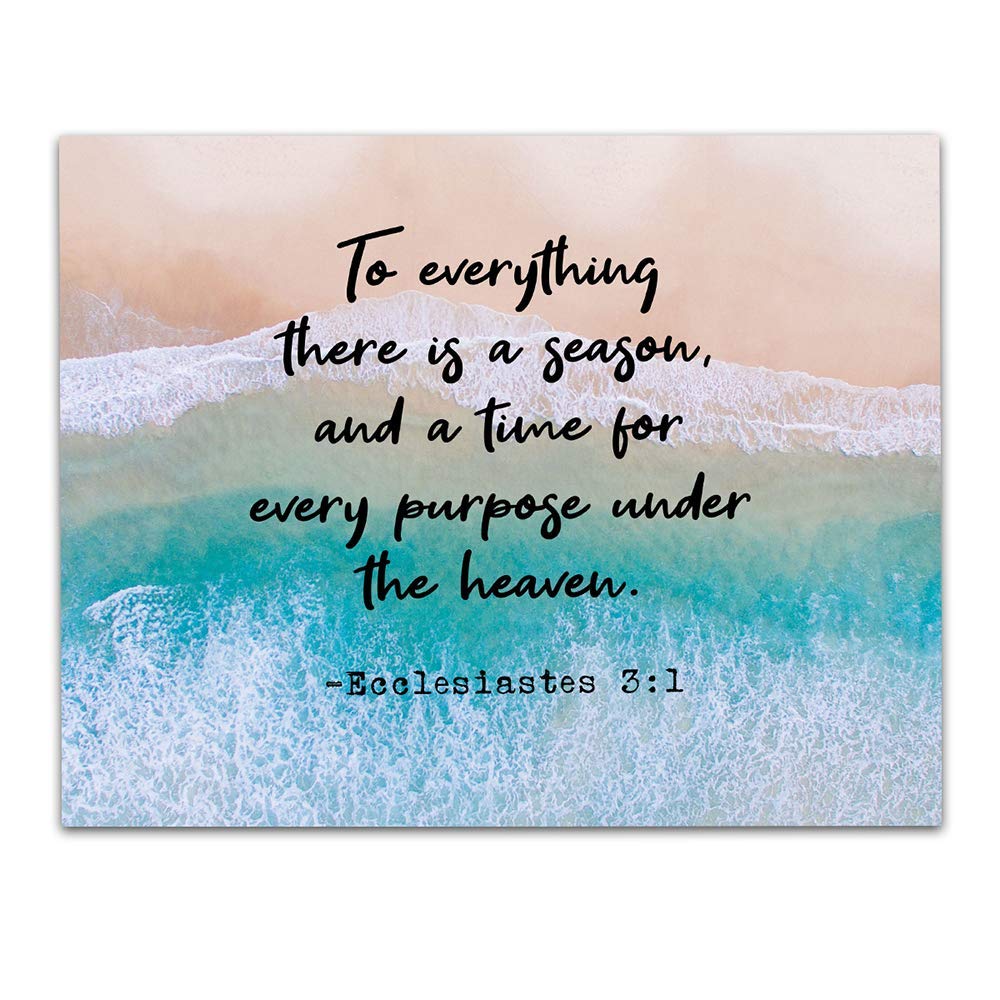
Photo credit: https://www.amazon.com/Ecclesiastes-Everything-Season-Unframed-Inspirational/dp/B08FMDFBTK

Having finally sat down to write a blog post, I was shocked to realize it had been two months since my last post.  Writing has always been a source of pleasure, joy, and learning for me – a way to reflect on the happenings of life in light of my faith and Holy Scripture.  Blogging for me is akin to preaching and spiritual direction:  an exercise in translating our daily, seemingly secular life into the sacred.  Nearly weekly postings for most of my ministry has been an outlet for me and a ministry to many others.

As I contemplated why there was such a big gap this summer, two theories percolated.  One was the more obvious.  I took some time for vacation, we were searching for and then training a new staff member, I was a part of a bishop’s search (which some argue is like a second full-time job), I was tending my family in a pandemic, I was investing time in continuing education, and I was trying to serve my beloved parish.  My plate was quite obviously full. 

But the second, perhaps more revealing reason came to me through scripture.  I was reminding of that familiar passage from Ecclesiastes, chapter 3:  For everything there is a season.[i]  Honestly, I think more people are familiar with this passage through The Byrd’s song “Turn! Turn! Turn!”  This summer has felt like a different season for me.  Instead of writing about life around us and interpreting it in light of our faith, I spent the summer doing that work orally with two faith communities – talking through what God is doing in the Church, what God has done through us in this time of pandemic, where the Church is going, and who Jesus is calling all of us to be.  In some ways those conversations have been very similar in content to what I write.  But experientially, it was significantly more vulnerable.  Instead of hiding behind the written word, I was engaging in deep, hard, thoughtful conversations in real time, being probed, questioned, and challenged – and all of that experience being broadcast in recorded and live videos for anyone and everyone to see.  I described it to a dear friend as a time of feeling naked before the world.

This summer has been a season for discernment, for deep reflection, for vulnerable pondering.  And just like the scripture writer says, for everything there is a season:  a time to plant, a time to break down, a time to laugh and dance, a time to embrace, a time to seek and a time to lose, a time to speak, and a time to love.  Now, I enter into another season:  a time to reconnect with the Hickory Neck community that loved me through this process – even though it was difficult for them.  A time to write again:  about where we see God in the midst of this season of pandemic that we wish were over.  A time to dream and a time to innovate:  about where God is calling us now.  A time to laugh, dance, and embrace:  even if we have to go back to doing that all virtually.  No matter what the season, God is with us.  I’m honored to journey in this season with you.


[i] Ecclesiastes 3.1-8 reads:  For everything there is a season, and a time for every matter under heaven:  a time to be born, and a time to die; a time to plant, and a time to pluck up what is planted; a time to kill, and a time to heal; a time to break down, and a time to build up; a time to weep, and a time to laugh; a time to mourn, and a time to dance; a time to throw away stones, and a time to gather stones together; a time to embrace, and a time to refrain from embracing; a time to seek, and a time to lose; a time to keep, and a time to throw away; a time to tear, and a time to sew; a time to keep silence, and a time to speak; a time to love, and a time to hate; a time for war, and a time for peace.

On Being Normal and Other Longings…

03 Thursday Jun 2021

Posted by jandrewsweckerly in reflection

≈ Leave a comment

Tags

church, community, connection, core, discipleship, God, goodness, happy, normal, pandemic, restrictions

Photo credit: https://avalonassnmgmt.com/2020/11/23/normal-is-overrated-for-now/

This Sunday, our parish is introducing two in-person worship services for the first time in fifteen months.  There is a lot about which to be excited!  We will be able to worship in our beloved Historic Chapel, which was not able to be used during most of the pandemic due to structural restrictions.  We will be able to sing congregationally, even if we have to keep our masks on for a little while longer.  We will be able to skip registration and check-in, we can sit wherever we want (you have no idea how hard such a simple thing has been for some of our parishioners!), and we can receive communion sitting right next to other people – some people we have loved and missed for a long time and some people who are completely new to us!  There are a few restrictions remaining, like masking, avoiding touch, and not being able to share a common cup, but we are okay with incremental change and so very happy for what we will get to experience this Sunday.

All that being said, you may have noticed I am being very careful to not say we are “going back to normal.”  Partially that is because we are not yet fully engaging in church as we once were.  And in some ways, there are permanent additions, such as livestreaming, that we never experienced pre-pandemic, that will be mainstays for us now. 

But the real reason I have avoided using the term “normal,” is because I don’t want us to go back to normal.  “Normal” in March 2020 meant a country deeply divided politically; neglecting, or downright oppressing, immigrants, the impoverished, women, and the LGBTQ community; and a deep unwillingness to talk about systemic racism.  Even our church was unwilling to fully embrace digital discipleship and evangelism.  I am not interested in returning to that kind of “normal.”

And so, although it may seem like semantics, we are introducing worship in a new way.  We are modeling all the goodness of things we once knew, and hopefully letting go of some of the things that needed to be let go.  We are holding fast to the things we loved during this pandemic – connecting to people who are far away, helping the less mobile feel a part of the community, and encouraging connection, even when the service times do not match your schedule.  And we are coming out on the other end as something different – with the same core values and passions – but expressed in a different way.  And for now, that, as God said in creation, is very good!

On Nudges and the Holy Spirit…

12 Wednesday May 2021

Posted by jandrewsweckerly in reflection

≈ Leave a comment

Tags

Bible, call, church, discernment, follow, God, Holy Spirit, Jesus, journey, life, ministry, vocation

Photo credit: https://www.ibelieve.com/faith/what-is-discernment-ways-grow-more-discerning.html

Discernment is a topic we talk a lot about in church.  Some of our most beloved biblical stories, often called “call narratives,” are about discernment.  They all have a pattern:  God calls the individual to some bold action, the person resists (sometimes repeatedly and comically), but when the person eventually acquiesces, God equips the individual for the work. 

I love these call narratives mostly because they are so human and relatable.  But I sometimes wonder if the dramatically entertaining nature of these stories makes us think “calls” are something that only happens to certain, singled-out people.  In truth, that is why we talk about discernment so much in the life of the church:  because we want people to know that discernment is not just about major life transitions.  Discernment happens repeatedly throughout life – sometimes at expected moments, like a school graduation, in response to a spouse’s new job, or even retirement.  But discernment also happens in the times when we are plugging away at the calls we have already discerned:  when a volunteer opportunity stirs something in us; when a friend makes an off-handed comment about a gift we should be honoring; or when we just feel a little discomforted but do not know why (as a spoiler, that discomfort is usually the Holy Spirit!).

In my ministry setting, we talk about discernment a lot.  It is the topic of one of the six sessions in our Discovery Class (a newcomer/confirmation class).  We talk about discernment from the pulpit – even when there is not some big call narrative in the lectionary.  We talk about discernment in Bible study, in pastoral visits, and even over coffee.  We have come to understand that “call” is not static, and that even within a call, or vocation, the Holy Spirit continues to move and nudge us in ways that enrich our own journey and the journey of those around us.  Following Jesus means just that – continuing to follow wherever he may lead.

This week, I announced to my parish that the Spirit had been nudging me too.  In this unique situation, it may be a nudge that does not come to fruition.  Even in those cases, God is doing something too.  But it may also lead to something new and different.  That is the risk we take when we listen to the Holy Spirit.  I cannot authentically encourage my community into constant discernment if I am closed to the possibilities of the Spirit – especially when I would be perfectly happy to stay right where I am.  And so, this week I join you in that gloriously off-centered life that is the life of following Jesus.  I do not know where it will lead, but I am grateful for a community who journeys with me!

Sermon – Job 14.1-14, HS, YB, April 3, 2021

28 Wednesday Apr 2021

Posted by jandrewsweckerly in Sermons

≈ Leave a comment

Tags

Christian, church, community, disciples, drama, faith, Holy Saturday, hope, Jesus, Job, liturgy, pandemic, preparation, quiet, redemption, Savior, Sermon, silence, sorrow

Up until last year, I had not remembered that there was a liturgy in our Prayer Book for Holy Saturday.  I had always thought it was Maundy Thursday, Good Friday, Easter Vigil on Saturday night (which is basically just Easter), and then Easter Sunday.  But when the pandemic hit last year, we realized doing a virtual Easter Vigil just would not work – there is so much reading, singing, doing things by candlelight, and the drama of being huddled together that we had to let the Liturgy wait until we could gather again.  So instead, we turned to this tiny liturgy, whose entire content is listed on one page of the Book of Prayer Book.

Still in a pandemic a year later, I found myself curious about this liturgy we are entering once again.  The truth is, the earliest accounts of Holy Week observances had no liturgies for Holy Saturday, with the exception of private use of the daily office.[i]  Instead, this day has simply been known as the “quietest day of the Christian year.”[ii]  That the church has not always gathered on Holy Saturday and that Christians might see this day as a day of quiet makes a lot of sense.  The Church says so much this week – from our waving of palms last Sunday, to our gathering around the upper room table to wash feet and share bread, to devastating betrayals of Jesus, to the vivid walk toward the cross, to the finality of the closed tomb.  We almost need a day of quiet to let the drama sink in and wrap our heads around what this week means.

But I suspect if your life is anything like mine or most Americans, we are not sitting quietly in our homes from 3:00 pm on Friday until Easter morning.  Instead, we are filling the time with preparations – tending to all the things we did not do while we were attending church this week:  dying eggs, entertaining children, stuffing Easter baskets, prepping Easter day meals, cleaning the house, or just having fun.  There is nothing inherently wrong about those things, but this year, of all years, I am grateful for a Holy Saturday liturgy.  With this last year of suffering through a pandemic and reflecting on our broken humanity’s inability to eliminate racism or mend civil discourse, even with the rise of vaccines, I find our country is in a Holy Saturday kind of time.  We have been through a tumultuous experience and are not yet healed. 

That is why I like having Job as a companion today.  Job’s words are stark.  As Job sits in the ashes of his sorrows, having lost his children, his livelihood, and his support system, he describes the brutality of life.  He talks about how trees have hope – even when cut down, they can sprout again, and new life can be born out of death.  But not so with humans, he argues.  No, when their bodies lay in the ground, there is nothing but death.  Job captures the essence of this day.  There is a similar finality at the door of Jesus’ tomb this day.  All the hopes and dreams, all the joys and blessings, all the promises of new life are sealed away in a tomb.  And after such a violent death and the threat for those who followed Jesus, there is no wonder why the Church has considered this a quiet day.  Unlike the quiet waiting of Advent, when the church is brimming with expectation and bustling around in preparation for Christ’s birth, today is a day of silence devoid of restorative peacefulness.  As one scholar says, “The waiting of Advent is like having warm bread in the oven.  By contrast, the air of Holy Saturday smells more like stale smoke, as though something essential was burned the day before.”[iii]  As our lives are not yet pandemic free, and as threats of spikes in cases emerge, we know that kind of waiting all too well.

And yet, in the very last verse of today’s reading, the despondent Job says something totally counter to everything else he has said.  “If mortals die, will they live again?” Job asks.  For someone who has boldly proclaimed the finality of human death, his question is a question that only a person of faith can ask – a question that reveals the tiniest bit of hope still left in Job.  Job communicates in this question a truth we people of faith hold dear:  no matter how bad the suffering, no matter how prevalent the experience of dread and doom, no matter how deep the failures of humanity seem to run, there is always hope.  The disciples and community surrounding Jesus Christ do not know that hope yet.  But as followers of Christ 2000 years later, we now stake our entire identity on the risen savior. 

So yes, receive the gift of stale smoke this day.  Sit in ashes with Job and mourn all in your life that feels dead.  Take time in this busyness of life for some uneasy silence.  Name all those who have been lost due to disease and violence.  But keep asking the questions.  Hold on to the hope, however infinitesimally small that God can indeed redeem us – us as individuals, us as country, us as Church.  Holding the two in tension is difficult – we want to rush to Easter and forget all that has happened.  But letting the power of all that has happened speak to us today will allow us to know the astounding power of resurrection much more deeply tomorrow.  Job, Jesus, and this faith community here will pull up a chair and sit with you by the ashes until we can reap with tears of joy tomorrow.  Amen.


[i] William Joseph Danaher, Jr., “Theological Perspective,” Feasting on the Word, Yr. B, Vol. 2 (Louisville:  Westminster John Knox Press, 2008), 310.

[ii] Christina Braudaway-Bauman, “Pastoral Perspective,” Feasting on the Word, Yr. B, Vol. 2 (Louisville:  Westminster John Knox Press, 2008), 312.

[iii] Braudaway-Bauman, 312

Sermon – John 13:1-17, 31b-35, MT, YB, April 1, 2021

28 Wednesday Apr 2021

Posted by jandrewsweckerly in Sermons

≈ Leave a comment

Tags

absence, church, digital, dignity, evensong, experts, grief, Holy Week, Jesus, love, Maundy Thursday, pandemic, serve, service, tension

One of the things I have learned over the years is the mixed blessing of offering pastoral care from personal experience.  The mother who lost an adult child both feels gratified to help someone else going through the same situation and angry that she is now an expert in grieving the loss of an adult child.  The man who has been through addiction is honored to help someone else through addition – and yet wishes he were not so personally knowledgeable.  The divorcee talking to a dear friend whose marriage has recently crumbled shares, “Welcome to the club you never wanted to belong to.”

As we started thinking about how to honor Maundy Thursday in a pandemic when many of the things we would normally do on this night are forbidden, we thought the same:  we already know how to do this.  We learned last year that when we cannot experience the intimacy of footwashing, the grief of the last holy meal before Easter, the dimming of the lights, the stripping of the altar, and walking out of this space in silence, turning to a totally different liturgy can create another kind of comfort.  We turn to Evensong in the hopes that another ancient tradition, one the Church celebrates almost everyday in the Cathedrals, Minsters, and colleges of the Mother Church in England, will ease the mourning of yet another loss during this time of pandemic.

But being experts in how to cope in a pandemic – either liturgically, emotionally, or spiritually – does not make the grief any easier.  We still feel the absence of what has been – almost as much as we feel the pending absence of Jesus when we will lay him in a tomb tomorrow.  Having figured out how connect with our community digitally, enjoying seeing people’s names pop up on Facebook, and loving hearing the sounds of our Choral Scholars coming through our TVs and laptops on YouTube, certainly has sufficed in these days – and in fact has brought many people into Hickory Neck who had never experienced Hickory Neck before.  But all of that does not negate our grief that a year later we are still in this liminal time of “not yet.”

So, what do we do with this internal tension that we are not yet where we are going, and certainly not fully who we have been?  I like to look at Jesus in our gospel lesson tonight.  Jesus knew what was coming on this night too.  He knew Judas, his beloved companion on his pilgrimage, was going to betray him.  He knew great tragedy was coming, abandonment by the other disciples would happen, and humiliation, pain, and death were inevitable.  Sitting in the upper room, in the tension of no longer being just a rabbi and not yet the risen Messiah, Jesus could have easily wallowed in grief.  Instead, in that overcrowded, tense upper room, Jesus gets up, takes off his outer robe, and ties a towel around his waist.  In the face of pending doom and tremendous transformation, Jesus bends down, and washes feet.  When the world is in chaos, Jesus does the work of humble service, of respecting the dignity of others, of an everyday deed of loving his neighbor.

We cannot possibly know when church will begin to feel familiar and comfortable.  We do not know which changes we have experienced in the last year will become permanent.  We cannot know the lasting impact of this pandemic on the fabric of our lives.  But we do know what Jesus says tonight.  In the face of the unknown, Jesus says to do two things:  to serve others as he served his disciples and to love one another.  Jesus makes everything quite simple tonight.  In the face of disorienting new realities Jesus says: serve and love. That is our invitation in this most sacred week – when our grief and frustration are sometimes paralyzing, engaging in the work of serving and loving are the actions that will give us strength for the days and weeks ahead.  Amen.

Sermon – Mark 6:1-6, 16-21, Isaiah 58:1-12, AW, YB, February 17, 2021

24 Wednesday Feb 2021

Posted by jandrewsweckerly in Sermons

≈ Leave a comment

Tags

Ash Wednesday, ashes, church, fasting, God, holy, invitation, Lent, mirror, pandemic, Sermon, spiritual practices, struggle

I have always thought the Ash Wednesday liturgy offers a strange contrast.  We engage in the very visible sign of having ashes spread across our foreheads.  And yet, our gospel lesson this day speaks very clearly of not showing your piety publicly.  But this year, the contrast of Ash Wednesday feels even more pointed.  Typically on this day, we talk about giving things up for Lent, fasting, and entering into a season of contemplation about not just our mortality, but the sinfulness that separates us from God.  But we have spent the last eleven months fasting – fasting from social gatherings, fasting from touch and uncovered faces, even fasting from receiving the sacred meal.  And for a large portion of those months, we have been in deep contemplation about the exponentially rising death all around us, the brokenness of our common life, the sin of oppression and racism.  The last thing I want to hear from the church today is how I need to give up more.

I think that is why I love the text from Isaiah this year so much.  God offers a mirror to God’s people.  On first glance, God’s people are certainly doing the things that are expected – in fact, the “things” that are often of Lent.  They are fasting and lying in sackcloth and ashes.  They are doing the work of penitence.  But the acts are not the problem – the motivation of the acts are the problem.  They are doing acts of contrition as sort of an exchange:  fasting so that God will give them favor; Sure, their behavior may end in the oppression of others, but they are doing the manual action called for in this moment. 

But God is having nothing of hollow spiritual practices.  If those practices are not leading to the loosening of the bonds of injustice, or the undoing of the thongs of the yoke, or the freeing of the oppressed, they are meaningless.  If the people of God are not sharing their bread with the hungry, bringing the homeless poor into their homes, covering the naked, and caring for their own kin, then fasting is little more than act in futility, an action done without reflection, intention, or love of neighbor. 

So what do the words of Isaiah have to do with living in month eleven of a pandemic?  I am going to say something that might be a little controversial, but here you go:  the church is not asking you to fast this Lent.  Now, in a few moments, I am going to say these very words, “I invite you, therefore, in the name of the Church, to the observance of a holy Lent, …by…fasting, and self-denial…”  But you have already fasted for a whole year.  You have already been in a season of self-denial.  The ashes you will impose on your head later are not a reminder that you are dust and to dust you shall return.  You know that reality all too well now.  Instead, we are going to take a cue from Isaiah tonight.  You have already done the manual acts of Lent.  Now your invitation is the “so that” part of the action.  Our work this Lent is to reflect upon what has been a most difficult year and to ponder together what this past year of fasting is inviting us into.  How has this season of fasting, this season of struggle, this season of brutality transformed our sense of purpose and identity – a people focused on God’s work loosening the bonds of injustice, freeing the oppressed, and sharing our bread?  How has the sobering nature of death, grittily rubbed onto our foreheads tonight, changing our resolve to lean into God, lean into this Christian community, lean into the work of sharing God’s love with those who do not know that love?

The rest of the invitation I will read in a moment says this, “I invite you, therefore, in the name of the Church, to the observance of a holy Lent, by self-examination and repentance; by prayer…and by reading and meditating on God’s holy Word.”  You have done the rituals of fasting and self-denial long enough.  As we look forward to these next forty days together, our work is to spend time with God, scripture, and one another and answer the question, “So what?”  What are we going to do now?  What are we going to claim and what are we going to let go?  How is the grit of ash this year not the sensation of defeat, but of invitation.  I invite you, therefore, in the name of the Church, to the observance of a holy Lent.  Amen.

Sermon – Isaiah 9.2-7, Blue Christmas, December 21, 2020

06 Wednesday Jan 2021

Posted by jandrewsweckerly in Sermons

≈ Leave a comment

Tags

Blue Christmas, Christ Child, Christmas, church, darkness, God, joy, light, mourn, night, painful, pandemic, Sermon, strength, suffering

Blue Christmas is a service we offer every year.  This service is not always mainstream.  For many, Christmas is a season of uncomplicated joy.  But for others, Christmas can be a painful experience:  we mourn the memories of those who are no longer with us, the darkness of shorter days weighs on our mental health, or the unbounded exuberance of others creates a chasm between their happiness and our loneliness, sorrow, or pain.  And that does not account for the grief we may be experiencing otherwise – broken relationships, dissatisfaction with or lost employment, an unexpected medical diagnosis, or a dream unfulfilled.  And because Christmas cheer is all around us, we feel even more isolated in our sadness – as if we are alone in our feelings.  Only in services like these do we feel seen.

That is the experience of a “normal” Christmas.  This year, we have added nine months of a pandemic, a tumultuous political year, and civil unrest.  Suddenly, those of us who struggle with finding joy this Christmas find ourselves in a rising majority, not the minority.  I watched this year as hundreds of people decorated for Christmas in mid-November, in an effort to demand the experience of joy from a year that has been short on joy.  I can see the desperate need of a suffering people to find light somewhere, anywhere, during this holiday season.

Fortunately for us, the church is not silent on this experience.  The text we heard from Isaiah earlier says, “The people who walked in darkness have seen a great light; those who lived in a land of deep darkness–on them light has shined. You have multiplied the nation, you have increased its joy; they rejoice before you as with joy at the harvest, as people exult when dividing plunder. For the yoke of their burden, and the bar across their shoulders, the rod of their oppressor, you have broken as on the day of Midian.”  The prophet says all of this light and joy is possible for one reason:  “For a child has been born for us, a son given to us.”  Scripture tonight honors that there are seasons of darkness.  There are times when we live in deep darkness, devoid of joy.  There are times when burdens feel like weights on our shoulders, where oppressors keep us in positions of suffering.  Sometimes those times of darkness happen around holidays, and sometimes the memory of those dark moments invade our holidays.  To that experience, the prophet says, God brings us light.  God lifts burdens, God helps us recall joy, God strengthens us.  And perhaps, most importantly, God gives us the Christ Child – the only true source of light that can lighten the darkness.

I have always loved that the Christ Child was born in literal darkness.  The delivery of the Christ Child at night reminds us that even in the rustic setting of being outcast, joy comes to Mary and Joseph.  The delivery of the Christ Child at night reminds us that even in the mundane, lonely, and exhausting work of tending sheep through the night, unbounded joy can break forth in the form of angels with heavenly news.  The delivery of the Christ Child at night reminds us that even in the darkness of night, whispered conversations between strangers can bring joy to kindle and ponder in our hearts.

Tonight, by the manager, God sees your darkness, your suffering, your hurt.  The removal of that darkness, suffering, and hurt may not be possible in these next few days.  But in that darkness, God promises you the tiniest sliver of light.  Whether you find that light by seeing you are not alone in the darkness tonight, whether you find that light through the stories of others, or whether you find that light gazing on the miracle of the Christ Child, the light, however faint, is there, waiting for you, warming you ever so slightly, and starting the long, hard work of lifting your heavy burden.  And until you are ready to receive that light, the Church sits with you in the darkness tonight.  Amen.

On Things Ludicrous and Holy…

17 Thursday Dec 2020

Posted by jandrewsweckerly in Uncategorized

≈ Leave a comment

Tags

best, Christmas, church, division, humble, indignation, joy, light, love, pandemic, praise, resurrection, separation

Photo credit: https://loe.org/shows/segments.html?programID=18-P13-00051&segmentID=1

My children are preparing for their winter socially distanced holiday recital, and we have been flooded with a flurry of details, items to purchase, things to organize.  One of the flyers that came this week was for a t-shirt they could buy promoting the recital and the cause that will benefit from the proceeds.  The shirt says, “Best Christmas Ever.”

I was glad my children were not around when I saw the flyer because my immediate response was to scoff – out loud, in my house, looking at a piece of paper with indignation.  Best Christmas Ever?!?  Had the dance studio lost their minds?  What about this Christmas could possibly be the “best”?  Families are separated, some of whom have not seen each other in over a year.  The Coronavirus is rapidly spreading, with the death toll in the United States now over 300,000.  And despite a transition in political power, we remain as divided as ever, struggling to find peace among our brothers and sisters. 

After recovering from self-righteous indignation, I began to think about the approaching Christmas season, and what the Church, and I as her priest, have invited people to do.  We are still inviting our parishioners, friends, and neighbors to join the Holy Family on Christmas Eve and sing songs of praise and thanksgiving.  Although we honor grief and suffering at our Blue Christmas service on December 21, we are still making a claim for hope, for light, and for love.  Even with our church buildings closed again, we are still encouraging the church to gather in their cars for a drive-thru, or by their hearths with their devices to join with the shepherds as we go to see this thing that has come to pass.  Perhaps to an outsider, the work of the Church this next week seems as ludicrous as claiming this Christmas is the Best Christmas Ever.

This week, I find myself humbled.  I know the Church is going to ask a lot of you over this next week.  You may not feel like singing carols, or hearing the familiar story, or watching candles flicker as we pray.  And that’s okay.  But, if it is alright with you, we are going to keep doing it anyway.  The Church has always been full of resurrection people.  We cannot help ourselves once we know the Risen Lord.  And so, when the Christ Child comes next week, we will keep holding on to light, to joy, and to love.  We will keep holding on to the promise that Christ is with us always, even to the end of the age.  We will keep shining the light of the Christ Child, reflecting his light to all.  And we will keep believing and trusting for you until you can come to the place where you can believe and trust yourself.  You do not need to rush.  We will keep holding the light until you are ready to take it up yourself.

← Older posts
Newer posts →

Recent Posts

  • On Sharing the Love…
  • Sermon – Micah 6.1-8, Matthew 5.1-12, EP4, YA, January 30, 2026
  • On Justice, Kindness, Humility, and the Messy Middle…
  • Feast of the Rev. Dr. Martin Luther King, Jr., January 18, 2026
  • On Peace, Love, and Conduits…

Archives

  • February 2026
  • January 2026
  • December 2025
  • November 2025
  • October 2025
  • September 2025
  • August 2025
  • July 2025
  • June 2025
  • March 2025
  • February 2025
  • December 2024
  • November 2024
  • October 2024
  • September 2024
  • August 2024
  • July 2024
  • June 2024
  • May 2024
  • March 2024
  • February 2024
  • January 2024
  • December 2023
  • November 2023
  • October 2023
  • September 2023
  • August 2023
  • July 2023
  • June 2023
  • May 2023
  • March 2023
  • February 2023
  • January 2023
  • December 2022
  • November 2022
  • October 2022
  • June 2022
  • May 2022
  • January 2022
  • December 2021
  • November 2021
  • October 2021
  • September 2021
  • August 2021
  • June 2021
  • May 2021
  • April 2021
  • March 2021
  • February 2021
  • January 2021
  • December 2020
  • November 2020
  • October 2020
  • September 2020
  • August 2020
  • July 2020
  • June 2020
  • May 2020
  • April 2020
  • March 2020
  • February 2020
  • January 2020
  • December 2019
  • November 2019
  • October 2019
  • September 2019
  • August 2019
  • July 2019
  • June 2019
  • May 2019
  • April 2019
  • March 2019
  • February 2019
  • January 2019
  • December 2018
  • November 2018
  • October 2018
  • September 2018
  • August 2018
  • July 2018
  • June 2018
  • May 2018
  • April 2018
  • March 2018
  • February 2018
  • January 2018
  • December 2017
  • November 2017
  • October 2017
  • September 2017
  • August 2017
  • July 2017
  • June 2017
  • May 2017
  • April 2017
  • March 2017
  • February 2017
  • January 2017
  • December 2016
  • November 2016
  • October 2016
  • September 2016
  • August 2016
  • July 2016
  • June 2016
  • May 2016
  • April 2016
  • March 2016
  • February 2016
  • January 2016
  • December 2015
  • November 2015
  • October 2015
  • September 2015
  • August 2015
  • July 2015
  • June 2015
  • May 2015
  • April 2015
  • March 2015
  • February 2015
  • January 2015
  • December 2014
  • November 2014
  • October 2014
  • September 2014
  • August 2014
  • July 2014
  • June 2014
  • April 2014
  • March 2014
  • February 2014
  • January 2014
  • December 2013
  • November 2013
  • October 2013
  • September 2013
  • August 2013
  • July 2013
  • June 2013
  • May 2013
  • April 2013
  • March 2013
  • February 2013
  • January 2013
  • December 2012
  • November 2012
  • October 2012
  • September 2012

Categories

  • reflection
  • Sermons
  • Uncategorized

Meta

  • Create account
  • Log in
  • Entries feed
  • Comments feed
  • WordPress.com

Blog at WordPress.com.

  • Subscribe Subscribed
    • Seeking and Serving
    • Join 395 other subscribers
    • Already have a WordPress.com account? Log in now.
    • Seeking and Serving
    • Subscribe Subscribed
    • Sign up
    • Log in
    • Report this content
    • View site in Reader
    • Manage subscriptions
    • Collapse this bar
 

Loading Comments...