• About

Seeking and Serving

~ seek and serve Christ in all persons

Seeking and Serving

Tag Archives: faith

Sermon – Mark 7.1-8, 14-15, 21-23, P17, YB, September 1, 2024

04 Wednesday Sep 2024

Posted by jandrewsweckerly in Sermons

≈ Leave a comment

Tags

body, church, disciples, Episcopal Church, faith, identity, Jesus, member, membership, Sermon, serve, work

Before I became a priest, I served as a Director of Volunteer services at a Habitat for Humanity affiliate.  In my training as a volunteer manager, I learned that one of the most important things about recruiting someone to a volunteer position was clarity about what one was asking from a volunteer.  If they were going to serve on a committee, how long was the commitment, how frequently would they meet, what work would be expected, and how was leadership structured were all details they should have.  If they were going to work on site, what training was expected or would be provided, what age restrictions existed, what risks would they undertake, and how their day would be structured were important details before a workday.  If they had a group event, they needed to know how many volunteers could be on site, what hours they needed to commit to, and what happened in inclement weather.  By the end of my tenure, every volunteer position had a position description outlining expectations, qualifications, and rewards.

So, imagine my transition to the priesthood and realizing how poorly the Episcopal Church had defined membership.  The very first time someone asked me (and every time since then), I dread the question, “So what do I need to do to become a member of this church?”  The Episcopal Church does a notoriously poor job of defining membership.  Our commitment to professing “All are welcome!” seems to translate into no defining characteristics of membership.  “How do I join your church?” should be one of the easiest questions there is.  And yet, when I talk to new members, the answer has to be two-fold:  the technical answer (as long as you attend three services a year and are a financial contributor, you’re considered a member – the answer from the wider Episcopal Church which I loathe!), and the more practical answer we have crafted here at Hickory Neck:  you fill out a form, you commit to supporting the church financially, you commit to feeding yourself (through study, prayer, regular worship), and you commit to feeding others (through giving your time to the church and to the wider community on behalf of the church). 

Our gospel lesson today seems to be wading through a similar lack of clarity.  The Pharisees and scribes are totally perplexed by how some of Jesus’ disciples are not washing their hands before eating – a totally valid concern in these days of post-pandemic!  But handwashing was not just about hygiene.  The ritual washing of hands was about identity, or “membership” as we understand membership today.  The Jews of this time are in an “oppressed minority, living in an occupied land.”  Their question is asked with the backdrop of colonialism, cultural and religious diversity, and competing claims on identity.[i]    Their question is both simple and complex:  why aren’t the disciples living like members of our community? 

For many a reader of this text, all sorts of erroneous conclusions have been drawn – primarily the anti-Semitic understanding that the laws of the Jews are superseded by laws of Jesus.[ii]  But that is not what is happening in this text.  Jesus does not have any issue with ritual cleansing:  he of all people understands the expectations of following God.  But Jesus is saying something more nuanced about identity and membership.  Jesus is saying that no matter how we traditionally mark ourselves as “other,” even if something is “the way we’ve always done it,” what is more important is how we live our faith.  So, if we are doing all the right things:  washing our hands the right way, bowing or genuflecting at all the right times, crossing ourselves when we’re supposed to, saying “Amen” during the sermon – or avoiding saying “Amen” during the sermon – none of that matters if our insides are defiled.  As Jesus quotes from Isaiah, “This people honors me with their lips, but their hearts are far from me…”[iii] 

Today’s invitation is to ponder what membership in this body of faith means.  Are we honoring Jesus with our lips, but our hearts are far from Jesus?  Are we following the external “rules” but fostering evil intentions in our heart?  Have we filled out the membership form but neglected our work of feeding ourselves and feeding others?  Our work this week is making sure that when we go out into the world to love and serve the Lord – the dismissal that the we agree to every week – that we love and serve the Lord in ways that show people Christ through our words and actions; that as the political season ramps up, we ensure we are not defiling the dignity of any human being with our lips; and that when we talk about how much we love this church on the hill, we do so in a way that does not mask our individual struggles with avarice, deceit, slander, pride, and folly.  Telling the world you are a proud member of Hickory Neck Episcopal Church is just fine – and something I hope you do on a regular basis.  But our invitation from scripture today is to be clear with others that, as that old tune says, “He’s still working on me,” is also a part of membership in the body of Christ – perhaps the most appealing one that draws others into a desire for membership too.  Amen. 


[i] Debie Thomas, “True Religion,” August 22, 2021, as found at https://www.journeywithjesus.net/lectionary-essays/current-essay?id=2944 on August 30, 2024.

[ii] Idea suggested by Matt Skinner on the Sermon Brainwave podcast, “#799: 14th Sunday after Pentecost (Ord. 22B) – Aug. 29, 2021,” August 22, 2021, as found at https://www.workingpreacher.org/podcasts/799-14th-sunday-after-pentecost-ord-22b-aug-29-2021 on August 28, 2024.

[iii] Mark 7.6b.

On the Road to Getting It Right…

03 Wednesday Jul 2024

Posted by jandrewsweckerly in reflection

≈ Leave a comment

Tags

Communion Table, Episcopal Church, exclusion, faith, Holy Spirit, love, ministry, ordination, Philadelphia 11, Philadelphia Eleven, priesthood, question, women

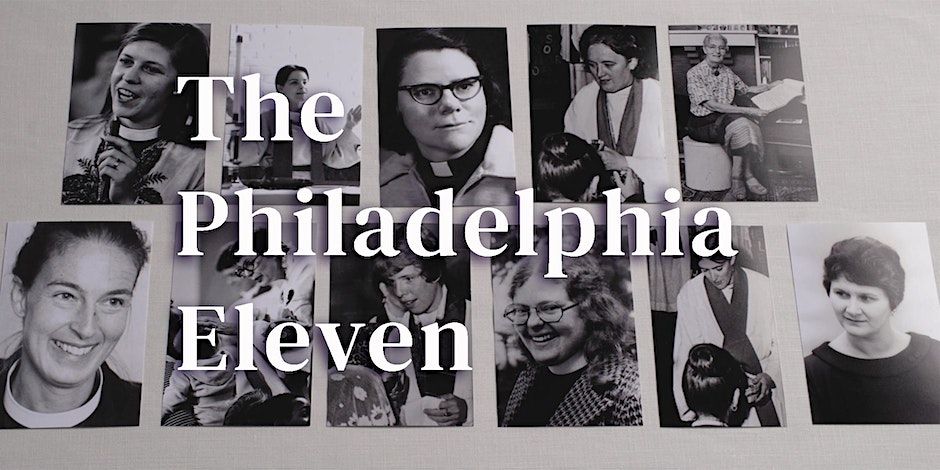
Photo credit: https://azdiocese.org/2023/11/the-philadelphia-eleven-screenings-in-arizona/

This past Sunday, the local Episcopal parishes in my town gathered to watch the documentary, The Philadelphia Eleven.  The film details the history of women’s ordination in the Episcopal Church, and the first eleven women who were “irregularly ordained” in 1974 (i.e. ordained by Episcopal Bishops, but without the church’s General Convention sanctioning the ordination of women).  The question of women’s ordination had come before General Convention many times before, but was always defeated.  So, fifty years ago, a handful of women, along with male allies, decided they could not wait any longer.  The film tells the story of the outrage the eleven women created, the abuse and death threats they faced, and the way that their diverse ministries led to the sanctioning of women’s ordination by General Convention in 1976. 

I came into the Episcopal Church later in life.  Although deeply involved in the United Methodist campus ministry at my college, an ecumenical trip with the Episcopal campus minister was my first real exposure to the liturgy and polity of the Episcopal Church.  That campus minister was a woman, and at that point in my development, that did not seem abnormal.  Then, a couple of years after college, I stumbled into the Episcopal Cathedral, whose dean was a woman.  One of her assisting priests was also a woman.  Those early mentors did not just normalize women’s ordination – it never occurred to me that there was a time when women were not priests.  In fact, I remember an occasion when one of my own daughters as a young child asked me, “Can boys be priests?”

At this year’s General Convention of the Episcopal Church, we took the first steps to authorize the honoring of the Philadelphia Eleven in our set of honored saints we celebrate at weekday Eucharists.  In the same city, where 51 years earlier the General Convention had denied women’s right to ordination, we agreed to honor the saints who pushed us to be better versions of the Church.  All female clergy in the room were invited to stand to a roar of applause.  I looked at the other women, many of whom I know and love, and I looked at the male clergy and laity whose eyes and smiles were full of admiration and respect, and I realized a couple of things.  One, it is always a joy to celebrate when the Church gets something right – even if it takes a long time for the Church to get there.  And two, I can be in ministry as my most authentic self is due to the suffering and courage of men and women I may never meet. 

I share all this not to brag on the Episcopal Church – in fact, we still have a long way to go.  Income disparity between male and female clergy is still a problem, as well as access to comparable positions.  I have been the first female rector both times I have served as rector, and both times, people left the church when a woman was hired.  But I share this story more because I wonder who else have we excluded from the Table.  I share this story because I found myself wondering whether I would have risked being one of the Philadelphia Eleven, knowing the suffering that would come.  I share this story because as someone who really appreciates rules and boundaries, I wonder which of those rules and boundaries the Holy Spirt keeps bumping against.  While these may seem like big questions, or super-Church-nerdy questions, I think these questions are for all of us – an invitation to wonder who we have excluded in the communities of faith we love so much.  The Philadelphia Eleven seem to be still asking us these questions fifty years later.    

Sermon – 1 Samuel 8.4-20, 11.14-15, Mark 3.20-35, P5, YB, June 9, 2024

19 Wednesday Jun 2024

Posted by jandrewsweckerly in Sermons

≈ Leave a comment

Tags

control, faith, family, God, Holy Spirit, invite, Jesus, king, love, parent, Sermon, trust

This morning, we get two powerful stories from scripture.  In our story from first Samuel, we hear the story of how the people of Israel come to demand a king to rule over them instead of God and God’s appointed judges and prophets.  They figure if they have a king like the other nations, then they’ll never have to worry about their safety and security.  A king will defend them in a way that looks familiar – like the other nations – than a way that feels like trusting a God you cannot see.  Of course, Samuel warns them – you pick a king and the king will take your daughters and sons into his service, will steal your land and produce as his own, will take your property and use it to his own benefit, will basically enslave you (not unlike the days in Egypt).  But the people insist none of that matters – as long as they have a king like everyone else.

Meanwhile, in Mark’s gospel, Jesus has been healing people, driving out demons, saying some things, and generally making a raucous.  Here, two groups insert themselves – the scribes, who try to claim Jesus is possessed by a demon himself, and his family, who are concerned he has lost his mind and want to restrain him.  Jesus is so frustrated by their behavior, especially of his mother and brothers that he loudly states, “Who are my mother and my brother?”  In other words, he denies his very own family because they cannot see the truth in what he is doing.  In these two stories – of the Israelites wanting a king and of Jesus’ family demanding he behave in a certain way, we have people thinking they know better than God – taking matters into their own hands thinking they know how things should be.

I was talking to another parent recently about how parenting is probably the hardest job of all the vocations I have – particularly as a person who likes to imagine she has a modicum of control in her life.  In the beginning, although parenting is physically exhausting, parenting is also manageable in a way that is not so obvious.  For those infants and young children, you have a lot of control – what the child will eat and drink, what the child will wear, when the child will rest, where the child can go.  But as the child ages, they make more and more of the decisions – what they will wear, where they will go, with whom they will spend time.  This is, of course, how parenting should be – the raising up of an independent child.  But the more your child becomes independent the more you realize how the younger years were the “good ol’ days” – the days where you felt like you were in control (or at least convinced yourself you had more control than you probably did).  Parenting feels like the ultimate test for those of us who like a sense of control.

But the truth is, the ultimate test for those of us who like a sense of control is being a person of faith – following a God whose logic sometimes feels illogical, following a savior who says and does things that really push our buttons, and following a Spirit who takes us places we really do not want to go.  And so, we find ourselves, much like the Israelites, accepting slavery, abuse, and the loss of freedom just to get those things we think will make us happy and whole.  We find ourselves, like Mary and Jesus’ brothers, bossing around God, insisting God behave in ways that make us feel comfortable.  Instead, God tells them and us to trust – to trust that God will provide leaders who will guide us in the ways of justice and truth; to trust that even the things we cannot understand will lead to good; to trust that even though we cannot know what God knows, our wholehearted trust in the will of God is all that matters.

So how do we do that?  How do we, people of free will, in a country of democracy where “we the people” make decisions, in a time when choices are boundless and we must make them, how do we become people of trust – people of faith?  Well, I like to go back to that story of Jesus in a crowded room from Mark’s Gospel today.  Scholar Debie Thomas says, “…I can’t help but imagine what it must have felt like to be inside the house with Jesus that day.  I know intimately and well, as perhaps you do, the hunger to belong, to have someone safe and loving to belong to.  Regardless of our circumstances, we all know what it’s like to yearn for someone who can hold all of who we are, and love us still, without flinching.  That’s exactly what Jesus does for the crowds that day. He invites them in, he asks them to stay, and he makes them family. 

Yes, Jesus divides the house, and that process hurts.  But he doesn’t divide [the house] to make us homeless.  He divides [the house] to rebuild it.  To make [the house] more spacious, more welcoming, and more beautiful.  The Spirit of God is neither insane nor evil; the Spirit completes the good work he begins.  His will be a house of healing for the whole world.”[i]

Holy Scripture today is not inviting us to become some mindless, fluff who walk around without aim or purpose just “trusting that God will work everything out.”  God did give us freewill, and God does want us to use that freewill for good.  But what the Holy Spirit is trying to remind us of is that we do not have the whole story.  We cannot see the way in which Jesus is rebuilding the house.  We cannot fully know the feeling of being inside that home where true healing may be.  We cannot understand the fullness of the implications of our desires – which seem reasonable and justified to us.  But what we can see and know and understand is that Jesus is building a house of healing for the whole world.  And if we can stop trying to parent God, we can start beginning to see that God is constantly doing a new thing and inviting us into the family.  We just do not get to be the parent in that family.  And that is a very good thing indeed.  Amen.


[i] Debie Thomas, “A House Divided,” June 3, 2018, as found at https://www.journeywithjesus.net/essays/1805-a-house-divided on June 5, 2024.

On the Blessing of No…

05 Wednesday Jun 2024

Posted by jandrewsweckerly in reflection

≈ Leave a comment

Tags

bishop, ego, faith, good, Holy Spirit, image of God, learning, lose, no, opportunity, priest, self-confidence, transform, win, yes

Photo credit: https://toledoparent.com/online-exclusives/learning-to-say-no/

For weeks my fourth grader has been talking about running for Student Body President.  I was admittedly proud of her gumption, but also wildly (and quietly) nervous on her behalf.  She is a genial, vibrant, beloved individual and I feared what losing an election at her age might do to her self-esteem.  But even with gentle warning, she was determined.  So, we worked on her speech and filled out the paperwork.  The “primary” involved whittling down a group of 12 students to three – no speeches or posters, just a raw “popularity contest” among the fourth graders.  Last night she returned home only a little disappointed that she had not been elected to the final ballot. 

I do not know why I doubted her capacity to maintain her self-confidence in the face of such a loss.  I have been modeling the same for her for years – sometimes you win and sometimes you lose.  Sometimes you get a yes, and sometimes you get a no.  These lessons have certainly happened verbally and in low-risk ways, like in card games.  But the lesson has been learned in big ways too – like a lost bishop’s election.  Though I loathed the very public nature of a bishop’s search, I do not think I fully understood the power of letting my girls watch me not only be nominated, but make very public presentations, and then not be elected.

Without realizing it, I have been teaching my girls the power of a good “no.”  Almost all the good things that have happened to me – jobs, schools, auditions – were preceded by a solid no.  The student government election I did not win, the audition where I did not make the cut, the job I really wanted and did not get.  Every single one of those no’s profoundly taught me something about myself I did not know, and every single one of those no’s led to another opportunity that could only open up because of the no that happened first. 

The experience of no’s can be brutal to the ego.  But I wouldn’t be the spouse, mother, priest, or human that I am today without all those no’s.  And now I know that learning was not just for me – it was for my children too.  And maybe those no’s have been for some of you as well.  I wonder what no’s you are facing these days.  I wonder what you have learned from the times you received a no.  I suspect the Holy Spirit has been transforming you so that when you get a yes, you come to that yes as your most powerful self – the self that was made in God’s image and is beautiful and beloved.

On Seeking and Seeing Sacred Ground…

29 Wednesday May 2024

Posted by jandrewsweckerly in reflection

≈ Leave a comment

Tags

barre class, Bible, burning bush, Christianity, church, faith, God, holiness, holy, Jesus, Moses, reverence, sacred, sacred ground, shoes, Spirit

Photo credit: https://medium.com/koinonia/dont-wait-for-a-burning-bush-f8c7435489ae

One of my fitness routines includes attending “barre” – a class that combines yoga, Pilates, and ballet.  When you enter the studio, you remove your shoes and put on special socks to prevent slipping during the class.  You then enter the actual classroom and procure any fitness aides required for the class, such as hand weights, bands, or balls, and proceed to setup up your space at the barre.  I tend to take classes in the 5:30 am hour, so most of the time I am pretty groggy and operating on auto pilot as I prepare my space for class. 

Knowing my routine for class, imagine my surprise the other day when, as I somewhat sleepily entered the classroom, I found myself bowing.  I was immediately shocked and a little embarrassed by my body’s instinctual movement.  As a priest, I bow all the time – as I reverence at the altar, as the processional cross passes me, at certain points in the Creed, or at the name of Jesus in the liturgy.  But I have never reverenced an exercise classroom.

The strange appearance of such an out-of-context movement got me thinking about Holy Scripture.  In Exodus, we hear how Moses receives his call at the site of a burning bush.  When God calls out to Moses amid the flames, God says, “Come no closer!  Remove the sandals from your feet, for the place on which you are standing is holy ground.”[i]  Now I am not sure I would call the barre classroom sacred ground – though the Lord’s name is often called upon, especially during long plank series.  But something about that room made my body respond to its holiness the same way I respond to the holiness of Church.  So how exactly do we define a holy place – or sacred ground?

In the instance of barre class, perhaps what my body was responding to was the way I do find holiness – in the care and compassion of teachers, in the camaraderie of classmates on a shared journey of health and wholeness, in the individual experience at the barre when you feel like you cannot go on and something or someone pulls you through doubt.  Though I think the sacred ground of worship space is unrivaled as a place of encounter with God, the community of Jesus, and the movement of the Spirit, I certainly have found other sacred places – the mountain community where my family gathered every summer with the wider church; the edge of crashing waves, where the vastness of the Creator is palpable; the coffee shop where someone pours out their heart’s burdens to another and blessing is proclaimed.  Perhaps regularly attending Church, with its preserved sacred ground, is what allows us to see and hear God on the sites of sacred ground all around us.  Where are you finding unexpected sacred ground these days?  Where is God inviting you to take off your shoes and give reverence to the mightiness of our God?


[i] Exodus 3.5

Sermon – John 20.19-31, E2, YB, April 7, 2024

01 Wednesday May 2024

Posted by jandrewsweckerly in Sermons

≈ Leave a comment

Tags

baptism, belief, community, doubt, Doubting Thomas, Eastertide, faith, fear, God, incarnation, intimacy, Jesus, relationship, Sermon

Photo credit: Hickory Neck Episcopal Church. Reuse with permission only.

For those of you who have worked with me for a while now, you know that I am easily excited by new ideas.  So, when Ed and Tyler suggested the Sunday after Easter for Quinton’s baptism, I excitedly said, “Yes!”  I knew we would be still experiencing the high of Holy Week and Easter from last week, I knew that baptisms are traditionally celebrated throughout Eastertide, and I knew having another reason to celebrate this Sunday would be fun.  What I failed to double-check was the lectionary.  As soon as I saw the gospel for today, I groaned.  Who wants to talk about Doubting Thomas when we are performing a sacrament of belief and belonging?!?

At first glance, John’s Gospel text today, is in fact, a terrible text for baptism.  First of all, the disciples are making a very poor showing about what the community of faith is supposed to look like.  You would think after seeing the empty tomb and hearing Mary Magdalene’s testimony, “I have seen the Lord,” the disciples would be hitting the ground running, doing the work of spreading the good news, or at least throwing a raucous party.  Instead, we find the disciples huddled in a locked room, cowering in fear.  The text says they are afraid of the Jewish leaders, perhaps afraid the same people who killed Jesus would try to kill them too.  But I think there is more to their fear.  I think they are afraid to face others, because they feel they have failed.  Perhaps they believe their pick for Messiah did not seem to be the Messiah after all.  I think they are also behind those locked doors because they are ashamed that they failed to protect Jesus, to keep him alive.[i]   Those locked doors are not just for safety – those locked doors are for hiding the shame, the disappointment, and the fear of facing others that the disciples have. 

And then we have the famous Doubting Thomas.  That we even call him “Doubting Thomas” is indication enough of the communal disapproval of his behavior.  Why couldn’t he just believe?  If not Mary Magdalene, at least his fellow disciples, who use the same words as Mary’s own testimony, “We have seen the Lord.”[ii]  Even Jesus seems to disapprove when he asks, “Have you believed because you have seen me?  Blessed are those who have not seen and yet have come to believe.”[iii]  We do not exactly seem to be setting the stage well for little Quinton, or anyone new to the Church today.

But the more I thought about this text, and the more I read, the more I realized this is actually the perfect text for someone new to the community of faith.  As little Quinton grows up, I do not want him to think that faith is about perfectly believing, perfectly behaving Christians, who perfectly go to Church.  And although I want Quinton to know about doubt and to have a super healthy sense of curiosity and questioning, the truth is our labeling of Thomas as “Doubting Thomas,” gets in the way of what John is trying to teach new believers.  Instead, New Testament scholar Karoline Lewis explains, “The primary definition of the term doubt, however, has to do with uncertainty.  Uncertainty, as a category of belief, does not really exist in the Fourth Gospel.  One is either certain or not certain; in the light or in the dark.  Jesus invites Thomas to move from darkness to light, from lack of relationship to intimacy.  There is no middle ground with it comes to believing in Jesus.”[iv] 

Now, stay with me on this, because I realize that dichotomy sounds even worse than doubting.  Instead, what John’s gospel is doing is not about exclusion, but about radical inclusion.  John is not conveying something about belief but about incarnation:  “to be incarnated demands relationship.  As a result, you are either in one community or another, but you cannot be not in community.  Life, especially abundant life, is dependent on the reality of multiple expressions of connectivity and belonging, whether that be on-on-one or in various sizes of communities…Even God was not alone in the beginning…”  So, when Thomas says, “My Lord and my God,” he is not talking about his own belief or even an individualized theology, but rather “the intimacy this Gospel imagines between believer and Jesus…”  As Lewis goes on to say, “To give witness to a personal relationship with Jesus is immediately to enter into a community of intimacy between Jesus, God, the Paraclete (a fancy word for Holy Spirit[v]), and the believer and between the believer and the new community, the flock, that Jesus as the Word made flesh has made possible for the world.”[vi]

One this day, when Thomas the Twin teaches us all about what belief really means – that is, incarnate, intimate relationship with God and with one another – I cannot imagine a better word for us today.  When we baptize Quinton today, we invite him into the relationships already present in this community – the real ones that sometimes cower in shame and doubt – but also the ones that lead to abundant life and blessing.  When we pour water over his head and rub oil on his forehead and commit to supporting him and one another in this journey of faith, we are claiming him not as someone who will always have things figured out – because we do not always have things figured out.  But we do commit to the intimacy of relationship:  with the three persons of the Godhead, with one another, and with the community of faith.  I cannot think of a better reminder on this second Sunday in Easter as we deepen our own intimacy with the risen Lord than to baptize and reaffirm our baptisms – as we acclaim today, “I will! (with God’s help).”  Amen.


[i] M. Craig Barnes, “Crying Shame,” Christian Century, vol. 121, no. 7, April 6, 2004, 19. 

[ii] Karoline M. Lewis, John:  Fortress Biblical Preaching Commentaries (Minneapolis:  Fortress Press, 2014), 248.

[iii] John 20.29.

[iv] Lewis, 249.

[v] My words, not Lewis’ words.

[vi] Lewis, 250.

On the Busyness of Holy Week…

27 Wednesday Mar 2024

Posted by jandrewsweckerly in reflection

≈ Leave a comment

Tags

church, death, faith, God, hear, Holy Week, Jesus, liturgy, love, resurrection, see, smell, taste, touch

Photo credit: https://www.redletterchristians.org/why-we-want-to-skip-holy-week/

Holy Week is a funny time for liturgical churches.  Growing up in the United Methodist Church, I remember one Sunday (Palm Sunday), we put nails in the cross, and the next Sunday (Easter Sunday), we would put flowers in the same holes where those nails had been.  But services between the two Sundays were rare, if not nonexistent.  Once I became an Episcopalian, a whole world of liturgical wonders opened up.  Each church did Holy Week a little differently, but invariably, there was some kind of worship every night of Holy Week.  There were the traditional Triduum services:  Maundy Thursday, Good Friday, and Easter Vigil.  But then there were a whole variety of others things:  Taizé worship, Compline, Evensong, Healing Services, Tenebrae, Lessons and Carols, Vespers, and even special concerts. 

Among ecumenical clergy, I often get looks of skepticism, as if they wonder why we do that to ourselves (i.e. work so many nights in a row).  They are not wrong (it is certainly taxing), and I also do not promote the kind of martyred attitude many clergy assume while doing it.  For most of us though, there is something deeper happening.  Fellow clergyman Tim Schneck said it best in a recent post, “When you hear clergy strongly encouraging you to attend the services of Holy Week, especially the Great Three Days (Maundy Thursday, Good Friday, the Easter Vigil), it’s not just because they like to see more people in the pews, or it’s good for their egos, or they want parishioners to see how much effort goes into these liturgies.  It’s because they believe in the death and resurrection of Jesus Christ and the transforming power of the Christian faith.  It’s because they love you and want nothing more than for you to have such a moving encounter with our Lord, that it will change your life.  It’s an invitation rooted in profound love, and a recognition that there is literally nothing more important in the entire world than to participate fully as we collectively journey from the Upper Room to Calvary to the Empty Tomb.” 

I know life is full and stressful.  I know in my area, many families are rapidly approaching Spring Break and have a load of things to do to prepare.  But as a pastor – maybe your pastor – I want to gift you this most sacred week for your spiritual journey.  Whether you tune in online or join us in person at my church, let yourself be stirred by liturgies you do not often see, by actions you rarely do, and by music your rarely hear.  In what can easily feel like just another week, make a point to find yourself a church that can stir your curiosity about faith or your longing for meaningful connection or a sense of belonging.  But mostly, know that whatever you can do – even if it’s just Easter, know that there is a place where everyday this week, you can be reminded that you are loved – deeply, profoundly, and unconditionally.  And if you want to hear, taste, smell, see, and touch that love, the Church is waiting for you. 

Of the Mind and of the Heart…

15 Friday Mar 2024

Posted by jandrewsweckerly in reflection

≈ Leave a comment

Tags

academic, change, children, emotional, faith, family, God, head, heart, Jesus, journey, joy, know, Lent, live, parenthood, prayer, sadness

Photo credit: https://www.everypixel.com/image-8567765057447502976

A couple of weekends ago, my husband and I found ourselves kids-free, walking the local downtown area.  As we strolled along, we observed other families – parents pushing strollers, parents supervising kids learning to ride their bicycles, parents pausing family walking for educational moments.  Watching the other families brought back a flood of memories of those stages of our lives – the fond, endearing moments as well as those moments when we felt like we might crack.  But what was not familiar was what we were experiencing that day:  the children having plans of their own, making choices to be with friends over being with their parents.

My husband and I used to work with families at our church who were going through those very changes:  the phase of life where the children’s primary influence shifts from parents to peers.  It is a good and natural phase, but one we observed was much harder for parents than for the children.  But teaching and knowing something is quite different from experiencing something – from watching your own children do the very thing you have taught other parents about.  That moment is the clarity that comes from taking an academic subject and having it become a very real, emotional subject.  Suddenly, I could see the future of the relationships with our children in a much more tangible way.  And there was some sadness, some joy, and lots of somethings in between.

As we make our way past the halfway mark of Lent and we see the approaching journey of Holy Week, I have been thinking a lot about the learned experience of faith and the felt experience of faith.  Often we Episcopalians are creatures of the mind – studying repentance and forgiveness, participating in liturgies that shape the penitential nature of Lent, and even talking to others to learn about their Lenten experiences.  But knowing about Lent can be quite different from living Lent – facing all those things we preferred to keep in the “academic” box and instead having to move them into the “lived” box. 

My prayer for you as your Lenten journey approaches the climax of Holy Week and Easter is that you let yourself feel all of it.  My prayer is that you allow that much more vulnerable version of yourself to gather next to Jesus and keep walking forward – as the imperfect person you are, accompanied by the perfection of the Savior who makes this journey possible.  I look forward to hearing how letting down those walls of self-protection and letting in the grace, love, and forgiveness of God shapes these last days of Lent.  Know that I walk with you!

Sermon – Matthew 2.1-12, EPD, YB, January 7, 2024

14 Wednesday Feb 2024

Posted by jandrewsweckerly in Sermons

≈ Leave a comment

Tags

attention, Epiphany, faith, fear, God, Jesus, joy, learning, magi, mess, pilgrimage, questions, Sermon, wonder

When you are preparing for ordination, you get asked lots of “big picture” questions:  Who is Jesus to you?  Why do you think you need to be a priest to live out your call?  Where do you see God in your daily life?  Fortunately, or not, those are not really questions we ask each other in our everyday lives.  We sort of settle into a comfort zone with our faith, hoping that just being in church, or maybe being in a study group, or doing some sort of devotional practice will help us grow in faith.  We likely feel connected to God, but we may not regularly engage in the rigorous questioning of our faith.

Our gospel lesson today opens up for us how easily we can miss the activity of God if we aren’t paying attention.  Today we celebrate the feast of the Epiphany – the revelation of Jesus’ identity as the Messiah through the journey of the Magi.  But before we get to those cool, and slightly odd gifts, we learn a lot about the context of Jesus’ arrival.  First, we are told about King Herod – a man desperate to hold on to power by whatever means possible.  Who, when hearing a child has been born, a tiny little baby – who might, one day – threaten his power, is terrified.  And so, Herod goes to the scholars to confirm where this threat is.  Then, he proceeds to meet with the Magi in secret, pretending that he too wants to honor this new leader (as if that would ever be something a paranoid, power-hungry leader would do), and schemes to make sure he can find this threat through the Magi.  And we learn, well after this passage, that his terror is so strong that he kills a whole generation of male children to ensure this supposed future king cannot threaten his power.  Herod is so obsessed with power, he is blind to the extraordinary thing happening in front of him.[i]

Then we are told about the people of faith.  We are told that the Magi’s news terrifies all of Jerusalem too.  For a people of faith who were eagerly awaiting a Messiah, we now see how the system of oppression and fear that Herod has created has paralyzed them.  Though a Messiah would free them, they only know that in their day-to-day life, any threat to Herod means havoc and suffering in their lives.  Even the Biblical Scholars of Herod’s day miss the movement of God.  They very clearly state that the Messiah is to be born in Bethlehem.  One would think that even if strangers tell you the Messiah has come, your scholarly training might make you curious enough to follow the Magi and see if a revolution is coming.  But even their academic training does not embolden them for action.[ii]

Instead, strangers to faith – the “unchurched” as we might call them today – are the ones able to point to God.  These are people who study.  These are people who do not just bury themselves in books, but also keenly pay attention to the world around them.  These are people courageous enough to confirm their conclusions – even if confirmation means traveling quite far.  These are people willing to ask for directions, open to help to understand their suspicions.  These are people capable of great joy, gratitude, and reverence for something that is not even a part of their sense of identity.  And they are vigilant and attentive, willing to keep responding upon further dreams and insight, going another way to their home.[iii]

The good news for us today is that even when we are overwhelmed by fear, even when we are stuck in our faith life, even when we have the truth in our hands but are missing the living Lord, God will find ways to break through the mess of life and break into our lives.  As one scholars says, “Just as the powers that be try and fail to prevent the resurrection, so they try and fail to prevent the birth of God’s child.  God’s purposes cannot be thwarted; God’s purposes will prevail.”[iv]  If, then, God appears anyway, our invitation is to open our hearts, minds, and lives to receptivity to that presence.  Maybe that happens in your daily spiritual practices of prayer, journaling, or study.  Maybe that happens by surrounding yourself with people – churchy types or those foreign to the faith – who are already attuned to God and can help you see the movement of the Spirit in your own life.  Or maybe that happens simply by committing not just to being in church regularly, but being fully present when you are here, cultivating the practice of openness to Jesus.  The promise of accepting that invitation is a journey of adventure, not unlike the Magi – full of learning, joy, and wonder.  Come join the great pilgrimage!


[i] William R. Herzog, II, “Exegetical Perspective,” Feasting on the Word, Yr. B, Vol. 1 (Louisville: Westminster John Knox Press, 2008), 215.

[ii] James C. Howell, “Theological Perspective,” Feasting on the Word, Yr. B, Vol. 1 (Louisville: Westminster John Knox Press, 2008), 214.

[iii] William V. Arnold, “Pastoral Perspective,” Feasting on the Word, Yr. B, Vol. 1 (Louisville: Westminster John Knox Press, 2008), 212, 214.

[iv] Herzog, 217.

On Children, Questions, and Dignity…

06 Wednesday Dec 2023

Posted by jandrewsweckerly in reflection

≈ Leave a comment

Tags

Advent, baptismal covenant, children, complex, complicated, creation, dignity, faith, God, humanity, image of God, Jesus, questions, respect, scripture, slow down, village

Photo credit: https://www.adl.org/resources/tools-and-strategies/respecting-dignity-words

We have been having lots of “big” conversations around our house the last couple of weeks.  The first happened when my younger child and I went to shop for our Angel Tree gifts – an annual tradition from our church and the Salvation Army.  Our girls tend to prefer to choose someone their age – perhaps because they feel more equipped to imagine what someone their age wants, or because it helps them feel a sense of camaraderie.  This year, the nine-year old we selected ended up being quite different from the nine-year old in our family.  Though the toys she wanted were familiar, the size of clothing needed made it obvious that the two girls could not be more different.  So, in the middle of a store, I found myself having a deep conversation about genetics, systems of poverty, and the blessed nature of all creation.

Later, the conversation turned heavy again.  Something came across the same nine-year old’s radar about Israel and Palestine, and the barrage of questions were endless and increasingly difficult.  We started with why they were fighting, talked about what each side had done, and what the impact of this war has been.  Eventually we got into the murky waters of the religious backgrounds of the warring sides – careful to talk about the interconnectedness of the Abrahamic faiths.  But then came the gut-punch question, “So, who do we want to win?”  Talking about war and peace, death and destruction, and the biblical complicatedness of the Holy Land was not exactly the conversation I was expecting between school, dinner, and various sports practices.

One of the disadvantages of being a “grown up” is we often think we have things figured out:  capable of complicated thought, educated and experienced, we have seen enough of life to understand its complexities and make judgments based on our learnings.  It is one of the many reasons why I am so grateful for the children in our lives – both my own, but also our community’s children.  As part of their village, our work is to responsibly help them see the complicated, often sinful, nature of humanity, and help them love humanity in all its complexity.  In essence, children help us see why one of the main promises in our baptismal covenant is we will respect the dignity of every human being.

As we bustle around the Advent season, tempted to be too busy to handle anything other than our massive to-do lists, I invite you to slow down.  When we run so fast and when our minds are so occupied, we miss the invitations to respect the dignity of every human being:  from our neighbors impacted by poverty, to the frazzled parent just trying to get their children to school, to the person suffering within their body, to the innocent bystanders of war.  Scripture tells us that each person, when they are at their best or their worst, their strongest or their weakest, their most successful or their most failing, are made in the image of God.  Whether we like them or not, Jesus asks us to respect the dignity of that creation every day.  How might you better respect the dignity of the humans around you today?

← Older posts
Newer posts →

Recent Posts

  • On Sharing the Love…
  • Sermon – Micah 6.1-8, Matthew 5.1-12, EP4, YA, January 30, 2026
  • On Justice, Kindness, Humility, and the Messy Middle…
  • Feast of the Rev. Dr. Martin Luther King, Jr., January 18, 2026
  • On Peace, Love, and Conduits…

Archives

  • February 2026
  • January 2026
  • December 2025
  • November 2025
  • October 2025
  • September 2025
  • August 2025
  • July 2025
  • June 2025
  • March 2025
  • February 2025
  • December 2024
  • November 2024
  • October 2024
  • September 2024
  • August 2024
  • July 2024
  • June 2024
  • May 2024
  • March 2024
  • February 2024
  • January 2024
  • December 2023
  • November 2023
  • October 2023
  • September 2023
  • August 2023
  • July 2023
  • June 2023
  • May 2023
  • March 2023
  • February 2023
  • January 2023
  • December 2022
  • November 2022
  • October 2022
  • June 2022
  • May 2022
  • January 2022
  • December 2021
  • November 2021
  • October 2021
  • September 2021
  • August 2021
  • June 2021
  • May 2021
  • April 2021
  • March 2021
  • February 2021
  • January 2021
  • December 2020
  • November 2020
  • October 2020
  • September 2020
  • August 2020
  • July 2020
  • June 2020
  • May 2020
  • April 2020
  • March 2020
  • February 2020
  • January 2020
  • December 2019
  • November 2019
  • October 2019
  • September 2019
  • August 2019
  • July 2019
  • June 2019
  • May 2019
  • April 2019
  • March 2019
  • February 2019
  • January 2019
  • December 2018
  • November 2018
  • October 2018
  • September 2018
  • August 2018
  • July 2018
  • June 2018
  • May 2018
  • April 2018
  • March 2018
  • February 2018
  • January 2018
  • December 2017
  • November 2017
  • October 2017
  • September 2017
  • August 2017
  • July 2017
  • June 2017
  • May 2017
  • April 2017
  • March 2017
  • February 2017
  • January 2017
  • December 2016
  • November 2016
  • October 2016
  • September 2016
  • August 2016
  • July 2016
  • June 2016
  • May 2016
  • April 2016
  • March 2016
  • February 2016
  • January 2016
  • December 2015
  • November 2015
  • October 2015
  • September 2015
  • August 2015
  • July 2015
  • June 2015
  • May 2015
  • April 2015
  • March 2015
  • February 2015
  • January 2015
  • December 2014
  • November 2014
  • October 2014
  • September 2014
  • August 2014
  • July 2014
  • June 2014
  • April 2014
  • March 2014
  • February 2014
  • January 2014
  • December 2013
  • November 2013
  • October 2013
  • September 2013
  • August 2013
  • July 2013
  • June 2013
  • May 2013
  • April 2013
  • March 2013
  • February 2013
  • January 2013
  • December 2012
  • November 2012
  • October 2012
  • September 2012

Categories

  • reflection
  • Sermons
  • Uncategorized

Meta

  • Create account
  • Log in
  • Entries feed
  • Comments feed
  • WordPress.com

Blog at WordPress.com.

  • Subscribe Subscribed
    • Seeking and Serving
    • Join 395 other subscribers
    • Already have a WordPress.com account? Log in now.
    • Seeking and Serving
    • Subscribe Subscribed
    • Sign up
    • Log in
    • Report this content
    • View site in Reader
    • Manage subscriptions
    • Collapse this bar
 

Loading Comments...