• About

Seeking and Serving

~ seek and serve Christ in all persons

Seeking and Serving

Tag Archives: faith

Sermon – Acts 16.16-34, E7, YC, May 8, 2016

11 Wednesday May 2016

Posted by jandrewsweckerly in Sermons, Uncategorized

≈ Leave a comment

Tags

Christ, enslaved, faith, freedom, live, Moral Mondays, Paul, power, praise, privilege, protest, Silas, slave, suffering, truth, value, wealth

Thousands of years ago, our people were enslaved.  Once-friendly Egypt got a new pharaoh who saw the sheer number of us, and out of fear, enslaved us.  We lost our freedom, and labored under a brutal new regime.  We longed for better days.  We longed for a return to our homeland, even though our homeland could not have sustained us because of the famine years before.  Every night, our cries went out to God.  One day, God heard us.  God sent us a man by the name of Moses, who dramatically managed to convince Pharaoh to let us go back home.  So we quickly packed our things and ran.  Pharaoh changed his mind and sent his armies after us.  But when we crossed the Sea of Reeds, and Pharaoh’s army drowned, we celebrated.  We were free.

Not long after, the rejoicing stopped.  Freedom did not look like what we thought freedom would look like.  Freedom was hard.  When we were enslaved, we always knew from where our next meal would come.  We knew where we would lay our heads at night.  We knew the routine.  With Moses, we were constantly wandering in the wilderness, wondering where our next meal would come from, searching for water, unsure of what would happen.  Nothing in our journey unfolded as we imagined.  We thought freedom would mean being able to do whatever we wanted, being free of obligation, and not being constrained by anyone or thing other than ourselves.  Pharaoh was admittedly awful, but better the devil you know, right?

Being from a country whose primary value is freedom, sometimes I think we get as confused as our ancestors about what freedom means in the context of being people of faith.  Take our lesson from the Acts of the Apostles today.  There are both people who are free and people who are not.  Those who own the slave-girl are free to collect money for someone else’s performance, and they are free to get someone thrown in jail.  The judges who throw Paul and Silas into jail are also free – free to choose who is punished and who is not.  Finally, we might put the jailer into the free category as well.  He is a man with a steady, respectable job, who has power over those in prison.

Meanwhile, our story has those who are lacking freedom.  The first character we hear about is a slave-girl.  In some ways, this nameless slave is a double slave – a slave to her owners who use her for money and a slave to the spirit of divination inside her.  Paul and Silas also lose their freedom.  They are thrown into jail midway through our story, which clearly puts them in the not-free category.  Plus, the slave-girl calls them “slaves of the Most High God.”

Looking at the characters in Acts, we can see how confusing the definition of freedom can be.  If freedom is a value in and of itself, then the heroes of our story are the slave owners, magistrates, and the jailer.  The owners of the slave girl obviously have social capital and an income source.  They have influence and power, and up until Paul and Silas come along, they have the comforts of wealth.  The judges also have a great deal of respect and power in the community.  They are charged with keeping order in the community and protecting the community’s way of life.  Even the jailer has a clear sense of identity and purpose.  He may not have wealth and prestige, but he has a secure job and a sense of clear identity in the community.

Consciously, we know that we should not identify with these three entities.  But subconsciously, and in a country that does not distinguish between freedom and freedom in Christ, we find ourselves much more aligned with and, quite frankly, longing for the kind of freedom that these three parties have.  Meanwhile, the slave-girl is nothing like what we hope for ourselves.  Being possessed by a spirit and being owned by another individual do not usually make the top of our lists for happiness and fulfillment.  And in no way do we want to be like Paul and Silas, who not only seem to be homeless rebel-rousers, they also are physically brutalized and imprisoned.  We are faithful followers of Christ, but I doubt many of us would take that commitment all the way to jail.

Last week, a friend of mine had that very debate.  She is a priest in North Carolina, and she decided to join the weekly protests that has become known as Moral Mondays.  Moral Mondays have been happening since 2013, as religious leaders and followers across North Carolina have gathered in peaceful protest of the laws being passed that promote unfair treatment, discrimination, and oppression.  Bishop Michael Curry was a frequent protestor and speaker at Moral Mondays before being elected Presiding Bishop.  Last week, my friend decided that she needed to join fellow Christians in protest, but she was uncertain about the possibility of being arrested.  She knew what was happening in the legislature was unjust, but she also had a family and job to think about.  She was unsure about how she could best be of use – by staying long enough to be escorted to jail, or whether her presence at the protest would be enough.

What my friend was on the cusp of understanding is what Paul, Silas, and the slave-girl already know.  The slave-girl already knows the truth that no one else can see – that Jesus is the way to salvation.  And when she shouts that long and loudly enough, she is not only freed of her possession, she is free of the bondage of slavery – because her owners can no longer use her as they did before.  Even Paul and Silas, who are locked in jail, are more free than they seem at first glance.  What person, after being brutally whipped and thrown into a cold cell, can be found praying and singing praises to God in the middle of the night?  Only someone who is so free of the bondage of this world can be able to praise God in the midst of earthly suffering.

If Paul, Silas, and the slave-girl are free, guess who the real enslaved ones in our story are.  Those owners, who seem to have the earthly freedom of wealth, have actually become slaves to their wealth.  They are so enslaved to that wealth that when their source of income is freed, they lash out, bringing pain and suffering down upon others.  They cannot see the gift of freedom and health for the slave-girl; they only see the consequences for themselves.  The magistrates are no freer than the owners.  They are so enslaved to their rigid rules that they cannot see the inherent injustice that the slave-girl has faced for so many years.  Even the jailer is not truly free.  He is so caught up in his identity as a jailer that he is willing to take his life for his job.  He is ready to kill himself for what he thinks is a failure on his part than to see how this job has taken over his sense of identity.[i]

So how do we avoid living like the complaining Israelites, who were physically free, but not yet spiritually free to live as the Lord our God invited them to live?  How do we, in a nation that reveres freedom, avoid being enslaved by the wealth, power, and identity that comes from being free?  The jailer asks the same question to Paul and Silas when he asks, “What must I do to be saved?”  In the paraphrase of our text, Paul’s answer is simple:  Put your entire trust in the Master Jesus. Then you’ll live as you were meant to live.[ii]  Paul and Silas could have easily fled that jail when the earthquake happened.  They could have sped past the jailer, and been focused solely on their own self-preservation.  But we see that there is a peace in Paul and Silas that comes from true freedom – of living how we are meant to live.  Instead of weeping and plotting in that cell, they sing and pray to God.  Instead of running when the doors fling open, they ensure that the jailer is okay.  Instead of demonizing the jailer, they offer him baptism.  This is what true freedom looks like.[iii]

In our freedom, we have become enslaved – in varied and sundry ways, but we are all enslaved by something.[iv]  Paul, Silas, and the slave-girl invite us into another way.  They invite us to live as liberated people who trust in our Lord Jesus Christ.  That true freedom may mean we find ourselves shouting out truth in a peaceful rally.  That true freedom may mean that we find ourselves praising God when no one else is, sacrificing our own comfort so that someone might find theirs.  That true freedom might mean trusting God is acting when we feel like God left the building long ago.  When we claim that freedom, then finally, finally, we will begin living as we were meant to live.  Amen.

[i] David G. Forney, “Pastoral Perspective,” Feasting on the Word, Yr. C, Vol. 2 (Louisville: Westminster John Knox Press, 2009), 526.

[ii] Eugene Patterson, The Message, as found at https://www.biblegateway.com/passage/?search=Acts+16%3A16-34&version=MSG on May 6, 2016.

[iii] L. Gregory Jones, “Come, Lord Jesus,” Christian Century, vol. 109, no. 16, May 6, 1992, 485.

[iv] Ronald Cole-Turner, “Theological Perspective,” Feasting on the Word, Yr. C, Vol. 2 (Louisville: Westminster John Knox Press, 2009), 524.

You’re Invited!

27 Wednesday Apr 2016

Posted by jandrewsweckerly in Uncategorized

≈ Leave a comment

Tags

ask, church, evangelism, faith, fear, invitation, invite, simple, stranger

One of the things that has been fun about living in a new community is being able to operate under the radar for a little while.  I had not started my job yet when my oldest child began her first week in her new school.  That meant I was able to go to the bus stop in plain clothes – where my collar did not cue in the other parents as to what my occupation is.  It was a wonderful experiment because I was able to quickly see how or whether people talk about their faith in this new community.

By the second day, one of the moms introduced herself to me.  She was incredibly friendly and helpful, trying to ascertain how much we had begun to integrate ourselves into the neighborhood.  Within five minutes, she mentioned how I might enjoy bringing the kids to vacation bible school at her church this summer.  She followed up that invitation by asking if I had started looking for a church home.  At that point in the conversation, the cat was out of the bag.  Not only did I have a church home, I was that church’s new pastor.  As I walked home that day I was impressed by her natural and quick ability to do the simple and powerful:  invite me to church.

There is a duo that I have come to love called the Skit Guys.  They do funny skits that poke fun at us church-going people while also exposing, challenging, and encouraging us in our weaknesses.  Some of my favorite skits, like this one, challenge why people do not ever think to invite others to church.   They make the invitation part seem so simple.  At the new bus stop, I realized how right they are.

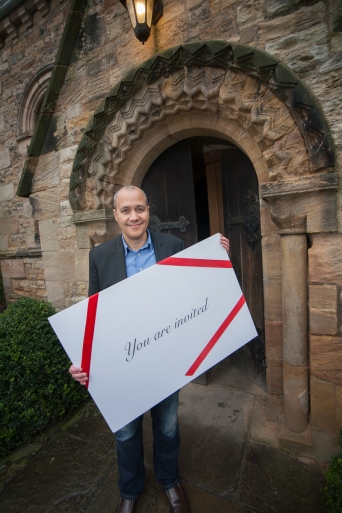
You are Invited

Photo credit:  www.christiantoday.com/article/church.asks.too.much.of.us.thats.why.we.dont.invite.our.friends/47064.htm

So, this week, I invite you to do the same.  Maybe your child has been at the bus stop all year, but you never broached the “religion” topic with another parent.  Maybe you had a casual chat with someone at the hair salon or barber shop, but you did not think to mention your church.  Maybe you were at a bar or a restaurant and were talking politics and religion, but never asked if they have a good church home.  This week, I invite you to go for it.  Perhaps the person already has a church home and you will hear about some cool ministries they are doing.  Perhaps the person was scorned by the church and you can be a pastoral ear, sharing the times when church has been both hard to be a part of and times when church has been a blessing for you.  Or perhaps the person has been waiting to be asked.  I’m sure you will have a great story to tell if that is the case!  Good luck!

The Power of Prayer…

10 Thursday Mar 2016

Posted by jandrewsweckerly in Uncategorized

≈ Leave a comment

Tags

alone, community, faith, God, love, power, pray, prayer, saints

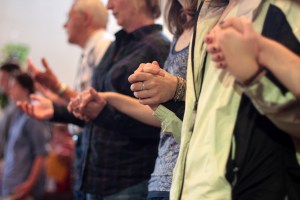
praying-hands1

Photo credit:  internationalhouseofprayernorthwest.org/event/praying-for-our-police-december-31st-200-300pm/

One of the major components of my vocation is living a life of prayer.  I am constantly offering up prayers for my parishioners, my family, and my friends.  I am regularly praying for the oppressed, the hungry, and those suffering around the world.  I pray for those in leadership in our country and around the world.  And even if the average stranger or acquaintance feels a little uncomfortable talking about religion with me, they have no issues asking me to pray for them.  Prayer is part and parcel of my life and work.

But as much as I pray, for others and even myself, I rarely ask others to pray for me.  I am not sure why really.  Maybe I feel like people are busy or God knows what I need.  Regardless, I don’t tend to solicit prayers.  But this past month has involved a lot of upheaval.  I am transitioning between jobs, and the prayer concerns seem endless.  My current parish has been sorting through their own grief and anxiety about the change.  My future parish has been preparing to receive me and handling logistics on their end.  And my family is juggling everything:  from the emotional toll of the transition, to buying our first home, to finding a new job for my husband, and finding new schools and childcare for our children.

So this week, I finally asked for prayer.  I asked a colleague group of mine and some close friends to pray.  The response was immediate and overwhelming.  Sharing the burden seemed to lessen the burden.  Feeling connected to a community of support gave me comfort and strength.  And thinking about their prayers made me realize there are other people praying too.  My current parish has a prayer group that is praying for us.  My future parish has a weekly prayer they are offering for me, my family, and for them.  Even my mom’s Bible Study group is praying for us.  And that probably does not even count the myriad other people who are praying for me without me realizing it.

As I marveled in the community of saints lifting me up in prayer this week, I realized maybe that is part of the power of prayer:  prayer reminds us that we are not alone.  When we join in prayer with others, we remember that we are not on our own in this life.  The vast web of prayer gives us a tiny glimpse into the enormous love of our God for us.  This week I am grateful for the reminder of the power of a prayerful community.  I encourage you to reach out to your own communities if you are in need of prayer.  And if you are feeling less needy this week, then reach out to someone else who might need your prayers.  We are not alone and we need each other.

Homily – John 1.1-18, C1, YC, December 27, 2015

06 Wednesday Jan 2016

Posted by jandrewsweckerly in Uncategorized

≈ Leave a comment

Tags

Christmas, faith, God, interpreting, Jesus, John, love, prologue, Sermon

I know many priests who love to read John’s prologue at Christmas.  They get excited just reading the text and they cannot wait to preach on the text.  I am not one of those priests.  The text is so dramatic and circuitous.  “In the beginning was the Word, and the Word was with God, and the Word was God. He was in the beginning with God. All things came into being through him, and without him not one thing came into being.”  I know lots of people who love the poetic sound of these words, but to me, they just sound like gibberish.  I always have to read them three of four times to figure out what John is saying.  I struggle in hearing them to know whether John is being repetitive or if he is trying to lead me through some complex logic.  By the time I get to the fourth verse, I tend to mentally check out.  Besides, this is Christmas – can’t we talk about cute babies, loud animals, and singing angels??

Truthfully, John is not to blame for my apathy.  John’s prologue is true to the entire tenor of John’s gospel.[i]  John is not a gospel writer who is interested in telling an enthralling story of intrigue and delight.  John is much more interested in interpreting the story of Jesus.  He does not just want to report the what – he wants to report the why.  The other gospel writers are like that grandpa who always tells great bedtime stories.  John is more like the cryptic college professor who seems to speaking English, but nothing he says makes sense.

I sense my distaste for John says more about me as a consumer than about John as a writer.  As a lover of movies and books, I like to be entertained and drawn in by a story.[ii]  But the truth is, I know that the cryptic college professors have something very important to teach us too.  Today, what that professor has to teach us is to define what has happened in the Christmas event – not just the who, what, when, where stuff of a news feed.  John wants us to know what the who, what, when, where stuff means.  Actually, I think John wants us to know that the who, what, when, where stuff is only scratching the surface of the enormity of the Christmas event.  John wants us to know that although Jesus is born in a particular time and place, Jesus always was, is, and will be.  All that gibberish about the beginning and the Word and the Word being with God and being God is important.  What John does is set the stage for our entire theological understanding of who Jesus is.[iii]  Jesus is not just a special child.  Jesus is not simply a person.  Jesus is both human and divine.  John is outlining the crux of our entire faith in this prologue.

Though I do not suspect that John’s words today would be the best words to use when explaining to a child or a new convert to the faith who Jesus was and what he means to us, John’s words are at the heart of not only the Christmas story, but of our entire faith as Christian people.  When I served at an Anglo-Catholic parish, we did a lot of bowing, genuflecting, and prostrating.  One of the things that took some getting used to for me what genuflecting during the part of the creed that says, “by the power of the Holy Spirit he became incarnate form the Virgin Mary, and was made man.”[iv]  At first I wondered why we genuflected there, but I followed along so as not to stand out.  After two years of that practice though, I came to see the strength in the gesture.  God does something powerful by taking on human flesh.  The incarnation is a game changer.  All that happened before the Christmas moment was transformed when God took on human form.  That is why, despite how wordy or convoluted the words may sound, we read them at Christmas because they help us understand the enormity of this event.   In the end, that realization is much more powerful than the who, what, when, where information.  The why is a much more powerful story today.  The why tells us of the astounding way that God loves us – so much so that God will go to unheard of lengths to be among us, to give us a glimpse of how to live in the way of God, and to redeem us for all time.  The why of this story may not be an engaging bedtime story.  But the why of this story blows our minds when we begin to grasp how insanely the Lord our God loves us.  We could all stand to do a little more genuflecting – either with our bodies or in our hearts – recognizing the tremendous significance of what God has done in the person of Jesus. Our invitation today is to thank and praise our God, and then to discern how that all-powerful love for us will change us to be agents of love and light as well.  Amen.

[i] Robert Redman, “Theological Perspective,” Feasting on the Word, Yr. C, vol. 1 (Louisville:  Westminster John Knox Press, 2009), 140.

[ii] Michael S. Bennett, “Pastoral Perspective,” Feasting on the Word, Yr. C, vol. 1 (Louisville:  Westminster John Knox Press, 2009), 142.

[iii] Redman, 142.

[iv] BCP, 358.

Sermon – Philippians 1.3-11, A2, YC, December 6, 2015

11 Friday Dec 2015

Posted by jandrewsweckerly in Uncategorized

≈ Leave a comment

Tags

action, affirmation, community, faith, family, God, Good News, Jesus, letter, love, mission, overflow, Paul, Philippians, seeking, Sermon, serving, sharing

This sermon was given on the occasion of our Annual Meeting.

My dearest St. Margaret’s, “I thank my God every time I remember you, constantly praying with joy in every one of my prayers for all of you, because of your sharing in the gospel from the first day until now.  I am confident of this, that the one who began a good work among you will bring it to completion by the day of Jesus Christ.  It is right for me to think this way about all of you, because you hold me in your heart, for all of you share in God’s grace with me…For God is my witness, how I long for all of you with the compassion of Christ Jesus.”

If ever I were to write a love letter to St. Margaret’s, I would steal these words from Paul to the Philippians.  You see, Paul saw in the Philippians what I see in you:  a community of faith alive with the Holy Spirit, sharing the Good News of Christ Jesus in our community.  A little over four years ago, I became your rector.  You were bruised and battered, having not only survived a tumultuous relationship with your last rector, but also a strained relationship with an interim, as well as the absence of consistent leadership for over two years through the limits of a supply priest.  Having had years of struggle, I quickly came to realize that St. Margaret’s had some baggage.  But St. Margaret’s also had a sense of tenacity, determination, and a deep-rooted joy that could not be stifled.  You see, as Paul writes, I could see that over fifty years ago, “the one who began a good work among you [would] bring [that good work] to completion by the day of Jesus Christ.”  I knew God was not done with us yet.

And so, over time, I came to love each of you:  not the dreamy romantic love of love birds, but the kind of love that family has for each other.  That is what people usually describe as being so wonderful about St. Margaret’s:  that we are like family.  Now when I first heard that description, I got a little nervous.  I have served at too many funerals and weddings to know that every family has some drama.  Every family has a loud Uncle Carl, crazy Aunt Bessie, or overbearing Grandma Jones.  Every family has experienced sibling drama or tensions between parent and child.  Describing St. Margaret’s as being like a family made me wary.  I began to wonder who the loud uncle, the crazy aunt, or the overbearing grandma were in this community.  But over the years, I began to understand more fully why the description of St. Margaret’s as family works so well.  Don’t get me wrong, we have our loud uncles, crazy aunts, and overbearing grandmas – though I will never tell you who they are!  But like a family, we know each other.  We know each other’s foibles, quirks, and tendencies.  We know each other’s hurts, failures, and embarrassing moments.  We even know how to predict the reactions of each other to any given situation.  But also like family, we love each other anyway.  We love each other in the way that loving mothers, protective fathers, supporting sisters, and encouraging brothers can.  We love each other not despite our weaknesses but because of those weaknesses.  In fact, no matter how much we might annoy each other at times, those foibles, quirks, and tendencies are what we have come to love about one another.  In essence, we have come to see each other with the loving eyes that Christ has for each of us.  We have come to love like Paul.[i]  Somewhere deep in our hearts, we too pray, “I thank my God every time I remember you, constantly praying with joy in every one of my prayers for all of you.”

Paul gushes about the Philippians today:  about how much he loves them, how proud he is of their work to spread the Good News, and how he sees Christ moving and acting among them for good.  But Paul’s letter is not simply a letter of affirmation – a love letter for the Philippians to put under their pillows and pull out when they are feeling low.  Paul’s letter is more.  Paul’s letter comes with a charge.  “And this is my prayer, that your love may overflow more and more with knowledge and full insight to help you to determine what is best, so that in the day of Christ you may be pure and blameless, having produced the harvest of righteousness that comes through Jesus Christ for the glory and praise of God.”  Paul does not want the Philippians to keep this love to themselves.  He wants them to let their love overflow into action.[ii]

The more and more I read Paul’s charge this week, the more and more I began to see the mission of St. Margaret’s in his words.[iii]  Several years ago, St. Margaret’s took up a mantra.  We want to be a community of faith seeking Christ, serving Christ, and sharing Christ in our community and beyond.  First, we want to be a community seeking Christ – a community committed to learning more about this God we follow, and deepening our journey with Christ.  As Paul says, we want to build up knowledge and full insight to help us determine what is best.  And so that is a part of our work here.  We are teaching our children how to walk in the way of Christ.  We are studying God’s word and challenging one another to grow through prayer, reading, and reflection.  We are engaging in meaningful worship that inspires and delights us, and helps us to connect with our God.  We are a community of faith seeking Christ.

We are also a community of faith serving Christ.  As Paul says, we are letting our love overflow.  St. Margaret’s is a community that cares about others – not just those inside the doors, but outside the doors too.  I see that love in the ways that wallets open as soon as we learn of a need in our community.  I see that love when you think of others when grocery shopping for yourselves, adding in a few extra cans or boxes for people you have never met.  I see that love when we spread peanut butter and scoop jelly, praying that the recipient of that sandwich might know the love of Christ that you have known and be encouraged in their struggle.  Our love overflows into vegetable gardens, into grief support groups, and into the hearts and minds of those who long for love.  We are a community of faith serving Christ.

We are also a community of faith sharing Christ.  As Paul says, we are to let our love overflow so that it might produce a harvest.  What I have loved about this community is that although we are nervous about sharing the Good News – of evangelizing – we share the Good News anyway.  When you gush with friends about the meaningful thing that happened at church, when you tell a stranger about how your church is doing good work, or when you serve as an example of Christ-like love in the world, you are sharing the Good News.  We do that when we walk in the parade, we do that when we put our name on baseball jerseys, and we do that when we wear our St. Margaret’s shirts to the gym, grocery store, or shopping mall.  We are a community of faith sharing Christ.

We are a community of faith seeking Christ, serving Christ, and sharing Christ because the love, joy, and acceptance we have found inside these walls is not just for us.  Fifty-two years ago, God began a good work in us.  God planted the seeds of righteousness in this community, and today we are invited to harvest that work.  And Paul assures us, as he assured the Philippians years ago, that God will bring to completion the good work began in us.  All we have to do is let our love overflow – overflow from us, overflow from our beautiful, complicated relationships with one another, and overflow from our community out into the world.  So tuck that love letter under your pillow when you need affirmation and a reminder that you are doing the good work that God calls you to do.  But also pull out that love letter when you feel weary – when you need to be inspired to get back out there, to seek Christ, serve Christ, and share Christ.  God loves you with a deep affection; and God wants your love to overflow to others more and more.  Amen.

[i] Leander E. Keck, ed., New Interpreter’s Bible, vol. 11 (Nashville: Abingdon Press, 2000), 484.

[ii] Philip E. Campbell, “Exegetical Perspective,” Feasting on the Word, Yr. C, vol. 1 (Louisville:  Westminster John Knox Press, 2009), 39.

[iii] Edward Pillar, “Commentary on Philippians 1.3-11,” December 6, 2015 as found at  http://www.workingpreacher.org/preaching.aspx?commentary_id=2695 on December 3, 2015.

Sermon – John 18.33-37, P29, YB, November 22, 2015

25 Wednesday Nov 2015

Posted by jandrewsweckerly in Uncategorized

≈ Leave a comment

Tags

ambiguity, angst, bizarre, Christ the King, communion, divinity, Eucharist, evil, faith, follow, Jesus, king, mystery, Pilate, Sermon, terrorism, uncomfortable, violence

Every once in a while, I am reminded of how bizarre our faith can sound to others.  When a child asks a seemingly basic question, or when a non-believing stranger asks me a question that is not easy to explain, I can imagine how strange my responses sound.  But having been raised in the faith, the strangeness never bothered me.  And if I really was not sure about something, I found myself comfortable with the explanation, “It’s a mystery.”

But lately, I have been barraged by incidents where “It’s a mystery,” just does not cut it!  The first instance was the First Holy Communion class I did with David and William a few weeks ago.  David and William actually went pretty easy on me.  But those classes are always challenging because they do not allow you to simply experience Holy Eucharist – I have to explain Holy Eucharist:  from why we process and reverence an instrument of death (the cross had the same purpose as our modern-day electric chair); to what to do when we don’t necessarily believe everything in the Nicene Creed; to why the priest holds out her hands during the Eucharistic prayer.  The second instance of “It’s a mystery,” not cutting it was in Bible Study class last week.  The group is reading John and John’s rather gory discussion of eating flesh and drinking blood.  The group wanted to know what Episcopalians believe about what happens to the bread and wine when the priest consecrates the elements – and how that differs from what other denominations believe.  I am fairly certain that if I had told the group that what happens in Eucharist is a mystery, they would not have let me off the hook so easily.  The final instance of “It’s a mystery,” not cutting it has been in reading the book, The Year of Living Biblically.  In this past week’s assignment, our author, A.J. Jacobs finally makes his way into the New Testament.  As an agnostic Jew, the author discusses his fears about trying to live the Bible literally if he cannot get behind the idea of Jesus as the Messiah and the idea of Jesus being both human and divine.  As a cynical New Yorker who confesses he has no desire to convert, I am sure my “It’s a mystery,” explanation would get him nowhere.

The challenges of our faith are not limited to worship, Eucharist, and Jesus’ divinity.  Today we celebrate yet another bizarre element of our faith – Christ the King Sunday.  On this last Sunday of Pentecost, before we enter into the season of Advent, we declare Christ as our King.  On the surface, that is not a bizarre claim, I realize.  Many communities have kings, and the way we venerate Christ is not unlike the way many kingdoms venerate their kings.  Given the familiarity of that image, we might imagine that Christ the King Sunday is about regal processions, festive adornments, and praise-worthy songs.  In fact, we will do some of that today.  The problem though with Christ the King Sunday is not that Jesus is our King.  The problem is what kind of king Jesus is.

We have seen evidence of what kind of king Jesus is.  Most famously would be the Palm Sunday procession.  Jesus does not ride into Jerusalem on horseback with a sword and an army.  No, he rides into town on a borrowed donkey, accompanied by a little crowd – nothing newsworthy really.  There are other clues too.  There is that time when the Samaritans refuse housing to Jesus and his disciples.  The disciples ask, “Lord, do you want us to command fire to come down from heaven and consume them?”[i]  But Jesus just rebukes the disciples and keeps on going.  Even when Jesus knows Judas is going to betray him, he does not stop Judas.  Instead of stopping Judas or outing Judas, Jesus quietly lets Judas leave to betray him.

So we should not be surprised today at the interaction between Pilate and Jesus and why this passage, of all passages, should be selected for Christ the King Sunday.  Pilate is perplexed by this man who is being labeled (or more accurately, is being accused of having claimed to be) the king of the Jews.  So Pilate asks repeatedly whether Jesus is indeed the king of the Jews.  Jesus mockingly explains that if he were a traditional king, his people would be fighting to save him – which they are decidedly not doing.  Jesus cryptically further explains that his kingship does not look like kingship in the traditional sense – and in fact, his version of kingship is the only kind of kingship that can save anyone.  Violence, retaliation, and revenge will not work.[ii]  A battle of wills will not win control.  The only thing that will win is sacrifice, selflessness, and ceding.  Jesus will not overcome the evil of the world by matching wills with rulers like Pilate.  Jesus will only overcome by allowing himself to be overcome.  When we really think about Jesus’ kingship, his kingship is yet another bizarre thing about our faith.  Who pins their faith on a weak, non-violent, forgiving man?

Given the multiple terrorist attacks we have witnessed over the past week, the irony of Christ the King Sunday is not lost on me.  Just this past week, at Lunch Bunch, we were discussing the challenges of engaging in war to stop terrorism verses isolationism.  The discussion we had was the same discussion that hundreds of theologians have had for centuries.  I have even witnessed top scholars debate the ethics of intervention versus non-violence.  We watch Jesus turn the other cheek – in fact, Jesus tells us to turn the other cheek, give away our tunics, go a second mile, give to borrowers, and love our enemies.[iii]  But we watched what happened in World War II when we stayed out of the war as long as possible – a genocide happened.  And we have seen what sanctions do in foreign countries – though they are non-violent, the brunt of the restrictions hit the poorest of the country.  And yet, we are also only one country.  We cannot possibly fight every force of evil, have troops in every country, and wage war every time evil emerges.

This is one of those times when I would love to say, “It’s a mystery!”  We say that phrase because the answer is beyond our knowing – or because we just do not know the answer.  Any kind of guessing about “What Would Jesus Do,” is not likely to get us very far.  We know that Jesus does not fight Pilate today, and has no intention of answering evil for evil.  But we also know that Jesus is wholly other – the Messiah, the Savior, the sacrifice for our sins.  His death is different from our deaths, and the kingdom he brings is both already and not yet.

Despite the fact that I cannot give you answers about what we should do about ISIS, about terrorism, or about violence, what I can tell you is that the ambiguity of Jesus’ identity as Christ the King is actually good news today.  Now I know ambiguity does not sound like a gift.  But in this instance, I believe ambiguity is where we can put our faith today.  Ambiguity is a gift today because ambiguity makes us uncomfortable.  Because we do not have definitive answers, we are forced to stay in prayer and keep discerning God’s will in this chaotic world.  Because we do not have a king who answers violence for violence (which is quite frankly, a very easy black-and-white formula to replicate), we are forced to contemplate our faith in light of the world.  Because we follow Christ the King, we do not get to say, “It’s a mystery,” as an excuse not to wrestle.

As I think about the conversations I have had with David and William, with our Thursday Bible Study Group, and even the conversation I would have with A.J. Jacobs, I realize ambiguity is the most honest, vulnerable, real way we can start any conversation about faith and Jesus Christ.  And if we ever want a young person, a non-believer, or even someone wise beyond their years to trust that they can have an authentic, meaningful conversation with us about faith, then we have to be willing to step into the ambiguity of faith.  One of Jacobs’ advisors talks about the “glory of following things we can’t explain.”[iv]  That is what Christ the King offers us today – the opportunity to follow things we cannot always explain.  Jesus invites us share our ponderings and struggles with knowing this king who is sometimes counterintuitive.  He invites us to relinquish our angst about the ambiguity, and instead to celebrate the King of ambiguity.  Amen.

[i] Luke 9.54.

[ii] David Lose, “Christ the King B:  Not of this World,” November 16, 2015 as found at http://www.davidlose.net/2015/chirst-the-king-b-not-of-this-world/ on November 19, 2015.

[iii] Matthew 5.39-48.

[iv] A. J. Jacobs, The Year of Living Biblically (London:  Arrow Books, 2009), 203.

Gratitude and Giving

23 Friday Oct 2015

Posted by jandrewsweckerly in Uncategorized

≈ Leave a comment

Tags

church, community, encouragement, faith, giving, God, gratitude, pledging, prayer, spiritual, stewardship, upheaval

This week we begin a series of guest blog posts by parishioners at the Episcopal Church of St. Margaret in Plainview, NY.  They are reflecting on what stewardship means to them, and how God the Giver has been a part of their lives.  Our first guest post is from parishioner Phil Russo.

I am grateful for many blessings in my life but most recently I find my gratitude rooted in the support my family has received during times of adversity.  Over the course of the past two years I have encountered two sudden and unexpected upheavals.  The first involved my mom suddenly falling ill, resulting in a long hospital stay, with series of setback after setback.  As we began to grasp the reality and gravity of the situation, my family and I founds ourselves sitting in a hospice facility knowing that the end was near.

Photo credit:  http://newmanec.com/parish/prayers/

Photo credit: http://newmanec.com/parish/prayers/

The second upheaval was even more unexpected and impactful, as my wife Nancy fell seriously ill.  It turned our life upside down as we faced surgery, treatments, and adjusting to a new normal striving to get our lives back.  During both of these ordeals, I found myself praying more often, asking God for help.  At times I labored in trying to understand why these things were happening to me and my family.  As many of you know, these kinds of things can test your faith.  One constant source of support and comfort was knowing that we had a church family at St. Margaret’s praying for us, pulling for us and reaching out with words of encouragement.

St. Margaret’s for me has always been a kind of spiritual anchor, a kind of home base for me and my family in our faith journey.  It made us feel good to be part such a caring church community.  It also underlined the importance of having a spiritual support base to lean on in time of need.  I am grateful and blessed to be part of the St. Margaret’s family.  It just seems logical for me to start from a place of gratitude when I consider my thoughts about Stewardship and pledging financial support.

I am also grateful that I have gotten involved in some of the business aspects that go into keeping St. Margaret’s running.  Unfortunately, St. Margaret’s pledges do not cover expenses and we operate at a loss.  This is not sustainable.  This is an inconvenient truth that many do not realize or may choose to treat with indifference or leave to others to deal with.  It will eventually cause us to make difficult decisions and possibly cut programs near and dear to many.  Therefore, I find it helpful to keep these facts in mind as I consider my annual pledge.  It always starts with gratitude but it is also grounded in an understanding of the financial side of St. Margaret’s.

Submitted by Phil Russo.

Sermon – Mark 6.1-13, P9, YB, July 5, 2015

08 Wednesday Jul 2015

Posted by jandrewsweckerly in Uncategorized

≈ Leave a comment

Tags

baptism, Christian, covenant, disciples, faith, identity, Jesus, liturgy, protection, purpose, seek, Sermon, serve, share, vulnerability

A few weeks ago, as we were planning liturgies, we were discussing the fact that we had two baptisms in a row – last Sunday and today.  A few people in the group kind of groaned, “Two in a row?!?”  I laughed at the time.  But the more I thought about their exasperation, the more I wondered why they were exasperated.  Certainly baptisms can take longer.  Between the blessing of the water, the renewal of vows, and the baptism itself, the service is a bit longer.  And perhaps to groan came out of a place of wanting to spread out the requency of special services – much like one rations out Halloween candy instead of eating it all at once.  But the more I thought about having two baptisms in a row, the more I liked the idea; in fact, the more I thought about the baptismal liturgy, I began to wish we had one every Sunday.

Now before you all issue a collective groan of exasperation, let me explain.  You see, the baptismal liturgy is one of those foundational liturgies.  In baptism, we ritually welcome someone into the family of faith.  But the baptismal liturgy is about more than the cute baby (though Rose is very cute, I admit!).  The baptismal liturgy is the time when we declare who we are, how we are to live, and how we will accomplish that ideal.  In this liturgy, we retell the story of our history – how God moved over the waters in creation, how God split the waters to free the enslaved people of Israel, and how God used the waters of baptism to mark a new way through Jesus’ own baptism.  In this liturgy, we also talk about our nature – how we are prone to sin, how we (despite the fact that we are saved by the waters of baptism) are on a continual journey of repenting and returning to the Lord, and how we need each other if we are ever to keep turning toward God.  In this liturgy, we also declare the radical way that we will live our lives in Christ – what being a Christian actually means.  Being a Christian means regularly gathering to learn together, to pray together, to eat at the Holy Table together, and to join in fellowship together.  Being a Christian means sharing the good news with others – not just by example, but by our words too.  Being  a Christian means seeking and serving Christ in others, loving our neighbor, striving for justice and peace, and respecting the dignity of others.  I don’t know about you, but regular worship, regular evangelism, and regular mission sounds like a lot of work!  And yet, here we are (for the second week in a row!) proclaiming that we will do these things.

So if today is all about defining who we are and who we are going to shape little Rose into being, what might be the best way for us to prepare her for her new life in Christ?  Some of us might imagine the story we heard a few weeks ago about David and Goliath.  If you remember, David was just a boy who agreed to take on the enormous Goliath, that everyone feared.  When King Saul agrees to let David fight Goliath, he first wants to suit up David.  Saul clothes David with Saul’s armor; he puts a bronze helmet on David’s head and clothes him with a coat of mail.  By the time Saul puts his sword over the armor, David cannot even walk!  David realizes the protection weighs him down.  So he removes the armor and weapon and instead takes only a staff, five smooth stones in his shepherd’s bag, and his sling.  Goliath (and if we are honest, probably everyone else gathered, including the people of God) laughs at David’s puny preparation.  The funny thing is that in our gospel lesson today, Jesus does the same thing for the disciples when he commissions them to go out in the world.  Jesus tells them to take nothing for their journey except a staff; no bread, no bag, no money in their belts; they get a staff, one pair of sandals, and one tunic.

When we think about preparing ourselves for the life of faith – of going out into the world to seek Christ, serve Christ, and share Christ – most of us think about preparing the way that Saul prepares David.  We want some armor for all those times that we are rejected when we share our faith; we want a sword in case we run into trouble while seeking Christ; we want some heavy mail so that when we serve others, nothing or no one gets too close[i]  But instead, Jesus sends out the disciples with a staff to steady their walking as they share the good news, a pair of sandals and one tunic so that they can humbly encounter others as they serve Christ, and empty hands and bellies so that they can seek Christ in others.  On this day when we proclaim who we are and how we will live, one might imagine that we are readying ourselves and gathering our supplies, and especially that we are arming this small, vulnerable child for walking the way of Christ.  But instead, Jesus basically tells us that there is no way to protect ourselves; there is no way to prepare.[ii]  We go with our trust in the Lord, with vulnerability, and with a sense of identity and purpose.

That is why I think we could stand to have baptism Sunday every Sunday.  Our tendency would be to find the biggest backpack we can and load that bag with all the things we think we need for our journey.  But Jesus tells us to put that bag down and start walking:  walking the way, the truth, and the light; walking by seeking, serving, and sharing Christ.  In many ways Rose has more to teach us today than we have to teach her.  She came into this world with very little.  In fact, she even came here with very little – sure her parents might have a monster diaper bag with all the “just in case” stuff babies often need.  But Rose herself cannot carry a bag; she is not self-sufficient; she is vulnerable with us all.  Instead of giving Rose an armor for Christ today, she encourages us to take off our armor and swords, and get back to the basics: our staff, sandals, and tunic.  That is the beauty of baptism.  Baptism helps us remember that we need each other.  Rose needs us to teach her the way.  We need her to teach us how to gat back to basics.  Together we find our way to living the faithful life in Christ.  Thanks be to God!  Amen.

[i] Michael L. Lindvall talks about the anxiety that evangelism produces in all of us in his article, “Pastoral Perspective,” Feasting on the Word, Yr. B, Vol. 2 (Louisville:  Westminster John Knox Press, 2009), 216.

[ii] C. Clifton Black, “Commentary on Mark 6:1-13,” July 5, 2015, as found at http://www.workingpreacher.org/preaching.aspx?commentary_id=2502 on July 2, 2015.

Always go to the baptism…

01 Wednesday Jul 2015

Posted by jandrewsweckerly in Uncategorized

≈ Leave a comment

Tags

baptism, bold, community, faith, funeral, Jesus, journey, life-giving, radical, transformation

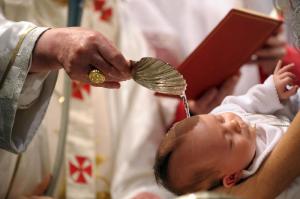
Photo credit:  http://www.holyangelssturgis.org/sacraments/baptism/

Photo credit: http://www.holyangelssturgis.org/sacraments/baptism/

At St. Margaret’s we are in the middle of two big weeks.  This past Sunday we baptized twin girls and this coming Sunday we are baptizing another baby girl.  It is fairly rare for our parish to have back-to-back baptisms.  For the Altar Guild, that has meant that the same paraments can stay on the altar, the Pascal Candle can stay in the sanctuary, and flowers will be equally festive.  For the liturgical leaders it means that the occasionally used service is much more familiar as we head into this weekend – we should not need as much preparation and should be primed for who is holding what and when (it turns out there is a lot of choreography when it comes to liturgy!).  And for the parish, the liturgy will be very familiar and they will be ready for their big line, “We will!” when it is their turn to affirm that they will do all in their power to support these persons in their life in Christ.

But just because this coming Sunday feels familiar or even repetitive, nothing about it is rote.  That is the thing about baptisms:  although everything surrounding the day is the same, the experience is totally unique.  In the Episcopal Church, we only baptize once.  A baptism is a once-in-a-lifetime experience, something that is tremendously significant and special.  Nothing can invalidate our baptism.  Once we are welcomed into the household of God, nothing the person does can take away that status.  Baptism is a big deal.

I have often heard it said that you should never miss a funeral.  A funeral only happens once, and is something you can never recreate.  Though many of us fear what to say or do or how to approach the family, just being there becomes a blessing to the bereaved and to you.  It is a practice many have come to value:  always go to the funeral.  In fact, I began to embrace that mantra fully after seeing this story.

I think the same can be said of a baptism.  Though the liturgy is always the same, the liturgy says and does something very important.  It is not about the pretty dresses or handsome outfits.  It is about a sacred thing that happens.  It is about committing to a way of life – declaring the importance of faith in one’s life and agreeing to live in a certain way.  It is about renewing our own commitment to our baptismal covenant – something that, if done regularly, could probably help us change the world.  And it is about standing tall as a community, and taking ownership for the ways in which we form one another.  When we jubilantly say, “We will!”, our commitment is to being a community that lives life in a radically different way – in seeking Jesus, in serving Jesus, and in sharing Jesus.  When we stand at the font as a community we are claiming a radical identity that changes everything in our lives.  Something bold, invigorating, and life-giving happens at baptism.  You may think that if you have seen one baptism, you have seen them all.  On the contrary, I suggest that each one has a unique way of transforming us in Christ.  For the health of ourselves, the community, and the newly baptized, we need to be at the baptism as much as the family wants us to be there.  Always go to the baptism.  It will change your life.

Sermon – Mark 5.21-43, P8, YB, June 28, 2015

01 Wednesday Jul 2015

Posted by jandrewsweckerly in Uncategorized

≈ Leave a comment

Tags

baptism, Christ, communion, community, doubt, faith, God, hemorrhaging woman, Jairus' daughter, Jesus, powerful, saints, strong, weakness, witness, women

Today we are surrounded by some powerful women.  Many of you do not know Charlotte and Piper, who we are baptizing today, but they came into the world fighting.  While they were in the womb, their lives were threatened.  Doctors were able to operate in the womb at twenty-one weeks to ensure their survival.  Despite that help, they were born early and very tiny, but amazingly, had to have very little medical support.  Once they gained weight, they were able to come home and enjoy a healthy infancy.  My guess is that the strength these two children of God harnessed is what has pulled them through – a strength that their parents might regret when they hit their teenage years!

When we baptize Charlotte and Piper, we will baptize them into a communion full of strong saints – women who have paved the road before them, who have shown great faithfulness and strength, and who will serve as mentors and guides in their earthly pilgrimage.  We meet a couple of those women today.  First we meet Jairus’ daughter through her father.  Now, we might not think of her as a strong woman, since she is near death, but this young woman was powerful nonetheless.  She evokes such devotion in her father that he, a synagogue leader, is willing to bow down to the controversial Jesus and beg for healing for his dying daughter.  Jairus’ love for this powerful young woman made him willing to cross boundaries, to show vulnerability, and put great faith in Jesus.  We also know that Jairus’ daughter is twelve, about the age that women start menstruating, making them capable of producing life – one of the most powerful gifts of nature.  Though she is at death’s door, her power as a woman and as an individual bring people like Jesus to her, so that she might be restored to wholeness of life.

Of course, we also meet another strong woman today.  By all accounts, this woman should not have been strong.  In those days, menstruation alone meant that women had to be separated from the community for a period of time for ritual impurity.  But to have been bleeding for twelve years means that this woman has been ostracized from others for as long as Jairus’ daughter has been alive.  Furthermore, she spent all her money trying to obtain healing from doctors.  Her poverty and her impurity make her a double outcast.[i]  But this woman will not quit.  She boldly steps into a crowd (likely touching many people that she ritually should not) and she grabs on to Jesus’ clothing, knowing that simply by touching Jesus she can be healed.  She does not ask Jesus to heal her or mildly whisper among the crowds, “Excuse me Jesus, could you please heal me?”  No, she takes matters into her own hands, and though Jesus demands to speak with her, her own determination and faith make her whole.

In many ways, the baptism that we witness today is a same expression of strength and faith.  When we are baptized, we (or in the case of infants our parents and godparents) boldly claim the life of faith.  We renounce the forces of evil and we rejoice in the goodness of God.  We promise to live our life seeking and serving Christ, honoring dignity in others, and sharing Christ in the world.  This action is not a meek or mild one.  This action is an action of boldness – one in which we stand before the waters of baptism, and stake our claim in resurrection life.

Now, here’s the good news:  even though we are surrounded by powerful women today and we are doing and saying powerful things, we do not always have to be strong.  All the women we honor today are strong – but they have moments of weakness too.[ii]  I am sure over the course of twelve years, the hemorrhaging woman has doubts.  As bold as she is today, I am sure there are moments when she fears – maybe even that day – whether she could really reach out and claim Jesus’ power as her own.  And as Jairus’ daughter feels the life fade from her, I am sure she doubts.  I am sure she wonders whether she will ever be able to claim the life-force that is budding inside of her or to live a long life honoring her parents.  And though Charlotte and Piper have been warriors thus far in life, they will both have their own doubts and weaknesses.  In fact, that is why we as a congregation today promise that we will do all in our power to support them in their life in Christ.  That is why her parents and godparents promise by their prayers and witness to help them grow into the full stature of Christ.  That is the good news today.  For all the moments of strength that we honor in one another, we also honor the doubts, fears, and weaknesses.  God is with us then too, and gives us the community of faith to keep us stable until we can be strong witnesses again.  Amen.

[i] Mark D. W. Edington, “Theological Perspective,” Feasting on the Word, Yr. B, Vol. 2 (Louisville:  Westminster John Knox Press, 2009), 190.

[ii] David Lose, “Come As You Are,” June 24, 2012 at https://www.workingpreacher.org/craft.aspx?post=1493 found on June 25, 2015.

← Older posts
Newer posts →

Recent Posts

  • On Sharing the Love…
  • Sermon – Micah 6.1-8, Matthew 5.1-12, EP4, YA, January 30, 2026
  • On Justice, Kindness, Humility, and the Messy Middle…
  • Feast of the Rev. Dr. Martin Luther King, Jr., January 18, 2026
  • On Peace, Love, and Conduits…

Archives

  • February 2026
  • January 2026
  • December 2025
  • November 2025
  • October 2025
  • September 2025
  • August 2025
  • July 2025
  • June 2025
  • March 2025
  • February 2025
  • December 2024
  • November 2024
  • October 2024
  • September 2024
  • August 2024
  • July 2024
  • June 2024
  • May 2024
  • March 2024
  • February 2024
  • January 2024
  • December 2023
  • November 2023
  • October 2023
  • September 2023
  • August 2023
  • July 2023
  • June 2023
  • May 2023
  • March 2023
  • February 2023
  • January 2023
  • December 2022
  • November 2022
  • October 2022
  • June 2022
  • May 2022
  • January 2022
  • December 2021
  • November 2021
  • October 2021
  • September 2021
  • August 2021
  • June 2021
  • May 2021
  • April 2021
  • March 2021
  • February 2021
  • January 2021
  • December 2020
  • November 2020
  • October 2020
  • September 2020
  • August 2020
  • July 2020
  • June 2020
  • May 2020
  • April 2020
  • March 2020
  • February 2020
  • January 2020
  • December 2019
  • November 2019
  • October 2019
  • September 2019
  • August 2019
  • July 2019
  • June 2019
  • May 2019
  • April 2019
  • March 2019
  • February 2019
  • January 2019
  • December 2018
  • November 2018
  • October 2018
  • September 2018
  • August 2018
  • July 2018
  • June 2018
  • May 2018
  • April 2018
  • March 2018
  • February 2018
  • January 2018
  • December 2017
  • November 2017
  • October 2017
  • September 2017
  • August 2017
  • July 2017
  • June 2017
  • May 2017
  • April 2017
  • March 2017
  • February 2017
  • January 2017
  • December 2016
  • November 2016
  • October 2016
  • September 2016
  • August 2016
  • July 2016
  • June 2016
  • May 2016
  • April 2016
  • March 2016
  • February 2016
  • January 2016
  • December 2015
  • November 2015
  • October 2015
  • September 2015
  • August 2015
  • July 2015
  • June 2015
  • May 2015
  • April 2015
  • March 2015
  • February 2015
  • January 2015
  • December 2014
  • November 2014
  • October 2014
  • September 2014
  • August 2014
  • July 2014
  • June 2014
  • April 2014
  • March 2014
  • February 2014
  • January 2014
  • December 2013
  • November 2013
  • October 2013
  • September 2013
  • August 2013
  • July 2013
  • June 2013
  • May 2013
  • April 2013
  • March 2013
  • February 2013
  • January 2013
  • December 2012
  • November 2012
  • October 2012
  • September 2012

Categories

  • reflection
  • Sermons
  • Uncategorized

Meta

  • Create account
  • Log in
  • Entries feed
  • Comments feed
  • WordPress.com

Blog at WordPress.com.

  • Subscribe Subscribed
    • Seeking and Serving
    • Join 395 other subscribers
    • Already have a WordPress.com account? Log in now.
    • Seeking and Serving
    • Subscribe Subscribed
    • Sign up
    • Log in
    • Report this content
    • View site in Reader
    • Manage subscriptions
    • Collapse this bar
 

Loading Comments...