• About

Seeking and Serving

~ seek and serve Christ in all persons

Seeking and Serving

Tag Archives: faith

Sermon – Mark 6.1-13, P9, YB, July 5, 2015

08 Wednesday Jul 2015

Posted by jandrewsweckerly in Uncategorized

≈ Leave a comment

Tags

baptism, Christian, covenant, disciples, faith, identity, Jesus, liturgy, protection, purpose, seek, Sermon, serve, share, vulnerability

A few weeks ago, as we were planning liturgies, we were discussing the fact that we had two baptisms in a row – last Sunday and today.  A few people in the group kind of groaned, “Two in a row?!?”  I laughed at the time.  But the more I thought about their exasperation, the more I wondered why they were exasperated.  Certainly baptisms can take longer.  Between the blessing of the water, the renewal of vows, and the baptism itself, the service is a bit longer.  And perhaps to groan came out of a place of wanting to spread out the requency of special services – much like one rations out Halloween candy instead of eating it all at once.  But the more I thought about having two baptisms in a row, the more I liked the idea; in fact, the more I thought about the baptismal liturgy, I began to wish we had one every Sunday.

Now before you all issue a collective groan of exasperation, let me explain.  You see, the baptismal liturgy is one of those foundational liturgies.  In baptism, we ritually welcome someone into the family of faith.  But the baptismal liturgy is about more than the cute baby (though Rose is very cute, I admit!).  The baptismal liturgy is the time when we declare who we are, how we are to live, and how we will accomplish that ideal.  In this liturgy, we retell the story of our history – how God moved over the waters in creation, how God split the waters to free the enslaved people of Israel, and how God used the waters of baptism to mark a new way through Jesus’ own baptism.  In this liturgy, we also talk about our nature – how we are prone to sin, how we (despite the fact that we are saved by the waters of baptism) are on a continual journey of repenting and returning to the Lord, and how we need each other if we are ever to keep turning toward God.  In this liturgy, we also declare the radical way that we will live our lives in Christ – what being a Christian actually means.  Being a Christian means regularly gathering to learn together, to pray together, to eat at the Holy Table together, and to join in fellowship together.  Being a Christian means sharing the good news with others – not just by example, but by our words too.  Being  a Christian means seeking and serving Christ in others, loving our neighbor, striving for justice and peace, and respecting the dignity of others.  I don’t know about you, but regular worship, regular evangelism, and regular mission sounds like a lot of work!  And yet, here we are (for the second week in a row!) proclaiming that we will do these things.

So if today is all about defining who we are and who we are going to shape little Rose into being, what might be the best way for us to prepare her for her new life in Christ?  Some of us might imagine the story we heard a few weeks ago about David and Goliath.  If you remember, David was just a boy who agreed to take on the enormous Goliath, that everyone feared.  When King Saul agrees to let David fight Goliath, he first wants to suit up David.  Saul clothes David with Saul’s armor; he puts a bronze helmet on David’s head and clothes him with a coat of mail.  By the time Saul puts his sword over the armor, David cannot even walk!  David realizes the protection weighs him down.  So he removes the armor and weapon and instead takes only a staff, five smooth stones in his shepherd’s bag, and his sling.  Goliath (and if we are honest, probably everyone else gathered, including the people of God) laughs at David’s puny preparation.  The funny thing is that in our gospel lesson today, Jesus does the same thing for the disciples when he commissions them to go out in the world.  Jesus tells them to take nothing for their journey except a staff; no bread, no bag, no money in their belts; they get a staff, one pair of sandals, and one tunic.

When we think about preparing ourselves for the life of faith – of going out into the world to seek Christ, serve Christ, and share Christ – most of us think about preparing the way that Saul prepares David.  We want some armor for all those times that we are rejected when we share our faith; we want a sword in case we run into trouble while seeking Christ; we want some heavy mail so that when we serve others, nothing or no one gets too close[i]  But instead, Jesus sends out the disciples with a staff to steady their walking as they share the good news, a pair of sandals and one tunic so that they can humbly encounter others as they serve Christ, and empty hands and bellies so that they can seek Christ in others.  On this day when we proclaim who we are and how we will live, one might imagine that we are readying ourselves and gathering our supplies, and especially that we are arming this small, vulnerable child for walking the way of Christ.  But instead, Jesus basically tells us that there is no way to protect ourselves; there is no way to prepare.[ii]  We go with our trust in the Lord, with vulnerability, and with a sense of identity and purpose.

That is why I think we could stand to have baptism Sunday every Sunday.  Our tendency would be to find the biggest backpack we can and load that bag with all the things we think we need for our journey.  But Jesus tells us to put that bag down and start walking:  walking the way, the truth, and the light; walking by seeking, serving, and sharing Christ.  In many ways Rose has more to teach us today than we have to teach her.  She came into this world with very little.  In fact, she even came here with very little – sure her parents might have a monster diaper bag with all the “just in case” stuff babies often need.  But Rose herself cannot carry a bag; she is not self-sufficient; she is vulnerable with us all.  Instead of giving Rose an armor for Christ today, she encourages us to take off our armor and swords, and get back to the basics: our staff, sandals, and tunic.  That is the beauty of baptism.  Baptism helps us remember that we need each other.  Rose needs us to teach her the way.  We need her to teach us how to gat back to basics.  Together we find our way to living the faithful life in Christ.  Thanks be to God!  Amen.

[i] Michael L. Lindvall talks about the anxiety that evangelism produces in all of us in his article, “Pastoral Perspective,” Feasting on the Word, Yr. B, Vol. 2 (Louisville:  Westminster John Knox Press, 2009), 216.

[ii] C. Clifton Black, “Commentary on Mark 6:1-13,” July 5, 2015, as found at http://www.workingpreacher.org/preaching.aspx?commentary_id=2502 on July 2, 2015.

Always go to the baptism…

01 Wednesday Jul 2015

Posted by jandrewsweckerly in Uncategorized

≈ Leave a comment

Tags

baptism, bold, community, faith, funeral, Jesus, journey, life-giving, radical, transformation

Photo credit:  http://www.holyangelssturgis.org/sacraments/baptism/

Photo credit: http://www.holyangelssturgis.org/sacraments/baptism/

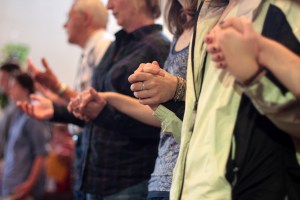
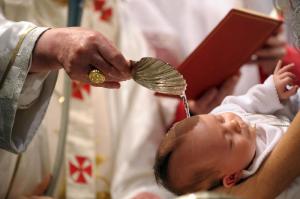
At St. Margaret’s we are in the middle of two big weeks.  This past Sunday we baptized twin girls and this coming Sunday we are baptizing another baby girl.  It is fairly rare for our parish to have back-to-back baptisms.  For the Altar Guild, that has meant that the same paraments can stay on the altar, the Pascal Candle can stay in the sanctuary, and flowers will be equally festive.  For the liturgical leaders it means that the occasionally used service is much more familiar as we head into this weekend – we should not need as much preparation and should be primed for who is holding what and when (it turns out there is a lot of choreography when it comes to liturgy!).  And for the parish, the liturgy will be very familiar and they will be ready for their big line, “We will!” when it is their turn to affirm that they will do all in their power to support these persons in their life in Christ.

But just because this coming Sunday feels familiar or even repetitive, nothing about it is rote.  That is the thing about baptisms:  although everything surrounding the day is the same, the experience is totally unique.  In the Episcopal Church, we only baptize once.  A baptism is a once-in-a-lifetime experience, something that is tremendously significant and special.  Nothing can invalidate our baptism.  Once we are welcomed into the household of God, nothing the person does can take away that status.  Baptism is a big deal.

I have often heard it said that you should never miss a funeral.  A funeral only happens once, and is something you can never recreate.  Though many of us fear what to say or do or how to approach the family, just being there becomes a blessing to the bereaved and to you.  It is a practice many have come to value:  always go to the funeral.  In fact, I began to embrace that mantra fully after seeing this story.

I think the same can be said of a baptism.  Though the liturgy is always the same, the liturgy says and does something very important.  It is not about the pretty dresses or handsome outfits.  It is about a sacred thing that happens.  It is about committing to a way of life – declaring the importance of faith in one’s life and agreeing to live in a certain way.  It is about renewing our own commitment to our baptismal covenant – something that, if done regularly, could probably help us change the world.  And it is about standing tall as a community, and taking ownership for the ways in which we form one another.  When we jubilantly say, “We will!”, our commitment is to being a community that lives life in a radically different way – in seeking Jesus, in serving Jesus, and in sharing Jesus.  When we stand at the font as a community we are claiming a radical identity that changes everything in our lives.  Something bold, invigorating, and life-giving happens at baptism.  You may think that if you have seen one baptism, you have seen them all.  On the contrary, I suggest that each one has a unique way of transforming us in Christ.  For the health of ourselves, the community, and the newly baptized, we need to be at the baptism as much as the family wants us to be there.  Always go to the baptism.  It will change your life.

Sermon – Mark 5.21-43, P8, YB, June 28, 2015

01 Wednesday Jul 2015

Posted by jandrewsweckerly in Uncategorized

≈ Leave a comment

Tags

baptism, Christ, communion, community, doubt, faith, God, hemorrhaging woman, Jairus' daughter, Jesus, powerful, saints, strong, weakness, witness, women

Today we are surrounded by some powerful women.  Many of you do not know Charlotte and Piper, who we are baptizing today, but they came into the world fighting.  While they were in the womb, their lives were threatened.  Doctors were able to operate in the womb at twenty-one weeks to ensure their survival.  Despite that help, they were born early and very tiny, but amazingly, had to have very little medical support.  Once they gained weight, they were able to come home and enjoy a healthy infancy.  My guess is that the strength these two children of God harnessed is what has pulled them through – a strength that their parents might regret when they hit their teenage years!

When we baptize Charlotte and Piper, we will baptize them into a communion full of strong saints – women who have paved the road before them, who have shown great faithfulness and strength, and who will serve as mentors and guides in their earthly pilgrimage.  We meet a couple of those women today.  First we meet Jairus’ daughter through her father.  Now, we might not think of her as a strong woman, since she is near death, but this young woman was powerful nonetheless.  She evokes such devotion in her father that he, a synagogue leader, is willing to bow down to the controversial Jesus and beg for healing for his dying daughter.  Jairus’ love for this powerful young woman made him willing to cross boundaries, to show vulnerability, and put great faith in Jesus.  We also know that Jairus’ daughter is twelve, about the age that women start menstruating, making them capable of producing life – one of the most powerful gifts of nature.  Though she is at death’s door, her power as a woman and as an individual bring people like Jesus to her, so that she might be restored to wholeness of life.

Of course, we also meet another strong woman today.  By all accounts, this woman should not have been strong.  In those days, menstruation alone meant that women had to be separated from the community for a period of time for ritual impurity.  But to have been bleeding for twelve years means that this woman has been ostracized from others for as long as Jairus’ daughter has been alive.  Furthermore, she spent all her money trying to obtain healing from doctors.  Her poverty and her impurity make her a double outcast.[i]  But this woman will not quit.  She boldly steps into a crowd (likely touching many people that she ritually should not) and she grabs on to Jesus’ clothing, knowing that simply by touching Jesus she can be healed.  She does not ask Jesus to heal her or mildly whisper among the crowds, “Excuse me Jesus, could you please heal me?”  No, she takes matters into her own hands, and though Jesus demands to speak with her, her own determination and faith make her whole.

In many ways, the baptism that we witness today is a same expression of strength and faith.  When we are baptized, we (or in the case of infants our parents and godparents) boldly claim the life of faith.  We renounce the forces of evil and we rejoice in the goodness of God.  We promise to live our life seeking and serving Christ, honoring dignity in others, and sharing Christ in the world.  This action is not a meek or mild one.  This action is an action of boldness – one in which we stand before the waters of baptism, and stake our claim in resurrection life.

Now, here’s the good news:  even though we are surrounded by powerful women today and we are doing and saying powerful things, we do not always have to be strong.  All the women we honor today are strong – but they have moments of weakness too.[ii]  I am sure over the course of twelve years, the hemorrhaging woman has doubts.  As bold as she is today, I am sure there are moments when she fears – maybe even that day – whether she could really reach out and claim Jesus’ power as her own.  And as Jairus’ daughter feels the life fade from her, I am sure she doubts.  I am sure she wonders whether she will ever be able to claim the life-force that is budding inside of her or to live a long life honoring her parents.  And though Charlotte and Piper have been warriors thus far in life, they will both have their own doubts and weaknesses.  In fact, that is why we as a congregation today promise that we will do all in our power to support them in their life in Christ.  That is why her parents and godparents promise by their prayers and witness to help them grow into the full stature of Christ.  That is the good news today.  For all the moments of strength that we honor in one another, we also honor the doubts, fears, and weaknesses.  God is with us then too, and gives us the community of faith to keep us stable until we can be strong witnesses again.  Amen.

[i] Mark D. W. Edington, “Theological Perspective,” Feasting on the Word, Yr. B, Vol. 2 (Louisville:  Westminster John Knox Press, 2009), 190.

[ii] David Lose, “Come As You Are,” June 24, 2012 at https://www.workingpreacher.org/craft.aspx?post=1493 found on June 25, 2015.

Seeing dignity…

24 Wednesday Jun 2015

Posted by jandrewsweckerly in Uncategorized

≈ Leave a comment

Tags

baptism, brokenness, difficult, dignity, faith, human being, humanity, joy, laughter, The Intouchables

Photo credit: http://ourfaithinaction.net/2012/the-intouchables/the-intouchables-movie-poster-3/

Photo credit: http://ourfaithinaction.net/2012/the-intouchables/the-intouchables-movie-poster-3/

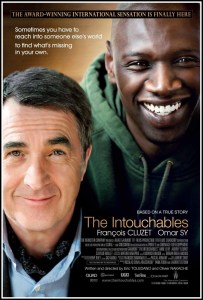
This weekend I finally saw The Intouchables, a 2011 film based on the true story of a French, wealthy quadriplegic who hires a man convicted of petty theft to be his caregiver.  The quadriplegic, Philippe, has been through many caregivers.  He is a widower who lost the use of most of his body in a paragliding accident.  He is bitter and does not like the way that most highly-skilled caregivers treat him more like a patient than a person.  Meanwhile, Driss applies for the job simply to obtain governmental unemployment benefits, assuming that Philippe will never hire him.  Philippe is intrigued by this man who shows him little respect, and hires Driss.  The two begin a relationship that is different than any either of them had known.  Philippe is finally able to rediscover a joy for life and reimagine what his life can be.  Meanwhile, Driss begins to see that he can have value too – that perhaps he can start anew with life, providing for his family and having a new sense of self-worth.

What I loved about this film was two-fold.  First, I had anticipated this being a sober, but triumphal movie.  Instead, I found myself laughing throughout the film – not at a slapstick humor, but at the kind of humor one develops when things get so bad that laughter is both the inappropriate and most appropriate thing to do.  It is an irreverent humor that only two characters who have been pushed to the margins can deeply enjoy, and yet, those outcasts invite us in to our own darkness and bring us out with laughter.  The second thing I loved about this movie is the way in which each character was able to see humanity in one who had been stripped of their humanity.  For Philippe, his physical disability had taken away his ability to full participate in society.  Society struggled to see any value in him beyond his money – which is not a value for which anyone wants to be known.  For Driss, he was a criminal who was unable to hold down a job and be a responsible citizen.  Society struggled to see any value in him, leaving him limited options.  And yet, in Philippe, Driss was able to unearth an adventurous, funny, sarcastic man of compassion and fortitude.  And in Driss, Philippe was able to unearth a sympathetic, strong, talented man of wisdom and grace.  In essence, they could see the humanity in one another.

When we reaffirm our baptismal covenant, one of the promises we make is to respect the dignity of every human being.  Over and over we make that promise, and yet I think it is one of the hardest things we promise to do.  It is very difficult to respect the dignity of the guy who cuts you off in traffic.  It is very difficult to respect the dignity of your family member who constantly puts you down.  It is very difficult to respect the dignity of the man who kills nine Christians in a church because of their race.  This past Sunday, as we were editing the Prayers of the People, I found I had no problem listing the names of the deceased from Charleston.  Where I struggled was adding the killer’s name to our list too.  That action went against every instinct in my body, and yet, some small ache made me feel like I had to add him too.

Respecting the dignity of every human being is not a one-time action.  It takes a lifetime of practice.  We fail at it all the time, but we keep recommitting to the work because we promised we would at our baptism.  What encouraged me about that work this week, was the relationship between Philippe and Driss.  Watching two men, so dramatically different, and yet similar in the way that society treated them as outcasts, heartily laugh from the depths of their souls gave me hope.  They gave me hope that I might see the dignity of others through my own brokenness.  The promise for my work is that I too would find the joy that only hearty, full-bodied laughter can bring.

Sermon – John 15.9-17, E6, YB, May 10, 2015

20 Wednesday May 2015

Posted by jandrewsweckerly in Uncategorized

≈ 2 Comments

Tags

abundance, choice, disciples, faith, friends, guilt, Jesus, joy, love, obligation, parent, Sermon

One of my favorite television shows was a show called Gilmore Girls.  Gilmore Girls captured the story of the quirky relationship between a single-mom and her teenage daughter, and the funny adventures that happened to them in their small town.  One of my favorite scenes from that show was an episode in which the daughter was celebrating her birthday.  First thing that morning, the mother tiptoed into her daughter’s room, snuggled in her bed, and began her yearly ritual of retelling her birth story.  “Once upon a time, a long time ago, a scared, pregnant woman entered the hospital with contractions.”  Based on the way the story begins and the tone in the mom’s voice, the viewers all think this is going to be a tender moment between mother and child, where the mom will describe the way her heart filled with joy when she looked into her daughter’s eyes.  Instead, the mother proceeds to tell the gory, painful story in graphic detail, basically intimating that the daughter should feel indebted to her mother for the great burden of her birth, and every year the child should celebrate the work her mother did to birth her, instead of the mother needing to joyfully celebrate the daughter.

The audience chuckles at the scene because we all know that mother.  This is the mother who says, “I was in labor for 60 hours with you…the least you could do is…”  Or the mother who says, “Oh you think that is hard?  Try giving birth naturally to a nine-pound baby and then tell me what hard is!!”  This kind of guilt-based love never really feels like love.  The response guilt-based love gets is something done out of obligation, not out of joy or devotion.

The funny thing is that in many ways, that guilt-based love is what we hear from Jesus in our gospel lesson today.  Jesus says, “This is my commandment, that you love one another as I have loved you.  No one has greater love than this, to lay down one’s life for one’s friends.”  When I think about Jesus, I do not think of him as a coercive parent.  And yet, his language, especially about his death and resurrection can sound exactly like that.  You can almost hear the nagging parent, “I hung on a cross until midday and died for your sins.  The least you could do is love one another as I loved you!!”  And what is so frustrating is that there is no comeback line to that logic.  There is no way for us to come back to Jesus and argue, “Well, that was a different time period.  If you had lived today, that would not have happened.”  Or, “But your death wasn’t all that bad, and you did rise again, so really, we don’t need to feel that guilty because your death was a necessary evil.”  Those whining excuses do not hold water, and we are left manipulated into a sense of obligation, because, really, who can argue with Jesus?  He did die for our sins, and there is no way to repay him.

When we think about our faith, more often than not the lessons we learn are guilt-based.  Even our most basic “Golden Rule:  Do unto others as you would have them do unto you,” is a lesson based on guilt.  When we are reminded of that rule, and we think about how we feel when someone hurts us, we guiltily stop our negative behavior.  But the guilt is not limited to our faith.  Our behavior in friendships is often dictated by guilt and obligation.  She always buys me a gift for Christmas, so I should buy her a gift too – even when we know neither of us needs gifts.  They had us over for dinner and served nice wine, so now we need to invite them to our place and pick up a similar vintage.  He gave party favors at his party, so we need to give party favors at our party too.  We get so caught up in the obligations of life that we lose touch with joy – the joy of our faith, of our friends, of our life.

Here’s the problem with guilt:  guilt creates a false sense of agency.  In other words, after we experience guilt, we come to believe that we have the power, and in the case of guilt, the need, to work harder to achieve something better.  When we first read our gospel lesson, the lesson seems laced with guilt.  Upon first glance, Jesus seems to be telling us over and over all the things we need to do to be better – to love better.  But that assumption could not be farther from the truth.  Jesus says three things that show us how his love is not a manipulative, guilt-inducing love, but a freely given and freeing love.  First, Jesus explains that he wants the disciples to abide in his love and to love others because he wants his joy to be in them, so that their joy may be complete.  I hear Jesus’ words this way, “Don’t love because you feel like you have to or because you feel like you should.  Love because loving will give you joy.  This joy is no ordinary ‘happiness’[i] – a fleeting feeling like the one you get from a great piece of chocolate.  This joy runs deep and can be a well that you can keep drawing from, even after happiness is long gone.  I know because I have this joy – and I want to give that joy to you.”  Jesus does not guilt us into a particular behavior because we should behave that way.  He wants us to know and feel the deep joy he has and he knows the way to get there – through love.

Second, Jesus renames the disciples as friends.  He says, “I do not call you servants any longer, because the servant does not know what the master is doing; but I have called you friends, because I have made known to you everything that I have heard from my Father.”  As one scholar explains, in Jesus’ day, “to be called a ‘slave’ of a good master was not denigrating, and it could even be a title of respect.  But still a ‘slave’ was not on the same level as a friend.  A slave’s status obligated him to support a master through difficult times, but a friend would do it freely, for reasons of mutual commitment and affection.”[ii]  Jesus is not offering a promotion in order to garner favor with the disciples.  Jesus is pointing to a reality that has already occurred, and that reality shifts the motivation behind all that they do.  The love Jesus talks about giving is not out of a sense of obligation due to an unequal relationship, but out of a sense of abundance that comes from intimate, loving equality and mutuality.

Finally, Jesus reminds the disciples that the love they experience in him is not out of a sense of obligation because of their relationship, or even because the disciples must do something to receive that love.  No, Jesus says, “you did not choose me but I chose you.”  This is different from the love of a mother or father for a child.  A child never chooses their parents, but parents also do not get to choose their children.  But here, Jesus chooses the disciples.  Jesus sees their inadequacies, their weaknesses, their imperfections, and he chooses them anyway.  They do not earn his love; they do not even earn their discipleship.  Jesus chooses them.  Jesus loves them first.  They do not earn that love or owe anything for that love.  Jesus chooses them – again and again.

When we hear Jesus’ words more clearly – when we hear the great abundance behind his words, suddenly our sense of guilt disappears.  When we understand that we are Jesus’ friends, that we are chosen by Jesus, and that Jesus simply wants us to know the same joy that he knows, all those commandments – which basically boil down to love anyway – are not burdens or actions done out of guilt.[iii]  Those commandments are what we do because we are so overwhelmed by how we are loved that the love spills out of us helping us to extend Christ-like friendship, love, and joy to others.  That behavior is not something we choose.  We do not choose to love our cranky neighbor.  We do not choose to love that parishioner who always seems to know how to irritate and downright anger us sometimes.  We do not choose to love that homeless person on the street.  We could not fake that kind of love if we were guilted or even if we wanted to give that love.  We can only approach that kind of love because when we know Christ – as his friend – the friend who chooses us before we ever choose him – the friend who longs for us to know deep, abiding joy – when we know that Christ, the love we need oozes out of us despite ourselves.  We find ourselves doing ridiculous things like taking that cranky neighbor a bowl of soup when we hear about their cancer treatments.  We do silly things like hug that frustrating parishioner really hard at the peace.  We do crazy things like giving our full wallet’s contents to the homeless person because suddenly how responsible they are with the money just doesn’t even matter anymore.  We cannot stop that love.  We cannot control that love.  We cannot even use that love judiciously.  That kind of love comes from a place in us unlike any other we know – a place free from guilt, obligation, and coercion.  Because although you were birthed through the waters of baptism, that birth will never be a reason for you to be guilted into anything.  Amen.

[i] Karoline Lewis, “Choose Joy,” May 3, 2015 as found at http://www.workingpreacher.org/craft.aspx?post=3608 on May 8, 2015.

[ii] Thomas H. Troeger, “Homiletical Perspective,” Feasting on the Word, Yr. B, vol. 2 (Louisville:  Westminster John Knox Press, 2008), 499.

[iii] Lawrence Wood, “Labors of Love,” Christian Century, vol. 120, no. 10, May 17, 2003.

Homily – Luke 6.27-36, Martin Luther King, Jr., January 15, 2015

21 Wednesday Jan 2015

Posted by jandrewsweckerly in Uncategorized

≈ Leave a comment

Tags

enemies, faith, grace, homily, Jesus, love, Martin Luther King, mercy, nonviolence, oppression, racism

Today we honor the life and work of The Rev. Dr. Martin Luther King, Jr.  Born on Jan. 15, 1929, Dr. King was the son and grandson of Baptist preachers.  After earning his Ph.D. in Systematic Theology from Boston University, he became pastor of a church in Montgomery, Alabama.  A year later, Dr. King was catapulted into national prominence as the leader of the Montgomery Bus Boycott initiated by Rosa Parks.  He was able to rally both whites and blacks with his nonviolent demonstrations and his ability to be an articulate prophet.  Dr. King’s work was instrumental to the passage of three Civil Rights acts in the 1960s.  He was constantly threatened, attacked, and jailed, but Dr. King refused to back down.  He was assassinated in Memphis in 1968 while advocating for local sanitation workers.

Dr. King was a man of tremendous faith, and I imagine he read the passage we heard today from Luke many times.  Jesus teaches those gathered to love:  love their enemies; love through non-violence; love by giving freely without expecting anything in return.  In a time when he had plenty of reasons to hate and be bitter, Dr. King chose love, over and over again.  When he was arrested, he loved; when he was stabbed, he loved; when he was threatened and his home bombed, he loved.

Malcolm X, a contemporary of Dr. King, disagreed with him on this point.  He did not believe in nonviolence.  He had seen too much pain, suffering, and degradation.  As his people were beaten, abused, and murdered, Malcolm X wanted to fight back.  Many people judge Malcolm X, saying he should have embraced nonviolence like Dr. King.  I think we judge because we have a hard time admitting that there is a part of us that is a fighter, too.  Nonviolence sounds fine until you are slapped in the face; nonviolence sounds romantic until your children are threatened; nonviolence sounds noble until you watch your brothers and sisters beaten and murdered.

What Dr. King does is inspire us – inspire us to live a Christ-like life in modern times.  We may be past segregation and legal oppression of people of color, but there is still racism and oppression, as seen by many recent cases in the news.  Jesus and Dr. King today invite us and remind us to be agents of love.  In a world that needs less violence, we can be agents of love, mercy and grace.  Amen.

Stepping out on faith…

23 Thursday Oct 2014

Posted by jandrewsweckerly in Uncategorized

≈ Leave a comment

Tags

ambiguity, confidence, control, faith, fear, generosity, God, hope, trust

Courtesy of http://blog.catchthesun.net/2014/09/computer-tools-for-copy-editors-macros/

Courtesy of http://blog.catchthesun.net/2014/09/computer-tools-for-copy-editors-macros/

Control is something I write about a lot.  Perhaps I write about it so much because I never quite master giving up my desire for control back to God.  I am reminded of the book, Divergent, by Veronica Roth.  In it, the dauntless faction seeks to master its fears through simulations.  In the book there is disagreement about whether fears can ever actually be mastered or whether the work is just recognizing the fear and its cues, and then modifying one’s bodily response to those fears.

If you asked me this week whether I was in the “never mastering fears” camp, the answer would be a resounding yes.  As someone who values control, my life has felt totally out of control this week.  It started with a standby jury summons – every day this week I could not know the fate of my day until 5:00 pm the night beforehand.  So I was already in a state of ambiguity, hoping my childcare arrangement for the day would work.  Then, just as the week was starting, I received a late night pastoral care call night, necessitating a visit in the wee hours of the night.  Two nights later my youngest daughter had one of “those” nights: uncontrollable crying, waking up everyone in the house, and leaving us all weary.  Even as I sit waiting to be called for voir dire, I wonder what will happen today.  Needless to say, this creature of control is being pushed to the limit.

This experience is especially interesting to me as I think about what is happening at St. Margaret’s.  We are approaching our Annual Meeting in December, where we present our budget for 2015.  We do not know what our pledges will be this year yet, especially because some of our older members are quite frail.  So during budget planning, our Vestry had to step out on faith with an estimated budget – in fact, a budget that expects a deficit.  And yet, here we are, stepping into the great unknown, praying that God and the people are with us.

As I plod through my stressfully ambiguous week, I appreciate what kind of ambiguity and risk our Vestry has assumed.  But I especially appreciate their faith, hope, and confidence.  They are inspiring us to embrace generosity – generosity of our time, talent, and treasure.  I am grateful for the powerful witness this week.  They are an inspiration to me and the entire parish.

Homily – Philippians 4.4-9, Psalm 34.1-8, Luke 6.17-23, Thomas a Kempis, July 24, 2014

21 Thursday Aug 2014

Posted by jandrewsweckerly in Uncategorized

≈ Leave a comment

Tags

faith, God, homily, power, song, Thomas a Kempis, words

Today’s lessons are all filled with song.  The New Testament lesson instructs, “Rejoice in the LORD always.”  That simple phrase has been sung by huge gospel choirs who sing, “Rejoice in the LORD always, again I say, rejoice!”  Our psalmist says, “Taste and see that the LORD is good.” Most of us know that familiar communion hymn, “Taste and see, taste and see, the goodness of the LORD…”  Finally we hear the Beatitudes as told by Luke, “Blessed are you who are poor.”  The a cappela group Sweet Honey in the Rock put the Beatitudes to song as well.  Their rendition of the Beatitudes is so beautiful that the words sound different once you have heard the group sing them.  Many of the hymns and songs we know and love are steeped in the words of scripture and breathe new life into words that may have become stale to us.

Thomas a Kempis knew something about the power of words.  Born Thomas Hammerken in 1380, Thomas was a member of the order of the Brethren of the Common Life.  The group cultivated a biblical piety that stressed the inner life and the practice of virtues.  Their spirituality has influenced both Catholic and Protestant traditions of prayer and meditation. But Thomas is mostly known for his writing.  “The Imitation of Christ” has been translated into more languages than any other book except the Holy Scriptures. Millions of Christians have found his work to be a true treasure.  Thomas used the power of words to inspire the faith of others for hundreds of years.

What Thomas and our lessons remind us of is the power of words to motivate faith.  Sometimes, as in our lessons today, we need the sound of song to make those words come alive.  Sometimes, we need the inspiration of a profound writer to make the words breathe anew.  Today we celebrate the blessing of Thomas and of the many writers and songwriters who have inspired our faith.  We thank God for these witnesses and their gift of words to us.  Amen.

The community of faith…

23 Wednesday Jul 2014

Posted by jandrewsweckerly in Uncategorized

≈ Leave a comment

Tags

baptism, children, Christian, community, faith, God, Jesus, love, raising

My oldest daughter attends a Lutheran preschool.  During the summer the school runs a camp that is more play-based.  What our family loves is that they keep the religious content present in both programs.  What I especially enjoy is discovering my daughter singing a religious song that I remember from childhood, but have not yet taught her myself.  Last week it was “I’ve got the joy, joy, joy, joy down in my heart…”  When I shouted out in response, “Where?!?” she started laughing.  Then I told her how her father knew the same song in Spanish, since he had learned it on a mission trip in high school.  All of a sudden the room was filled with bilingual singing about the love of Jesus being in our hearts.

Courtesy of http://anglicansablaze.blogspot.com/2010/07/small-membership-church-and-hunger-for.html

Courtesy of http://anglicansablaze.blogspot.com/2010/07/small-membership-church-and-hunger-for.html

What my daughter’s singing reminded me of is how dependent we are upon the community of faith to raise up our children.  Many of you may be thinking, “She’s a priest.  Does her daughter really need anyone else to teach her stuff about God?”  The answer is an emphatic, “Yes!”  Though my vocation involves teaching and preaching, it is the community of faith combined with our efforts at home that will expose our children to and reinforce for them the love that God has for them.  I cannot do it alone.

This past Sunday, our youngest daughter was baptized.  The bishop asked us and her godparents if we would be “responsible for seeing that the child you present is brought up in the Christian faith and life.”  We responded by saying “I will, with God’s help.”  But the bishop also asked the congregation gathered, “Will you by your prayers and witness help this child to grow into the full stature of Christ?”  Their response was the same.  I came away from the baptism feeling deeply appreciative of the fact that we have a community of people who have committed to helping us raise our child to know the love that God has for her and to help her live into Jesus’ life and example.  It was a deeply affirming and encouraging experience for us all.

That is the joy of belonging to a Christian community.  Though we all have individual responsibilities, we also regularly acknowledge how none of us can do this alone.  The community of faith comes together to raise us up, encourage us in doubt, comfort us in suffering, and then partner with us in raising our children.  I am grateful today for the blessing of Christian community both in my life and now in the lives of my children.  Thanks be to God!

Homily – John 17.17-23, Isabel Florence Hapgood, June 26, 2014

09 Wednesday Jul 2014

Posted by jandrewsweckerly in Uncategorized

≈ Leave a comment

Tags

Christ, disciples, expression, faith, God, homily, Isabel Florence Hapgood, worship

Today we honor Isabel Florence Hapgood.  Isabel was a lifelong Episcopalian who was a force behind ecumenical relations between Episcopalians and Russian Orthodoxy in the United States around the turn of the twentieth century.  Born in Massachusetts, she was a superior student, with an aptitude for languages.  She mastered Latin, French, Russian, Polish, and Church Slavonic.  She was able to translate subtleties of Russian into English, translating the works of Tolstoy and other greats.  She was also a prolific journalist.  It was travel in the late 1880s in Russia that cemented a lifelong love of Russia – especially the Russian Orthodox Church.  In fact, she loved its great Divine Liturgy so much that she got permission to translate the liturgies into English – work that was well received in Russia and in North America.  Her work for the common life among the Russian Orthodox in North America, her desire for closer relations between Russian Orthodox and Episcopalians, and her making the liturgical treasures of the Russian Orthodox tradition available to the English-speaking world has made her renowned.

Isabel saw what any of us have seen who have traveled.  Sometimes the faith expression of other groups helps us to see God more fully.  When I was in seminary, we were regularly responsible for leading prayers.  We often found ourselves in a section of the library that contained prayer books from around the world.  Popular favorites were from South Africa and New Zealand.  But others were influenced by Celtic worship or even the current English prayer book.  Somehow, other cultures’ liturgies helped us to see God and express our faith even better than we could through our own familiar patterns.

What Isabel and perhaps we were on to is hinted at in our gospel lesson today.  Jesus is praying for the disciples, that they may all be one.  Though I don’t think Jesus was anticipating the development of the church into various denominations, what his prayer hints at is that the Christian faith is one when we recognize Christ in one another – despite cultural and theological differences.

We experience that truth in the Plainview-Old Bethpage Interfaith group here.  Worshipping with other denominations and faiths helps us to see God more fully.  We experience that truth when we travel and worship in other churches and traditions.  Even our own worship is enhanced by our beautiful St. Margaret icon, painted by a Greek Orthodox iconographer.  Our experience of God is at its fullest when we recognize that we are all loved in and through Christ and we all reveal Christ to one another in big ways and small ways.  Amen.

← Older posts
Newer posts →

Recent Posts

  • On Redefining Community…
  • On Parenting, Milestones, and Community…
  • Sermon – Acts 2.42-47, E4, YA, April 26, 2026
  • On Seasons of Discernment…
  • Sermon – Luke 24.13-35, E3, YA, April 19, 2026

Archives

  • May 2026
  • April 2026
  • February 2026
  • January 2026
  • December 2025
  • November 2025
  • October 2025
  • September 2025
  • August 2025
  • July 2025
  • June 2025
  • March 2025
  • February 2025
  • December 2024
  • November 2024
  • October 2024
  • September 2024
  • August 2024
  • July 2024
  • June 2024
  • May 2024
  • March 2024
  • February 2024
  • January 2024
  • December 2023
  • November 2023
  • October 2023
  • September 2023
  • August 2023
  • July 2023
  • June 2023
  • May 2023
  • March 2023
  • February 2023
  • January 2023
  • December 2022
  • November 2022
  • October 2022
  • June 2022
  • May 2022
  • January 2022
  • December 2021
  • November 2021
  • October 2021
  • September 2021
  • August 2021
  • June 2021
  • May 2021
  • April 2021
  • March 2021
  • February 2021
  • January 2021
  • December 2020
  • November 2020
  • October 2020
  • September 2020
  • August 2020
  • July 2020
  • June 2020
  • May 2020
  • April 2020
  • March 2020
  • February 2020
  • January 2020
  • December 2019
  • November 2019
  • October 2019
  • September 2019
  • August 2019
  • July 2019
  • June 2019
  • May 2019
  • April 2019
  • March 2019
  • February 2019
  • January 2019
  • December 2018
  • November 2018
  • October 2018
  • September 2018
  • August 2018
  • July 2018
  • June 2018
  • May 2018
  • April 2018
  • March 2018
  • February 2018
  • January 2018
  • December 2017
  • November 2017
  • October 2017
  • September 2017
  • August 2017
  • July 2017
  • June 2017
  • May 2017
  • April 2017
  • March 2017
  • February 2017
  • January 2017
  • December 2016
  • November 2016
  • October 2016
  • September 2016
  • August 2016
  • July 2016
  • June 2016
  • May 2016
  • April 2016
  • March 2016
  • February 2016
  • January 2016
  • December 2015
  • November 2015
  • October 2015
  • September 2015
  • August 2015
  • July 2015
  • June 2015
  • May 2015
  • April 2015
  • March 2015
  • February 2015
  • January 2015
  • December 2014
  • November 2014
  • October 2014
  • September 2014
  • August 2014
  • July 2014
  • June 2014
  • April 2014
  • March 2014
  • February 2014
  • January 2014
  • December 2013
  • November 2013
  • October 2013
  • September 2013
  • August 2013
  • July 2013
  • June 2013
  • May 2013
  • April 2013
  • March 2013
  • February 2013
  • January 2013
  • December 2012
  • November 2012
  • October 2012
  • September 2012

Categories

  • reflection
  • Sermons
  • Uncategorized

Meta

  • Create account
  • Log in
  • Entries feed
  • Comments feed
  • WordPress.com

Blog at WordPress.com.

  • Subscribe Subscribed
    • Seeking and Serving
    • Join 391 other subscribers
    • Already have a WordPress.com account? Log in now.
    • Seeking and Serving
    • Subscribe Subscribed
    • Sign up
    • Log in
    • Report this content
    • View site in Reader
    • Manage subscriptions
    • Collapse this bar

Loading Comments...