• About

Seeking and Serving

~ seek and serve Christ in all persons

Seeking and Serving

Tag Archives: journey

On Things Hidden and Things Seen…

07 Wednesday Oct 2020

Posted by jandrewsweckerly in Uncategorized

≈ Leave a comment

Tags

empathy, God, grace, grief, hidden, journey, pain, pandemic, seen, strength, struggle, suffering

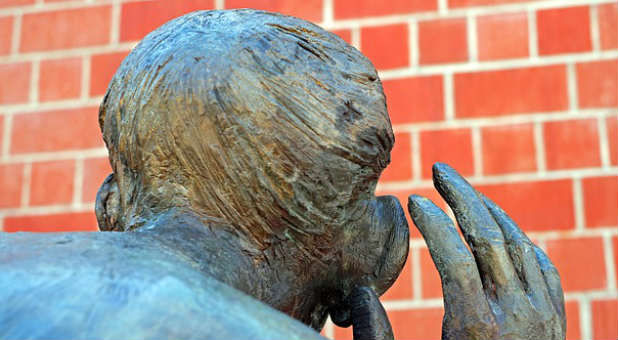
Photo credit: https://psychcentral.com/blog/how-to-sit-with-painful-emotions/

October is reserved for awareness about many issues:  infertility and child loss; breast cancer; domestic violence; and mental health.  What I noticed about all these issues is they are hidden – issues we do not talk about, have shame about, or are labeled as “private” and therefore off-limits.  And while I always like to respect people’s privacy or private grief, when we do not talk about these issues, we end up ignoring people’s pain or worse, robbing them of our empathy and support.  By hiding these issues away, we can do more damage than the issue itself.

I have seen a similar pattern with the Coronavirus.  Because we are physically isolated, we struggle to make space to honor the physical, emotional, spiritual, and financial strain of this time.  In my pastoral conversations, I have heard the grief of people who are physically or financially secure but are overcome with anxiety and depression.  I have talked with those who have lost jobs and are struggling with a sense of failure that has nothing to do with their abilities, effort, or achievements.  And I have reflected with others on how things slowly returning to a semblance of normalcy as we progress forward in phases of regathering in our communities makes them feel even more stress – as if they should feel normal too, but cannot seem to operate at full capacity.

In times like these –in infertility, infant loss, breast cancer diagnoses, domestic violence events, and mental health strains – but also most certainly during this pandemic, many of us are trying to show strength or an ability to power through, so much so that we avoid taking our suffering to God.  But that is not the kind of God we worship.  God does not expect an ability to be stronger than the pain and suffering of this world.  Instead, God longs to be invited into our pain, journeying with us, giving a comfort the world cannot provide.  This kind of relationship involves vulnerability and honesty – something that may be difficult for us.  If you find yourself in the midst of that struggle to trust God enough to show your weakness, or if you are feeling shame for your lack of empathy lately, I invite you to pray Psalm 139 with me this week, especially the first twelve verses.  I leave them here for your prayers, inviting you to be gracious with yourself, with your neighbor, and with the stranger.  Even if we do not know their struggles, God does.

Psalm 139.1-12

1 O Lord, you have searched me and known me.

2 You know when I sit down and when I rise up;

    you discern my thoughts from far away.

3 You search out my path and my lying down,

    and are acquainted with all my ways.

4 Even before a word is on my tongue,

    O Lord, you know it completely.

5 You hem me in, behind and before,

    and lay your hand upon me.

6 Such knowledge is too wonderful for me;

    it is so high that I cannot attain it.

7 Where can I go from your spirit?

    Or where can I flee from your presence?

8 If I ascend to heaven, you are there;

    if I make my bed in Sheol, you are there.

9 If I take the wings of the morning

    and settle at the farthest limits of the sea,

10 even there your hand shall lead me,

    and your right hand shall hold me fast.

11 If I say, “Surely the darkness shall cover me,

    and the light around me become night,”

12 even the darkness is not dark to you;

    the night is as bright as the day,

    for darkness is as light to you.

On Wanting to Go Back…

02 Tuesday Jun 2020

Posted by jandrewsweckerly in Uncategorized

≈ Leave a comment

Tags

ancestors, darkness, Egypt, faith, God, goodness, hard, help, Israelites, journey, lament, longing, pandemic, power, Promised Land, protest, romanticize, trust, wilderness

walkingdesert2_thumb

Photo credit:  http://www.livingintheshadowofhishand.com/2013/06/wandering-in-wilderness.html

The whole congregation of the Israelites complained against Moses and Aaron in the wilderness.    The Israelites said to them, “If only we had died by the hand of the Lord in the land of Egypt, when we sat by the fleshpots and ate our fill of bread; for you have brought us out into this wilderness to kill this whole assembly with hunger.”  (Exodus 16.2-3) 

The rabble among them had a strong craving; and the Israelites also wept again, and said, “If only we had meat to eat!  We remember the fish we used to eat in Egypt for nothing, the cucumbers, the melons, the leeks, the onions, and the garlic; but now our strength is dried up, and there is nothing at all but this manna to look at.”  (Numbers 11.4-6)


One of the cries we are prone to in these days is “I wish we could just go back to the way it was!”  I just did it myself in a sermon a few weeks ago, when I talked about how at the beginning of the pandemic, we were all chipping in and helping each other, but then slowly our demons had taken back over and we are becoming fractured and partisan again.  But we do it all the time.  The most famous may be our President’s campaign slogan, “Make American Great Again.”  I have heard the cry from former Senators and Congressmembers who have talked about the time when people worked “across the aisle” with compromise and collaboration.  As we have mourned social distancing and stay-at-home orders, this has especially become the cry of many of us in the Church.  And as violence rocks our country, many are asking protestors to quieten down and find other ways to make changes.

Of course, we are not alone in our lament and longing.  Our ancestors, the Israelites, were famous complainers in the wilderness, longing to go back to Egypt – the very place of their enslavement – because “at least they had food,” or they remember with longing the savory foods.  The hardness of the wilderness made them romanticize a life marked by brutality, oppression, and death.  Keeping an eye on the Promised Land was not so easy after years in the wilderness.

We are not unlike of ancestors.  In hoping to make America great again, we forget that any era of our history has been marked by darkness – whether the subjugation of the Indigenous peoples of this land, the enslavement, segregation, or oppression of African-Americans, the disenfranchisement and sexual subjugation of women, and on and on go the examples.  When we look at our current inability to work across party lines, we forget the ways in which women and people of color were wildly underrepresented in leadership – if represented at all!  Our current mourning of how Church used to be forgets the incredible ways technology has connected us to our neighbors, our extended community, and even strangers.   And both this pandemic and the protests about the treatment of persons of color are pulling back the curtains on disparities around wealth and opportunity for African-Americans.

What we learn from our biblical ancestors is that the wilderness is hard:  hunger, thirst, discomfort, and disagreements over power are real.  And yet, only in the wilderness did the faithful learn to trust God, to restructure leadership in shared ways, and find ways to govern themselves marked by justice and mercy.  As a person of privilege, I certainly have the option to turn off news coverage, wait this pandemic and the protests out, and stay ensconced in my place of power.  Or I can use this wilderness to learn, to be vulnerable, to use my power for goodness (or even better, cede some of my power), and to pray for God’s help on the journey.  It may be quite some time before we arrive at the Promised Land.  But we do not have to flee back to Egypt.


Sermon – John 13:1-17, 31b-35, MT, YA, April 9, 2020

23 Thursday Apr 2020

Posted by jandrewsweckerly in Sermons, Uncategorized

≈ Leave a comment

Tags

community, Coronavirus, disciples, grief, important, Jesus, journey, love, Maundy Thursday, pandemic, Sermon, tradition

I have been thinking about this night for a couple of weeks now.  Normally on this night, we wash each other’s feet, we share in what is a “Last Supper” for us until Easter, and then the church goes dark as the altar is stripped of every adornment.  This is a night for intimacy, vulnerability, and community.  But we are in this supremely odd moment where none of those things are allowed.  In this pandemic, we are avoiding the intimacy of touch; we are avoiding making ourselves vulnerable; we are avoiding gathering in community.  There is a way in which this very service, reminds us of the grief of this global moment.

But the more I thought about this gathering, the more I realized how well positioned we are this year to honor this night more powerfully than perhaps ever before.  In the course of just a few hours, the disciples and Jesus’ followers will be mourning the absence of his physical touch too.  Although we are not experiencing the intimacy of touch, we are experiencing the intimacy of a community gathered virtually.  Even in our homes, we are all turned to our devices, coming together from afar – creating a sense of community when we may feel like we do not have one.  And although we are not celebrating our traditional Maundy Thursday service, we are experiencing the tradition of Evensong – a service that is offered almost everyday in Cathedrals, Minsters, and colleges in the Mother Church in England.  In that way, tonight’s service brings us the comfort of a liturgical experience that has grounded the church for centuries.

If anything, living in the time of a pandemic, I believe we are beginning to find clarity about the ultimate importance of things – what really matters and what does not.  Jesus helps us see that tonight.  Strip away everything else, and Jesus concludes, “I give you a new commandment, that you love one another.  Just as I have loved you, you also should love one another.  By this everyone will know that you are my disciples, if you have love for one another.”  You may be thinking, “Great!  Another thing to do!”  But relax.  Here’s the good news tonight:  you’re already showing others you are Christ’s disciples.  I see you checking in on your neighbors and fellow parishioners.  I see you advocating for the disadvantaged and the vulnerable.  I see you supporting ministries financially in this uncertain time.  I see you praying for one another.  I see you doing your part to end the spread of this virus – whether you are a medical professional risking your own health, whether you are a healthy parishioner volunteering to get goods to those in need, or whether you are simply self-isolating.  We may be gathering virtually, but we are gathering in love, living as the faithful disciples Christ invited us to be – living as the faithful disciples you can be and are being.

As we journey further into the grief of this moment with Christ, and continue to journey into the grief of this pandemic, tonight we hold onto the life of love.  There is no better way to share intimacy, vulnerability, and community than to do exactly what we are doing in this moment.  Thanks be to God.  Amen.

Sermon – Ezekiel 37.1-14, John 11.1-45, L5, YA, March 29, 2020

01 Wednesday Apr 2020

Posted by jandrewsweckerly in Sermons, Uncategorized

≈ Leave a comment

Tags

change, Christ, Coronavirus, death, dry bones, exile, God, health, hope, Israel, Jesus, journey, Lazarus, life, normal, restoration, resurrection, Sermon, suffering

Today would be an easy day to skim the lessons and declare a victory.  We come to these texts today with cases of Coronavirus rising, deaths increasing, schools closing, jobs ending, and life stopping.  A simple drive down Richmond Road, and the restaurants and tourist stops whose parking lots are usually filled reveal a ghost town.  Even when we do venture out to grab necessities, the faces of people in stores are filled with anxiety, and bodies tense when spacing gets a little too close with others.  In this bizarre reality, we want nothing more than a breath of fresh air, a promise of hope and resurrection.

In many ways, that is exactly what we get in our lessons today.  Ezekiel shares a vision of resurrection and restoration.  The valley full of dry bones – presumably representing the people of Israel in exile in Babylon[i] – are brought back to life.  Through Ezekiel’s prophesying, God’s breath is breathed into the bones.  Bones reassemble, sinews and flesh come upon them, and even breath fills their lungs.  Reassembled, the bodies feel bereft in a strange land, but the Lord our God promises them they will be returned to Israel – to their land.  The same can be said of John’s gospel.  Lazarus is dead.  Four days dead.  The common Jewish understanding of the time was that the soul hovered near the body for three days, hoping to return; but after those three days, the soul departed for good.[ii]  There is no hope for Lazarus.  And yet, in Jesus’ deep love for this man, he weeps.  And then he raises Lazarus from the dead.  Into the next chapter, we even find Lazarus reclining on Jesus – not just alive, but living a life of abundance.

These are texts we want to hear today.  We want Holy Scripture to say, “Everything will be okay.  Everything will go back to normal.  You’re okay.”  And in some ways, that is what the texts seem to say.  The exiled people of Israel will be returned to their land.  The lost brother of Martha and Mary is returned to them in health and vigor.  Suffering is ended for both.  Life is restored for both.  We get to go back to normal.

And yet, I am not sure our texts today are saying things quite that simply.  For the people of God in exile, Ezekiel’s words are a bit more complex.  The breath God breathes into them helps them remember that even in exile, God is with them.  God is animating them in a foreign land.  Yes, there is a promise to return to the Promised Land.  But we know that any great journey into suffering means that even when we return to “normal,” we are not “normal.”  We are changed.  Health may be restored, land may be restored; but we are forever changed.  The news for Lazarus is a bit more complex too.  Although Jesus brings Lazarus back from the dead, to live an abundant life in the here and now, Lazarus’ resurrection is not forever.  Someday, Lazarus will return to the ground.  We know, like the people in exile, Lazarus’ life after the tomb will not be like his life before.  And we also see in Jesus’ conversation with Martha that Lazarus’ death not just about Lazarus.  Lazarus’ death is merely a foretaste of the resurrection of Jesus.  This return to life is limited to one person.  Jesus’ return to life will change a people.

All of this is to say that today’s good news is good news indeed.  There will be life after this virus.  There will be restored health and community after this virus.  There will be renewed strength and vitality after this virus.  But we will also be forever changed by this virus.  We will see life and the gift of life differently than before.  We will come back to our life rhythms and routines a changed people.  We will understand the gift of resurrection in new and deeply moving ways.  The promise of these passages in not simply a return to normal.  The promise of these passages is a journey that will change us all – of valleys with dry bones, of weeping by bedsides, of crying out to Jesus.  The promise of these passages is the destination of Easter.  Not a return to normal, but a new, profound understanding of resurrection in Christ.  In the meantime, Jesus weeps with us.  God is breathing life into us.  And soon, we will know the depths of resurrection life like never before.  Amen.

[i] Kelton Cobb, “Theological Perspective,” Feasting on the Word, Yr. A, Vol. 2 (Louisville:  Westminster John Knox Press, 2010), 122.

[ii] Leander E. Keck, ed., The New Interpreters Bible, vol. ix (Nashville: Abingdon Press, 1995), 687.

Sermon – John 9.1-41, L4, YA, March 22, 2020

27 Friday Mar 2020

Posted by jandrewsweckerly in Sermons, Uncategorized

≈ Leave a comment

Tags

blind man, cause and effect, comfort, Coronavirus, faith, God, good, grace, hope, Jesus, journey, light, questions, see, Sermon, sight, sin, suffering, theology

I must confess to you:  I have been dreading talking to you about this text all week.  The presence of cause and effect in this text is overwhelming.  The text says multiple times that the reason the blind man is blind from birth is because he sinned (and since it was from birth, there is the implication his parents sinned, and the blind man is being doubly punished and exists in double sin).  Those gathered insist that Jesus must be sinful too because he does not follow the law – he heals on the Sabbath, and he cannot possibly speak for or act for God as a sinner.  Jesus also says those gathered are sinners for they cannot see God.  Even at the beginning of John’s story, even Jesus says, “Neither this man nor his parents sinned; he was born blind so that God’s works might be revealed in him.”

I have not wanted to preach this text today because I do not at feel comfortable with the cause and effect nature of this text, especially what that cause and effect nature seems to imply about suffering.  Can Jesus really be saying this man was made blind so that God could be revealed?  Is this text saying God causes suffering – pain, disability, ostracizing from community, poverty so deep that only begging will ensure survival?  That concept is a huge hurdle for me because that is not at all my theology of suffering.  And I especially do not like hearing that theology of suffering this week – a week when we are watching the cases of Coronavirus creep up in our country and double in our county and have begun asking the same sorts of questions the people in this passage are asking:  Where is God in this?  Why is God allowing not only this terrible virus to happen, but the accompanying societal upheaval?  Is God causing this suffering for some greater good?  This kind of health crisis pulls at all of us and in our innermost, private places, and makes us wonder, even if we cannot say the words aloud, “Did God have something to do with this virus?”  Or sometimes we find ourselves not embarrassingly asking the question, but boldly shouting at God, “What in the world are you doing?  Why aren’t you here fixing this?  How could you do this?!?”  The absolute LAST passage I want to hear when we are asking these bone-deep theological, desperate questions is a text that seems to imply God causes suffering for God’s own glory.

That is why I am especially grateful for biblical scholars who can journey with us in interpreting scripture.  Biblical Scholar Rolf Jacobson took a look at that same verse that has been nagging me all week, “Neither this man nor his parents sinned; he was born blind so that God’s works might be revealed in him.”  Luckily Jacobson is better at Greek than me.  He explains that the writers of the New Revised Standard Version inserted text into the English translation that simply is just not there.  In the original Greek, the words “he was born blind,” are not there.  Instead of the text saying, “Neither this man nor his parents sinned; he was born blind so that God’s works might be revealed in him,” the text actually says, “Neither this man nor his parents sinned [period].  In order that God’s works might be revealed in him, we must work the works of him who sent me…”  According to Jacobson, Jesus is not saying the man was blind so God could be revealed.  Jesus is saying no one sinned.  But given the situation, God has given his disciples the opportunity to do something good to reveal God’s goodness.[i]  In other words, God does not cause suffering.  But God can use us in the midst of suffering for good.

I don’t know about you, but that has shifted my understanding of this text completely.  All of the arguing about who sinned, what laws you must follow to be holy, and who should be in or out are a distraction.  The same can be true of us.  When we start trying to logic our way through fault, or sin, or blame – even blame on God, we lose our way; we become blind like those gathered and arguing in our text today.  Instead, this text is inviting us to ask different questions.  Instead of whose sin caused this virus, we can ask, “How can I be a force for good in the midst of this virus?”  Instead of why God is doing this or allowing this to happen, we can ask, “Where are the opportunities to see God acting for good in the midst of suffering?”  Instead of where is God in this, we can ask, “Where am I finding moments of God’s grace in this?”  I am not arguing our questions and demands of God are not valid at this time.  In fact, I think our quiet doubt of and our raging anger at God are perfectly normal – and maybe even necessary for honest relationship with God.  What I am arguing is this text is not a reinforcement of our sense of darkness, but instead an invitation into light – an invitation to seeing when we may feel blinded.  My prayer this week is that we stumble into those moments of light this week – that we find those moments of grace upon grace that give us renewed comfort, hope, and faith.  May God bless you in the journey toward the light.  Amen.

[i] Rolf Jacobson, “Sermon Brainwave #713 – Fourth Sunday in Lent,” March 14, 2020, as found at http://www.workingpreacher.org/brainwave.aspx?podcast_id=1240, on March 19, 2020.

Sermon – Matthew 4.1-11, L1, YA, March 1, 2020

04 Wednesday Mar 2020

Posted by jandrewsweckerly in Sermons, Uncategorized

≈ Leave a comment

Tags

cosmic, devil, evil, good, immature, Jesus, journey, Lent, mature, practice, Sermon, spiritual discipline, temptation

There is an ongoing debate among people who have way to much time on their hands about  the efficacy of most spiritual disciplines during Lent:  whether we are giving up chocolate, alcohol, or swear words; whether we are taking up health improvements, like getting more sleep, walking daily, or practicing yoga; or whether we are committing to something more traditional like fasting, daily prayer, or the reading of scripture.  The argument is that these disciplines domesticate Lent, making Lent akin to New Year’s resolutions instead of the sacred practices the ancient church intended.  There’s even a book entitled, A Grown-up Lent: When Giving Up Chocolate Isn’t Enough, whose title alone insinuates that most of our disciplines are immature, are not “grown-up” enough to be considered worthy of Lent.

Now there are myriad articulations about why our practices are not enough, but one of the reasons articulated uses today’s gospel lesson as their defense.  In today’s gospel, we hear Matthew’s version of Jesus’ temptation in the wilderness.  On the surface, Matthew describes three temptations:  the temptation to satiate a physical need (after forty days, Jesus is hungry and could turn stones to bread to satisfy this physical hunger), the temptation to prove God loves us (Jesus might want to know that God has his back before he takes on this whole savior role), and the temptation to gain political power (any messiah might assume their cause is always better aided by powerful force).  By reading about Jesus’ temptation today, we might easily deduce the reason we assume Lenten disciplines is because we are mimicking Jesus’ temptation for these next forty days.  Like Jesus was tempted by hunger, a desire for comfort, and a desire for power, our disciplines highlight our daily temptations and our desire to not submit to the forces of evil.

But this gets to the heart of why so many are critiquing our spiritual disciplines during Lent.  Theologian Stanley Hauerwas argues, “…the temptation Jesus endures is unlike the temptation we endure, for the devil knows this is the very Son of God, who has come to reverse the history initiated by Adam and Eve’s sin in the garden and continued in the history of revolt by the people whom God loves as his own, namely, Israel.”[i]  In other words, although we are surely tempted by Satan in our own time, today’s temptation of Jesus is about a cosmic battle – the very battle between good and evil, the very evil that is wreaking havoc on the civility and humanity of our country today, making us turn against one another and abandon our baptismal promises to respect the dignity of every human being.  Some would argue that our giving up chocolate, or our eating fish on Fridays in Lent does not get us any closer to routing out the evil seeking to destroy the fabric of our church, our community, and our country; our focusing on physical health does not battle the things we confessed in the Great Litany today:  pride, vainglory, hypocrisy, deceits of the flesh, and dying suddenly and unprepared.

Now, while I get the academic protest about the simplistic nature of our disciplines, here is what I know.  A week ago, after a wonderful celebration of the end of Epiphany, and after a glorious honoring of the spirituals of our religious tradition, I lost my voice.  Despite my croaking despair with my doctor, he told me, rather unsympathetically, no matter what my job was, no matter if a big event, like, say Ash Wednesday with its three services, one ecumenical potluck, and Ashes to Go, were on my agenda, in no way was I to use my voice.  In essence, I was forced into silence on a week where I needed to lead.  Or, I suppose put more spiritually, I was gifted the opportunity to truly embrace the classic invitation of Lent: fasting (in this case from speaking) and meditating on God’s holy word (since I certainly could not speak God’s word).  The irony of this gift was not lost on me – an extrovert prone to powering through any challenge being forced to slow down and keep quiet is what Lenten disciplines are all about, right?  Take our biggest spiritual struggles, and then use disciplines to help ourselves correct behavior and get right with God – this is classic Lenten stuff!

I can tell you, this past week has been a profound week of learning.  All of those things we confessed in the Great Litany were in my face this week.  Nothing attacks one’s pride, vanity, and envy like watching other people do the job I was made to do but could not do in my weakness.  And while I was able to patiently be silent, working alone from my home office on the day before Ash Wednesday, I realized about half-way through Ash Wednesday my vocal chords were hurting not from physically trying to speak, but from tensing them in the desire to speak – my longing to speak manifested itself in a anticipatory tension of use, which became dangerously close to having the same effect of actually using my voice.  When I finally realized what was happening, why I was feeling worse, I had to mentally force my throat to relax, my shoulders to release their tension, and my mind to accept I could not simply do everything I normally do, simply removing one minor part – that of speaking.  No, being mute on Ash Wednesday would mean taking on another way of being.

I tell you all this not because Lent is all about me and my laryngitis.  I tell you all this because although I understand the academic critique of Lenten disciplines, I also see with fresh eyes the very blessing of Lenten disciplines.  Perhaps the critique is true that giving up meat, or taking up Pilates, or even reading a devotion is not going to help us battle the spiritual forces of evil; but taking on those practices will shake up our senses in really meaningful ways.  Daily resisting of patterns, or daily assumptions of new patterns, creates in us a retraining of our bodies so we can begin to see, hear, taste, smell, and touch God in new ways.  And that shaking – whether big or small – shakes up other things in our lives.  We begin to see more clearly where we have had a blindness of heart; where we have delighted in inordinate and sinful affections; where we have hardened our hearts again our black, Latino, young, old, Republican, and Democrat neighbors; where we have even held in contempt God’s word and commandments.  These disciplines are not juvenile – these disciplines, when embraced and practiced open up renewed relationship with Christ, with ourselves, and with our neighbor.

In essence, what spiritual disciplines do is help us fight the devil.  Now I know that might sound extreme, but stick with me a bit.  Hauerwas argues, “The devil is but another name for our impatience.  We want bread, we want to force God’s hand to rescue us, we want peace – and we want all this now.  But Jesus is our bread, he is our salvation, and he is our peace.  That he is so requires that we learn to wait with him in a world of hunger, idolatry, and war to witness to the kingdom that is God’s patience.  The Father will have the kingdom present one small act at a time.  That is what it means for us to be an apocalyptic people, that is, a people who believe that Jesus’ refusal to accept the devil’s terms for the world’s salvation has made it possible for a people to exist that offers an alternative time to a world that believes we have no time to be just.”[ii]

So, I say, give up chocolate.  Read your devotional.  Play Lent Madness.  Pray before the kids or pets wake up or after they go to sleep.  Commit daily acts of kindness.  Take that daily walk.  You may feel like you are doing something simple.  But in our simplicity, we are participating in the cosmic work of Christ.  In bringing intentionality into those things we can control, we bring intentional focus on those things we cannot control – those things only God can fight for us.  Our forty-day journey is not the same as Christ’s.  But taking this journey aligns us with the work of Christ, and helps us claim the light in a world overwhelmed by darkness.  May God bless our Lent, and make our Lent holy.  Amen.

[i] Stanley Hauerwas, Matthew (Grand Rapids:  Brazos Press, 2006), 51.

[ii] Hauerwas, 55.

On Signs and Listening…

26 Wednesday Feb 2020

Posted by jandrewsweckerly in Uncategorized

≈ Leave a comment

Tags

faith, God, Jesus, journey, Lent, listening, preaching, sign, truth

hearing

Photo credit:  http://www.charismamag.com/life/women/34343-learning-to-listen-large-when-god-speaks-small

Every once in a while, someone will ask me to whom my sermon was directed.  I think most folks who ask this think I somehow got into their minds and was preaching about them.  But I always assure people that the primary person I am preaching to is myself, something on which I need work.  I share my struggle because I often hear echoes of my struggle in others’ struggles as well.

Well, this past Sunday I preached a sermon directed at myself, without even realizing it!  On Sunday we celebrated Transfiguration Sunday, this year using Matthew’s Gospel[i].  In Matthew’s Gospel, God says, “This is my Son, the Beloved; with him I am well pleased; listen to him!”  In my sermon, I talked about one of the things we all need to do this Lent is listen to Jesus.  Sunday night, by the time three services and one concert was over, my voice was gone.  By Monday, I was diagnosed with laryngitis.

Now, we can all get a laugh about how the preacher who reminded us all to listen is now mute and forced to listen to Jesus.  But I must be hardheaded, because I think Jesus was already asking me to listen just a few days before.  The week prior to my sermon, I had just returned from a pilgrimage, and was frantically trying to meet deadlines, follow up on pastoral care, and catch up on emails.  But we got a snow on Thursday night that cancelled school on Friday, and I had to clear my entire calendar so I could be at home with my kids.  Instead of making all my appointments, I sat down and did other things from my home office that were also being neglected.  I am convinced the snow day was God’s way of trying to get me to slow down, and listen to Jesus.  Apparently, I need more than one sign from God before I listen!

I wonder what signs you are finding in your faith journey?  Where are you having ah-ha moments of God speaking truth that finally click?  I believe God is speaking to us all the time:  sometimes in words directly to us, sometimes through the words and actions of others, and maybe even sometimes through creation!  As we take our ashes today, and as we begin a season of intentional relationship with God, I invite you to take time this Lent to listen.  I cannot wait to hear what God is saying to you!

[i] Matthew 17.1-9.

On the Pilgrim’s Way…

21 Friday Feb 2020

Posted by jandrewsweckerly in Uncategorized

≈ Leave a comment

Tags

God, gratitude, journey, pilgrimage, pilgrims, spiritual, walk

Last week, I joined fifteen other pilgrims in the pilgrimage of a lifetime.  We made our way through the minsters, cathedrals, and colleges of England, hearing Evensong and Choral Mass, saying prayers, lighting candles, learning our history, discovering our present, and reveling in our walk with God.  You can see the daily reflections originally posted on Hickory Neck Church‘s Facebook page reprinted on this blog.  In the meantime, I am grateful this week for this incredible group of people who opened up new spiritual discoveries for my own journey!

84983864_2887843461271895_8078704505908101120_n

Photo credit:  Jennifer Andrews-Weckerly; reuse with permission only

The Why of Pilgrimage…

05 Wednesday Feb 2020

Posted by jandrewsweckerly in Uncategorized

≈ Leave a comment

Tags

foreign, God, Holy Spirit, Jesus, journey, pilgrim, pilgrimage, prayer, refresh, relationship, renew, sacred, servant, Spirit, spiritual, walk

Bath-Abbey

Photo credit:  https://rrcb.org/the-spiritual-blessing-of-pilgrimage/

Tomorrow, I will help lead sixteen pilgrims on a journey through England.  There have been countless details to coordinate, communication to send, logistics to handle back home, and preparations for the team’s spiritual guidance.  Over a year of planning will come to fruition once we step on that plane, and I cannot be more excited to see what is in store for each person’s spiritual journey.

Many people have asked me why we would go on a pilgrimage.  The truth is, there is no simple answer, and each person goes for their own reason.  Perhaps at the heart of the reason is to forge a deep connection to God.  For some, that connection is enriched with beautiful architecture, sacred art, and beautiful, holy music, all of which can be found in minsters, cathedrals, and colleges on our journey.  For others, simply getting out of their routine, going to a foreign place, and taking on the ritual of walking, meditating, listening, and praying is how they enliven that connection.  For others, relationship is their mode of connecting to God – relationship with team members, relationship to other pilgrims and Christians along the way, and relationship with our spiritual ancestors, who built these sacred spaces centuries ago.  We go on pilgrimage to know God, to walk with Jesus, to be fed by the Holy Spirit.  Many of us even go having no idea what to expect, but longing for something deep and abiding.

But we go not just to fill our own spirits – we go to bring back those renewed spirits.  We go so we can share our journey with others.  We go so we can come back better servants of the Good News.  We go so our faith community is richer as a body.  We go on pilgrimage for all of us.  I invite your prayers for those who go this week.  But I also invite your prayers for your own spiritual journey.  May your week be enlivened, refreshed, and renewed as we walk together.


Please enjoy this poem found in Ian Bradley’s Pilgrimage:  A Spiritual and Cultural Journey.  Our team has used it in our own preparations, and would like to gift it to you. 

To the Pilgrim

 Set out!

You were born for the road.

Set out!

You have a meeting to keep.

Where?  With whom?

Perhaps with yourself.


Set out!

Your steps will be your words –

The road your song,

The weariness your prayers.

And at the end

Your silence will speak to you.


Set out!

Alone, or with others –

But get out of yourself!

You have created rivals –

You will find companions.

You envisaged enemies –

You will find brothers and sisters.


Set out!

Your head does not know

Where your feet are leading your heart.


Set out!

You were born for the road –

The pilgrim’s road.

Someone is coming to meet you –

Is seeking you

In the shine at the end of the road –

In the shine at the depths of your heart.


He is your peace.

He is your joy!


Go!

God already walks with you!


~Anonymous


On the Why of Church…

04 Wednesday Sep 2019

Posted by jandrewsweckerly in Uncategorized

≈ 5 Comments

Tags

attend, belonging, church, community, God, habit, hope, invite, Jesus, journey, love, meaning, purpose, worship

67066969_10157939010987565_1287447765877522432_n

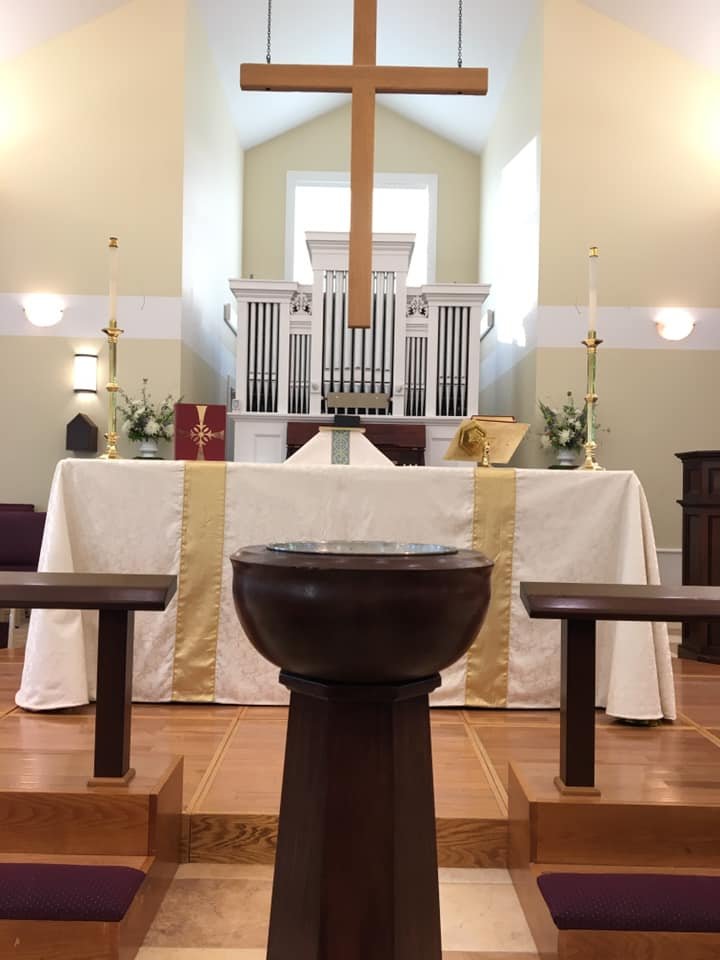
Photo:  Hickory Neck Episcopal Church; reuse with permission only

I spent the last almost three weeks on vacation.  It was a time relaxation, refreshment, and restoration.  It was a time of unplugging, unwinding, and uninterrupted space.  It was a time of sabbath.  And because most Sundays I am in church, I experienced not going to church.  On Sundays, it turns out lots of people are eating brunch, exercising, spending time with their families, enjoying nature, working, or just enjoying a good read.  And for a couple of weeks, I did just that.

The weeks away got me thinking:  why do we go to church on Sundays, when there are so many other things we could be doing?  As I contrasted the time of not going to church with my years of going to church, I realized I go to church for so many reasons – some big and some small.  The big ones may be obvious.  I want to connect with, learn about, and feel loved by God.  I want a sense of community, where I belong and am known.  I want a sense of purpose rooted in Jesus’ command to love God, self, and neighbor.

The small ones are less obvious.  I love the beauty of the people in church:  the elders laughing heartily, children and their looks of wonder and their awesome questions, people caring for the needs of others when they think no one is looking.  I love the power of music:  from the familiar song that takes me back to fond place, to the unfamiliar song with a lyric that blows my mind, to the transcendent way harmonizing voices can bring me to tears for some unknown reason.  I love the little moments:  when an invitation to prayer reminds me of a hurting loved one, when sharing the peace with someone with whom I have had hard feelings dissolves all tension, when the burn of the communion wine down my throat lingers for several minutes – as if Christ is not ready to leave me yet, when the light shines just so on the cross, reminding me once again of the big stuff of Church.

Going to Church every week gives me a sense of belonging – to God and to other people, gives me a sense of meaning in a world that is often confounding, and gives me a sense of hope.  Maybe you have gotten out of the habit of going to Church, for a hundred little and good reasons.  If so, I invite you to shake things up this week and try Church again.  Maybe you left the Church in hurt or never really were introduced to Church.  If so, I invite you to consider stepping in the doors and giving the Church a chance to share Christ’s love with you.  Or maybe you go to Church every Sunday, but things have begun to feel stale.  If so, I invite you to take a deep breath, sit in a different place, or simply allow yourself to be surprised by the Holy Spirit.  I invite you to my Church this week – for some of the reasons here, for your own reasons, or for reasons unknown to you.  I will be there with open arms, ready to introduce you to a group of awesome people, on the same journey to know our awesome God.

← Older posts
Newer posts →

Recent Posts

  • On the Myth and Magic of Advent…
  • On Risking Failure and Facing Fear…
  • Sermon – Luke 23.33-43, P29, YC, November 23, 2025
  • On Inhabiting Gratitude…
  • Sermon – Luke 20.27-38, P27, YC, November 9, 2025

Archives

  • December 2025
  • November 2025
  • October 2025
  • September 2025
  • August 2025
  • July 2025
  • June 2025
  • March 2025
  • February 2025
  • December 2024
  • November 2024
  • October 2024
  • September 2024
  • August 2024
  • July 2024
  • June 2024
  • May 2024
  • March 2024
  • February 2024
  • January 2024
  • December 2023
  • November 2023
  • October 2023
  • September 2023
  • August 2023
  • July 2023
  • June 2023
  • May 2023
  • March 2023
  • February 2023
  • January 2023
  • December 2022
  • November 2022
  • October 2022
  • June 2022
  • May 2022
  • January 2022
  • December 2021
  • November 2021
  • October 2021
  • September 2021
  • August 2021
  • June 2021
  • May 2021
  • April 2021
  • March 2021
  • February 2021
  • January 2021
  • December 2020
  • November 2020
  • October 2020
  • September 2020
  • August 2020
  • July 2020
  • June 2020
  • May 2020
  • April 2020
  • March 2020
  • February 2020
  • January 2020
  • December 2019
  • November 2019
  • October 2019
  • September 2019
  • August 2019
  • July 2019
  • June 2019
  • May 2019
  • April 2019
  • March 2019
  • February 2019
  • January 2019
  • December 2018
  • November 2018
  • October 2018
  • September 2018
  • August 2018
  • July 2018
  • June 2018
  • May 2018
  • April 2018
  • March 2018
  • February 2018
  • January 2018
  • December 2017
  • November 2017
  • October 2017
  • September 2017
  • August 2017
  • July 2017
  • June 2017
  • May 2017
  • April 2017
  • March 2017
  • February 2017
  • January 2017
  • December 2016
  • November 2016
  • October 2016
  • September 2016
  • August 2016
  • July 2016
  • June 2016
  • May 2016
  • April 2016
  • March 2016
  • February 2016
  • January 2016
  • December 2015
  • November 2015
  • October 2015
  • September 2015
  • August 2015
  • July 2015
  • June 2015
  • May 2015
  • April 2015
  • March 2015
  • February 2015
  • January 2015
  • December 2014
  • November 2014
  • October 2014
  • September 2014
  • August 2014
  • July 2014
  • June 2014
  • April 2014
  • March 2014
  • February 2014
  • January 2014
  • December 2013
  • November 2013
  • October 2013
  • September 2013
  • August 2013
  • July 2013
  • June 2013
  • May 2013
  • April 2013
  • March 2013
  • February 2013
  • January 2013
  • December 2012
  • November 2012
  • October 2012
  • September 2012

Categories

  • reflection
  • Sermons
  • Uncategorized

Meta

  • Create account
  • Log in
  • Entries feed
  • Comments feed
  • WordPress.com

Blog at WordPress.com.

  • Subscribe Subscribed
    • Seeking and Serving
    • Join 394 other subscribers
    • Already have a WordPress.com account? Log in now.
    • Seeking and Serving
    • Subscribe Subscribed
    • Sign up
    • Log in
    • Report this content
    • View site in Reader
    • Manage subscriptions
    • Collapse this bar
 

Loading Comments...