• About

Seeking and Serving

~ seek and serve Christ in all persons

Seeking and Serving

Tag Archives: Lent

On Glimpses of Togetherness…

03 Wednesday Mar 2021

Posted by jandrewsweckerly in reflection

≈ Leave a comment

Tags

absent, community, ecumenical, God, Holy Spirit, Jesus, Lent, pandemic, present, worship

Photo credit: Jennifer Andrews-Weckerly; reuse with permission only

This evening, we are gathering with our local ecumenical brothers and sisters in worship.  These Lenten gatherings happen every year, usually preceded by a simple supper before worshiping together.  One of the eight churches hosts and a preacher from another church offers the sermon.  The freewill offering supports a local nonprofit.  The evenings allow us to see the broader movement of Christ in our community, remind ourselves of the wideness of God’s mercy, and inspire a sense of community and fellowship.

Of course, in the midst of a pandemic, things look a little different.  Instead of seeing each other’s worship spaces, we are getting to see each other’s virtual worship spaces (Zoom, Facebook, YouTube, etc.).  Instead of seeing faces over a meal, we are feasting strictly on the Word of God.  In some ways, we could see the gatherings as “less than,” lacking all the things we love about community.  But for me, it has been a tremendous blessing to see how we are all in this together – all finding our own ways through technology, all seeking to be closer to Christ in the midst of this chaotic time.  Tonight, I am “preaching,” though technically, I prerecorded my sermon last week.  Our time of recording – with just three of us in the room, and two others on Zoom – was a tender invitation into the space where their community has been making it work for months. 

If you do not have plans tonight, or for the next several Wednesdays through Holy Week, consider yourself invited to virtual worship with the Upper James City County Ministerium.  On a basic level, it will give you a chance to pray, worship, and hear a good word each Wednesday.  On a deeper level, it may help you get out of your comfort zone with an unfamiliar style of worship or a theologically different perspective on scripture.  But on an even deeper level, it will remind you of how widely we are all connected during this strange, seemingly disconnected time.  It is my hope that you experience a glimpse into the magnitude of how the Holy Spirit is doing some incredible work during this time that can often feel absent of God.  You are invited to come and see a different perspective!

On Being Apart While Together…

24 Wednesday Feb 2021

Posted by jandrewsweckerly in reflection

≈ Leave a comment

Tags

alone, apart, Ash Wednesday, beautiful, dichotomy, experiment, God, Holy Spirit, Lent, lonely, pandemic, separated, together

Photo credit: https://www.indiatvnews.com/lifestyle/news-living-apart-together-the-new-relationship-trend-in-town-for-older-adults-380624

As a priest, especially a priest in a pandemic, you do not always know how the things you plan are going to go.  Most of the liturgical things we do are about 90 degrees off from what we “normally” do, and we just keep hoping they capture the spirit of the original liturgies.  I am blessed to serve an awesome congregation whose DNA is wired to be creative, playful, and experimental, so I always feel like we are in this together.  But I still find myself holding my breath a bit each time we try something unusual.

Ash Wednesday was no different.  We did our due diligence, made ample opportunity for parishioners and neighbors to get ashes for home use, and we figured out how to synchronize our ashes through livestreaming.  What I did not anticipate was what it would feel like to put ashes on my own head.  Even when I was a solo clergy person, I always had a parishioner put ashes on me after I put ashes on them.  But putting ashes on my own head felt very solitary – suddenly I was very aware of how separated we all are from one another – and how lonely that sometimes feels.

I pondered that reality for a few days before I remembered something else from Ash Wednesday.  We decided in the pandemic to still offer Ashes to Go – a drive through experience at our location.  As we distributed containers of ash, we gave people three options – “ash” themselves as we pray with them, take the ashes home and say a set of prayers we gave them, or take them home and watch our livestream and “ash” with us.  One family drove through and I gave the mom the three options.  She decided I should go ahead and pray as she put ashes on the foreheads of her two preschool children.  As I watched her work – this mom whose story I could all too easily imagine – the stress of parenting for almost a year in a pandemic, making hard decisions about childcare, juggling work, children, and family, trying to precariously hold it together.  Here she was, taking on the work of the spiritual nourishment of her kids too. 

And that is when I realized the truth.  We are very separated, often alone, and sometimes lonely in this pandemic.  But we are all feeling those things together.  When we gather online together, we are together in our apart-ness.  When we swing by the property for drive-through experiences, we are acknowledging our togetherness in our apart-ness.  When things remind us of our apart-ness, we are collectively reminded together.  It is a beautiful, awful dichotomy, only made better by the fact that we are, in fact, together in this.  This Lent, I invite you to pause to look around, and observe the small, sometimes tiny, reminders that we are in this together.  Even in our apart-ness, we are with each other in Spirit.  And the Spirit is enough to hold us together while apart until we can be physically together some day.

Sermon – Mark 6:1-6, 16-21, Isaiah 58:1-12, AW, YB, February 17, 2021

24 Wednesday Feb 2021

Posted by jandrewsweckerly in Sermons

≈ Leave a comment

Tags

Ash Wednesday, ashes, church, fasting, God, holy, invitation, Lent, mirror, pandemic, Sermon, spiritual practices, struggle

I have always thought the Ash Wednesday liturgy offers a strange contrast.  We engage in the very visible sign of having ashes spread across our foreheads.  And yet, our gospel lesson this day speaks very clearly of not showing your piety publicly.  But this year, the contrast of Ash Wednesday feels even more pointed.  Typically on this day, we talk about giving things up for Lent, fasting, and entering into a season of contemplation about not just our mortality, but the sinfulness that separates us from God.  But we have spent the last eleven months fasting – fasting from social gatherings, fasting from touch and uncovered faces, even fasting from receiving the sacred meal.  And for a large portion of those months, we have been in deep contemplation about the exponentially rising death all around us, the brokenness of our common life, the sin of oppression and racism.  The last thing I want to hear from the church today is how I need to give up more.

I think that is why I love the text from Isaiah this year so much.  God offers a mirror to God’s people.  On first glance, God’s people are certainly doing the things that are expected – in fact, the “things” that are often of Lent.  They are fasting and lying in sackcloth and ashes.  They are doing the work of penitence.  But the acts are not the problem – the motivation of the acts are the problem.  They are doing acts of contrition as sort of an exchange:  fasting so that God will give them favor; Sure, their behavior may end in the oppression of others, but they are doing the manual action called for in this moment. 

But God is having nothing of hollow spiritual practices.  If those practices are not leading to the loosening of the bonds of injustice, or the undoing of the thongs of the yoke, or the freeing of the oppressed, they are meaningless.  If the people of God are not sharing their bread with the hungry, bringing the homeless poor into their homes, covering the naked, and caring for their own kin, then fasting is little more than act in futility, an action done without reflection, intention, or love of neighbor. 

So what do the words of Isaiah have to do with living in month eleven of a pandemic?  I am going to say something that might be a little controversial, but here you go:  the church is not asking you to fast this Lent.  Now, in a few moments, I am going to say these very words, “I invite you, therefore, in the name of the Church, to the observance of a holy Lent, …by…fasting, and self-denial…”  But you have already fasted for a whole year.  You have already been in a season of self-denial.  The ashes you will impose on your head later are not a reminder that you are dust and to dust you shall return.  You know that reality all too well now.  Instead, we are going to take a cue from Isaiah tonight.  You have already done the manual acts of Lent.  Now your invitation is the “so that” part of the action.  Our work this Lent is to reflect upon what has been a most difficult year and to ponder together what this past year of fasting is inviting us into.  How has this season of fasting, this season of struggle, this season of brutality transformed our sense of purpose and identity – a people focused on God’s work loosening the bonds of injustice, freeing the oppressed, and sharing our bread?  How has the sobering nature of death, grittily rubbed onto our foreheads tonight, changing our resolve to lean into God, lean into this Christian community, lean into the work of sharing God’s love with those who do not know that love?

The rest of the invitation I will read in a moment says this, “I invite you, therefore, in the name of the Church, to the observance of a holy Lent, by self-examination and repentance; by prayer…and by reading and meditating on God’s holy Word.”  You have done the rituals of fasting and self-denial long enough.  As we look forward to these next forty days together, our work is to spend time with God, scripture, and one another and answer the question, “So what?”  What are we going to do now?  What are we going to claim and what are we going to let go?  How is the grit of ash this year not the sensation of defeat, but of invitation.  I invite you, therefore, in the name of the Church, to the observance of a holy Lent.  Amen.

On Keeping Rituals Anyway…

17 Wednesday Feb 2021

Posted by jandrewsweckerly in reflection

≈ Leave a comment

Tags

Ash Wednesday, community, dust, God, journey, Lent, normalcy, pandemic, ritual, together

Photo credit: https://www.cincinnati.com/story/news/2019/03/06/ash-wednesday-2019-wearing-ashes-marks-beginning-lent/3064920002/

Today is Ash Wednesday.  It is the day we gather to kick off the beginning of Lent.  The main marker of this day are the ashes rubbed on our foreheads in the shape of a cross.  This ritual action is so powerful that churches typically offer multiple services in their buildings and they hang out in train stations, street corners, or parking lots so that people can grab their ashes on the go. 

But this year Ash Wednesday is happening in a surreal setting.  Reminding us we are dust and to dust we shall return seems a little superfluous when death is all around us from this pandemic.  Beginning a season of fasting seems like overkill when we have been doing nothing but fasting for eleven months – fasting from a way of life we once knew.  Asking us to give us something for Lent seems tone deaf when we have been giving up things for almost a year.  And with large communities having lost power for several days, churches still on lock down, and best practices prohibiting us from actually touching ashes to others’ foreheads, the whole idea of this day seems like too much.

So why are we even bothering with Ash Wednesday this year?  A couple of reasons.  One of the base reasons is we need to keep the rituals of life to help us feel some semblance of normalcy – some reminder of the things that have been meaning-giving in our lives.  Two, we need reminders that God is present in the midst of all this mayhem.  Some of us have never felt God’s absence, some of us have felt the abandonment of God in this time, and some of us have just felt so depleted that God feels distant – not absent, but also not vividly present. 

I don’t know how you are holding up this Ash Wednesday.  I don’t know where you are on your journey with God these days.  But what I do know is that the church is here to walk with you, comfort you, and create space for wherever you are on the journey – whether driving through,  watching online, or catching up by email, phone, or text.  We are in this together.    

Sermon – Mark 9.2-9, TRNS, YB, February 14, 2021

17 Wednesday Feb 2021

Posted by jandrewsweckerly in Sermons

≈ Leave a comment

Tags

Calvary, disciples, Epiphany, God, Good News, Jesus, joy, Lent, Messiah, mountain, pandemic, Sermon, Son of God, tension, Transfiguration

I do not know about you, but lately, I have found myself at a weird emotional place with this pandemic.  Eleven months ago, the pandemic got so bad, our church buildings closed and our experience as church as we know was forever altered.  Then the rollercoaster began.  Cases went up and down.  Schools were in and mostly out.  Masks were optional, then required, and now even recommended to be doubled.  And then there is the death toll.  We went from a couple of thousand a week to lately as much as 25,000 a week.  The introduction of the vaccine feels like the great white hope.  And yet, just this week I learned of a dear family friend who died a rapid death from the virus.  And we know there will be more death before there is life again.

I think that is why I am struggling this year to find the Transfiguration to be a source of joy.  As I read the familiar words this week, I wanted to be mesmerized – by the dazzling white of Jesus’ clothes, the appearance of none other than the law and the prophets:  Moses and Elijah.   Even God speaks words of revelation to the disciples.  Despite all the wonder and awe on this last of epiphanies in the season of Epiphany, I find myself unable to rally in this epiphanic moment.

The good news is the tension I have been feeling this week might not just be a case of my own emotional journey through this pandemic.  The tension we feel today is intentional on Mark’s part.  If you can remember all the way back in Advent, when we read the very first words of Mark, we read, “The beginning of the good news of Jesus Christ, the Son of God,” Mark tells us right away who Jesus is:  Jesus is the Christ, and Jesus is the Son of God.[i]  First, Mark tells us Jesus is the Christ:  the Messiah, the person the people of God had been awaiting, the victorious redeemer of the people, the mighty restorer of the kingdom of God.  Since that day in December when we heard this brief introduction by Mark, we have been celebrating the Messiah who was born.  Even today, as Jesus’ clothes turn dazzling white, and Elijah and Moses appear, we are filled with anticipation:  this is what we have been waiting for – Jesus the Messiah!!

And yet, somehow in the birth stories, and the epiphanies, and the dramatic healing stories, we forget the other half of Mark’s introduction:  The beginning of the good news of Jesus Christ, the Son of God.  You see, just as Jesus is the Messiah, the Christ, Jesus is equally something else:  the Son of God.  Now the Son of God is not a title of honor so much as a reminder of what will happen to Jesus.  The Son of God is destined to lay down his life for the people of God.  Jesus is the suffering servant we hear about in Isaiah – the one who makes the ultimate sacrifice so that new life might come.

So what does any of this have to do with the Transfiguration?  Pretty much everything.  You see, in this victorious Messiah-like last epiphany moment before we head into Lent, the temptation is for us to linger on the mountain, to stay with the Jesus who makes us feel good, who makes us feel powerful, who makes us feel victorious, who dazzles us with shiny clothes.  That euphoric feeling is not unlike the feelings stirred up by the hope of vaccines – a hope so strong that some governors in our country have lifted pandemic restrictions all together – no more masks, no more distancing, no more waiting.

But as we begin Lent this week, we descend this mountain and walk our way to another mountain – the mountain of Calvary that reminds us of the other truth of Jesus:  that Jesus is the Son of God, sent to redeem us through the darkness of the cross.[ii]   Even on the mountain of Transfiguration, God reminds us of this truth.  God does not shout to the disciples, “Jesus is the Messiah!!”  Instead, God whispers the gentle reminder, “This is my Son, the beloved.”  Even God knows we will want to linger on the goodness of who Jesus is – the brilliance of a Messiah.  But as Mark tells us from the beginning:  Jesus is both the Christ and the Son of God.

This week we will begin the long journey of Lent.  We will reflect on our relationship with Jesus, our failings and faults, and our gifts and goodness.  The work will feel hard and tedious at times, especially clouded by this unrelenting pandemic, and we may prefer to hold on to the Messiah on today’s mountain.  But as we walk from today’s mountain to Good Friday’s mountain, we also hold in tension with Jesus the Christ, Jesus the Son of God.  In our weakness, we find a savior who is also weak.  In our dark days, we find a savior mired in darkness.  In our despairing, we find a savior lost in despair too.  Jesus’ identity as the Son of God gives us as much comfort as Jesus’ identity as the mighty Messiah.  When we hold all of who Jesus is in our hearts, we can be more tender with all of who we are. 

I am grateful to walk the Lenten walk with you.  I am grateful to hear about your struggles and victories, your darkness and light.  I am grateful to be surrounded by a community of people – whether virtually or in person – working through valley of two mountains so that we can come through the redemption of the resurrection.  Today’s Transfiguration Sunday offers us sustenance for the valley, fuel for the work, fire for the renewal.  This is the beginning of the good news of Jesus the Christ, the son of God.  Amen.


[i] This understanding of Jesus’ identity was presented by Thomas P. Long at a lecture on February 9, 2018.

[ii] The idea of framing Lent between two mountains come from Rolf Jacobson, in the Sermon Brainwave podcast, “#768: Transfiguration of Our Lord (B) – February 14, 2021,” February 7, 2021 as found at https://www.workingpreacher.org/podcasts/768-transfiguration-of-our-lord-b-feb-14-2021 on February 10, 2021.

Sermon – Matthew 26.14- 27.66, PS, YA, April 5, 2020

08 Wednesday Apr 2020

Posted by jandrewsweckerly in Sermons, Uncategorized

≈ Leave a comment

Tags

afraid, angry, anxious, change, Coronavirus, disciples, God, grief, hope, Jesus, Lent, Lord, Palm Sunday, promise, rollercoaster, Sermon, turbulent, victory, walk

There is a meme that has been circulating that reads, “This Lent is the Lent-iest Lent I’ve ever Lented.”  Of course, the grammar is intentionally ridiculous, but the meme had the effect of making me want to laugh and cry all at the same time.  Lent is usually when we craft a time of sacrifice and abstinence – a time of purposeful withdrawal from comfort to help us ascetically come closer to God.  But this Lent, we have not needed to craft anything.  Comfort has been ripped away from us, our footing has been upended, and a sense of being bereft has swept over us as our governments have attempted to force us to respect the dignity of every human being through stay at home orders with punitive consequences.  In other words, that daily devotional I started reading in the first week of Lent is buried under a pile of crisis management paperwork.

Because this has been a “Lent-y” Lent, the emotional rollercoaster of Palm Sunday is much more relatable than in most years.  We started out our service singing loud hosanas, feeling the high of the promise of the arrival of a savior-king, and we end with a reading where disciples have deserted and betrayed, the faithful have condemned out of fear and resentment, the leadership have mocked and brutalized, the Chosen One of Israel lies dead in a tomb while the remaining faithful women linger at a distance, fearfully mourning Christ’s death.  In this “Lent-iest Lent we’ve ever Lented,” we are no stranger to the feeling of going from confident security and relative prosperity, to sober, fearful waiting and looking at the tomb that is sealed with finality.  As death and the threat of infection hang around us, we do not need to contrive a sense of deep mournfulness and communal culpability.  We do not need to imagine the feeling of Christ’s death.  From singing hosanas to shouting “Let him be crucified,” we are living the narrative of Palm Sunday today.

Though I would never wish our current reality on us, and though I wish we were having a more man-made experience of Lent, I must confess the confluence of this time with this virus feels appropriate.  We do not have to imagine the grief of sitting by the cross mourning the reality of death – we are already sitting by the cross mourning.  We do not have to imagine being forced from the crowd to take up a stranger’s cross in a violent, turbulent moment – we are already in a turbulent moment in the company of strangers.  We do not have to imagine what feels like the extinguishing of hope and victory – we are already in the midst of clouded hope and unseen victory.

I suppose that is where I find hope today.  We do not need to imagine today.  We are the disciples, afraid and unworthy.  We are the mourning women, anxious and bereft.  We are the religious leaders, angry and discouraged.  None of that may sound hopeful.  But I see hope all around.  I see hope in governor’s wives who can see and speak to truth, warning us and helping us see.  I see hope in disciples who can see their own unfaithfulness and mourn with honesty.  I see hope in Jews who risk reputation and sacrifice personal wealth to properly bury the Christ.  I see hope in a Messiah who wanted to escape certain and necessary death, but dies with dignity and faithfulness to save us.  Though today is a sober day, today is also a day of promise.  The hosannas we say are not in vain.  The songs we sing are not in vain.  The prayers we pray are not in vain.  I have hope that we will come through this unique Lent a changed people – a people more humble about our frailty, a people more sober about the importance of community, a people more astounded by the blessing of a savior.  Even in our physical separation, we walk this holiest of weeks together, we mourn and comfort together, and we hold out hope together.  Today, we walk in the light of the Lord.  Amen.

Sermon – Matthew 4.1-11, L1, YA, March 1, 2020

04 Wednesday Mar 2020

Posted by jandrewsweckerly in Sermons, Uncategorized

≈ Leave a comment

Tags

cosmic, devil, evil, good, immature, Jesus, journey, Lent, mature, practice, Sermon, spiritual discipline, temptation

There is an ongoing debate among people who have way to much time on their hands about  the efficacy of most spiritual disciplines during Lent:  whether we are giving up chocolate, alcohol, or swear words; whether we are taking up health improvements, like getting more sleep, walking daily, or practicing yoga; or whether we are committing to something more traditional like fasting, daily prayer, or the reading of scripture.  The argument is that these disciplines domesticate Lent, making Lent akin to New Year’s resolutions instead of the sacred practices the ancient church intended.  There’s even a book entitled, A Grown-up Lent: When Giving Up Chocolate Isn’t Enough, whose title alone insinuates that most of our disciplines are immature, are not “grown-up” enough to be considered worthy of Lent.

Now there are myriad articulations about why our practices are not enough, but one of the reasons articulated uses today’s gospel lesson as their defense.  In today’s gospel, we hear Matthew’s version of Jesus’ temptation in the wilderness.  On the surface, Matthew describes three temptations:  the temptation to satiate a physical need (after forty days, Jesus is hungry and could turn stones to bread to satisfy this physical hunger), the temptation to prove God loves us (Jesus might want to know that God has his back before he takes on this whole savior role), and the temptation to gain political power (any messiah might assume their cause is always better aided by powerful force).  By reading about Jesus’ temptation today, we might easily deduce the reason we assume Lenten disciplines is because we are mimicking Jesus’ temptation for these next forty days.  Like Jesus was tempted by hunger, a desire for comfort, and a desire for power, our disciplines highlight our daily temptations and our desire to not submit to the forces of evil.

But this gets to the heart of why so many are critiquing our spiritual disciplines during Lent.  Theologian Stanley Hauerwas argues, “…the temptation Jesus endures is unlike the temptation we endure, for the devil knows this is the very Son of God, who has come to reverse the history initiated by Adam and Eve’s sin in the garden and continued in the history of revolt by the people whom God loves as his own, namely, Israel.”[i]  In other words, although we are surely tempted by Satan in our own time, today’s temptation of Jesus is about a cosmic battle – the very battle between good and evil, the very evil that is wreaking havoc on the civility and humanity of our country today, making us turn against one another and abandon our baptismal promises to respect the dignity of every human being.  Some would argue that our giving up chocolate, or our eating fish on Fridays in Lent does not get us any closer to routing out the evil seeking to destroy the fabric of our church, our community, and our country; our focusing on physical health does not battle the things we confessed in the Great Litany today:  pride, vainglory, hypocrisy, deceits of the flesh, and dying suddenly and unprepared.

Now, while I get the academic protest about the simplistic nature of our disciplines, here is what I know.  A week ago, after a wonderful celebration of the end of Epiphany, and after a glorious honoring of the spirituals of our religious tradition, I lost my voice.  Despite my croaking despair with my doctor, he told me, rather unsympathetically, no matter what my job was, no matter if a big event, like, say Ash Wednesday with its three services, one ecumenical potluck, and Ashes to Go, were on my agenda, in no way was I to use my voice.  In essence, I was forced into silence on a week where I needed to lead.  Or, I suppose put more spiritually, I was gifted the opportunity to truly embrace the classic invitation of Lent: fasting (in this case from speaking) and meditating on God’s holy word (since I certainly could not speak God’s word).  The irony of this gift was not lost on me – an extrovert prone to powering through any challenge being forced to slow down and keep quiet is what Lenten disciplines are all about, right?  Take our biggest spiritual struggles, and then use disciplines to help ourselves correct behavior and get right with God – this is classic Lenten stuff!

I can tell you, this past week has been a profound week of learning.  All of those things we confessed in the Great Litany were in my face this week.  Nothing attacks one’s pride, vanity, and envy like watching other people do the job I was made to do but could not do in my weakness.  And while I was able to patiently be silent, working alone from my home office on the day before Ash Wednesday, I realized about half-way through Ash Wednesday my vocal chords were hurting not from physically trying to speak, but from tensing them in the desire to speak – my longing to speak manifested itself in a anticipatory tension of use, which became dangerously close to having the same effect of actually using my voice.  When I finally realized what was happening, why I was feeling worse, I had to mentally force my throat to relax, my shoulders to release their tension, and my mind to accept I could not simply do everything I normally do, simply removing one minor part – that of speaking.  No, being mute on Ash Wednesday would mean taking on another way of being.

I tell you all this not because Lent is all about me and my laryngitis.  I tell you all this because although I understand the academic critique of Lenten disciplines, I also see with fresh eyes the very blessing of Lenten disciplines.  Perhaps the critique is true that giving up meat, or taking up Pilates, or even reading a devotion is not going to help us battle the spiritual forces of evil; but taking on those practices will shake up our senses in really meaningful ways.  Daily resisting of patterns, or daily assumptions of new patterns, creates in us a retraining of our bodies so we can begin to see, hear, taste, smell, and touch God in new ways.  And that shaking – whether big or small – shakes up other things in our lives.  We begin to see more clearly where we have had a blindness of heart; where we have delighted in inordinate and sinful affections; where we have hardened our hearts again our black, Latino, young, old, Republican, and Democrat neighbors; where we have even held in contempt God’s word and commandments.  These disciplines are not juvenile – these disciplines, when embraced and practiced open up renewed relationship with Christ, with ourselves, and with our neighbor.

In essence, what spiritual disciplines do is help us fight the devil.  Now I know that might sound extreme, but stick with me a bit.  Hauerwas argues, “The devil is but another name for our impatience.  We want bread, we want to force God’s hand to rescue us, we want peace – and we want all this now.  But Jesus is our bread, he is our salvation, and he is our peace.  That he is so requires that we learn to wait with him in a world of hunger, idolatry, and war to witness to the kingdom that is God’s patience.  The Father will have the kingdom present one small act at a time.  That is what it means for us to be an apocalyptic people, that is, a people who believe that Jesus’ refusal to accept the devil’s terms for the world’s salvation has made it possible for a people to exist that offers an alternative time to a world that believes we have no time to be just.”[ii]

So, I say, give up chocolate.  Read your devotional.  Play Lent Madness.  Pray before the kids or pets wake up or after they go to sleep.  Commit daily acts of kindness.  Take that daily walk.  You may feel like you are doing something simple.  But in our simplicity, we are participating in the cosmic work of Christ.  In bringing intentionality into those things we can control, we bring intentional focus on those things we cannot control – those things only God can fight for us.  Our forty-day journey is not the same as Christ’s.  But taking this journey aligns us with the work of Christ, and helps us claim the light in a world overwhelmed by darkness.  May God bless our Lent, and make our Lent holy.  Amen.

[i] Stanley Hauerwas, Matthew (Grand Rapids:  Brazos Press, 2006), 51.

[ii] Hauerwas, 55.

On Signs and Listening…

26 Wednesday Feb 2020

Posted by jandrewsweckerly in Uncategorized

≈ Leave a comment

Tags

faith, God, Jesus, journey, Lent, listening, preaching, sign, truth

hearing

Photo credit:  http://www.charismamag.com/life/women/34343-learning-to-listen-large-when-god-speaks-small

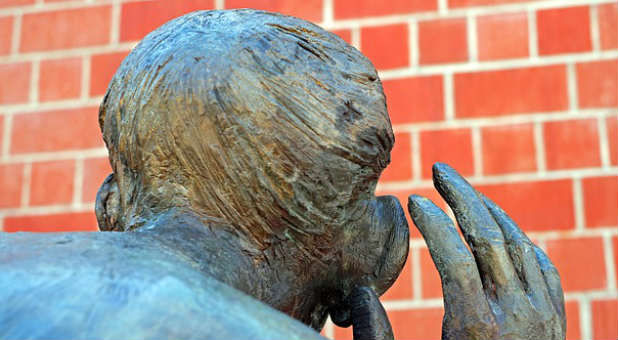
Every once in a while, someone will ask me to whom my sermon was directed.  I think most folks who ask this think I somehow got into their minds and was preaching about them.  But I always assure people that the primary person I am preaching to is myself, something on which I need work.  I share my struggle because I often hear echoes of my struggle in others’ struggles as well.

Well, this past Sunday I preached a sermon directed at myself, without even realizing it!  On Sunday we celebrated Transfiguration Sunday, this year using Matthew’s Gospel[i].  In Matthew’s Gospel, God says, “This is my Son, the Beloved; with him I am well pleased; listen to him!”  In my sermon, I talked about one of the things we all need to do this Lent is listen to Jesus.  Sunday night, by the time three services and one concert was over, my voice was gone.  By Monday, I was diagnosed with laryngitis.

Now, we can all get a laugh about how the preacher who reminded us all to listen is now mute and forced to listen to Jesus.  But I must be hardheaded, because I think Jesus was already asking me to listen just a few days before.  The week prior to my sermon, I had just returned from a pilgrimage, and was frantically trying to meet deadlines, follow up on pastoral care, and catch up on emails.  But we got a snow on Thursday night that cancelled school on Friday, and I had to clear my entire calendar so I could be at home with my kids.  Instead of making all my appointments, I sat down and did other things from my home office that were also being neglected.  I am convinced the snow day was God’s way of trying to get me to slow down, and listen to Jesus.  Apparently, I need more than one sign from God before I listen!

I wonder what signs you are finding in your faith journey?  Where are you having ah-ha moments of God speaking truth that finally click?  I believe God is speaking to us all the time:  sometimes in words directly to us, sometimes through the words and actions of others, and maybe even sometimes through creation!  As we take our ashes today, and as we begin a season of intentional relationship with God, I invite you to take time this Lent to listen.  I cannot wait to hear what God is saying to you!

[i] Matthew 17.1-9.

Sermon – Matthew 17.1-9, LE, YA, February 23, 2020

26 Wednesday Feb 2020

Posted by jandrewsweckerly in Sermons, Uncategorized

≈ Leave a comment

Tags

action, Calvary, emotion, God, Jesus, Lent, listen, mountain, mountaintop experiences, rollercoaster, touch, Transfiguration

On this last day of Epiphany, as we prepare to enter into Lent this week, we are given the text of Jesus’ transfiguration.  The text in and of itself is mesmerizing:  Jesus and three disciples go up a mountain, which is a hint to all of us that something dramatic is about to happen; Jesus is transfigured, his face shining like the sun and his clothes turning dazzling white; Moses and Elijah appear, two giant figures in our tradition – so giant we heard about Moses’ mountaintop experience today too; a cloud comes down around them and God speaks; and when the experience is all over, Jesus gently touches the disciples and says, “Get up and do not be afraid.”  We could easily get lost in this spellbinding moment, longing to stay on the mountaintop this morning.

But as many scholars point out[i], this mountaintop story, situated at the end of the Epiphany season, is not told in isolation.  Because we tell this story when we do, we have to take a wider view today.  The end of this season is bookended by the end of the season we are about to enter:  Lent.  That season ends on a mountain, of sorts, too – the hill of Calvary, where we see a very different kind of scene.  In this Sunday of transition, we hold the two mountains in tension together.  As scholar N.T. Wright reminds us, on Transfiguration Sunday, “…on a mountain, is Jesus, revealed in glory; there, on a hill outside Jerusalem, is Jesus, revealed in shame.  Here his clothes are shining white; there, they have been stripped off, and soldiers have gambled for them.  Here he is flanked by Moses and Elijah, two of Israel’s greatest heroes, representing the law and the prophets; there, he is flanked by two brigands, representing the level to which Israel had sunk in rebellion against God.  Here, a bright cloud overshadows the scene; there, darkness comes upon the land.  Here Peter blurts out how wonderful it all is; there, he is hiding in shame after denying he even knows Jesus.  Here a voice from God himself declares that this is his wonderful son; there, a pagan soldier declares, in surprise, that this really was God’s son.”[ii]

Looking at the transfiguration of Jesus in that way as opposed to a momentous, isolated event feels like riding a rollercoaster – seeing the glorious and the disastrous all in once glance, feeling the high of sweet affirmation and comfort and the low of betrayal all in one breath, knowing the promise of victory and reality of failure all in one moment.  When you take the expanse of the mountaintop transfiguration, the journey through Lent, the culmination on the hill of Calvary, you can almost feel dizzy from the range of emotions.

In some ways, that sensation of being on a rollercoaster of emotions has not been dissimilar to the experience of emotions lately at Hickory Neck.  In the course of one week recently, we said goodbye to a beloved curate, labored intensively with our homeless neighbors, and then had the Presiding Bishop rock this very Nave.  In the course of these next months, we live into the reality of switching from a staff with two full-time priests, to one full-time priest, and will discover how that will shape and shift not only our experience with our staff, but our experience with caring for one another.  In the course of these next forty-plus days, we will go from the high of pancakes and talent shows, to ashes and repentance, back to alleluias, butterflies, and Easter eggs.  I can feel viscerally that rollercoaster of Transfiguration to Calvary right here in the life and ministry of Hickory Neck.

But that is why I am also deeply grateful for Matthew’s transfiguration text today.  We get two instructions today – one from God and one from Jesus.  God speaks first, with words we heard earlier at Jesus’ baptism.  “This is my Son, the Beloved; with him I am well pleased.”  Those words are another declaration and reminder of Jesus’ identity.  But God adds something else today.  “Listen to him!” God says.  In those three words, God tells us what to do when caught in the whirlwind of life and transition:  listen to Jesus.  For a people who live in a culture marked by the spirit self-determination and can-do attitude, we are not necessarily the best at listening to Jesus.  Listening takes time and patience and discernment, and we just want to get on with the “doing.”  But today, God’s words are for us.  Listen to Jesus.

I used to be a part of a group who opened our gatherings with prayer.  One particular leader had a unique method of prayer.  He would introduce the prayer normally, saying, “Let us pray.”  But then he would say nothing.  For a long time.  So long was the silence, that the first time I experienced his prayer method, I kept discretely peeking through my eyelashes to make sure nothing was wrong.  I wondered if something had happened, or if he was struggling for words, or maybe even if he had fallen asleep.  But he remained sitting in a serene body posture, in silence as we waited.  When I finally conceded he must be doing this on purpose, I tried to relax and just sit in the silence.  Eventually his spoken prayer began and was lovely.  But I needed several more times praying with him before I could settle into the silence he created.  In that silence I began to stop talking in my head, and began to do what God commands today.  Listen to Jesus.  That is one of our invitations as we enter this Lent, and as we settle into this liminal time of transition at Hickory Neck.  We are to listen to Jesus.  Listening will not feel like doing.  Listening will sometimes be frustrating.  But in listening, we will be equipped to hear Jesus speaking to us and guiding us.

The other words spoken today are by Jesus.  Actually, Jesus does something powerful before he speaks.  He touches the disciples.  Jesus’ touch reminded me of a story from a priest friend of mine.  The priest was at his Diocesan Council a few years ago, an event at which he rarely speaks.  But an important issue arose, and he felt as though he could not avoid speaking.  He stood up, argued his case, and faced a heated confrontation.  In the end, the assembly agreed with him and his opinion won over.  As he sat back at his table, a friend quietly whispered in his ear, “You’re shaking.  I’m going to touch you for a little bit.”  As the friend laid his hand upon his shoulder, my friend could feel his blood pressure lowering and the tension releasing from his body.[iii]  In a world that has become extremely and wisely cautious about touch, we sometimes forget the power of touch.  We all have had powerful experiences with touch:  whether we received a similar hand on the should as reassurance that all would be well; whether we received a hug that was just slightly longer than normal, but much needed, after confessing some bad news; or whether someone just held our hand for a while, as a silent, encouraging gesture.  That is the kind of touch Jesus offers today.

But then, Jesus speaks.  Jesus says, “Get up and do not be afraid.”  For those of us who are doers, these words are anchoring today.  God tells us to listen to Jesus, Jesus gives us a reassuring touch, and then Jesus tells us to get up and not be afraid.  In other words, Jesus is speaking to us, Jesus is reassuring us, and then Jesus is telling us to get up and get going.  I hear in Jesus’ words today more modern words for Hickory Neck, “You’ve got this!”  As we enter into the season of Lent, we commit to what we always do in this season – to returning and repenting, to listening and discerning, to seeking comfort and renewal, and then getting back in there.  In what can feel like a rollercoaster of emotions, today’s lesson offers us grounding, comfort, and encouragement.  In a season of journeying from one mountain to another, we have the promise of a comforting hand, soothing words, and inspiring action.  We are not off the rollercoaster yet, but we have each other, and the promise of those unknown to us who join us in this journey.  As we stand here on our hill in Toano, I am grateful for good companions on what promises to be an awesome ride.  Amen.

[i] Thomas G. Long, Matthew (Louisville:  Westminster John Knox Pres, 1997), 194; also, Rolf Jacobson, Sermon Brainwave podcast, “#708 – Transfiguration Sunday,” February 15, 2020,  http://www.workingpreacher.org/brainwave.aspx?podcast_id=1232, as found on February 20, 2020.

[ii] N.T. Wright, Matthew for Everyone, Part 2 (Louisville:  Westminster John Knox Press, 2004), 14.

[iii] Steve Pankey, “The Power of Touch,” as found at http://draughtingtheology.wordpress.com/2014/02/27/the-power-of-touch/ on February 27, 2014.

On Race, Lent, and Children…

10 Wednesday Apr 2019

Posted by jandrewsweckerly in Uncategorized

≈ Leave a comment

Tags

America, brokenness, children, Civil Rights, confess, Jesus, Lent, prayer, race, racism, repentance, shame, sin, unite

IMG_7640

Photo credit:  Jennifer Andrews-Weckerly; reuse only with permission

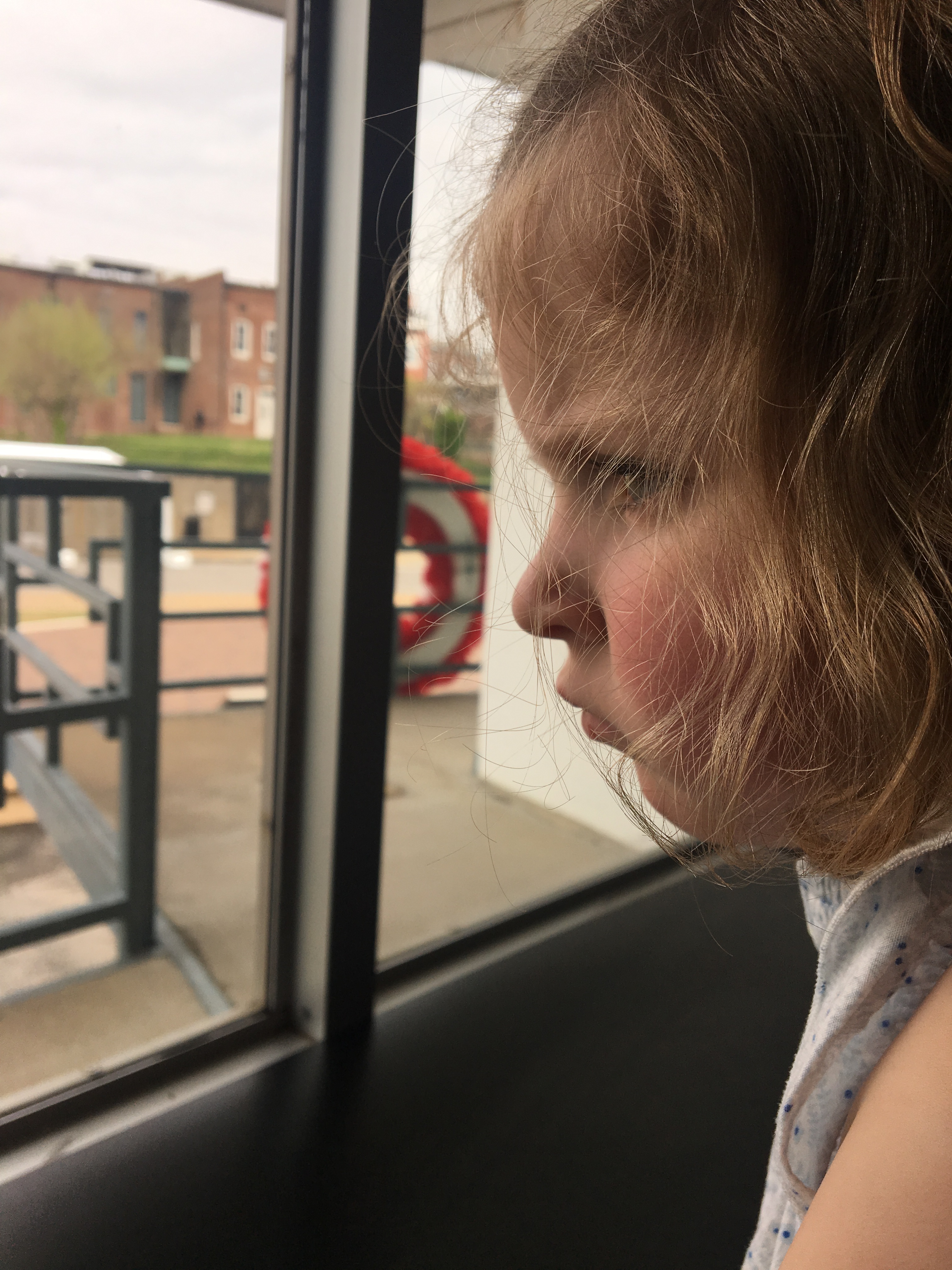
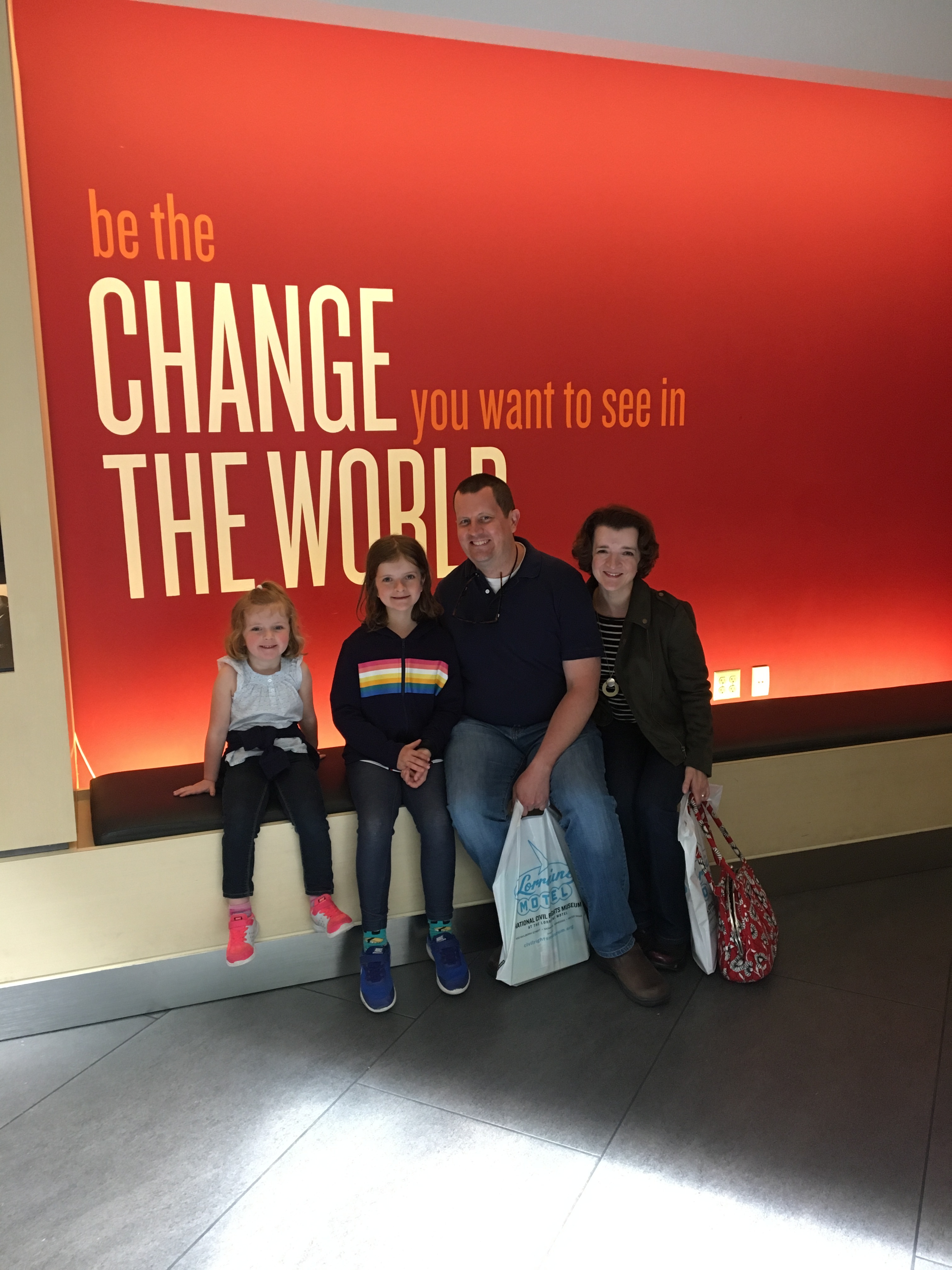
This past week, our family traveled to Mississippi to visit friends.  On the trip we were able to see both the Mississippi Civil Rights Museum in Jackson, and the National Civil Rights Museum in Memphis, Tennessee.  While the museums were appropriate for our older child, who has been studying the Civil War and Reconstruction in her Social Studies Class, our younger child was a bit mystified by the museums.  She struggled with understanding the concept of history versus modern day, but she especially struggled with why people were hurting and killing each other.  She clearly made the connection that Caucasians (or “peach-skinned” people as she called them) were being mean to African-Americans (or “brown-skinned” people), but she could not fathom why.  With every video or picture, I was barraged with questions about why people were doing what they were doing, or why someone would kill someone like Martin Luther King, Jr.

Explaining the atrocities of American racial history to a five-year old is one of the most gut-wrenching experiences I have had.  I already struggle with the shame of our history and my participation in racism.  But to expose my child to the sinfulness and brokenness of our country made the shame deeper.  As the museum bombarded me with statistics around racial disparities, as prerecorded voices shouted out awful words that were once shouted out to people of color, and as “Precious Lord,” or “We Shall Overcome,” played overhead, I was reminded of all that we have been through as a country, and how much further we have to go.

In Lent, we do a lot of confessing of our sinfulness and working on repentance.  On Ash Wednesday, we confessed our exploitation of other people, our blindness to human need and suffering, and for “all false judgments, for uncharitable thoughts toward our neighbors, and for our prejudice and contempt toward those who differ from us.”[i]  In the Great Litany this Lent, we prayed, “From all blindness of heart; from pride, vainglory, and hypocrisy; from envy, hatred, and malice; and from all want of charity, Good Lord, deliver us.”[ii]  In the Exhortation in the Penitential Order, the priest asked us to “Examine your lives and conduct by the rule of God’s commandments, that you may perceive wherein you have offended in what you have done or left undone, whether in thought, word, or deed. And acknowledge your sins before Almighty God, with full purpose of amendment of life, being ready to make restitution for all injuries and wrongs done by you to others; and also being ready to forgive those who have offended you, in order that you yourselves may be forgiven.  And then, being reconciled with one another, come to the banquet of that most heavenly Food.”[iii]

As we finish these last days of Lent, as we hear the passion narrative on Sunday, and as we walk the days of Holy Week next week, I am reminded of how much work we still have to do.  For me, I will be contemplating the ways in which I participate in the systems and practices of racism in our community, working to not only be better, but to teach my children to be better.  And knowing our work of repentance is on-going, I look forward to our Eastertide book study that will allow us to delve into these issues even more.  This week I pray for the whole human family:

O God, you made us in your own image and redeemed us through Jesus your Son: Look with compassion on the whole human family; take away the arrogance and hatred which infect our hearts; break down the walls that separate us; unite us in bonds of love; and work through our struggle and confusion to accomplish your purposes on earth; that, in your good time, all nations and races may serve you in harmony around your heavenly throne; through Jesus Christ our Lord.  Amen.[iv]

IMG_7644 (1)

Photo credit:  Jennifer Andrews-Weckerly; reuse only with permission

[i] Book of Common Prayer (BCP), 268.

[ii] BCP, 149.

[iii] BCP, 317.

[iv] BCP, 815.

← Older posts
Newer posts →

Recent Posts

  • On the Myth and Magic of Advent…
  • On Risking Failure and Facing Fear…
  • Sermon – Luke 23.33-43, P29, YC, November 23, 2025
  • On Inhabiting Gratitude…
  • Sermon – Luke 20.27-38, P27, YC, November 9, 2025

Archives

  • December 2025
  • November 2025
  • October 2025
  • September 2025
  • August 2025
  • July 2025
  • June 2025
  • March 2025
  • February 2025
  • December 2024
  • November 2024
  • October 2024
  • September 2024
  • August 2024
  • July 2024
  • June 2024
  • May 2024
  • March 2024
  • February 2024
  • January 2024
  • December 2023
  • November 2023
  • October 2023
  • September 2023
  • August 2023
  • July 2023
  • June 2023
  • May 2023
  • March 2023
  • February 2023
  • January 2023
  • December 2022
  • November 2022
  • October 2022
  • June 2022
  • May 2022
  • January 2022
  • December 2021
  • November 2021
  • October 2021
  • September 2021
  • August 2021
  • June 2021
  • May 2021
  • April 2021
  • March 2021
  • February 2021
  • January 2021
  • December 2020
  • November 2020
  • October 2020
  • September 2020
  • August 2020
  • July 2020
  • June 2020
  • May 2020
  • April 2020
  • March 2020
  • February 2020
  • January 2020
  • December 2019
  • November 2019
  • October 2019
  • September 2019
  • August 2019
  • July 2019
  • June 2019
  • May 2019
  • April 2019
  • March 2019
  • February 2019
  • January 2019
  • December 2018
  • November 2018
  • October 2018
  • September 2018
  • August 2018
  • July 2018
  • June 2018
  • May 2018
  • April 2018
  • March 2018
  • February 2018
  • January 2018
  • December 2017
  • November 2017
  • October 2017
  • September 2017
  • August 2017
  • July 2017
  • June 2017
  • May 2017
  • April 2017
  • March 2017
  • February 2017
  • January 2017
  • December 2016
  • November 2016
  • October 2016
  • September 2016
  • August 2016
  • July 2016
  • June 2016
  • May 2016
  • April 2016
  • March 2016
  • February 2016
  • January 2016
  • December 2015
  • November 2015
  • October 2015
  • September 2015
  • August 2015
  • July 2015
  • June 2015
  • May 2015
  • April 2015
  • March 2015
  • February 2015
  • January 2015
  • December 2014
  • November 2014
  • October 2014
  • September 2014
  • August 2014
  • July 2014
  • June 2014
  • April 2014
  • March 2014
  • February 2014
  • January 2014
  • December 2013
  • November 2013
  • October 2013
  • September 2013
  • August 2013
  • July 2013
  • June 2013
  • May 2013
  • April 2013
  • March 2013
  • February 2013
  • January 2013
  • December 2012
  • November 2012
  • October 2012
  • September 2012

Categories

  • reflection
  • Sermons
  • Uncategorized

Meta

  • Create account
  • Log in
  • Entries feed
  • Comments feed
  • WordPress.com

Blog at WordPress.com.

  • Subscribe Subscribed
    • Seeking and Serving
    • Join 394 other subscribers
    • Already have a WordPress.com account? Log in now.
    • Seeking and Serving
    • Subscribe Subscribed
    • Sign up
    • Log in
    • Report this content
    • View site in Reader
    • Manage subscriptions
    • Collapse this bar
 

Loading Comments...