• About

Seeking and Serving

~ seek and serve Christ in all persons

Seeking and Serving

Tag Archives: power

Sermon – Matthew 18.21-35, P19, YA, September 17, 2023

20 Wednesday Sep 2023

Posted by jandrewsweckerly in Sermons

≈ Leave a comment

Tags

abundance, conflict, faith, forgive, forgiven, forgiveness, God, health, Jesus, love, parable, power, resentment, scarcity, Sermon

One of the tricky things about Jesus’ parables is where to situate ourselves, especially when the parable is a familiar one.  As soon as we hear the words, “…the kingdom of heaven may be compared to a king who wished to settle accounts…” our brains jump ahead, “Oh, this is the one where the guy is forgiven of his debts and then two seconds later turns around and refuses to forgive someone else’s debt.”  We may have felt pity for the first slave who owed so much, we may have been shocked by his poor behavior toward the other slave, or we may have even thought, “That guy deserved what he got!”  But the thing that is the hardest to do when reading this familiar parable is to situate ourselves in the shoes of the first slave.  And yet, that is the entire reason Jesus tells the parable today. 

We know where to situate ourselves because of what happens before the parable.  If you remember our gospel last week, we talked about Jesus’ conflict resolution plan.  In the very next verse after Jesus explains how the community of faith is to handle conflict, Peter asks a question in today’s text.  The question is a fair one, and when we’re really honest with ourselves, one we may have asked God ourselves.  Peter asks, “Lord, if another member of the church sins against me, how often should I forgive?  As many as seven times?”  The parable Jesus tells today is in response to Peter’s question about conflict, sin, and forgiveness in the community of faith.  Essentially, Jesus says, “Let me tell you a little story about forgiveness.”  So, we, who have resisted forgiveness ourselves like Peter, can situate ourselves with not just Peter, but with the slave who fails so miserably at forgiveness. 

Now, before you get too defensive about how you would never treat a fellow human being like the first slave treats the second, we need to think about Peter’s question first.  Theologian Stanley Hauerwas explains, “Peter’s question presupposes that he is the one who has been sinned against.  He assumes that he is in the position of power against the one who has wronged him.  But Jesus’s reply reminds Peter that he is to learn to be the forgiven.”[i]  Before we begin to think about offering forgiveness, we operate from one foundational truth:  we are a people who have first been forgiven.[ii]  Our forgiven status is at the heart of our ability to be a people of forgiveness.

But before we even talk about being a people of forgiveness, we need to talk a little bit about what forgiveness is not.  Some of us believe that forgiveness means excusing or overlooking the harm that has been done to us and saying that everything is okay.  For those who hold that belief, forgiveness can be equated with stuffing our feelings down deep inside or downright lying in order to keep the peace.  Others of us believe that forgiveness means allowing those who have hurt us to persist in their behavior.  For those who hold this belief, forgiveness is so important, that we become recurring victims of offenses.  Still others believe that forgiving means forgetting what happened.  For those who hold this belief, forgiveness is pretending an old hurt does not still hurt.  Finally, others see forgiveness as something that we can do at will, and always all at once.  For those who hold this belief, forgiveness must be immediate and offered quickly.  The problem with all these models of forgiveness – of overlooking the harm, saying everything is okay, of allowing recurring behavior, of trying to forget, or forgiving once and for all – is that these models of forgiveness would have been totally foreign to Jesus.  According to author Jan Richardson, in Jesus’ teaching about forgiveness, “…nowhere does Jesus lay upon us the kinds of burdens we have often placed upon ourselves—burdens that can make one of the most difficult spiritual practices nearly impossible.”[iii]

So, if we know what forgiveness is not, we need to know what forgiveness is.  I like what scholar Debie Thomas has to say about forgiveness.  She says, “I think forgiveness is choosing to foreground love instead of resentment. If I’m consumed with my own pain, if I’ve made injury my identity, if I insist on weaponizing my well-deserved anger in every interaction I have with people who hurt me, then I’m drinking poison, and the poison will kill me long before it does anything to my abusers. To choose forgiveness is…to cast my hunger for healing deep into Christ’s heart, because healing belongs to him, and he’s the only one powerful enough to secure it.”  She goes on to say, “Secondly, …forgiveness is a transformed way of seeing.  A way of seeing that is forward-focused.  Future-focused.  Eschaton-focused.  …abuse and oppression are [n]ever God’s will or plan for anyone.  But I do believe that God is always and everywhere in the business of taking the worst things that happen to us, and going to work on them for the purposes of multiplying wholeness and blessing…Because God loves us, we don’t have to forgive out of scarcity. We can forgive out of God’s abundance.”[iv]

So how many times are we to forgive?  Not seven times.  Not even really seventy-seven times or seventy times seven, as some translations say.[v]  The forgiveness that first slave receives is hyperbolically abundant – the forgiveness by the king of ten thousand talents (or the equivalent of 150,000 years of labor)[vi] is almost ludicrous in its generosity.  But that is how abundantly God loves us.  We are invited today to love with that kind of ludicrous abundance too.  For our health, for our faith in the better world God is creating, we pray for the strength to ask God to “forgive us our sins as we forgive those who sin against us.”  We are a forgiven people, who, because God loves us, can forgive not out of scarcity, but out of God’s abundance.  Amen.  


[i] Stanley Hauerwas, Matthew:  Brazos Theological Commentary on the Bible (Grand Rapids:  Brazos Press, 2006), 166.

[ii] Hauerwas, 166.

[iii] Jan Richardson, “The Hardest Blessing,” September 9, 2014, as found at http://paintedprayerbook.com/2014/09/09/the-hardest-blessing/#.VBOogcKwKi0 on September 16, 2023.

[iv] Debie Thomas, “Unpacking Forgiveness,” September 6, 2020, as found at https://www.journeywithjesus.net/essays/2748-unpacking-forgiveness on September 16, 2023.

[v] Lewis R. Donelson, “Exegetical Perspective,” Feasting on the Word, Year A, Vol. 4 (Louisville: Westminster John Knox Press, 2011), 69.

[vi] David Lose, “Pentecost 14A: Forgiveness and Freedom,” Sept. 7, 2014, as found at http://www.davidlose.net/ 2014/09/pentecost-14-a/.

Sermon – Matthew 2.13-23, C2, YC, January 2, 2022

12 Wednesday Jan 2022

Posted by jandrewsweckerly in Sermons

≈ Leave a comment

Tags

Christmas, comfort, flight to Egypt, Good News, Herod, hope, Jesus, Joseph, joy, magi, Mary, mess, power, sentimental, Sermon, weird

Today is a very weird day for us scripturally and liturgically.  Even though there are two Sundays appointed for Christmastide, we rarely get to enjoy both because the feast of Epiphany, which falls on January 6, usually gets substituted for the Second Sunday of Christmas.  This year because we get to celebrate the second Sunday of Christmas, we go from Christmas celebrations on Christmas Eve and last Sunday, to the flight to Egypt this week – which takes place after the magi arrive.  And next week, we will go backwards to hear about the magi’s arrival which happens before this week’s lesson.  Like I said, today is super weird.

But the timing is not the only weird feature of today.  The structure of the Episcopal lectionary varies from the Revised Common Lection today and cuts out verses 16-18 of the second chapter of Matthew.  Now, normally, cutting out a few verses is not that big of a deal, but today cutting out verses is a huge deal.  We go from learning that Joseph has a dream warning him to flee to Egypt because Herod wants to destroy the baby Jesus (because the magi arrived and told him a baby has been born king of the Jews – and Herod is not interested in anyone taking power from him), to Herod dying and Joseph receiving another dream in Egypt telling him to go back home to Israel with his wife and baby Jesus.  But in those three omitted verses is an atrocity so mind blowing, I can only surmise the lectionary crafters eliminated the verses because they thought we would be too distracted by the atrocity.  In those three verses, Herod realizes he has been tricked by the magi, and so he sends his men to kill every male child under the age of two in Bethlehem to make sure a new king does not arise.  In essence, Herod is so determined to keep his power that he kills about twenty infants and toddlers[i] to secure his leadership.

But the weirdness does not stop there today.  This text is laden with meaning and parallelism.  Joseph is spoken to in dreams which causes him to safely journey to and from Egypt.  Another Joseph – the son of Jacob and great-grandson of Abraham with the coat of many colors – he had dreams too that led to his bondage in Egypt at first, but eventually to his security and power in Egypt when he interprets dreams for the pharaoh.  So, we hear a parallel story of two Josephs.  We also hear a parallel story of Moses and Jesus.  As one scholar explains, “At Jesus’ birth, violent forces seek his life, just as violent forces had sought the life of Moses.”[ii]  If you remember, the reason Moses was raised in the security of Pharaoh’s home was because Pharaoh’s daughter found Moses in a papyrus basket floating down the river – floating away because Pharaoh had ordered every male Hebrew child be killed because the Hebrews were becoming too numerous and he feared losing his power.  In essence, Jesus’ and Moses’ stories track one another – Jesus is the “Son of God and the expected prophet like Moses who will deliver Israel through a new exodus.”[iii]

Here’s the thing about the weirdness today.  We do not really want weirdness right now.  We are still in the twelve days of Christmas, and we want babies, and angels, and mom’s pondering, and dad’s standing righteously, and shepherds praising and marveling, and magi adoring the Christ Child.  In part, we want the sentimental comfort and joy of Christmas because our lives are running short on comfort and joy lately.  In fact, the wave of the Omicron variant is pressing upon us, and in a time when we thought we would be moving toward freedom, we are making a U-turn toward oppressive restrictions.  We have enough turbulence, terror, and violence in today’s world – the last thing we want to do is read about that mess (and more accurately, that repeated mess!) today in church.

But here’s where we find hope.  Matthew may lay out murder and fleeing and the continuation of a violence and oppression.  But as Dean Culpepper reminds us, “Matthew dares to see things as they are and still affirm that God is working, even in the worst that we can do.”[iv]  Today is not about glossing over the mess of this world.  Today is about naming the mess of this world and still being able to see God at work, doing something as radical as sending the Christ Child to us.  That is the real joy of Christmas this year.  “Nothing can defeat God’s promise of Immanuel, God with us.  Even when we cannot celebrate peace on earth…we can celebrate Immanuel, …the love of God and the promise of peace.”[v]  And that promise is better than any glossed over, sentimental wishes of a Merry Christmas.  That promise is weird, but tremendously good news, indeed.  Amen.


[i] R. Alan Culpepper, “Exegetical Perspective,” Feasting on the Word, Year C, Vol. 1 (Louisville: Westminster John Knox Press, 2009), 167.

[ii] Culpepper, 169.

[iii] Culpepper, 169.

[iv] Culpepper, 169.

[v] Culpepper, 169.

Sermon – John 18.33-37, P29, YB, November 21, 2021

01 Wednesday Dec 2021

Posted by jandrewsweckerly in Sermons

≈ Leave a comment

Tags

authority, Christ the King, church, Jesus, king, love, mercy, peace, power, Sermon

When I say the word “king,” the words that usually pop in our minds include:  ruler, power, authoritative, supreme, distant, dictator, or my personal favorite, Elvis.  Kings are a mixed bag for us, since Hickory Neck closed for over a hundred years after supporting one.  Equally messy was the king before the Revolutionary War who had a lot of impact in our lives – King Henry VIII.  If you remember, King Henry was the king who wanted to divorce his wife so that he could remarry.  When the Pope refused the King’s request, King Henry not only divorced his wife anyway, but he also started a revolution that led to the Anglican Church – our mother Church as Episcopalians.  If that is not power, I do not know what is!

Today, the Church celebrates Christ the King Sunday.  You would think on such a day, we would be hearing a text that glorifies Jesus, or that marks Jesus’ victory – such as the triumphal Palm Sunday lesson or an Easter or Ascension text.  Instead, we get the story of Jesus on trial with Pilate.  Jesus does not really look victorious in this passage – he has been humiliated, beaten, and is now being mocked by Pilate.  This is not exactly the image of Christ we may have had for Christ the King Sunday.  In fact, between Jesus and Pilate, Pilate plays the more stereotypical role of king.  Pilate uses power and authority for selfish ends with no concern for building community.  He hoards power and lords his power over people even to the point of destroying them, on a cross or otherwise.  Meanwhile, Jesus empowers others and uses his authority to wash the feet of those he leads.  He spends his life on them, and he gives his life to bring life.  Pilate’s rule brings about terror, even in the midst of calm.  Meanwhile, Jesus’ rule brings peace, even in the midst of terror.  Pilate’s followers imitate him by using violence to conquer and divide people by race, ethnicity, and nations.  Jesus’ followers put away the sword in order to invite and unify people.  Pilate’s authority originates from the will of Caesar and is always tenuous.  Meanwhile, Jesus’ authority originates from doing the will of God, and is eternal.[i]

So, if Jesus as a king is so different from any kings that we know, and our relationships with kings is tenuous at best, why do we celebrate Christ as King?  Christ the King Sunday is not that ancient of a concept in Church history.  In 1925, in the face of growing nationalism and secularism following World War I, Pope Pius XI established the feast of Christ the King.  The feast was meant to be a way of declaring where allegiances should be – not to a country, but to God.  Our allegiance should be to Jesus – our only ruler and power.  In a time of national pride, the Church boldly proclaimed, “We have no king but Jesus.”  Proclaiming Jesus as King is a fascinating reappropriation of the title “King.”  When the Church invites us to proclaim Christ as King, not only does the Church ask us to put Christ above any earthly ruler, the Church also asks us to redefine the concept of a king.  Jesus is a king who lays down his life for the sake of others; who endures humiliation and death for the salvation of people; who humbly cares for the poor, oppressed, imprisoned, and suffering.  This image does not sound anything like Henry VIII or even modern day presidents; and yet, this is what we proclaim today. 

So what does proclaiming Christ as King really look like today?  If Christ is King, then we are Christ’s people.  Those who have been baptized into Christ Jesus are, as the psalmist says, the people of his pasture and the sheep of his hand.  “Christ has made of us a people with his kingship.  And that kingship is unique, unlike any earthly kingship that is bound by geographic borders…  All are welcome, especially the chronically unwelcome ones.”[ii]  When we say that we are Christ’s people, we do not imply that we elected Jesus or that we hired Jesus as CEO.  We belong to Christ as his subjects – sharing the Eucharistic meal, sharing our lives, serving Christ as one, and resting our hopes in Christ.  Being the people of Christ impacts how we treat one another in this place, how we treat others outside of this place, and how we treat ourselves.    

At the end of another Church year, having lived through another cycle of hearing the stories of Jesus’ life, of being taught again through his miracles and parables, we come together to proclaim the truth of Christ’s kingship.  After another year of living our own lives – burying our loved ones, baptizing our children, celebrating marriage, mourning broken relationships, welcoming new families and ministries, struggling and thriving, surviving a pandemic – we bring all of our own experiences to the climax of this day as well.  We lay down all of this past year at the feet of the crucified, enthroned Christ, and we give thanks.[iii]  We are blessed to be a people ruled by a king who rules with love and mercy.  Being so blessed, we extend that kingly love and mercy to each other, to our neighbors, and to ourselves.  Amen. 


[i] Jaime Clark-Soles, as found on http://www.workingpreacher.org/preaching_print.aspx?commentary_id=1490 on November 23, 2012. 

[ii] Mary W. Anderson, “Royal Treatment,” Christian Century, vol. 120, no. 23, November 15, 2003, 18.

[iii] Anderson, 18.

On Shifting Sands and Drishtis…

19 Thursday Nov 2020

Posted by jandrewsweckerly in Uncategorized

≈ Leave a comment

Tags

balance, control, family, focus, God, goodness, grace, imbalance, Jesus, love, pandemic, parenting, power, sand, weary, yoga

Photo credit: https://www.yogajournal.com/yoga-101/pillars-of-power-yoga-using-drishti-on-and-off-the-mat

When you are doing balancing postures during yoga, one of the skills you learn early on is developing a drishti, or a focal point.  The idea is the more you focus your gaze on one fixed object, the more your body steadies itself.  I am not entirely sure why or how finding a drishti works, but I know from experience that a very wobbly body in a balancing posture is quickly steadied once focused on a drishti.  It is a strange sensation, but when the drishti is engaged, the gaze of the eyes has complete power over the entire body, creating a sense of self-possession, control, and power.

I was talking to a fellow parent this past week and when we talked about parenting during a pandemic, I told her I felt like I was standing on shifting sand.  Just when I would start to figure out a rhythm or start to feel like I had some modicum of control over family life, things would change – whether the formal arrangement with hybrid learning, the changing of teachers mid-quarter, or even my own child’s changing ability to adapt and thrive.  Just when I feel like our family is finding our balance, something makes us wobbly all over again.  That kind of uncontrolled imbalance, of attempting to stand on shifting sand leaves the body weary and fatigued.

But as I have been thinking about pandemic parenting and my learning in yoga, I’ve begun to wonder if what this wobbly parent might need is a pandemic drishti.  For some parents that might mean focusing on the blessing of your children – so that no matter what tempter tantrum they are throwing today, what argument you are having as a family, or what door they have slammed, you focus not on the anger and frustration of the scene immediately in front of you, but on the love you have for your child (even if it’s only the love you see when they are fast asleep).  For me, my drishti is the love of God surrounding us on every side:  the one who loves me when I fail as a parent, the one who loves my child as they receive another setback in expectations, the one who loves each of us when all we can see is the heat of anger and frustration in one another.  Once I focus on God’s love of us, slowly my demeanor starts to shift, my balance starts to return, and my steadiness strengthens.

This week, I encourage you to claim your pandemic drishti.  Whether you focus on God’s lovingkindness, the grace of our Lord Jesus Christ, or the ever-present blessing of the Holy Spirit, take whatever time you need to shift your gaze on God.  My guess is the more you practice steading your gaze on the goodness of God, the more your wobbling, weary body will feel grounded in goodness too.  We cannot control the shifting sand of these times.  But we can control our steady gaze in the face of a storm.

On Sacred Ground and Stories…

23 Wednesday Sep 2020

Posted by jandrewsweckerly in Uncategorized

≈ Leave a comment

Tags

God, holy, Moses, power, sacred, sacred ground, story, struggle, tender

Photo credit: https://gracechurchanderson.com/2017/09/holy-ground/

Last week, our parish kicked off a program called “Sacred Ground.”  The program comes out of the Episcopal Church and is meant to be a program to help Caucasians begin (or continue) to wrestle with the issue of racism.  As part of the introductory materials, Bishop Michael Curry retells Moses’ call narrative.  If you remember, God tells Moses to take off his shoes beside the burning bush because he is standing on holy ground.  Bishop Curry submits that the ground is holy not because of the fire but because it is the place where God tells God’s story.  Curry further suggests that anytime someone shares their story, we are standing on sacred ground with them.

As our group began to tell our stories, I began to realize perhaps this is why we are struggling as a country and community these days.  So often we assume we know people’s stories based on their political stances, their social media posts, or even our chitchat with them on a daily basis.  But every person has a story – a journey of joys and sorrows, a path of successes and failures, and a walk of pride and shame.  And until we make space to hear that story, we will judge, assume, and desecrate the holiness of others.

This week I came across a story of a project in Denmark called the Human Library.  People go to public libraries and instead of borrowing books they “borrow” people.  Each person is given a “title,” such as “Unemployed,” “Refugee,” or “Bipolar.”  When you borrow the person, you sit with them for thirty minutes and hear their story.  The idea is to break down prejudice through the power of story.

This week I invite you to reach out to someone you do not know much about – someone you only know superficially, someone different from you, or someone you already know will rub you the wrong way and ask if you can hear their story.  In this time of social distancing, maybe you start with projects like Humans of New York or StoryCorps.  But maybe you use a phone, FaceTime, or outdoor coffee as your method to connect with someone local.  Either way, this week I invite you to take off your shoes and stand on some holy ground with one another and your God.  Perhaps once we all have our shoes off, we will find ourselves walking much more tenderly with one another.

On Wrestling with Healing…

19 Wednesday Aug 2020

Posted by jandrewsweckerly in Uncategorized

≈ Leave a comment

Tags

Bible, disciple, gift, healing, Jesus, ministry, power, scripture, vocation

healing hands

Photo credit: https://www.womansday.com/life/g25224950/healing-prayers/

This summer, my parish is participating in a 90-Day Bible Reading Challenge.  It’s been a powerful journey and companion during this pandemic time.  One of the lessons we have already learned this summer is reading the Bible at a rapid pace is different than in-depth Bible Study.  You tend to get the big picture of God and the people of faith, see patterns more easily, and catch things by reading the books in order as opposed to hearing snippets, like we do on Sundays.

As we have been reading through Matthew, something caught my attention this time.  From the beginning of Jesus’ ministry, he is constantly healing people.  Not just one or two famous stories we may remember, but constantly healing, sometimes healing whole crowds of sick people.  In chapter ten, when Jesus sends out his twelve disciples, he doesn’t tell them to teach people or preach the gospel.  He gives them authority to drive out evil spirits and to heal every disease and sickness.  Jesus also does a lot of teaching in Matthew, but I was surprised to remember how ubiquitous Jesus’ healing ministry is.

Reading Matthew’s Gospel in a rapid, big-picture way, I have been reminded how much Jesus’ healing ministry makes me a bit uncomfortable.  I am generally comfortable with preaching and teaching, but, as one of Jesus’ disciples, healing is not a power I would ever claim.  Additionally, as modern readers, I think healing and miracles are one of those things that lead to all sorts of questions.  Does Jesus really heal people?  When we think of healing, do we soften the words, making the healing more figurative than literal?  If Jesus heals all those people in his time, what do we do with all the people who are not healed in our time, especially as we face a worldwide pandemic?  Shouldn’t healing just be limited to medical professionals and those gifted with the charism of healing, as opposed to all of us as followers of Christ?

Here’s what I do know.  The healing Jesus does allows individuals to reenter communal life, fully participating in the community, and being restored as an equal.  Also, the healing Jesus does clears the way for those individuals to do good with their lives, not only helping others, but also showing others the way to Christ.  As I think about those who are suffering in our communities, part of the healing that is needed is the healing that will restore them to full participation in life – eliminating poverty, hunger, homelessness, and discrimination of any kind.  Making health care, childcare, affordable food, and affordable housing accessible to all.  We may not have the vocation of physical or mental healing, but we all have the vocation of healing our society, respecting the dignity of every human being, and striving for justice and peace among all people.  Perhaps when Jesus sent out those disciples to heal, they all healed others in the ways they knew how.  But they all went out to heal.  We can go and do likewise – healing this world that needs healing so much!

Sermon – Matthew 10.40-42, P8, YA, June 28, 2020

01 Wednesday Jul 2020

Posted by jandrewsweckerly in Sermons, Uncategorized

≈ Leave a comment

Tags

Bible, Christ, covenant, disciple, God, hospitality, Jesus, love, mirror, missionary discourse, pandemic, power, presence, Sermon, vulnerability

This summer, several parishioners are participating in our 90-Day Bible Reading Challenge.  In supporting each other in our reading, one of the patterns we have noticed is the break-neck pace of reading twelve pages a day means we do not have a lot of time for traditional Bible Study – looking at the original Hebrew or Greek, discerning the historical context of the book, studying the cultural norms of the community, or even delving into the literary devices of the book.  Instead we are drinking from the fire hose of Scripture – capturing the larger narrative God’s covenantal relationship with humankind, but not indulging in the intriguing details.

With a passage like the one we hear in today’s gospel from Matthew, we could easily do the same.  There are only three verses in the text, and they are somewhat repetitive in pattern.  A quick skim brings up an old adage we have learned by heart – welcome the stranger because you may be welcoming Christ himself.  Maybe your mind immediately leapt to a time you saw Christ in a stranger.  Maybe you began thinking about the ministry of hospitality, particularly how strong that ministry is at Hickory Neck.  Maybe you even started to wonder what you could do to be more hospitable, especially during this time of social distancing.

But here’s the thing:  when we slow down our reading, we realize Jesus does not say, “whoever welcomes the stranger welcomes me.”  Jesus says, “Whoever welcomes you welcomes me…”  Often when we think of hospitality, we think of hospitality from the perspective of the host.  Whether we acknowledge the reality or not, we are people of power and privilege, and our notion of hospitality is rooted in how we can offer hospitality to others.[i]  There is nothing inherently wrong with this dynamic – in fact, our sense of obligation to offer hospitality is an answer to Jesus’ call to love neighbor.  But Jesus is not talking about offering hospitality to others from a position of power.  Instead, Jesus is inviting us to give up power and receive others’ hospitality.

If you remember, we have been in the midst of Jesus’ Missionary Discourse[ii] the last several weeks.  Jesus told the disciples to go out, without resources, to do the work of discipleship.  He warned them they would face persecution, and family members would turn against one another.  And today, as Jesus concludes his discourse, he tells them whoever welcomes them, welcomes Jesus.  So not only are the disciples to make themselves vulnerable to the hospitality of others, they will be mirroring Jesus to others.  In other words, in every moment, every interaction, every relationship, encounter, conversation, and conflict among the disciples –the disciples will be witnessing Jesus.[iii]

I do not know about you, but that is a lot of pressure.  Making oneself vulnerable is hard enough.  Making oneself vulnerable means opening up all our flaws, weaknesses, and doubts.  And now, Jesus is saying while we are vulnerable, our homes, our marriages, our workplaces, our extended families, even our friendships are windows into Christ for others.  As Debie Thomas asks, “When we know Jesus is visible in and through us at every moment…[will] we tread more lightly on the earth?  Speak less and listen more?  Reconsider our grudges and grievances?  Choose our words with greater care?  Examine our motivations more closely?”[iv]

There is a lot about this pandemic that has been absolutely awful – devastating, painful, and full of death.  But one of the things that has happened to Hickory Neck in this pandemic represents new life too.  Before we closed our buildings in March, we offered hospitality from our comfort zone – hospitality unparalleled once you walked in those doors – hospitality that made most of us join this church.  But once we moved everything online, the doors and walls of this place lowered – we went out, showing who we are and what we are about to a much broader audience.  Here in this exposed setting, we are carefully, thoughtfully, intentionally showing others what Jesus looks like.  The work is hard and scary, but the reward is great too.  In letting down our walls, we are helping people to see Christ – the same Christ who redeems us, gives us strength, and makes us whole.  But the work of discipleship is not just happening on livestream.  I see this work happening in you – as you call to check in on people in the parish you have not met before because you attend a different service, as you don a mask and attend a rally in support of our African-American brothers and sisters during this raw time, and as you have socially-distanced conversations with neighbors about the power of Christ in your life.  The promise Jesus made at the beginning of his Discourse is still lingering today.  Christ is with us always, even to the end of the age.  His promised presence will allow us to keep letting down walls and being Christ’s mirror in the world.  Our job is to take up the challenge we will hear in our dismissal today:  Go.  Receive God’s love and hospitality.  Serve the Lord as Christ’s mirror.  Amen.

[i] Debie Thomas, “Welcome the Prophet,” June 21, 2020, as found at https://www.journeywithjesus.net/lectionary-essays/current-essay on June 26, 2020.

[ii] Eugene Eung-Chun Park, “Exegetical Perspective,” Feasting on the Word, Year A, Volume 3 (Louisville:  Westminster John Knox Press, 2011), 189.

[iii] Thomas.

[iv] Thomas.

On Race, Earthquakes, and Action…

17 Wednesday Jun 2020

Posted by jandrewsweckerly in Uncategorized

≈ 2 Comments

Tags

action, African-American, beauty, blindness, compassion, complacency, confederate, earthquake, harassed, Jesus, learn, listen, love, power, protest, racism, senses, uncomfortable, value

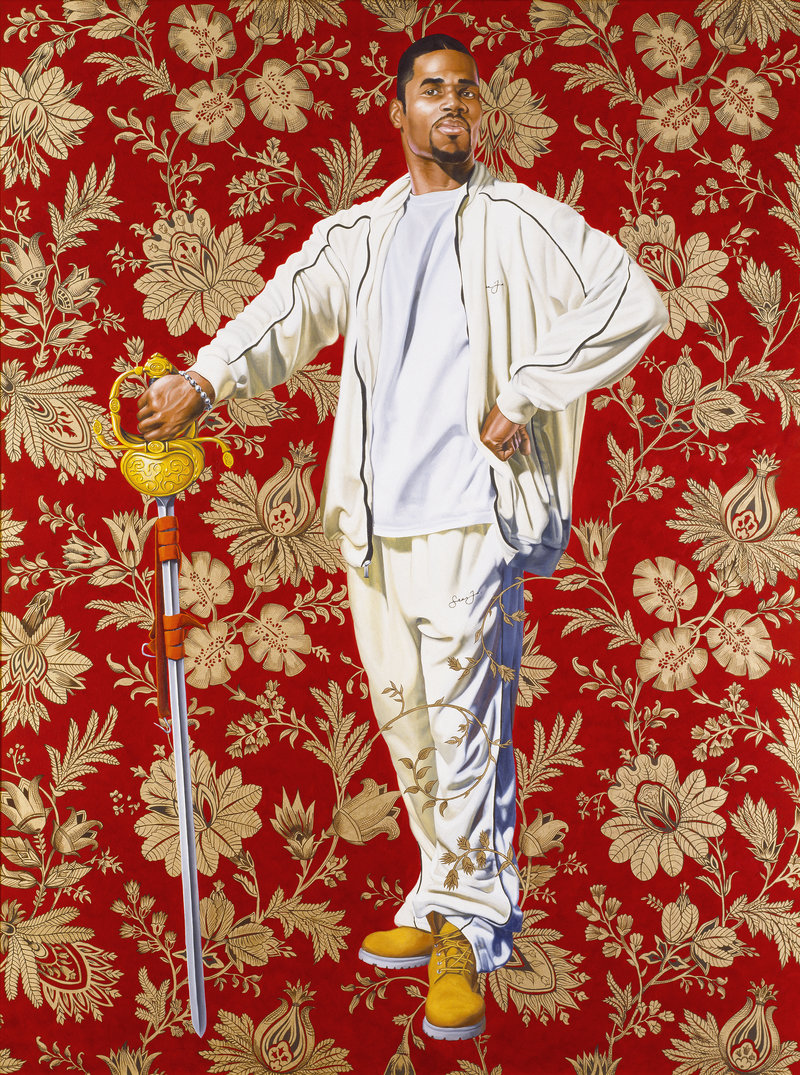
Kehinde Wiley

Photo credit:  https://www.npr.org/2015/05/22/408558234/the-exquisite-dissonance-of-kehinde-wiley

A few years ago, the Virginia Museum of Fine Arts had an exhibit of the works of Kehinde Wiley.  I had not seen his work before, and found his pieces in the exhibit shocking to the eye.  Wiley managed to take traditional poses and settings from art history and infuse them with images of modern African-Americans.  The pieces were jarring to the senses.  As I made my way through the exhibit, it began to dawn on me why my senses were so jarred. By consistently seeing classical art featuring people with light-colored skin, I had been enculturated to expect certain images in art.  The prominence of one kind of subject also created unspoken messages about value, beauty, and power.  Wiley’s vibrant pieces were like an earthquake.  And as someone who considers herself fairly self-aware, I found myself humbled by his work, and sorrowful for my ignorance.

I think that is why I was so surprised by an experience last week.  Last Tuesday night, our family went up to Richmond to take a look at the Robert E. Lee statue and the surrounding damage to businesses and monuments.  For those of you who have not been following the story, as part of the protests about George Floyd’s death and the Black Lives Matter cause, the prominent Confederate monuments in Richmond have come under fire.  The statue of Robert E. Lee’s large stone plinth has been covered in graffiti, protesting George’s death, the treatment of African-Americans by the police, and systemic racism.  As I took in the visceral, pain-filled cries of graffiti, as I looked at pictures of black victims of police violence surrounding the statue, whose names I have prayed for over the years, as I watched families of color take pictures in front of this once pristine, but ever-controversial, statue with a new sense of pride and defiance, what I began to understand is those who are harassed and feel helpless have been begging for our compassion for a long time – cries that could no longer be ignored when staring at that powerfully altered statue.

But mostly, I mourned again for my complacency and blindness.  As a descendant of Confederate veterans, student of African-American history and politics, and pastor of a church built long before the Civil War, I know the issue of Confederate statues and monuments is sensitive.  But watching what was happening at the Robert E. Lee statue created the same feeling as Kehinde Wiley’s art work:  an earthquake for all in positions of privilege and power.  Standing there with my family, I felt like I was on unstable ground, my complicity in systemic racism exposed, and the weight of the question pressing on my chest:  what are you going to do about it?

For my brothers and sisters of color, I am sorry.  I am sorry that you have had to do the work to awaken my senses instead of doing that work myself.  For my brothers and sisters of European descent, we have work to do.  Hickory Neck Church has been posting ways for you to engage this issue – not necessarily telling you what to do, but inviting you into the position of making yourself vulnerable to listening, learning, and acting.  This is our work to do.  It is hard and uncomfortable, and this post may even make you defensive.  Please know that I am here – here to walk with you, here to encourage you, and here to hold us all to Jesus’ message of love.  What you do next will vary widely.  Maybe you can only do one small thing to start.  Our invitation is do something – and keep doing something until we find ourselves doing the work of the kingdom Jesus has desired for a long time.

IMG_8253

Photo credit:  Jennifer Andrews-Weckerly; reuse with permission only.


On Wanting to Go Back…

02 Tuesday Jun 2020

Posted by jandrewsweckerly in Uncategorized

≈ Leave a comment

Tags

ancestors, darkness, Egypt, faith, God, goodness, hard, help, Israelites, journey, lament, longing, pandemic, power, Promised Land, protest, romanticize, trust, wilderness

walkingdesert2_thumb

Photo credit:  http://www.livingintheshadowofhishand.com/2013/06/wandering-in-wilderness.html

The whole congregation of the Israelites complained against Moses and Aaron in the wilderness.    The Israelites said to them, “If only we had died by the hand of the Lord in the land of Egypt, when we sat by the fleshpots and ate our fill of bread; for you have brought us out into this wilderness to kill this whole assembly with hunger.”  (Exodus 16.2-3) 

The rabble among them had a strong craving; and the Israelites also wept again, and said, “If only we had meat to eat!  We remember the fish we used to eat in Egypt for nothing, the cucumbers, the melons, the leeks, the onions, and the garlic; but now our strength is dried up, and there is nothing at all but this manna to look at.”  (Numbers 11.4-6)


One of the cries we are prone to in these days is “I wish we could just go back to the way it was!”  I just did it myself in a sermon a few weeks ago, when I talked about how at the beginning of the pandemic, we were all chipping in and helping each other, but then slowly our demons had taken back over and we are becoming fractured and partisan again.  But we do it all the time.  The most famous may be our President’s campaign slogan, “Make American Great Again.”  I have heard the cry from former Senators and Congressmembers who have talked about the time when people worked “across the aisle” with compromise and collaboration.  As we have mourned social distancing and stay-at-home orders, this has especially become the cry of many of us in the Church.  And as violence rocks our country, many are asking protestors to quieten down and find other ways to make changes.

Of course, we are not alone in our lament and longing.  Our ancestors, the Israelites, were famous complainers in the wilderness, longing to go back to Egypt – the very place of their enslavement – because “at least they had food,” or they remember with longing the savory foods.  The hardness of the wilderness made them romanticize a life marked by brutality, oppression, and death.  Keeping an eye on the Promised Land was not so easy after years in the wilderness.

We are not unlike of ancestors.  In hoping to make America great again, we forget that any era of our history has been marked by darkness – whether the subjugation of the Indigenous peoples of this land, the enslavement, segregation, or oppression of African-Americans, the disenfranchisement and sexual subjugation of women, and on and on go the examples.  When we look at our current inability to work across party lines, we forget the ways in which women and people of color were wildly underrepresented in leadership – if represented at all!  Our current mourning of how Church used to be forgets the incredible ways technology has connected us to our neighbors, our extended community, and even strangers.   And both this pandemic and the protests about the treatment of persons of color are pulling back the curtains on disparities around wealth and opportunity for African-Americans.

What we learn from our biblical ancestors is that the wilderness is hard:  hunger, thirst, discomfort, and disagreements over power are real.  And yet, only in the wilderness did the faithful learn to trust God, to restructure leadership in shared ways, and find ways to govern themselves marked by justice and mercy.  As a person of privilege, I certainly have the option to turn off news coverage, wait this pandemic and the protests out, and stay ensconced in my place of power.  Or I can use this wilderness to learn, to be vulnerable, to use my power for goodness (or even better, cede some of my power), and to pray for God’s help on the journey.  It may be quite some time before we arrive at the Promised Land.  But we do not have to flee back to Egypt.


The Pilgrim’s Way…Day 5

11 Tuesday Feb 2020

Posted by jandrewsweckerly in Uncategorized

≈ Leave a comment

Tags

beautiful, blessing, body, connection, Eucharist, evensong, evocative, God, instrument, intimate, liturgy, music, pilgrimage, power, Salisbury, sound, spiritual, Winchester

84338524_2889910537731854_333793429337145344_n

Photo credit:  Jennifer Andrews-Weckerly; reuse with permission only

Sixteen pilgrims from Hickory Neck Church traveled to England for 8 days of pilgrimage.  Our focus was on choral music, hearing Evensong or Choral Mass at a Cathedral, Minster, or college everyday.  This is the fifth entry, initially posted on our church Facebook page.  For those of you who do not follow us on Facebook, I am repeating the journey’s daily entries here.  Enjoy!

Salisbury/Winchester

Today, I was struck by the tremendous power of liturgy. We stumbled into a midday Eucharist at Salisbury Cathedral. It was spoken, and the homily was humbly short, but poignant. Then, as the priest set the table, she asked if anyone was a licensed Chalicist. I didn’t volunteer for fear someone else would want to help, and even unsure what the rules were in the Mother Church. But as the priest finished the Eucharistic Prayer, I determined I would just go up and offer to help. As soon as the priest saw my collar, she gratefully handed me the chalice. I found myself profoundly moved: doing something almost innate, but something that also felt foreign in the vast space, in a country not my own. And yet the power of Christ’s meal knows no boundaries. His blood is shed for you, and my body is His instrument.

Later this evening, we attended Evensong at Winchester Cathedral. The Adult singers and boy Chorister’s voices sang in perfection: clean and clear, expressive and moving. Their anthem, Deep River, is the third movement of Michael Tippett’s oratorio about the Nazi government’s violent pogrom against its Jewish population—called Kristallnacht. Pulling from African-American spirituals, this last movement holds a message of hope for the possible healing that would come from Man’s acceptance of his Shadow in relation to his Light. Combining the sound of spirituals and Anglican Choral singing, and the message of justice and reconciliation, I felt all my spiritual worlds colliding, and the words and sounds brought me to tears. I was amazed by how evocative a piece a liturgical music could be. I left Evensong feeling like I had journeyed with God somewhere deeply intimate and profoundly beautiful.

I don’t know if you have had one of those liturgical moments lately. If you are longing for that kind of connection, you are always welcome at Hickory Neck. And if you have found that liturgical blessing, do share it with someone who needs it!

The lyrics for Deep River:

Deep river,
My home is over Jordan.
Deep river, Lord.
I want to cross over into campground.

Deep River,
My home is over Jordan.
Deep river, Lord,
I want to cross over into campground.

Oh, don’t you want to go,
To the Gospel feast;
That Promised Land,
Where all is peace?

Oh, deep river, Lord,
I want to cross over into campground.

86441337_2889910554398519_6456003992475402240_n

Photo credit:  Jennifer Andrews-Weckerly; reuse with permission only

← Older posts

Recent Posts

  • On the Myth and Magic of Advent…
  • On Risking Failure and Facing Fear…
  • Sermon – Luke 23.33-43, P29, YC, November 23, 2025
  • On Inhabiting Gratitude…
  • Sermon – Luke 20.27-38, P27, YC, November 9, 2025

Archives

  • December 2025
  • November 2025
  • October 2025
  • September 2025
  • August 2025
  • July 2025
  • June 2025
  • March 2025
  • February 2025
  • December 2024
  • November 2024
  • October 2024
  • September 2024
  • August 2024
  • July 2024
  • June 2024
  • May 2024
  • March 2024
  • February 2024
  • January 2024
  • December 2023
  • November 2023
  • October 2023
  • September 2023
  • August 2023
  • July 2023
  • June 2023
  • May 2023
  • March 2023
  • February 2023
  • January 2023
  • December 2022
  • November 2022
  • October 2022
  • June 2022
  • May 2022
  • January 2022
  • December 2021
  • November 2021
  • October 2021
  • September 2021
  • August 2021
  • June 2021
  • May 2021
  • April 2021
  • March 2021
  • February 2021
  • January 2021
  • December 2020
  • November 2020
  • October 2020
  • September 2020
  • August 2020
  • July 2020
  • June 2020
  • May 2020
  • April 2020
  • March 2020
  • February 2020
  • January 2020
  • December 2019
  • November 2019
  • October 2019
  • September 2019
  • August 2019
  • July 2019
  • June 2019
  • May 2019
  • April 2019
  • March 2019
  • February 2019
  • January 2019
  • December 2018
  • November 2018
  • October 2018
  • September 2018
  • August 2018
  • July 2018
  • June 2018
  • May 2018
  • April 2018
  • March 2018
  • February 2018
  • January 2018
  • December 2017
  • November 2017
  • October 2017
  • September 2017
  • August 2017
  • July 2017
  • June 2017
  • May 2017
  • April 2017
  • March 2017
  • February 2017
  • January 2017
  • December 2016
  • November 2016
  • October 2016
  • September 2016
  • August 2016
  • July 2016
  • June 2016
  • May 2016
  • April 2016
  • March 2016
  • February 2016
  • January 2016
  • December 2015
  • November 2015
  • October 2015
  • September 2015
  • August 2015
  • July 2015
  • June 2015
  • May 2015
  • April 2015
  • March 2015
  • February 2015
  • January 2015
  • December 2014
  • November 2014
  • October 2014
  • September 2014
  • August 2014
  • July 2014
  • June 2014
  • April 2014
  • March 2014
  • February 2014
  • January 2014
  • December 2013
  • November 2013
  • October 2013
  • September 2013
  • August 2013
  • July 2013
  • June 2013
  • May 2013
  • April 2013
  • March 2013
  • February 2013
  • January 2013
  • December 2012
  • November 2012
  • October 2012
  • September 2012

Categories

  • reflection
  • Sermons
  • Uncategorized

Meta

  • Create account
  • Log in
  • Entries feed
  • Comments feed
  • WordPress.com

Blog at WordPress.com.

  • Subscribe Subscribed
    • Seeking and Serving
    • Join 394 other subscribers
    • Already have a WordPress.com account? Log in now.
    • Seeking and Serving
    • Subscribe Subscribed
    • Sign up
    • Log in
    • Report this content
    • View site in Reader
    • Manage subscriptions
    • Collapse this bar
 

Loading Comments...