• About

Seeking and Serving

~ seek and serve Christ in all persons

Seeking and Serving

Tag Archives: question

On the Road to Getting It Right…

03 Wednesday Jul 2024

Posted by jandrewsweckerly in reflection

≈ Leave a comment

Tags

Communion Table, Episcopal Church, exclusion, faith, Holy Spirit, love, ministry, ordination, Philadelphia 11, Philadelphia Eleven, priesthood, question, women

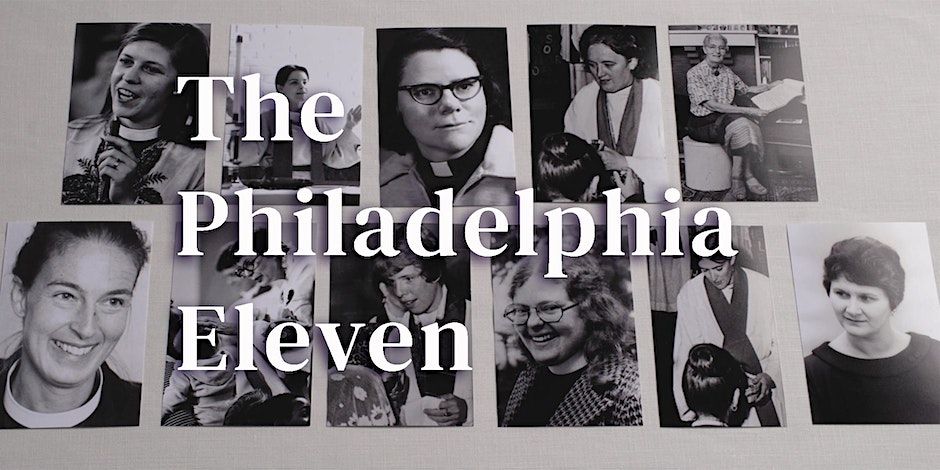
Photo credit: https://azdiocese.org/2023/11/the-philadelphia-eleven-screenings-in-arizona/

This past Sunday, the local Episcopal parishes in my town gathered to watch the documentary, The Philadelphia Eleven.  The film details the history of women’s ordination in the Episcopal Church, and the first eleven women who were “irregularly ordained” in 1974 (i.e. ordained by Episcopal Bishops, but without the church’s General Convention sanctioning the ordination of women).  The question of women’s ordination had come before General Convention many times before, but was always defeated.  So, fifty years ago, a handful of women, along with male allies, decided they could not wait any longer.  The film tells the story of the outrage the eleven women created, the abuse and death threats they faced, and the way that their diverse ministries led to the sanctioning of women’s ordination by General Convention in 1976. 

I came into the Episcopal Church later in life.  Although deeply involved in the United Methodist campus ministry at my college, an ecumenical trip with the Episcopal campus minister was my first real exposure to the liturgy and polity of the Episcopal Church.  That campus minister was a woman, and at that point in my development, that did not seem abnormal.  Then, a couple of years after college, I stumbled into the Episcopal Cathedral, whose dean was a woman.  One of her assisting priests was also a woman.  Those early mentors did not just normalize women’s ordination – it never occurred to me that there was a time when women were not priests.  In fact, I remember an occasion when one of my own daughters as a young child asked me, “Can boys be priests?”

At this year’s General Convention of the Episcopal Church, we took the first steps to authorize the honoring of the Philadelphia Eleven in our set of honored saints we celebrate at weekday Eucharists.  In the same city, where 51 years earlier the General Convention had denied women’s right to ordination, we agreed to honor the saints who pushed us to be better versions of the Church.  All female clergy in the room were invited to stand to a roar of applause.  I looked at the other women, many of whom I know and love, and I looked at the male clergy and laity whose eyes and smiles were full of admiration and respect, and I realized a couple of things.  One, it is always a joy to celebrate when the Church gets something right – even if it takes a long time for the Church to get there.  And two, I can be in ministry as my most authentic self is due to the suffering and courage of men and women I may never meet. 

I share all this not to brag on the Episcopal Church – in fact, we still have a long way to go.  Income disparity between male and female clergy is still a problem, as well as access to comparable positions.  I have been the first female rector both times I have served as rector, and both times, people left the church when a woman was hired.  But I share this story more because I wonder who else have we excluded from the Table.  I share this story because I found myself wondering whether I would have risked being one of the Philadelphia Eleven, knowing the suffering that would come.  I share this story because as someone who really appreciates rules and boundaries, I wonder which of those rules and boundaries the Holy Spirt keeps bumping against.  While these may seem like big questions, or super-Church-nerdy questions, I think these questions are for all of us – an invitation to wonder who we have excluded in the communities of faith we love so much.  The Philadelphia Eleven seem to be still asking us these questions fifty years later.    

Sabbatical Journey…On Differences and Experiences

26 Monday Jun 2023

Posted by jandrewsweckerly in reflection

≈ 1 Comment

Tags

church, Church of Latter-Day Saints, differences, Episcopal, experience, faith, question, Salt Lake City, welcome

She Will Find What is Lost, by Brian Kershisnik, at the CJCLDS Conference Center (picture taken June 25, 2023)

Today, we toured Salt Lake City with a family friend and her family.  We wanted to learn about Temple Square, and help the kids learn a little more about the Church of Jesus Christ of Latter-Day Saints.  We couldn’t have had a more patient, open, vulnerable tour guide than our friend.  She constantly said all questions were fair game, and she meant it.  We learned about Church structure and governance, liturgical practices, theology, and personal experience.  Her son told us about his Morman mission to Korea and her girls talked about their choice not to take a mission.  We also got to see the 20,000-seat Conference Center, and the Tabernacle with the 11,000-pipe organ.  And we got the real experience of most businesses being closed on Sundays due to the widely respected sabbath day of rest. 

As we were talking with our friend about her faith and considering the differences in practices and theology, I began to realize how strange my faith must sound to the unchurched.  It is tricky enough to navigate and respect differences within the Abrahamic faiths.  But to someone who is unchurched, surely how we interpret scripture, what we practice (and don’t), and all our rules and restrictions must seem so foreign and intimidating.  Trying to figure out the differences between an Episcopalian and a member of the LDS must feel completely befuddling. 

I think we forget that what matters most to the unchurched is not necessarily all those distinctions among us, but how we treat the unchurched.  So much of what we think about church or other faiths is based on our experience of them – not some heady explanation of doctrine.  So, whether we are treated with dignity matters.  Whether we are given freedom to explore and ask questions without judgment matters.  Whether we experience genuine love and acceptance as we are matters.  I have known many an Episcopalian who was drawn to the Episcopal Church because they were frustrated by the doctrine of another denomination or faith.  But what kept them in the Episcopal Church wasn’t the doctrine they were seeking, but the reception they received once they kept coming back to church.

I hope this blog is one small way you might begin to experience the invitation of church another way.  Your questions and your struggles are welcome here.  You pain and hurt, as well as your hopes and joys, are welcome here.  Your skepticism and your hesitancy are welcome here.  Most of us people of faith are still figuring out this whole faith thing too.  You are welcome here.

Sermon – Acts 8.26-40, E5, YB, May 2, 2021

05 Wednesday May 2021

Posted by jandrewsweckerly in Sermons

≈ Leave a comment

Tags

baptism, Ethiopian eunuch, God, Good News, guide, Holy Spirit, listen, patience, Philip, posture, proclaim, pursuit, question, response, Sermon

As we continue our journey of Eastertide, we continue to explore the consequences of the resurrection on our daily living.  This week, we turn to the Acts of the Apostles, and the vivid story between Philip and the Ethiopian eunuch.  What seems like a simple witness story, the apostle Philip teaching and converting the foreign eunuch, is not simple at all.  In fact, we learn from both characters, in very different ways, what posture toward God we should assume, what our responsibility to each other and the community of faith is, and what our response to the resurrection and one another can be.

Our first lesson from these two characters is what posture toward God we can assume.  Philip shows us the posture of responding to God, no matter what the instruction.  Philip is told by an angel of the Lord to go south.  There is no explanation about why he should go or what the itinerary will be, or why he should take the dangerous wilderness road.  Later, the Holy Spirit tells Philip to approach a quickly-moving chariot, containing a person of influence, who may reject this disheveled disciple.  Both times, Philip responds immediately, sprinting to follow the Spirit.  We see in Philip no complaining or whining to God.  Philip hears God’s word of instruction and Philip responds, no questions asked.

We also learn from the eunuch’s posture toward God.  The eunuch is a man of color, looking distinctly different from any Jew from Israel; he is a court official, a man of importance and wealth[i]; his sexual status has been altered, making him barred from the temple.[ii]  So this man, this unnamed eunuch, has both power and a lack of power.  But despite his exclusion from the temple, he is pursuing God.  And, despite his half-fulfilled experience in Jerusalem, he will not be deterred from seeking God.  This outsider by all other standards shows us the posture of constant, undeterred pursuit of God. 

After Philip and the eunuch teach us about the appropriate postures toward God, the pair teaches us about our responsibilities to one another and to the community of faith.  Philip teaches us of our responsibility to serve as guides to one another.[iii]  Imagine for a moment the best teacher you ever had.  Usually our best teachers are not didactic, but are more guides who are in the learning journey with us.  That is exactly what Philip offers when he sits beside the eunuch in the chariot.  He sits beside the foreign, castrated man, and treats him like an equal in the pursuit of following Jesus.  Philip teaches us that our work is to be guides with one another in this journey of growing to know God.

The eunuch teaches us a lot about our responsibilities toward one another too.  As a person of influence and power, the eunuch could have easily brushed off Philip, telling this dirty disciple to get away from his pristine chariot.  But instead, the eunuch is completely unafraid to ask questions.  He willingly admits he needs a guide, he wants to know how to interpret scripture, and he wants to know if he too can be baptized.  His willingness to question reveals a sense of humility and engagement, and a willingness to trust someone in the community to teach him.

After teaching us about the appropriate posture toward God, the responsibilities to one another and the community of faith, Philip and the eunuch finally teach us about what our work or response to God and one another can be.  Philip responds to God by proclaiming the good news.  This step is often the hardest for us.  When the time for proclaiming the gospel comes, we clam up, fear we are not qualified, or are afraid to come off as pushy or sanctimonious.  But Philip shares the good news by telling the eunuch about Jesus, sharing stories of Jesus’ historical ministry, his love for the poor, his death and resurrection, and then finally, how Jesus’ life can be seen in the whole of the salvation narrative.  Sharing the good news is simply a matter of telling a good story. 

Finally, the eunuch shows us the other requirement of faithful living – responding to the good news.  For the eunuch, he hears the good news, and he immediately responds by asking for baptism.  Our liturgy invites us into the same response every week.  We come together as a community; we hear the word of God – those stories that make up the whole of the good news; and we are sent out into the community – to love and serve the Lord.  Church is not just a place to come and feel good.  Church is also a place to be so filled that your enthusiasm for the good news that sends you out into the world with the work God has given you to do. 

This week, I invite you to take Philip and the Ethiopian eunuch with you out into the world.  Perhaps you will work on your willingness to be open to the voice of the Holy Spirit; perhaps you will allow yourself to say aloud those questions that you hide in the depths of your heart; perhaps you will share the holy stories of the faith with another; or perhaps you will patiently sit with someone who is struggling with their faith this week.  Like Philip and the eunuch, who boldly go down to those baptismal waters, we too hold one another’s hands as we leave this space, facing the challenges of this world together.  Amen.


[i] Paul W. Walaskay, “Exegetical Perspective,” Feasting on the Word, Year B, Vol. 2 (Louisville: Westminster John Knox Press, 2008), 457.

[ii] Walaskay, 457.

[iii] William Brosend, “Unless Someone Guides Me,” Christian Century, vol. 117, no. 15, May 10, 2000, 535.

On God, Scripture, and Politics…

02 Wednesday Sep 2020

Posted by jandrewsweckerly in Uncategorized

≈ Leave a comment

Tags

abundant, Bible, challenge, covenant, disciple, forgiving, God, love, neighbor, politics, question, reading, relationship, scripture, witness

heart-light-bible_si

Photo credit:  https://www1.cbn.com/teaching/bible-verses-love

This week, our church will finish our summer 90-Day Bible Reading Challenge.  At the beginning of the summer, I wanted to find something we could do as a community.  I was also aware the Bible was being used as a prop and as a symbol for certain political opinions.  I figured if Hickory Neck is helping form faithful disciples who can participate fully in civic life, we should know what is in the Bible – all of it!  And so, we began a reading journey.

The days and nights were long.  Twelve pages a day does not sound like much, but for anyone who got behind (or who like me, is still behind), we learned that twelve daily pages of biblical text was no simple feat.  We journeyed through fun, familiar stories, we drudged through laws and genealogies, we read stories that were repeated in other books.  We asked questions, we struggled with cultural differences, and we found some surprises.  We realized the Hebrew Scriptures (Old Testament) comprises two-thirds of the Bible.  We fell in love with new books, laughed, and found modern parallels to life today.

This summer, I realized the gift of the 90-Day Bible Challenge was not just a reading journey – it was a journey into deeper relationship with God.  The Challenge did not allow us to dive deeply into our questions, particular stories, or even cultural issues.  Instead, the Challenge reminded us of who God is – a loving, forgiving, graceful God, whose commitment to covenantal relationship with God’s people is of utmost importance – even when we fail to be faithful over and over and over again.  In fact, watching the people God fail so many times helps us understand the tremendous depth of God’s love for us.  And seeing that overarching covenantal relationship from God’s perspective inspires in us a desire to reflect that abundant, forgiving, graceful love out in the world.

Thank you, Hickory Neck, for reminding me why the Bible is not a book that is to collect dust on the shelf or to only be consumed in small pieces during Sunday services, but a collection of books that speaks powerfully to this time – in ways that cannot be coopted by political agendas of the day, but whose witness of love does have powerful political consequences.  I am grateful for the reading journey that became a journey into deeper relationship with God and with neighbor.

The Pilgrim’s Way…Day 8

14 Friday Feb 2020

Posted by jandrewsweckerly in Uncategorized

≈ Leave a comment

Tags

beginning, canticles, Christ, diverse, end, evensong, God, grow, Holy Spirit, longing, pilgrimage, prayers, question, songs, stories, variety, wandering, Westminster Abbey

84540568_2896312937091614_6368332770682339328_n

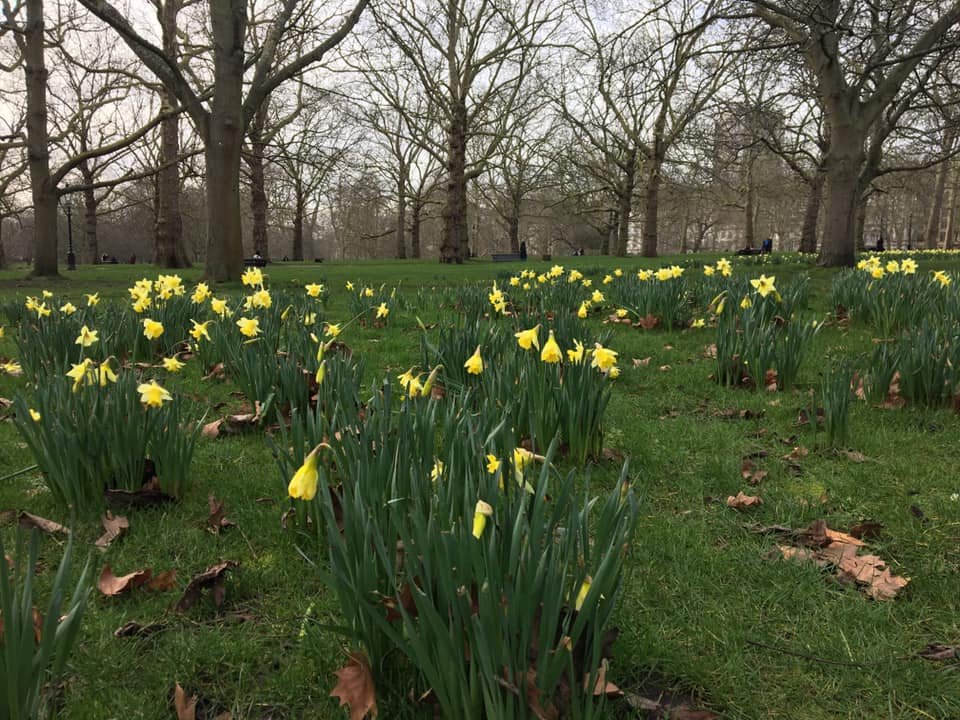
Photo credit:  Jennifer Andrews-Weckerly; reuse with permission only

Sixteen pilgrims from Hickory Neck Church traveled to England for 8 days of pilgrimage.  Our focus was on choral music, hearing Evensong or Choral Mass at a Cathedral, Minster, or college everyday.  This is the last entry, initially posted on our church Facebook page.  For those of you who do not follow us on Facebook, I am repeating the journey’s daily entries here.  Enjoy!

London – Westminster Abbey

The full last day of our pilgrimage was a free day until Evensong. What was fascinating was how varied our experiences were. Some pilgrims chose museums, some did tours of government-related buildings (historic and modern), some did touristy things, and some rested or visited local friends. I was surprised by the limited overlap in our choices, and realized how diverse our interests really are.

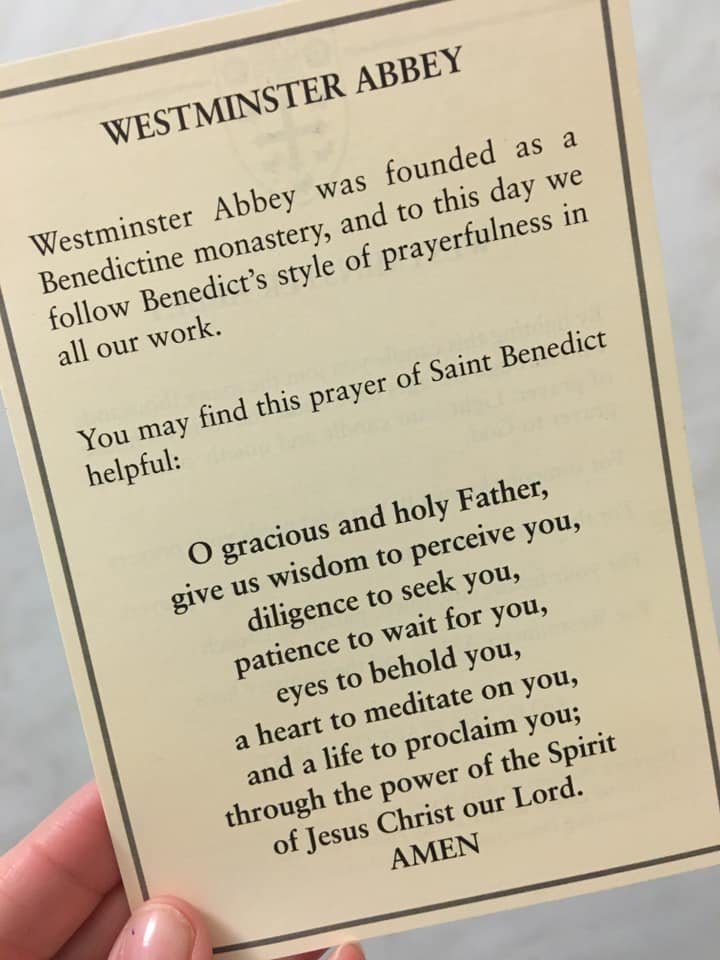
That is part of what has been so beautiful about this experience. We represent a variety of ages and phases of life, backgrounds, and spiritual journeys. And yet, we all had a longing for something – a desire to know God more fully, to walk with Christ more intentionally, and experience the Holy Spirit more playfully. The commonality in our diversity made Evensong even more beautiful tonight. We gathered back in from our wandering and settled into the prayers, canticles, and songs that have rooted us this entire pilgrimage. As the boys and men artfully played one another’s voices against each other, sounds seemed to be all over the place, and yet majestically all together. Our journey mirrored the singing at Westminster Abbey in profound ways.

As we return from our pilgrimage, I encourage you to ask questions, to hear stories, and to grow with us. Our pilgrimage may feel like it is ending, but our pilgrimage is just beginning with you.

85023488_2896313000424941_3665780026227294208_n

Photo credit:  Jennifer Andrews-Weckerly; reuse with permission only

Sermon – John 10.22-30, Psalm 23, E4, YC, May 12, 2019

16 Thursday May 2019

Posted by jandrewsweckerly in Sermons, Uncategorized

≈ Leave a comment

Tags

belief, belonging, character, God, Good Shepherd, group, image, Jesus, longing, question, Sermon, sheep, shepherd, uncomfortable

One of my good friends is enamored with the image of Jesus as the Good Shepherd.  She can describe the chapel of the Good Shepherd at the National Cathedral in minute, passionate detail.  In her office are images of Christ the Good Shepherd.   I suspect that if you asked her who Jesus is to her, she would say he is the Good Shepherd.  And she would not be alone.  The verses of John immediately before the text we heard today about Jesus being the Good Shepherd is a favorite when planning funerals.  The 23rd Psalm, which says “The Lord is my Shepherd,” is perhaps the most well-know scripture passage of all time – known even by people who have not attended church in ages.  The passage from John we hear today talks about the intimacy between Jesus and Jesus’ followers being like sheep who know their shepherd’s voice.  The fourth Sunday of Easter is even called “Good Shepherd Sunday,” in the liturgical year.  We probably should have all worn those awesome sheep hats the Praise Band wears during the Epiphany pageant to show our sheep solidarity.

Despite all that – despite the familiarity, the wide-spread popularity, and the commitment of an entire day in the church calendar to shepherd imagery – I must confess something I have told very few people in life:  I do not really like the imagery of Christ as the Good Shepherd.  Now I know some of you may be shocked – how can a priest not like one of the most popular biblical metaphors?  Some of you may be perplexed – what’s not to like about the image of a good shepherd?  Some of you may be downright offended – how can I not relate to the metaphor that has sustained you countless times?

Let me break my dislike down for us.  I do not like the image of Jesus as the Good Shepherd primarily because I do not like the idea of being sheep.  Now I know we have the Fiber Festival coming up this weekend, and I like wool as much as anybody, but sheep are not the brightest animals.  They are easily spooked, they tend to be a little clueless, they seem to lack individual intelligence, and they make a horrible bleating noise that sounds nothing like the “baa” of nursery rhymes.  Sheep are easily corralled – dogs are used to herd them in simply by nudging them all back together.  That rod and staff the 23rd Psalm talks about is used to physically push and prod sheep into uniformity.  And let’s not forget they are notorious for getting lost.  I mean, of all images to conjure up and celebrate on a given Sunday, we get to be sheep?!?

But as you and I both know, the things that make us the most uncomfortable are usually the things that are the most true.  Take for example the question and request of Jesus by those gathered around him in the temple, in the portico of Solomon.  They say to him, “How long will you keep us in suspense?  If you are the Messiah, tell us plainly.”  Jesus responds, “I have told you, and you do not believe.”  I cannot count the number of times we have asked Jesus this same question.  Sometimes the question is the exact same question as the one the people of faith ask today – are you the Messiah?  Can we believe in you?  Should we believe in you?  For anyone who has struggled with their faith – worried like those gathered at the tomb whether any of this Jesus stuff is true – the question and request today are not unfamiliar.  But we often ask this question in other ways.  As one writer confesses, there are countless times that we petition God with, “‘If you are.’  If you are good.  If you are powerful.  If you are loving.  If you are real.  If you are the Messiah, then stop talking in riddles.  Stop hiding when I long for your presence.  Stop awakening in me holy hungers you won’t satisfy.  Show up, speak plainly, act decisively.  Take this world of swirling, dubious gray, and turn it black and white, once and for all.”[i]  To all those questions, to all those longings, the response from Jesus to us is the same response of Jesus to the people of faith in our scripture lesson:  I have, but you do not believe.

Now here is where the text gets even more uncomfortable.  Jesus’ full words are, “I have told you, and you do not believe…because you do not belong to my sheep.”  Now there are all kinds of awful things that have been said historically about this text – the supersessionism of Christians over Jews, predestination, you name it![ii]  But I do not think Jesus was trying to exclude one group, or say, only one group will ever belong and everyone else is out.  I think what Jesus is trying to do is challenge people like me who do not like the idea of being sheep.  Jesus is saying today – I know you do not like being sheep, I know you do not like submitting control to me, I know that you do not like admitting that you do not have things all figured out.  When Jesus says, you do not believe because you do not belong to my sheep, I think Jesus is saying, we do not belong because we are unwilling to belong.  In other words, we do not belong not because Jesus excludes – we do not belong because we actively fight belonging.  And because we fight belonging, we also struggle with believing.

One of my favorite church welcome videos features a series of concerns that often keep people away from church:  feeling like they do not lead lives that are good enough, worrying about unfamiliar or even weird cultural practices that might be uncomfortable, concern they might not fit in because of what they wear, or a sense that they could never belong to a group that has shown a history of hypocrisy.  To each concern, the church-goers have response.  Not sure what to wear?  Wear clothes.  Not sure your past sins will make you worthy?  We all have pasts that make us unworthy.  Worried about secret handshakes or stiff worship?  You’ll just find love and affirmation here.  Know the church is full of hypocrites?  Aren’t we all hypocrites?  What I love about the video is that belonging is more natural that belonging seems – and the more you spend time belonging, the more you realize your belonging helps you believe.  Belief does not come first.  It cannot come first.  Belonging comes first.

Author Debie Thomas says knowing belonging comes first is where our hope is today.  “According to this text, whatever belief I arrive at in this life will not come from the ups and downs of my own emotional life. It will not come from a creed, a doctrine, or a cleverly worded sermon.  Rather it will come from the daily, hourly business of belonging to Jesus’s flock — of walking in the footsteps of the Shepherd, living in the company of fellow sheep, and listening in real time for the voice of the one whose classroom is rocky hills, hidden pastures, and deeply shadowed valleys.  If I won’t follow him into those layered places — places of both tranquility and treachery, trust and doubt — I will never belong to him at all.”[iii]

For the longest time, I have resisted the metaphor of Jesus as our Good Shepherd because I did not like what being a sheep implied about my character and intellect.  But what I forgot in my resistance is that there are a whole lot of sheep around when I simply consent to belong.  Bumping into fellow sheep reminds me that I have companions along the journey who are also sometimes resistant to the guidance of Christ.  Bumping into fellow sheep reminds me that I am not alone in the things of life and faith I do not understand.  Bumping into fellow sheep reminds me going solo often leads to peril.  Bumping into fellow sheep really is not all that bad.  Not only do we have a shepherd who loves us unconditionally and irrationally, we also have a community where all our weakness, foibles, and sins are held in common, and forgiven.

Our invitation is to remember what John is actually saying today in his gospel.  As one scholar reminds us, “God is the one who initiates a relationship to us.  God seeks us out long before we seek God.  Christ makes us his sheep; we do not make him our shepherd.”[iv]  That is why we have long said as a people of faith, “The Lord is my shepherd…He maketh me to lie down in green pastures; he leadeth me beside still waters.”  I mean, if you want to keep fighting the invitation to belong, by all means.  Lord knows, I have tried that route.  But on this Good Shepherd Sunday, your invitation is to consider another way:  to lean into the sheep all around you today, to trust that the Shepherd actually is good; and to know that wherever you are in your belief journey, belonging is the easiest step to get you there.  Amen.

[i] Debie Thomas, “Tell Us Plainly,” May 5, 2019, as found at https://www.journeywithjesus.net/lectionary-essays/current-essay?id=2201 on May 8, 2019.

[ii] Thomas H. Troeger, “Homiletical Perspective,” Feasting on the Word, Yr. C, vol. 2 (Louisville:  Westminster John Knox Press, 2009), 447.

[iii] Thomas.

[iv] Troeger, 449.

Sermon – Luke 24.1-12, ED, YC, April 21, 2019

01 Wednesday May 2019

Posted by jandrewsweckerly in Sermons, Uncategorized

≈ Leave a comment

Tags

celebrate, celebration, church, confusion, doubt, Easter, faith, Jesus, journey, joy, loud, question, quiet, resurrection, Sermon, unbelievable, uncertain, victory

Easter is one of my favorite days in the church year.  I love how no matter whether we come to church every Sunday or if we haven’t been to church in ages, something about Easter draws us to the Church.  I love the celebration:  the Easter outfits, the fragrant flowers, the boisterous music, and the family of faith gathered at the communion table.  I love the sweet feeling of having emerged from the penitential season of Lent, and counting how many times we can say, “Alleluia.”  There is a loudness to Easter, an unbridled joy, a sense of victory.

What is funny about our experience today though is very little of the boldness of this day is present in Holy Scripture.  In fact, Luke tells a story that is quite the opposite of our experience today.  While we sing loud alleluias and hosannas, all of the characters in our gospel lesson today are in a totally different place.  They are mired in grief, lost in confusion, unsure about what has happened to them.  In a quiet, almost mechanical, numb way, the women who have been beside Jesus his entire ministry and were the only ones remaining at his death, come to the tomb in the fog of dawn, to do the work of tending to the dead body.  In their haze, no sense of closure comes.  Instead, more confusion comes.  Not only is the tomb empty, the angelic figures tell them Christ is risen.  The angels remind them Jesus had explained this to them, and things start to make sense.  But when the women return to tell the men, the men are so resigned and defeated, they mock the women.  Peter goes to check out the story, but even he does not come back with profound clarity.  He is lost in amazement – in awed confusion.  This story tells us very little about what this all means, what we should do, or how we should respond.  Very little about the gospel today is loud, triumphant, or jubilant.

Though I have been begging our musician for years now for more sound at Easter – a timpani to accompany the brass – the truth is, I kind of like how our gospel lesson today takes us in another direction.  Much of what we boldly proclaim today – that Christ is risen, his resurrection brings eternal life, and everything we know has changed – is pretty difficult stuff to believe.  Any of you who has spent time around an inquisitive child or a doubtful friend knows how difficult explaining the resurrection can be.  For our rational, twenty-first century selves, the theology of Easter is not only difficult to articulate, Easter is almost unbelievable.  And when we are really honest with ourselves, in the quiet of our own homes, we sometimes have moments when we are not really sure why we believe what we believe about Christ.

That’s why I love today’s gospel.  Today’s gospel reminds us of how unbelievable the resurrection of our Lord really was.  Sure, Jesus had said he would be handed over to sinners, be crucified, and on the third day rise again.  But his words sounded crazy at the time.  Now that Jesus’ words have come true, the women are perplexed, terrified, and rejected when they share their truth.  The men are paralyzed, doubtful, and downright mean.  On this early morning, the followers of Jesus only have their experiences of Jesus, their uncertainty of faith, and their attempts to believe the unbelievable.

To me, that is very good news indeed.  On this day as we sing songs about Jesus’ resurrection, and as we hear Peter preach with certainty in the book of Acts, and as we, with joy, proclaim, “Christ is risen!  The Lord is risen indeed!” our gospel story reminds us faith is a journey full of doubt, questions, and confusion.  We come on this festival day not because we are absolutely certain about Jesus.  We come on this festival day because in our foggy dawns, we have had encounters with the risen Lord – even when we did not know how to articulate the encounters.  We come to this festival day because in our pain, suffering, and questioning about life – we have had moments when something from scripture or our faith life suddenly connected and made sense.  We come to this festival day because even in our doubts, there is some small part of us that cannot extinguish hope, that suspects Christ might have actually changed the world.

On this day, the Church does not want our theological explanations of the resurrection.  On this day, the Church invites us to recall those moments, however fleeting or miniscule, where we have encountered, or suspected we encountered, the risen Lord.  Our bold singing of alleluias only needs that small flicker of hope – or maybe our desire for that flicker of hope.  Our celebrating today only needs our presence – our willingness to be here, encouraged by others walking through the fog.  Our proclamation today that the Lord is risen, only needs our willingness to say the words.  The community gathered here today will do the rest.  We will say with you, “The Lord is risen indeed,” until someday we can all claim the astounding love and grace of our Lord Jesus Christ ourselves.  Amen.

On Adventures and God…

09 Wednesday Aug 2017

Posted by jandrewsweckerly in Uncategorized

≈ Leave a comment

Tags

adventure, bruise, church, doubt, fear, fun, God, hurt, invitation, new, question, relationship

IMG_5281

Photo credit:  Elizabeth Shows Caffey

One of the themes of this summer for me has been new adventures.  This summer I tried aerial yoga for the first time – a practice of yoga that involves being suspended from the ceiling with silks.  I also rode a bike for the first time in over 20 years.  And last night, for the first time ever, I represented our church by throwing one of the first pitches at our local minor league baseball games.  In each of those instances, I was nervous, skeptical, or downright scared.  I know I yelped at least once in aerial yoga.  When I first started riding the bike, I was so stressed out that my hands started hurting from gripping the handlebars.  And as I waited to throw that first pitch, my stomach was doing flip-flops.

Those examples may not sound all that thrilling to you.  I certainly did not skydive, bungee jump, or walk a tightrope.  But those adventures were all experiences I normally would have declined – coming up with a hundred reasons why the adventures would be a bad idea:  pulled muscles, skinned knees, or a bruised ego.  But in each instance, I could see in the eyes of the people asking me to take the adventure a sense of longing, hopefulness, vulnerability.  They were inviting me into adventure, and saying “no” would have meant a crushed spirit of enthusiasm.  And so, against my better judgment, I said “yes.”  And you know what?  In every instance I had a ton of fun!

I was thinking this morning about that weighty pause when someone invites you into adventure – when you can either say “yes” or “no,” with the person left eagerly anticipating your response.  I think we experience that same weighty pause with God all the time.  God is constantly inviting us to take on new adventures:  stepping through the church doors for the first time in a long time, hoping not to be judged or hurt; going to a church study group, unsure about how your doubts or questions may be received; serving dinner at the homeless ministry, wondering what you can possibly say to or have in common with someone who lives on the streets.  If you do not have a relationship with Christ, saying “yes” can be hard.  But even when you do have a relationship with Christ, responding positively to an invitation from God can be hard.  Taking on new adventures with God means trusting, letting go of fear, and making yourself vulnerable.

I wonder what invitations to adventure God has been inviting you to try this week.  What invitation might you say “yes” to that you have been delaying or refusing altogether?  The risk is that you might pull some muscles, skin some knees, or bruise that old ego.  But the payoff is that you might find meaning, purpose, and renewed relationship with God.  And I suspect that you might also have a bit of fun!

Sermon – Matthew 4.1-11, Genesis 2.15-17, 3.1-7, L1, YA, March 5, 2017

08 Wednesday Mar 2017

Posted by jandrewsweckerly in Sermons, Uncategorized

≈ Leave a comment

Tags

church, corrupt, disciplines, doubt, evil, God, goodness, identity, insecurity, Jesus, Lent, question, relationship, repentance, Satan, Sermon, sin, temptation, trust

On this first Sunday in Lent, I usually like to talk about Lenten disciplines.  The season of Lent is one of the few times in the Church that we take a hard look at our faith life and then actually commit to doing something tangible to strengthen our walk with Christ.  When I hear about your disciplines, I get some clue as to what feeds each of you spiritually – whether you long to connect with Holy Scripture, or hope to deepen your prayer life; whether you know that denial of certain parts of your life will create a needed discomfort or disruption, or instead find taking up something to create needed transformation; whether you are motivated by something fun and engaging (like Lent Madness), or you prefer something more philosophical (like our Lenten study group focusing on the spirituality of the Eucharist).  Lenten disciplines also give me a tiny clue about what sinful behaviors have been pulling you away from God.  As we prayed the Great Litany today, there were countless options:  pride, vainglory, hypocrisy, envy, hatred, malice, desires of the flesh, and hardness of heart.  Or, perhaps you are inspired to help one of those we prayed for in the Litany:  the lonely, the sick, the homeless, the imprisoned, broken families, the oppressed, or those suffering injustice.  There really is no wrong way to approach Lenten disciplines – that we are taking them on demonstrates a commitment to enriching our faith and growing closer to God.

Given the beginning of those practices, the text of Jesus’ temptation every year on this first Sunday in Lent has always seemed most appropriate.  How better to encourage us to engage in repentance and reformation than to remember that Jesus too was tempted – tempted to ease the discomfort of hunger, tempted to test God’s loyalty and support, and tempted to take on power – even if ill-gotten – for the greater good?  And even better that this year in Lent, we get that powerful lesson from Hebrew Scriptures of Adam and Eve’s temptation – the temptation to eat beautiful fruit, to learn what God knows but won’t tell us, to take control of our destiny.  And all of those temptations would be plenty.  But what has been striking me more powerfully this year has been what is at the root of the temptations of Satan.  You see, in all of those tests for Jesus, and even in the simple offering of forbidden fruit, Satan does something even more insidious.  Through his temptations, Satan works to undermine our relationship with God – to sow the seed of mistrust that promises to unravel the very foundation of our faith.

We can talk all we want about deepening our faith, working on our sinful behaviors, or becoming better Christians in Lent.  But much scarier to talk about is the power of evil to undo our faith altogether.  Many of us know the darkness of this power from Satan.  If we have not had a spiritual identity crisis in our lives, someone we know has.  Enough people around us die, enough suffering happens in the world, enough pain comes our way that slowly we begin to wonder if God cares at all.  We watch what Christians do to one another or how they fail to care for one another, we see the misdeeds of the Church, or the Church’s clergy disappoint us, and slowly, slowly, we begin to doubt God is even present.  As I have been watching the news, as our country becomes more deeply divided, as suffering seems to be epidemic, and as we dehumanize one another, sometimes institutionalizing that dehumanization, I see the power of evil planting seed after seed of mistrust.  Who hasn’t asked, “Where is God?” in the last year?  Who hasn’t thought, “Maybe I should stop trusting God, and start taking care of things myself.”?  Who hasn’t wondered if God is slipping into irrelevance as the world falls apart around us?

As I have pondered the temptations of Adam, Eve, and Jesus, the power of evil to corrupt has been much more powerful, potent, and pressing this year.  The “crafts and assaults of the devil” and the desire to “beat down Satan under our feet”[i] we heard in the Great Litany are much more powerful in our current climate.  I am much less worried about Adam and Eve’s original sin than I am worried about their original insecurity.  The serpent comes along and sews mistrust among Adam and Eve.  He starts out with a simple question, “Did God really say…”  And so begins the serpent’s assault on their relationship with God – misrepresenting and undermining God’s instructions, suggesting God is keeping something from them.  And as scholar David Lose suggests, once this primary relationship is undermined, Adam and Eve are “susceptible to the temptation to forge their identity on their own, independent on their relationship with God, and so take and eat the forbidden fruit… [They] forget whose they are and so lose themselves in the temptation to secure their identity on their own.”[ii]  Though Adam and Eve’s sin is grave, how the serpent gets them there is much scarier to me.

Satan attempts to do the very same thing with Jesus.  “The devil also tries to undermine Jesus’ relationship with God by suggesting [the relationship] is not secure, that he should test [the relationship] by throwing himself off the mountain, or that he should go his own way by creating food for himself, or that he should seek the protection and patronage of the devil rather than trust God’s provision.”[iii]  Satan is good!  He even tries to twist Jesus’ use of scripture to convince Jesus of God’s unworthiness of trust.  What is frightening about Satan’s tactics is that he is not just about tempting us to do bad things.  He is meddling in our relationship with God, sewing distrust, confusion, questioning our identity as beloved children of God.  And that kind of meddling leads to much worse problems than poor behavior.  Satan tries to upend who we are.

Last week, we baptized two members into the household of faith.  We talked about how baptism marks for us who and whose we are.  We gave thanks for the reminder and celebrated as a community.  We were not unlike Adam and Eve, who upon their creation, God says it is very good.  We were not unlike Jesus, who at his own baptism, which occurs immediately before his temptation today, God says, “This is my beloved, with whom I am well pleased.”  But Satan takes goodness and blessedness, and tries to taint that goodness and blessedness with doubt, mistrust, and insecurity.  He tries to confuse us, making us forget who and whose we are.

Several years ago, the movie The Help debuted.  In the film, there is a maid who cares for a child who gets a lot of verbal abuse from her mother.  In several key scenes, the maid takes the child aside and teaches the child a mantra of sorts.  In her rough grammar, she reminds the child, “You is smart, you is kind, you is important.”  Eventually the maid is fired, and the audience is left hoping that the mantra she taught the child will remind her that no matter what verbal abuse she receives, she can remember who she is – smart, kind, and important.

We do not always have caretakers in our lives who will instill in us a mantra that holds us in the face of adversity.  But we do have a church.  We have a church that will tell us we are made in the image of God, that our very creation is rooted in goodness, and that we are beloved children of God.  When we begin to be assaulted by the power of evil, which would rather us question our identity, the church reminds of us of our baptismal covenant, our identity-making set of promises, which tells us we are enough, there is plenty to go around, and we need not live in fear.  While the forces of evil will try to isolate us and send us into questions of identity, the church comes together every week to remind us that we are beloved children of God – a people of value, worth, and purpose.[iv]

I do not know what spiritual discipline you are taking up for Lent this year.  But if you do nothing else this Lent, come to church.  Come gather with the community that reminds you who and whose you are.  Come be with a people who are also assaulted by the doubts, questions, and fears of the day, but who ground themselves in their identity, and find meaning, encouragement, and purpose in this place.  Come.  Together, we will stamp down Satan under our feet as we shine light on our God who redeems, reveres, and renews us.  Amen.

[i] BCP, 151-152.

[ii] David Lose, “Lent 1A:  Identity as Gift and Promise,” February 28, 2017, as found at http://www.davidlose.net/2017/02/lent-1-a-identity-as-gift-and-promise/ on March 2, 2017.

[iii] Lose.

[iv] Lose.

Homily – Hebrews 4.12–16, John Wyclif, October 30, 2014

05 Wednesday Nov 2014

Posted by jandrewsweckerly in Uncategorized

≈ Leave a comment

Tags

alive, challenge, change, comfort, God, homily, John Wyclif, question, scripture

Today we honor John Wyclif.  Born around 1330, John was educated at Oxford.  He served as a parish priest, but spent most of his vocation teaching theology and philosophy at Oxford and was celebrated for his academic achievements.  In 1374, Wyclif defended the Crown during a dispute with the papacy about finances.  This stance gained him a group of powerful patrons who were able to protect Wyclif.  This protected status gave him the freedom to try out his theological views, many of which were at odds with the medieval church.  Many of Wyclif’s ideas became the fodder for the reform movement in the following centuries.  In fact, later reformers like John Hus and Martin Luther acknowledged a debt to Wyclif.

Wyclif’s ideas may not seem radical now, but that is because they are a part of our Anglican identity.  Wyclif believed believers could have a direct, unmediated relationship with God, not needing intervention from the church or a priest.  He believed the national church should be free from papal authority.  He believed scripture should be available in the language of the people – and he translated the Vulgate into English.  He even questioned transubstantiation, which eventually gained him some enemies.

What I love about this feast day for Wyclif is that we get this lovely passage from Hebrews.  The lesson opens up with this line: “The word of God is something alive and active.”  So often we think about Holy Scripture as a static collection of books.  We might try to understand a passage, but often forget that Holy Scripture is alive and active.  Or perhaps we do not forget, but we long for scripture to be static and still, because if Holy Scripture stays the same, we can be comfortable and avoid change.

Once, when I was visiting a friend at Trinity Wall Street, she told me that the clergy have a lot of freedom there.  Because their funding comes from their huge investments, they are not dependent upon pledges for support.  And because they are not dependent upon pledges, they never have to worry about someone becoming upset and taking their pledge away.  I imagine that the clergy are much like Wyclif in his day – free to explore new concepts and ideas, and to challenge the status quo.  We know that when Wyclif did that, the church was transformed – it became alive and active like the Holy Scriptures.  That is our invitation today, too: to consider how our own faith life might become more alive and active, how the Holy Spirit might be working in us in new ways and to jump into the unknown.  Amen.

← Older posts

Recent Posts

  • On the Myth and Magic of Advent…
  • On Risking Failure and Facing Fear…
  • Sermon – Luke 23.33-43, P29, YC, November 23, 2025
  • On Inhabiting Gratitude…
  • Sermon – Luke 20.27-38, P27, YC, November 9, 2025

Archives

  • December 2025
  • November 2025
  • October 2025
  • September 2025
  • August 2025
  • July 2025
  • June 2025
  • March 2025
  • February 2025
  • December 2024
  • November 2024
  • October 2024
  • September 2024
  • August 2024
  • July 2024
  • June 2024
  • May 2024
  • March 2024
  • February 2024
  • January 2024
  • December 2023
  • November 2023
  • October 2023
  • September 2023
  • August 2023
  • July 2023
  • June 2023
  • May 2023
  • March 2023
  • February 2023
  • January 2023
  • December 2022
  • November 2022
  • October 2022
  • June 2022
  • May 2022
  • January 2022
  • December 2021
  • November 2021
  • October 2021
  • September 2021
  • August 2021
  • June 2021
  • May 2021
  • April 2021
  • March 2021
  • February 2021
  • January 2021
  • December 2020
  • November 2020
  • October 2020
  • September 2020
  • August 2020
  • July 2020
  • June 2020
  • May 2020
  • April 2020
  • March 2020
  • February 2020
  • January 2020
  • December 2019
  • November 2019
  • October 2019
  • September 2019
  • August 2019
  • July 2019
  • June 2019
  • May 2019
  • April 2019
  • March 2019
  • February 2019
  • January 2019
  • December 2018
  • November 2018
  • October 2018
  • September 2018
  • August 2018
  • July 2018
  • June 2018
  • May 2018
  • April 2018
  • March 2018
  • February 2018
  • January 2018
  • December 2017
  • November 2017
  • October 2017
  • September 2017
  • August 2017
  • July 2017
  • June 2017
  • May 2017
  • April 2017
  • March 2017
  • February 2017
  • January 2017
  • December 2016
  • November 2016
  • October 2016
  • September 2016
  • August 2016
  • July 2016
  • June 2016
  • May 2016
  • April 2016
  • March 2016
  • February 2016
  • January 2016
  • December 2015
  • November 2015
  • October 2015
  • September 2015
  • August 2015
  • July 2015
  • June 2015
  • May 2015
  • April 2015
  • March 2015
  • February 2015
  • January 2015
  • December 2014
  • November 2014
  • October 2014
  • September 2014
  • August 2014
  • July 2014
  • June 2014
  • April 2014
  • March 2014
  • February 2014
  • January 2014
  • December 2013
  • November 2013
  • October 2013
  • September 2013
  • August 2013
  • July 2013
  • June 2013
  • May 2013
  • April 2013
  • March 2013
  • February 2013
  • January 2013
  • December 2012
  • November 2012
  • October 2012
  • September 2012

Categories

  • reflection
  • Sermons
  • Uncategorized

Meta

  • Create account
  • Log in
  • Entries feed
  • Comments feed
  • WordPress.com

Blog at WordPress.com.

  • Subscribe Subscribed
    • Seeking and Serving
    • Join 394 other subscribers
    • Already have a WordPress.com account? Log in now.
    • Seeking and Serving
    • Subscribe Subscribed
    • Sign up
    • Log in
    • Report this content
    • View site in Reader
    • Manage subscriptions
    • Collapse this bar
 

Loading Comments...