• About

Seeking and Serving

~ seek and serve Christ in all persons

Seeking and Serving

Tag Archives: brokenness

Sermon – Acts 1.1-11, AS, YB, May 12, 2024

29 Wednesday May 2024

Posted by jandrewsweckerly in Sermons

≈ Leave a comment

Tags

Ascension, brokenness, church, community, healing, Holy Spirit, Jesus, kingdom of God, lifestyle, money, pivot, relationship, Sermon, sharing, stewardship

Our Stewardship Team gathered throughout the winter and spring and had some meaningful conversations about how we measure what matters in life.  We talked about how stewardship is more than money.  Stewardship is a lifestyle based on a relationship with Jesus Christ and fulfilling our baptismal covenant to provide and participate in the mission and ministry of Hickory Neck Episcopal Church to proclaim the Gospel in word and deed in order to change the world in which we live.  But we also talked about how things can get in the way of our faith journey:  our allegiances, our faith, our compassion, our use of money, our generosity, and our belief that God provides what is necessary for living out our lives.  And so, we agreed.  In order to help us navigate how to be faithful stewards, we would begin a preaching series over the next several months – looking at those challenges to our faith journey and what scripture has to say about them.  Today, the Stewardship team teed me up on this Ascension Sunday to talk about allegiances.

Now I do not know about you, but when I read the text about the Ascension from Acts, I did not really hear anything about stewardship.  Jesus did not lean over his shoulder as he was ascending to heaven and shout, “Don’t forget to tithe 10% to the Church!” So, what does the Ascension have to do with faithful living – with stewardship?  Well, to understand that notion, we have to take a big step back from the event of the Ascension.  You see, the Ascension is sort of a pivot moment in our lives.  Luke, the author of both the gospel of Luke and the Acts of the Apostles, understood history to be “divided into two ages:  the broken old world marked by Satan, idolatry, sin, injustice, exploitation, fractiousness, scarcity, enmity with nature, violence, and death.”  The renewed world where God restores all things to God’s purposes is “marked by true worship, forgiveness, justice, mutuality, community, abundance, blessing between nature and humankind, shalom, and life.”[i]  Jesus’ life and ministry was in witness against the broken world and a shepherding in of the renewed world.  In the process of ascending Jesus gives authority to the disciples to continue the work of the renewed world.  That’s why the whole rest of the book of the Acts of the Apostles will be about how the community of Jesus – the Church – will live:  sharing resources, supporting those in need, living as a community of abundance, mutuality, and justice.

This past Thursday’s Discovery Class was the session where the attendees teach the rest of class on given topics.  One set of our class members focused on the history of the early church in America.  They talked about how the church in the 1600s and 1700s was the governing body of the region – using their resources to care for widows and orphans, tending to those who fell on hard times, basically serving as the social services agency of the region.  Now, they also had clergy appointed by the governor and charged local residents a mandatory levy to help the Church pay for those expenses (an idea I imagine a certain treasurer of ours probably wouldn’t mind) – but for all intents and purposes, the early church of the Americas operated just like the early church in the Acts of the Apostles – living as a community sharing resources, supporting those in need, embracing abundance, mutuality, and justice.  In essence, a community who understood their allegiance to be to the kingdom of God and not to the kingdom of brokenness:  a community of faithful stewardship.

We are told in our reading from the Acts of the Apostles that as the disciples watch Jesus ascend to the heavens they stand there for a moment – frozen in time as their scrambled brains try to figure out what has just happened and what Jesus’ ascension means.  While they are standing there, looking at heaven, two men in white robes appear and ask them a simple question, “Why do you stand looking up toward heaven?”  In other words, God uses these men in white to tell the disciples, “Don’t just stand there – go be the church!  Jesus showed you the way to abundant, faithful stewardship.  Now go bring kingdom living to life!”

That is our invitation today too.  Now you may be thinking, “Yeah, but the Church has changed so much.  We are not the primary social services agency in town – we are not the place responsible for people’s physical, emotional, and spiritual well-being!”  But Jesus tells us today that we are.  That every single member of this community has a part to play – can contribute your financial resources, the gift of your skills and expertise, the offering of your time to make this church a modern expression of the kingdom of God here in Upper James City County.  On this Ascension Sunday, we can choose to carry on the work of Christ, to do our part to turn away from brokenness and be agents of healing and wholeness.  Where will we find the capacity to enliven that abundant life?  In our Eucharistic Prayer today we will pray, “And, that we might live no longer for ourselves, but for him who died and rose for us, he sent the Holy Spirit, his own first gift for those who believe, to complete his work in the world, and to bring to fulfillment the sanctification of all.”[ii]  Not only did Jesus give us the mission, Jesus also gives us the Holy Spirit – that gift we will celebrate next week – so that we might be the faithful stewards of God’s abundance, declaring our allegiance to living in the light – to being the agents of abundance God knows we can be.  Our invitation is stop looking up, and start looking around at the kingdom God has gifted us to tend.  Amen.


[i] Ronald J. Allen, “Considering the Text: Week One, Ascension Sunday, 12 May 2024”  Center for Faith and Giving, as found at centerforfaithandgiving.org, 2.

[ii] BCP, 374.
On Race, Lent, and Children…

10 Wednesday Apr 2019

Posted by jandrewsweckerly in Uncategorized

≈ Leave a comment

Tags

America, brokenness, children, Civil Rights, confess, Jesus, Lent, prayer, race, racism, repentance, shame, sin, unite

IMG_7640

Photo credit:  Jennifer Andrews-Weckerly; reuse only with permission

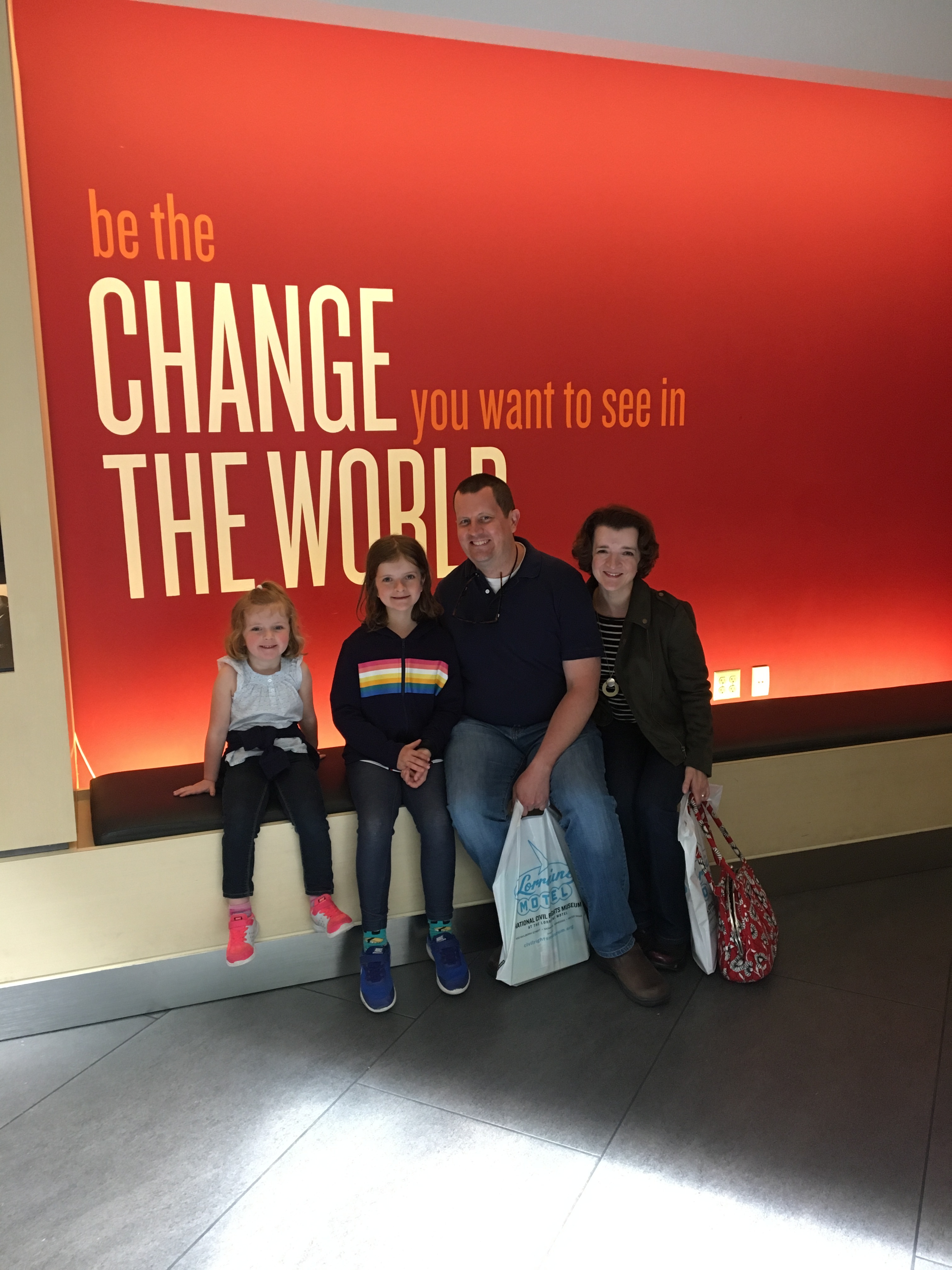
This past week, our family traveled to Mississippi to visit friends.  On the trip we were able to see both the Mississippi Civil Rights Museum in Jackson, and the National Civil Rights Museum in Memphis, Tennessee.  While the museums were appropriate for our older child, who has been studying the Civil War and Reconstruction in her Social Studies Class, our younger child was a bit mystified by the museums.  She struggled with understanding the concept of history versus modern day, but she especially struggled with why people were hurting and killing each other.  She clearly made the connection that Caucasians (or “peach-skinned” people as she called them) were being mean to African-Americans (or “brown-skinned” people), but she could not fathom why.  With every video or picture, I was barraged with questions about why people were doing what they were doing, or why someone would kill someone like Martin Luther King, Jr.

Explaining the atrocities of American racial history to a five-year old is one of the most gut-wrenching experiences I have had.  I already struggle with the shame of our history and my participation in racism.  But to expose my child to the sinfulness and brokenness of our country made the shame deeper.  As the museum bombarded me with statistics around racial disparities, as prerecorded voices shouted out awful words that were once shouted out to people of color, and as “Precious Lord,” or “We Shall Overcome,” played overhead, I was reminded of all that we have been through as a country, and how much further we have to go.

In Lent, we do a lot of confessing of our sinfulness and working on repentance.  On Ash Wednesday, we confessed our exploitation of other people, our blindness to human need and suffering, and for “all false judgments, for uncharitable thoughts toward our neighbors, and for our prejudice and contempt toward those who differ from us.”[i]  In the Great Litany this Lent, we prayed, “From all blindness of heart; from pride, vainglory, and hypocrisy; from envy, hatred, and malice; and from all want of charity, Good Lord, deliver us.”[ii]  In the Exhortation in the Penitential Order, the priest asked us to “Examine your lives and conduct by the rule of God’s commandments, that you may perceive wherein you have offended in what you have done or left undone, whether in thought, word, or deed. And acknowledge your sins before Almighty God, with full purpose of amendment of life, being ready to make restitution for all injuries and wrongs done by you to others; and also being ready to forgive those who have offended you, in order that you yourselves may be forgiven.  And then, being reconciled with one another, come to the banquet of that most heavenly Food.”[iii]

As we finish these last days of Lent, as we hear the passion narrative on Sunday, and as we walk the days of Holy Week next week, I am reminded of how much work we still have to do.  For me, I will be contemplating the ways in which I participate in the systems and practices of racism in our community, working to not only be better, but to teach my children to be better.  And knowing our work of repentance is on-going, I look forward to our Eastertide book study that will allow us to delve into these issues even more.  This week I pray for the whole human family:

O God, you made us in your own image and redeemed us through Jesus your Son: Look with compassion on the whole human family; take away the arrogance and hatred which infect our hearts; break down the walls that separate us; unite us in bonds of love; and work through our struggle and confusion to accomplish your purposes on earth; that, in your good time, all nations and races may serve you in harmony around your heavenly throne; through Jesus Christ our Lord.  Amen.[iv]

IMG_7644 (1)

Photo credit:  Jennifer Andrews-Weckerly; reuse only with permission

[i] Book of Common Prayer (BCP), 268.

[ii] BCP, 149.

[iii] BCP, 317.

[iv] BCP, 815.

The Sound of Silence…

07 Thursday Jul 2016

Posted by jandrewsweckerly in Uncategorized

≈ 1 Comment

Tags

brokenness, church, contemplations, Episcopal, God, listen, noise, prayer, Rite I, silence, sinfulness, worship

The-Sound-of-Silence

Photo credit:  advisoranalyst.com/glablog/s015/05/27/jeff-miller-the-sound-of-silence.html

In almost every parish I have served, there has been an 8:00 am, Rite I, spoken service.  The crowd usually is not that large.  Because the service is spoken, it tends to be very quiet and to be the shortest service of the day.  Those who are attracted to the service usually like the language (We use “thee” and “thou” language and the service has a more penitential tone.)  Others like the brevity of the service – appreciating both going to church and having the rest of the day free.  While others like the service because it feels more contemplative and centering.

Though the service is always pretty quiet in whatever Episcopal Church you choose, what I have noticed about the 8:00 am crowd at Hickory Neck is that they tend to be not just prompt, but early.  Every Sunday, at least five minutes before the service begins, everyone is seated and is silent.  Up until this past Sunday, I found the practice unsettling.  On Sundays, I am usually amped up, and ready to jump into liturgical leadership.  As an extrovert, I am chatty, and am used to some lighthearted conversation before the service starts.  So the silence immediately before the service feels discordant with my pent-up energy.

But this past Sunday, I remembered a complaint long ago from a fellow parishioner at the Cathedral where I became an Episcopalian.  She used to complain that the beginning of the service was not meant to be happy hour – she was irritated by the chatter all around her when all she wanted to do was kneel on the prayer cushion in front of her and enjoy a moment of silence before the service began.  Even the bulletin had a comment at the beginning that reminded people that we should respect others’ desire to begin our worship in quiet contemplation and centering prayer.  Though I appreciated the guidance, I never really “got” it – until this past Sunday.

The beauty of five minutes of silence before worship is that you can let go of all the stuff on your to-do list.  The beauty of the five minutes of silence before worship is that you can let go of the pain, worry, anger, or stress that is ever present and present yourself humbly before worship.  The beauty of the five minutes of silence before worship is that you can listen to God instead of talk to God.  As a celebrant, I do not know that I will ever be able to use those last five minutes to center myself (I tend to arrive much earlier at church to find that centering time).  But as one who facilitates worship, I have found myself greatly appreciating the gift of those five minutes for our parishioners.  I could use a good five minutes today to just listen.  In the noise of mass gun violence, terrorism, racism, poverty, and suffering, I am a bit out of things to say to God.  Instead I would rather kneel in silence today and give humanity’s and my own brokenness and sinfulness to God.  What might you offer to God today in that silence?  What do you imagine you might hear in that silence?

On Fault and Forgiveness…

12 Friday Feb 2016

Posted by jandrewsweckerly in Uncategorized

≈ Leave a comment

Tags

accident, blame, brokenness, fair, fault, forgiveness, heal, journey, Lent, Lord's Prayer, mend, prayer, relationship, work

forgiveness

Photo credit:  http://strocel.com/a-word-for-2014-forgiveness/

Several weeks ago I had a conversation with a friend about an automobile accident in which she was involved.  The accident was not her fault – in fact the other driver was being oblivious to those around him and plowed right into her.  My friend and the other driver waited for the police to arrive to complete a report.  That was when she learned about a law in New York of which neither of us were aware.  In New York, even if the accident is clearly one driver’s fault, both drivers are expected to contribute to a portion of the costs of repairs.  The non-fault driver must pay a small percentage even though the accident was in no way her fault.

As we talked about this law, we were initially outraged.  The law hardly seemed fair.  If someone side-swipes you, runs a stop sign, or hits you while distracted, why should you be responsible for someone else’s fault.  We hypothesized about whether there might have been some way for her to give the driver a wider berth to avoid the accident – basically being a better defensive driver.  But we both could imagine situations in which there is no way to see an accident coming.  To us, the law just did not seem fair.

Today, as I was thinking about Lent and forgiveness, I was reminded of my friend’s accident.  The more I thought about New York’s rule, the more I realized that New York may be on to something.  You see, whenever we talk about forgiveness, we often think of ourselves needing to forgive someone else for something they have done to us.  Letting go of anger is an important step toward meaningful forgiveness.  But solely focusing on the actions of the other lets us off the hook from thinking about the ways we may have contributed to problem that needs forgiving.  I am not suggesting that the blame is 50-50.  But the blame might be 90-10 or even 80-20.  Anyone who has been married or who has navigated close friendships or family relationships knows that even when we are totally in the right, there is always a little blame to be shared by all.

As we start our Lenten journey, I invite you to consider taking an inventory of those relationships in your life that need mending or healing.  As you prayerfully consider those relationships, review the ways in which you have participated in the relationship and what ways you might hold some of the fault for the brokenness of the relationship.  The work will not be easy – we like being right so much that we may not be able to really consider mending those relationships.  But as you journey through the complicated web of fault and forgiveness, consider praying the Lord’s Prayer again:  forgive us our trespasses as we forgive those who trespass against us.  My prayers are with you on the journey.

Seeing dignity…

24 Wednesday Jun 2015

Posted by jandrewsweckerly in Uncategorized

≈ Leave a comment

Tags

baptism, brokenness, difficult, dignity, faith, human being, humanity, joy, laughter, The Intouchables

Photo credit: http://ourfaithinaction.net/2012/the-intouchables/the-intouchables-movie-poster-3/

Photo credit: http://ourfaithinaction.net/2012/the-intouchables/the-intouchables-movie-poster-3/

This weekend I finally saw The Intouchables, a 2011 film based on the true story of a French, wealthy quadriplegic who hires a man convicted of petty theft to be his caregiver.  The quadriplegic, Philippe, has been through many caregivers.  He is a widower who lost the use of most of his body in a paragliding accident.  He is bitter and does not like the way that most highly-skilled caregivers treat him more like a patient than a person.  Meanwhile, Driss applies for the job simply to obtain governmental unemployment benefits, assuming that Philippe will never hire him.  Philippe is intrigued by this man who shows him little respect, and hires Driss.  The two begin a relationship that is different than any either of them had known.  Philippe is finally able to rediscover a joy for life and reimagine what his life can be.  Meanwhile, Driss begins to see that he can have value too – that perhaps he can start anew with life, providing for his family and having a new sense of self-worth.

What I loved about this film was two-fold.  First, I had anticipated this being a sober, but triumphal movie.  Instead, I found myself laughing throughout the film – not at a slapstick humor, but at the kind of humor one develops when things get so bad that laughter is both the inappropriate and most appropriate thing to do.  It is an irreverent humor that only two characters who have been pushed to the margins can deeply enjoy, and yet, those outcasts invite us in to our own darkness and bring us out with laughter.  The second thing I loved about this movie is the way in which each character was able to see humanity in one who had been stripped of their humanity.  For Philippe, his physical disability had taken away his ability to full participate in society.  Society struggled to see any value in him beyond his money – which is not a value for which anyone wants to be known.  For Driss, he was a criminal who was unable to hold down a job and be a responsible citizen.  Society struggled to see any value in him, leaving him limited options.  And yet, in Philippe, Driss was able to unearth an adventurous, funny, sarcastic man of compassion and fortitude.  And in Driss, Philippe was able to unearth a sympathetic, strong, talented man of wisdom and grace.  In essence, they could see the humanity in one another.

When we reaffirm our baptismal covenant, one of the promises we make is to respect the dignity of every human being.  Over and over we make that promise, and yet I think it is one of the hardest things we promise to do.  It is very difficult to respect the dignity of the guy who cuts you off in traffic.  It is very difficult to respect the dignity of your family member who constantly puts you down.  It is very difficult to respect the dignity of the man who kills nine Christians in a church because of their race.  This past Sunday, as we were editing the Prayers of the People, I found I had no problem listing the names of the deceased from Charleston.  Where I struggled was adding the killer’s name to our list too.  That action went against every instinct in my body, and yet, some small ache made me feel like I had to add him too.

Respecting the dignity of every human being is not a one-time action.  It takes a lifetime of practice.  We fail at it all the time, but we keep recommitting to the work because we promised we would at our baptism.  What encouraged me about that work this week, was the relationship between Philippe and Driss.  Watching two men, so dramatically different, and yet similar in the way that society treated them as outcasts, heartily laugh from the depths of their souls gave me hope.  They gave me hope that I might see the dignity of others through my own brokenness.  The promise for my work is that I too would find the joy that only hearty, full-bodied laughter can bring.

Sermon – John 13.1-17, 31b-35, MT, YB, April 2, 2015

15 Wednesday Apr 2015

Posted by jandrewsweckerly in Uncategorized

≈ Leave a comment

Tags

belonging, brokenness, church, dinner, Eucharist, failings, footwashing, forgiveness, God, home, identity, Jesus, joy, Last Supper, Maundy Thursday, peace, renewal, sacred, Sermon, sinfulness, strength, table

The dinner table is where sacred things happen.  The dinner table is where food is served that can satisfy a hunger, can heal an ailing body, can delight the senses, and can invoke a nostalgia like no other.  The dinner table is where stories are told, days are recounted, prayers are said, and laughter is had.  The dinner table is where places are set, dishes are passed, plates are cleared, and remnants are cleaned.  The dinner table is the host of all things mundane – like that frozen meal you threw together before you ran off to the next thing; and the dinner table is the host of all things momentous – like that gloriously planned and executed Thanksgiving meal that you hosted for your friends and family.  Because the dinner table can do all these things, the dinner table becomes the place in our home where sacred things happen – a holy site for one’s everyday and one’s extraordinary moments.

The dinner table where Jesus and his disciples gathered for that Last Supper was no different.  They had gathered at table hundreds of times in the three years they had spent together.  There had been learning and laughter, stories and questions, arguments and celebrations.  In many ways, all of these things seem to happen in the course of this one night during the Last Supper.  Jesus and the disciples are likely chatting up a storm, talking about the days events, when Jesus does something extraordinary.  He gets up, takes off his outer robes, and washes the feet of his disciples.  This kind of event is unheard of.  Hosts and well-respected teachers do not wash others feet; that task was assigned to a household slave.[i]  And some of the midrashic commentary suggests that not even a Hebrew slave was expected to perform such a menial task.  Instead, the slave might bring out a bowl of water, but the guest would wash his own feet.[ii]  So of course, a lively debate ensues with Peter, who does not understand what is happening.  Jesus washes Peter’s feet anyway – and washes Judas’ feet – before returning to that dinner table to explain what he has done.  He goes on to explain that not only will he die soon, but also that he expects a certain behavior after he is gone – that they love one another.

That is the funny thing about dinner tables.  They can bring out the most sacred and holy of conversations.  The dinner table is where one tells his family that he has terminal cancer.  The dinner table is where one tells her best friend that she lost her job and has no idea what she is going to do.  The dinner table is where the young couple announces that that they lost their pregnancy.  The dinner table is where the college student tells his parents that he is dropping out of school.  We tell these awful, scary stories at the dinner table because we know that the table can handle them.  The table is where we gather with those who we care about and is therefore the place where we can share both the joys of life and also the really hard stuff of life.  Though our table may have never hosted a dinner as beautiful as one of the tables Norman Rockwell could paint, our table is still a sacred place that can hold all the parts of us – the good, the bad, the beautiful, and the ugly.  We can share the awfulness of life there because we know that those gathered can handle it, and can carry us until we can be back at the table laughing some day.

What I love about our celebration of this day is that all of those things – the good, the bad, the beautiful, and the ugly – were present that night with Jesus and his disciples.  So yes, earlier in the evening, there probably is a raucous conversation.  The disciples are gathered at the table, in all their imperfection: those who love Jesus with a beautiful innocence and those who greedily hope to be at Jesus’ left and right hand; those who humbly understand Jesus and those who want Jesus to victoriously claim his Messianic power; those who profess undying faithfulness (even though they will fail to be faithful) and those who actively betray Jesus.  At that table Jesus not only talks about how to be agents of love, Jesus also shows them how to love.  On this last night – this last night before the storm of Jesus’ trial, crucifixion, and death – a sacred moment happens at the dinner table.  And though we do not hear the story tonight, we also know that Jesus then breaks the bread and offers the wine, instituting the sacrament of Holy Communion.

We know the rest of the story.  The disciples, who still do not really understand Jesus fully, muddle their way through footwashing and Holy Communion.  Then those same dense disciples sleep their way through Jesus’ last prayers.  One of those disciples becomes violent when a soldier tries to seize Jesus.  And eventually, most of the disciples betray and abandon Jesus altogether.  To this unfaithful, dimwitted, scared group, Jesus offers a sacred moment at the dinner table, inviting them into the depths of his soul and a pathway to our God:  and encourages them to love anyway.

Our own Eucharistic table is not unlike that dinner table with Jesus.  Tonight, we too will tell stories, sing, and laugh.  We too will wash feet in humility, embarrassment, and servitude.  We too will hear the sobering invitation to the Eucharistic meal, and will walk our unworthy selves to the rail to receive that sacrificial body and blood.  We too will argue with God in our prayers, pondering what God is calling us to do in our lives and resisting that call with our whole being.  We too will lean on Jesus, longing for the comfort that only Jesus can give.  And we too will hear Jesus’ desperate plea for us to also be agents of love – not just to talk about love, or profess love, but to show love as Jesus has shown love to us.

In this way, our Eucharistic table is not unlike the dinner table in your own home.  Our Eucharistic table has hosted countless stories, arguments, and bouts of laugher.  Our Eucharistic table has witnessed great sadness and great joy.  Our Eucharistic table feeds us, even when we feel or act unworthily.  And our Eucharistic table charges us to go out into the world, being the agents of love who are willing to wash the feet of others – even those who betray us and fail us.  This Lent, we have been praying Eucharistic Prayer C.  In that prayer, the priest prays, “Deliver us from the presumption of coming to this Table for solace only, and not for strength; for pardon only, and not for renewal.”[iii]   This Eucharistic table, like our own dinner table, can handle all of us – all our failings, sinfulness, and brokenness.  This table can fill us up with joy, forgiveness, and peace.  This table can be a place where we find belonging, identity, and security.  But this table is also meant to build us up – to give us strength and renewal for doing the work God has given us to do – to love others as Christ loves us.  Sacred things happen at this table.  Those sacred things happen so that we can do sacred things in the world for our God.  Amen.

[i] Guy D. Nave, Jr., “Exegetical Perspective,” Feasting on the Word, Yr. B, vol. 2 (Louisville:  Westminster John Knox Press, 2008), 279.

[ii] Mary Louise Bringle, “Homiletical Perspective, Feasting on the Word, Yr. B, vol. 2 (Louisville:  Westminster John Knox Press, 2008), 279.

[iii] BCP, 372.

Recent Posts

  • On the Myth and Magic of Advent…
  • On Risking Failure and Facing Fear…
  • Sermon – Luke 23.33-43, P29, YC, November 23, 2025
  • On Inhabiting Gratitude…
  • Sermon – Luke 20.27-38, P27, YC, November 9, 2025

Archives

  • December 2025
  • November 2025
  • October 2025
  • September 2025
  • August 2025
  • July 2025
  • June 2025
  • March 2025
  • February 2025
  • December 2024
  • November 2024
  • October 2024
  • September 2024
  • August 2024
  • July 2024
  • June 2024
  • May 2024
  • March 2024
  • February 2024
  • January 2024
  • December 2023
  • November 2023
  • October 2023
  • September 2023
  • August 2023
  • July 2023
  • June 2023
  • May 2023
  • March 2023
  • February 2023
  • January 2023
  • December 2022
  • November 2022
  • October 2022
  • June 2022
  • May 2022
  • January 2022
  • December 2021
  • November 2021
  • October 2021
  • September 2021
  • August 2021
  • June 2021
  • May 2021
  • April 2021
  • March 2021
  • February 2021
  • January 2021
  • December 2020
  • November 2020
  • October 2020
  • September 2020
  • August 2020
  • July 2020
  • June 2020
  • May 2020
  • April 2020
  • March 2020
  • February 2020
  • January 2020
  • December 2019
  • November 2019
  • October 2019
  • September 2019
  • August 2019
  • July 2019
  • June 2019
  • May 2019
  • April 2019
  • March 2019
  • February 2019
  • January 2019
  • December 2018
  • November 2018
  • October 2018
  • September 2018
  • August 2018
  • July 2018
  • June 2018
  • May 2018
  • April 2018
  • March 2018
  • February 2018
  • January 2018
  • December 2017
  • November 2017
  • October 2017
  • September 2017
  • August 2017
  • July 2017
  • June 2017
  • May 2017
  • April 2017
  • March 2017
  • February 2017
  • January 2017
  • December 2016
  • November 2016
  • October 2016
  • September 2016
  • August 2016
  • July 2016
  • June 2016
  • May 2016
  • April 2016
  • March 2016
  • February 2016
  • January 2016
  • December 2015
  • November 2015
  • October 2015
  • September 2015
  • August 2015
  • July 2015
  • June 2015
  • May 2015
  • April 2015
  • March 2015
  • February 2015
  • January 2015
  • December 2014
  • November 2014
  • October 2014
  • September 2014
  • August 2014
  • July 2014
  • June 2014
  • April 2014
  • March 2014
  • February 2014
  • January 2014
  • December 2013
  • November 2013
  • October 2013
  • September 2013
  • August 2013
  • July 2013
  • June 2013
  • May 2013
  • April 2013
  • March 2013
  • February 2013
  • January 2013
  • December 2012
  • November 2012
  • October 2012
  • September 2012

Categories

  • reflection
  • Sermons
  • Uncategorized

Meta

  • Create account
  • Log in
  • Entries feed
  • Comments feed
  • WordPress.com

Blog at WordPress.com.

  • Subscribe Subscribed
    • Seeking and Serving
    • Join 394 other subscribers
    • Already have a WordPress.com account? Log in now.
    • Seeking and Serving
    • Subscribe Subscribed
    • Sign up
    • Log in
    • Report this content
    • View site in Reader
    • Manage subscriptions
    • Collapse this bar
 

Loading Comments...