• About

Seeking and Serving

~ seek and serve Christ in all persons

Seeking and Serving

Tag Archives: change

Of the Mind and of the Heart…

15 Friday Mar 2024

Posted by jandrewsweckerly in reflection

≈ Leave a comment

Tags

academic, change, children, emotional, faith, family, God, head, heart, Jesus, journey, joy, know, Lent, live, parenthood, prayer, sadness

Photo credit: https://www.everypixel.com/image-8567765057447502976

A couple of weekends ago, my husband and I found ourselves kids-free, walking the local downtown area.  As we strolled along, we observed other families – parents pushing strollers, parents supervising kids learning to ride their bicycles, parents pausing family walking for educational moments.  Watching the other families brought back a flood of memories of those stages of our lives – the fond, endearing moments as well as those moments when we felt like we might crack.  But what was not familiar was what we were experiencing that day:  the children having plans of their own, making choices to be with friends over being with their parents.

My husband and I used to work with families at our church who were going through those very changes:  the phase of life where the children’s primary influence shifts from parents to peers.  It is a good and natural phase, but one we observed was much harder for parents than for the children.  But teaching and knowing something is quite different from experiencing something – from watching your own children do the very thing you have taught other parents about.  That moment is the clarity that comes from taking an academic subject and having it become a very real, emotional subject.  Suddenly, I could see the future of the relationships with our children in a much more tangible way.  And there was some sadness, some joy, and lots of somethings in between.

As we make our way past the halfway mark of Lent and we see the approaching journey of Holy Week, I have been thinking a lot about the learned experience of faith and the felt experience of faith.  Often we Episcopalians are creatures of the mind – studying repentance and forgiveness, participating in liturgies that shape the penitential nature of Lent, and even talking to others to learn about their Lenten experiences.  But knowing about Lent can be quite different from living Lent – facing all those things we preferred to keep in the “academic” box and instead having to move them into the “lived” box. 

My prayer for you as your Lenten journey approaches the climax of Holy Week and Easter is that you let yourself feel all of it.  My prayer is that you allow that much more vulnerable version of yourself to gather next to Jesus and keep walking forward – as the imperfect person you are, accompanied by the perfection of the Savior who makes this journey possible.  I look forward to hearing how letting down those walls of self-protection and letting in the grace, love, and forgiveness of God shapes these last days of Lent.  Know that I walk with you!

On Celebrating Life, Death, and Movies…

04 Wednesday Oct 2023

Posted by jandrewsweckerly in reflection

≈ Leave a comment

Tags

bless, celebration, change, community, death, end, Episcopal Church, eternal life, finality, grace, growth, Holy Spirit, Jesus, joy, life, ministry, movies, new, past

Photo credit: https://www.cnn.com/2023/09/28/tech/netflix-dvd-rental-movies-ending/index.html

Well, it finally happened.  Netflix’s DVD business closed last Friday.  Now I recognize that acknowledging I still received DVDs from Netflix may make me seem old-fashioned.  Even a contemporary exclaimed recently, “Do people even have the equipment to play DVDs anymore?!?”  I took a good ribbing, but the truth is I love movies, and Netflix’s DVD business allowed me to watch movies that were not available via streaming services.  I was constantly finding new gems, and still had over 100 movies in my queue that I hoped to watch some day.

For those of us old-timers still watching DVDs, the closing of Netflix’s DVD branch has been tinged with nostalgia and a tiny bit of grief.  Over the course of 18 years, I watched 667 films, each story sparking my imagination, eliciting pleasure, sorrow, excitement, indignation, laughter, and hope.  Obviously there will be other ways for me to revel in the artistry of filmmaking, but there is a certain finality to the closing of this chapter. 

Despite my wistfulness, I commend Netflix for the way they have handled this change.  Instead of wallowing in grief, or attempting to apologize for market changes beyond their control, instead, they have handled this “death” with grace and joy.  Knowing the closing was coming, this year they used their iconic mailing envelopes to feature celebratory artwork honoring how a whole generation has been shaped by their service.  On the week of their closure, the sent a “gift” to every member – a summary of the highlights of our membership – what movies we had watched each year, milestones in our membership, and even the list of movies in our queue in case we want to find another way to see them.  Instead of a death, it has felt like a celebration of life.

In a lot of ways, it has reminded me of the ways the Episcopal Church approaches death.  When someone we love passes, we use the burial office to celebrate life – certainly the life of the one who has died, but especially the promise of eternal life promised in Jesus Christ.  But I’ve been thinking about it over this last week, and the Church honors “mini-deaths” all the time:  the ending of a ministry that is no longer needed or effectively utilized, the retirement of a ministry leader after a successful tenure, or the blessing of a parishioner or staff member who moves away from the community.  All those transitions can be hard because they make us remember fondly the ways ministry blessed us in the past.  But those transitions are also often the source of new life:  a new ministry we could never have imagined five years ago, a new leader whose fresh ideas opens up new opportunities, and new members who shape and mold us into a new community.

I wonder what things feel like they are dying in your life right now – what things you thought would always be there are undergoing change.  Where might the Holy Spirit be inviting you to see new shoots of growth in the midst of something withering on the vine?  How might those “mini-deaths,” be tremendous gifts to you or your community?  How might we take a cue from Netflix, and find ways to celebrate those endings with dignity and joy?  I am grateful for the ways a secular business is helping me see the sacred in our own life cycles.  Let’s celebrate together!

How long, O LORD?

25 Wednesday May 2022

Posted by jandrewsweckerly in reflection

≈ 1 Comment

Tags

change, children, common ground, God, gun violence, massive shooting, nothing, prayer, shooting, together

Photo credit: https://www.kcrg.com/2021/11/08/prayer-vigil-planned-fairfield-high-school-spanish-teacher-found-dead/

Early this morning, I put my middle schooler on a bus.  She still lets me take her to the bus stop (as long as I stay in the car).  Everyday I pray as the 20 kids board the bus that they will be kind to one another and to themselves.  They are long-time experts in active shooter drills.  We acknowledge them, but I tend to minimize them because their normalcy breaks my heart. 

Later this morning, I put my second grader on a bus.  We still hold hands on the walk to the stop, she still plays with her classmates once we arrive.  Almost 30 kids board the bus everyday – from tiny kindergarteners to lanky fifth graders.  She is becoming an expert in active shooter drills too.  But because she is the age of some children who were shot to death yesterday in Texas, I couldn’t help calculating that the number of kids who didn’t come home last night in Uvalde was about 2/3 of the children on our bus.  I kept thinking about how sad my second grader is for school to be ending soon because she loves her teacher so much – and how traumatized my daughter would be if her teacher had died shielding my daughter and her classmates.  The more I picture standing outside that school waiting for news of my child’s fate, the closer I feel to crumbling in sobs of grief.

Yesterday, I did what we always do after a tragedy.  I quoted scripture on social media in the wake of the news.  “How long, O LORD, must I call for help? But you do not listen!  ‘Violence is everywhere!’ I cry, but you do not come to save.” (Habakkuk 1.2)  This morning as the bus pulled away, those words echoed in my ears, “How long, O LORD?” 

The response from God was stark, “I don’t know.  You tell me!”  I cried out to God yesterday and this morning for help to end this awful system of violence. In response, God reminded me I am God’s feet and hands in this world.  If I want the violence to stop, I can and should certainly pray.  But my prayer must in part be a prayer to summon political courage to actually do something.  And not just for me, but for all of us – those who would have us get rid of every gun in this country and those who would fight to the death for their guns – and everyone in between.  This problem is for all of us.  We are all to blame for massive shootings.  How?  Because in doing nothing, in finding no common ground at all, we are simply praying until the next massive shooting happens.  Whether you need to imagine your own children or your own childhood teacher in the faces of those who have died, allow the utter sorrow and pain to pierce your soul today so that tomorrow you do something – anything – to make a change.  And if you really want to make an impact, find someone whose opinion on gun control is different from yours and start talking about what you can do together to make a change.  That’s my prayer for us today.  That we start answering the question, “How long?” with “I change it today with you.”

On Being Tended in the Wilderness…

17 Wednesday Mar 2021

Posted by jandrewsweckerly in reflection

≈ Leave a comment

Tags

angels, change, community, faith, gathering, Jesus, pandemic, senses, tending, transformation, wilderness

Photo credit: https://www.markmallett.com/blog/the-desert-path/

This Sunday our church will regather in our building for the second time during this pandemic.  We will be masked, socially distanced, and observing all kinds of safety regulations.  In many ways it will not be the same.  The crowd will be much smaller than normal, we will not be able to hug or slide into a seat next to a dear friend (or soon-to-be friend).  We will not be able to sing, or kneel at the altar, or linger for conversation and coffee. 

But we will be back in a space so sacred that simply sitting in the chairs will bring a flood of memories and emotions.  We will be with people who have suffered through a long, hard year, just like us, and who are just as overwhelmed with gratitude as we are.  We will engage all the senses in worship:  hearing the word and music, seeing familiar and new sights, touching chairs we have not sat in for months, smelling the spring air floating across the room, and tasting the distinctive taste of a communion wafer. 

Five weeks ago, when we read the story of Jesus’ temptation in the wilderness at the beginning of Lent, I am not sure we fully understood Jesus’ experience.  We certainly have a whole new appreciation for the literal experience of wilderness – the deprivation, separation, and desperation.  But I am not sure we have ever fully understood what it means to be tended by angels and to reenter society.  For me, I always thought of Jesus having gone through an ordeal, but essentially leaving the wilderness the same, albeit a bit stronger, person.  But having just marked the one-year anniversary of this pandemic, I am now keenly aware that no one who enters the wilderness ever exits the wilderness the same person. 

Similarly, though I am thrilled to see some of my people on Sunday, and I am honored to offer angelic-like care after a year of suffering, I know that when we finally exit this pandemic, we will be changed community.  We will be a community with an increased capacity for empathy and justice.  We will be community who is not just open to experimentation and creativity, but who demands the kind of nimbleness that will always keep us open to the movement of the Spirit.  We will be a community who is less married to our buildings and more married to creating sacred spaces wherever we find them – online, in homes, in the community just outside our property.  We will be a community who knows all the goodness we have found inside this church community does not belong inside our community, but outside in the world with those who need it.  As we gather in this hybrid time, we are not returning to who we were.  We are pausing in the wilderness to be tended by the angels.  And then, slowly but surely, we will walk unknown paths together, a stronger, nimbler, more faithful community.   

On New Year Hope…

06 Wednesday Jan 2021

Posted by jandrewsweckerly in Uncategorized

≈ Leave a comment

Tags

breathe, change, community, fortitude, goodness, Holy Spirit, hope, invitation, New Year, pandemic

Photo credit: https://www.health.harvard.edu/blog/hope-and-caution-during-infertility-treatment-2019102818130

I remember when the year 1999 rolled over into 2000.  It was a time a great hubbub.  There was a sense of enormity about the transition.  Prince’s song 1999 experienced a revival, most of the world was worried about the ability of our technology to transition to Y2K, and many feared there would be some sort of cosmological event.  As the minutes rolled down to seconds, there was a collective intake of breath that we held until the clocks moved to midnight.  In the end, the transition was fairly uneventful.  Technology kept functioning, no big events happened, and most of us realized it was just another New Year’s. 

I have felt a similar incongruence this New Year’s.  Having had such a tumultuous year – between the pandemic, civil unrest, and political upheaval – I think many of us had begun to believe that once we turned the calendar from 2020 to 2021, things would be better.  The virus spread would slow as vaccines were promisingly being rolled out and we would finally be able to turn our energy from crisis mode to dealing with long-term issues like race.  And we might even begin to see some political stability.  If we could just get 2020 to close, all would be well. 

But these first days of 2021 have felt a little like the first days of 2000.  Not much has changed.  Instead of feeling like the change in calendar year has made everything better, we are left with the reality that we are still in the same situation.  In fact, things are going to get worse before they get better, which is almost incomprehensible.    

As that reality has sunken in these last few days, I see two invitations before us.  The first invitation is to take a deep, steadying breath.  This is not a loud, exasperated sigh, but a calming, strengthening breath – a breathing in of the Holy Spirit as we face the continuation of this season.  The second invitation is to take a moment to reflect on all the coping mechanisms we have developed in these last ten months – whether it has been operating in a new way (like livestreaming worship, zooming formation, or drive-thru connection events), whether it has been making space for community when we feel isolated (like sending mail, emails, and texts to fellow parishioners, hosting far-flung friends on Zoom calls just for fun, or taking socially distanced walks with others), or whether it has been discovering pleasant surprises (like the new people who have connected to your community even when your doors are closed, the hilarity that can ensue with virtual Epiphany pageants, or the blessings of a property that can lead to things like an outdoor labyrinth).  I know these last months have felt overwhelmingly disastrous at times.  But taking some breaths and looking at the goodness that has happened in the mess is what is giving me hope and fortitude for this next year.  My prayer is that you might find that same hope today too!

Sermon – Matthew 26.14- 27.66, PS, YA, April 5, 2020

08 Wednesday Apr 2020

Posted by jandrewsweckerly in Sermons, Uncategorized

≈ Leave a comment

Tags

afraid, angry, anxious, change, Coronavirus, disciples, God, grief, hope, Jesus, Lent, Lord, Palm Sunday, promise, rollercoaster, Sermon, turbulent, victory, walk

There is a meme that has been circulating that reads, “This Lent is the Lent-iest Lent I’ve ever Lented.”  Of course, the grammar is intentionally ridiculous, but the meme had the effect of making me want to laugh and cry all at the same time.  Lent is usually when we craft a time of sacrifice and abstinence – a time of purposeful withdrawal from comfort to help us ascetically come closer to God.  But this Lent, we have not needed to craft anything.  Comfort has been ripped away from us, our footing has been upended, and a sense of being bereft has swept over us as our governments have attempted to force us to respect the dignity of every human being through stay at home orders with punitive consequences.  In other words, that daily devotional I started reading in the first week of Lent is buried under a pile of crisis management paperwork.

Because this has been a “Lent-y” Lent, the emotional rollercoaster of Palm Sunday is much more relatable than in most years.  We started out our service singing loud hosanas, feeling the high of the promise of the arrival of a savior-king, and we end with a reading where disciples have deserted and betrayed, the faithful have condemned out of fear and resentment, the leadership have mocked and brutalized, the Chosen One of Israel lies dead in a tomb while the remaining faithful women linger at a distance, fearfully mourning Christ’s death.  In this “Lent-iest Lent we’ve ever Lented,” we are no stranger to the feeling of going from confident security and relative prosperity, to sober, fearful waiting and looking at the tomb that is sealed with finality.  As death and the threat of infection hang around us, we do not need to contrive a sense of deep mournfulness and communal culpability.  We do not need to imagine the feeling of Christ’s death.  From singing hosanas to shouting “Let him be crucified,” we are living the narrative of Palm Sunday today.

Though I would never wish our current reality on us, and though I wish we were having a more man-made experience of Lent, I must confess the confluence of this time with this virus feels appropriate.  We do not have to imagine the grief of sitting by the cross mourning the reality of death – we are already sitting by the cross mourning.  We do not have to imagine being forced from the crowd to take up a stranger’s cross in a violent, turbulent moment – we are already in a turbulent moment in the company of strangers.  We do not have to imagine what feels like the extinguishing of hope and victory – we are already in the midst of clouded hope and unseen victory.

I suppose that is where I find hope today.  We do not need to imagine today.  We are the disciples, afraid and unworthy.  We are the mourning women, anxious and bereft.  We are the religious leaders, angry and discouraged.  None of that may sound hopeful.  But I see hope all around.  I see hope in governor’s wives who can see and speak to truth, warning us and helping us see.  I see hope in disciples who can see their own unfaithfulness and mourn with honesty.  I see hope in Jews who risk reputation and sacrifice personal wealth to properly bury the Christ.  I see hope in a Messiah who wanted to escape certain and necessary death, but dies with dignity and faithfulness to save us.  Though today is a sober day, today is also a day of promise.  The hosannas we say are not in vain.  The songs we sing are not in vain.  The prayers we pray are not in vain.  I have hope that we will come through this unique Lent a changed people – a people more humble about our frailty, a people more sober about the importance of community, a people more astounded by the blessing of a savior.  Even in our physical separation, we walk this holiest of weeks together, we mourn and comfort together, and we hold out hope together.  Today, we walk in the light of the Lord.  Amen.

Sermon – Ezekiel 37.1-14, John 11.1-45, L5, YA, March 29, 2020

01 Wednesday Apr 2020

Posted by jandrewsweckerly in Sermons, Uncategorized

≈ Leave a comment

Tags

change, Christ, Coronavirus, death, dry bones, exile, God, health, hope, Israel, Jesus, journey, Lazarus, life, normal, restoration, resurrection, Sermon, suffering

Today would be an easy day to skim the lessons and declare a victory.  We come to these texts today with cases of Coronavirus rising, deaths increasing, schools closing, jobs ending, and life stopping.  A simple drive down Richmond Road, and the restaurants and tourist stops whose parking lots are usually filled reveal a ghost town.  Even when we do venture out to grab necessities, the faces of people in stores are filled with anxiety, and bodies tense when spacing gets a little too close with others.  In this bizarre reality, we want nothing more than a breath of fresh air, a promise of hope and resurrection.

In many ways, that is exactly what we get in our lessons today.  Ezekiel shares a vision of resurrection and restoration.  The valley full of dry bones – presumably representing the people of Israel in exile in Babylon[i] – are brought back to life.  Through Ezekiel’s prophesying, God’s breath is breathed into the bones.  Bones reassemble, sinews and flesh come upon them, and even breath fills their lungs.  Reassembled, the bodies feel bereft in a strange land, but the Lord our God promises them they will be returned to Israel – to their land.  The same can be said of John’s gospel.  Lazarus is dead.  Four days dead.  The common Jewish understanding of the time was that the soul hovered near the body for three days, hoping to return; but after those three days, the soul departed for good.[ii]  There is no hope for Lazarus.  And yet, in Jesus’ deep love for this man, he weeps.  And then he raises Lazarus from the dead.  Into the next chapter, we even find Lazarus reclining on Jesus – not just alive, but living a life of abundance.

These are texts we want to hear today.  We want Holy Scripture to say, “Everything will be okay.  Everything will go back to normal.  You’re okay.”  And in some ways, that is what the texts seem to say.  The exiled people of Israel will be returned to their land.  The lost brother of Martha and Mary is returned to them in health and vigor.  Suffering is ended for both.  Life is restored for both.  We get to go back to normal.

And yet, I am not sure our texts today are saying things quite that simply.  For the people of God in exile, Ezekiel’s words are a bit more complex.  The breath God breathes into them helps them remember that even in exile, God is with them.  God is animating them in a foreign land.  Yes, there is a promise to return to the Promised Land.  But we know that any great journey into suffering means that even when we return to “normal,” we are not “normal.”  We are changed.  Health may be restored, land may be restored; but we are forever changed.  The news for Lazarus is a bit more complex too.  Although Jesus brings Lazarus back from the dead, to live an abundant life in the here and now, Lazarus’ resurrection is not forever.  Someday, Lazarus will return to the ground.  We know, like the people in exile, Lazarus’ life after the tomb will not be like his life before.  And we also see in Jesus’ conversation with Martha that Lazarus’ death not just about Lazarus.  Lazarus’ death is merely a foretaste of the resurrection of Jesus.  This return to life is limited to one person.  Jesus’ return to life will change a people.

All of this is to say that today’s good news is good news indeed.  There will be life after this virus.  There will be restored health and community after this virus.  There will be renewed strength and vitality after this virus.  But we will also be forever changed by this virus.  We will see life and the gift of life differently than before.  We will come back to our life rhythms and routines a changed people.  We will understand the gift of resurrection in new and deeply moving ways.  The promise of these passages in not simply a return to normal.  The promise of these passages is a journey that will change us all – of valleys with dry bones, of weeping by bedsides, of crying out to Jesus.  The promise of these passages is the destination of Easter.  Not a return to normal, but a new, profound understanding of resurrection in Christ.  In the meantime, Jesus weeps with us.  God is breathing life into us.  And soon, we will know the depths of resurrection life like never before.  Amen.

[i] Kelton Cobb, “Theological Perspective,” Feasting on the Word, Yr. A, Vol. 2 (Louisville:  Westminster John Knox Press, 2010), 122.

[ii] Leander E. Keck, ed., The New Interpreters Bible, vol. ix (Nashville: Abingdon Press, 1995), 687.

Sermon – Isaiah 1.1, 10-20, P14, YC, August 11, 2019

14 Wednesday Aug 2019

Posted by jandrewsweckerly in Sermons, Uncategorized

≈ Leave a comment

Tags

action, blame, change, do something, God, guilt, hypocritical, injustice, innocent, love, meaning, renewal, Sermon, serve, strength, worship

One of the topics in Confirmation Class is how the Episcopal Church interprets and talks about Holy Scripture.  Confirmands are often surprised to hear the labels “Old Testament” and “New Testament” are not helpful labels.  Instead of calling the first portion of Holy Scripture the “Old Testament,” we call that portion the “Hebrew Scriptures.”  We make that change for two reasons.  One, we want to remind ourselves that the Christian Scriptures do not eliminate the importance of the Hebrew Scriptures – as if the “new” testament makes the “old” testament obsolete.  Two, the use of the “old” can connote irrelevance.  Neither of those things being true, we try to reframe our language.

Today’s Hebrew Scripture reading is a classic example of how our language can taint our interaction with Scripture.  Many of us hear the words of Isaiah and the judgment of Israel’s worship, and we slip into “they” language.  They are being as sinful as Sodom and Gomorrah – the same people who “had pride, excess of food, and prosperous ease, but did not aid the poor and needy.”[i].  Their worship, their sacrifice of animals, is meaningless to God.  Their prayers will be ignored by God.  They have blood on their hands.  The shifting of audience is easy enough for us; not being a community that offers sacrifices anymore, this piece of Scripture really can feel like an “old” testament.

That’s why I like one scholar’s rereading of this passage.  He argues we need to reframe today’s passage in our modern context.  Instead of condemning ancient practices, he rereads the text for the modern church as God saying thus:  “I hate your worship.  Your prayers make me sick.  I loathe your music.  Your sermons are a sacrilege.  Who asked for your offerings?  Your Holy Communion stinks.  I want none of it.”[ii]  I do not know about you, but that rewording made this passage come alive in ways “old” texts never do.  Suddenly, God is not talking about them; God is talking about us – our worship, our actions, our behavior.  With new ears for this text, God is not criticizing outdated, foreign practices – God is criticizing the thing we are right in the midst of: our worship, our music, our prayers, our communion, this very sermon!

Hearing this passage as a modern reading shook me up this week.  All week I have been pondering our worship – the primary marker of our identity.  Does our communion stink?  As I thought about the sacred meal this week, I could imagine how communion could be so rote communion loses its meaning.  But then I began to think about my experience with communion.  As a priest, I receive communion two to three times on a Sunday – sometimes more.  Despite that repetition, something about the physicality of communion keeps communion fresh.  Sometimes the wafers are stale, making them hard to swallow; sometimes the bread is dry and crumbly, making a huge mess around the altar; sometimes, especially by 11:15, my breakfast is so far gone that eating communion feels like a desperate attempt to ease the rumbling in my empty stomach.  The same happens with the wine:  sometimes the wine burns going down; sometimes the wine soothes a dry throat; sometimes I wish I could take a long draw of wine to wash down the gluten-free wafer that is stuck in my teeth.  Those experiences may sound silly or trivial, but I find God in every one of them:  How often have I longed for God the way I long for food when I am hungry?  How often have I cursed the mess of life before realizing Jesus makes our life messy?  How often has something from church or a word from God nagged at me like a wafer that scraped my throat on the way down.

I like thinking about those physical-spiritual connections in Eucharist because they do what God is challenging us to do in Isaiah today.  God is not saying worship is inherently bad.  The sacrificing of animals, the prayers, the offerings were all thing the community of God had been instructed to do.  There are whole books of the Bible that laboriously detail how to do these things, thoughtfully making concessions for those lacking the resources to make the recommending offerings.  God is not saying God hates the festivals, is repelled by their sacrifices, and will ignore their prayers because God finds them archaic or brutal or wrong.  God’s fervent and harsh criticism of their worship is the hypocrisy of their worship.  In verse fifteen, God says, “I will not listen; your hands are full of blood.”  What God is pointing out is the irony of their worship. Here they are, their hands covered in the blood of the sacrificed animals – what should be a pure, sacred offering to God for the blessings of this life.  But what God sees is different blood:  their raised hands are not simply covered in the holy blood of sacrifice; their raised hands are covered in the blood of the oppressed, the orphan, the widow.  God, rather bluntly, says, “Do not come to me with the pretense of humility and righteousness when nothing about your life is righteous.  Do not come to me as though you are pure and sanctified, when I see you covered in the blood of the innocent you trampled on the way into the temple.”

In the aftermath of two more mass shootings last weekend, the cities of Dayton and El Paso gathered in vigil, in prayer, and in conversation.  In Dayton, the governor offered the kind of speech one usually offers in times such as these – a sense of condolence, an encouragement to come together in mutual support, an acknowledgment of grief.  But the residents of Dayton were not having that speech this week.  As the governor was speaking, someone in the crowd shouted, “Do something!”  The governor continued his speech, and two more voices cried out the same call, “Do something! Do something!”  The governor maintained his cool and kept going with his scripted speech, but within moments, the crowd was chanting in one voice, “Do something!” so loudly the governor’s speech was completely inaudible.  Perhaps reflecting the tenor of a nation who is emotionally exhausted by the repeated trauma of mass shootings, the people of Dayton broke.  No longer content to receive prayers and idle words, the people of Dayton demanded the governor do something to change their reality.

I think that is what God is really upset about in our scripture lesson today.  God is not bored by their worship or saying the acts of worship of the Israelites are inherently bad.  What God is saying is their worship is invalidated by their actions outside the temple.  The people of God cannot do evil, ignore injustice, forget the oppressed, shun the orphaned, and leave the widowed behind while still seeking refuge in God.  God wants us to do something.  In fact, in verse seventeen, God says, “Learn to do good.”  We can pray all we want, we can mourn mass violence, we can even criticize politicians about their lack of action.  But God is looking straight into our eyes today and saying, “I am glad you are here and I love you.  But you need to do something.”  And if we are unclear about what that something is, God tells us right here in Isaiah:  cease doing evil, do good, seek justice, rescue the oppressed, defend the orphan, plead for the widow.  When tragedy strikes, when the world feels like the world is falling apart, when we feel helpless or overwhelmed by the evil of this time, God says your worship of God is odious unless you are doing something.

Now I do not want you to leave today thinking this service is meaningless.  Quite the contrary, “worship is essential for us and requires of us an awed and candid engagement with God that is life giving, community transforming, and world altering.”[iii]  What would be meaningless is for you to go through the motions, or for you to seek solace only, and not strength; pardon only, and not renewal.  The prayers, your offering, our music, the sacred meal are meant to empower us to go out in the world and do something.  I know that can be scary.  I know you may be thinking, “well, I have very strong opinions about guns and what our country should be doing.”  But I also know the people I have spoken to on both sides of the issue do not want the slaughter of innocents.  To that, God offers us encouragement.  God says in verse eighteen, “Come now, let us argue it out.”  God does not want you to run away from the evil of the world, but to dive in and figure out a way to do something.  God wants you to engage because God knows you can.  In fact, God says, “though your sins are like scarlet, they shall be like snow; though they are red like crimson, they shall become like wool.”  God does not hate our worship; but God does not tolerate our worship when our worship is void of action – when we forget the dismissal of our deacon, to go in peace, to love and serve the Lord.  Today, God invites us to wash the blood of the innocent off our hands, and to go out and do something:  to go in peace, to love and serve the Lord.  Amen.

[i] Ezekiel 16.49.

[ii] Paul Simpson Duke, “Homiletical Perspective,” Feasting on the Word, Yr. C, Vol. 3 (Louisville: Westminster John Knox Press, 2010), 319.

[iii] Duke, 321.

On Looking for Miracles…

24 Wednesday Jul 2019

Posted by jandrewsweckerly in Uncategorized

≈ Leave a comment

Tags

behavior, change, community, feeding, generosity, God, hoarding, miracle, prayer, security, selfishness, sharing, St. Peter, substance

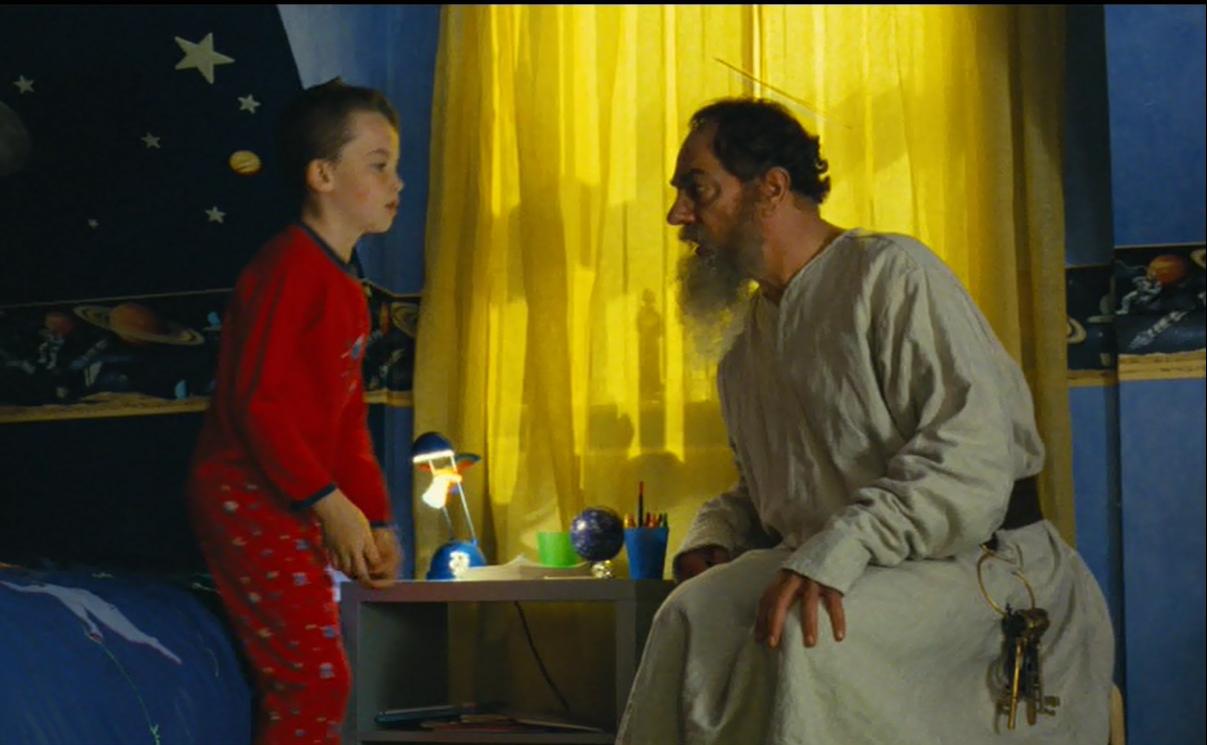
St. Peter

Photo Credit:  https://www.imdb.com/title/tt0366777/mediaviewer/rm1454393856

This past Sunday, our parish gathered to watch the film Millions (2004).  The film tells the story of two brothers who accidentally come into the possession of a bag with cash, and what they each want to do with the money.  The younger brother, still reeling from their mother’s death, regularly has visions of and conversations with saints, where he discusses the moral issues of how to handle the money.  My favorite scene is between the younger brother and St. Peter.  As St. Peter is talking to him about miracles, he tells him about the Feeding of the Five Thousand story.  But this Peter’s version is a little different than the one we all know.

In the film, Peter says what actually happened that day was not really a miracle.  A boy showed up with some sardines to share with the hungry crowd, and Jesus had the disciples pass them around.  But when each person received the plate, they did not take any, because they had been hiding a stash for themselves.  So, each person took their own stash out, and ate that food instead.  Some people even had a little extra, and so they added a small amount to the plate.  Peter argues there was no magic because the food did not actually multiply.  But as he talks the story through, he confesses perhaps a miracle did happen – the miracle of people sharing their food; the miracle of a once stingy people, hoarding their own food, to a tentatively generous people, willing to share.

What St. Peter was cheekily alluding to was a miracle not of substance, but of changed behavior.  Though the scene is meant to be playful, I have been thinking about that distinction ever since.  We are in a time of stingy hoarding; perhaps humans always are.  But in the face of our selfishness, I often find myself praying for a miracle – for God to act dramatically to change these awful patterns in our society.  But perhaps the miracle we need today is not a miracle of substance, but a miracle of changed behavior.  Perhaps we need little boys with plates of shared sardines to inspire us to let go of our own death grips on security, and open up our hands and hearts to generosity.   Perhaps when we open up, others will see works of miracle in our simple changes of behavior.

What are you hoarding this week on which you can loosen your grip?  Who are the children you have been ignoring who have something inspirational to share with you?  How might you slowly begin to let go of your posture of inward protection and look around your community to see who might need you and your open arms?  I invite you to be open to a miracle of changed behavior this week, and to let me know what ripple effects you see.  Maybe St. Peter is right about us, even today!

A Confession and a Call to Action…

07 Friday Jun 2019

Posted by jandrewsweckerly in Uncategorized

≈ Leave a comment

Tags

change, church, community, confess, God, grief, gun violence, indifference, inevitability, love, mass shooting, power, prayer, recommit, resignation

lightstock_110522_small_user_17564203

Photo credit:  https://www.firstchristianjax.com/event/prayer-vigil/

Over the weekend, a mass shooting happened in Virginia Beach.  Virginia Beach is less than an hour and a half away from Hickory Neck.  Some of our parishioners were colleagues with some of those killed.  There are many Episcopal Churches in Virginia Beach, and I know their priests have been working hard on pastoral care and preparing funerals.  Having a mass shooting so close to home, and certainly within our Diocese, has made this new reality of mass gun violence weightier and more tangible – as if the violence is making its way toward my personal sphere.

On Tuesday, our Bishop joined a worship service at an Episcopal parish in Virginia Beach.  As I thought about the service, I found myself wondering what liturgy they might be using, and how one even constructs a liturgy when you and your community is under such stress.  And then a dreadful thought occurred to me – one that is painful to confess.  I thought, “well, maybe I should develop a liturgy now when I’m not overcome with grief and counseling others, so the liturgy is easily modified for the situation.”

As soon as I had the thought, I crumpled in grief.  This is where I have come.  After years and years of devastating, massive amounts of death, countless pleas for us to change – change something, anything, and sermon after sermon preached about how we must do and be better, I have allowed myself to succumb to inevitability instead of demanding change.  This realization has been sitting with me all week, and it still brings me to tears when I recall my own sense of resignation.

This week, my prayer for us is a bit different.   My prayer for us is that we recommit to working for change.  My prayer is that we not let the sin of indifference or the sense of inevitability paralyze us from being agents of love and change.  My prayer is that we stop letting the sense of powerlessness take away our power.  I do not want to develop a “just in case” liturgy.  I don’t want to have to officiate over such a liturgy.  I want us all to acknowledge that we want to be better, and start doing the hard work of gathering diverse peoples to the table and finding a path forward.  Let’s be the Church – the Church our community needs.

O God, you made us in your own image and redeemed us through Jesus your Son: Look with compassion on the whole human family; take away the arrogance and hatred which infect our hearts; break down the walls that separate us; unite us in bonds of love; and work through our struggle and confusion to accomplish your purposes on earth; that, in your good time, all nations and races may serve you in harmony around your heavenly throne; through Jesus Christ our Lord. Amen.  (BCP, 815)

← Older posts
Newer posts →

Recent Posts

  • On Redefining Community…
  • On Parenting, Milestones, and Community…
  • Sermon – Acts 2.42-47, E4, YA, April 26, 2026
  • On Seasons of Discernment…
  • Sermon – Luke 24.13-35, E3, YA, April 19, 2026

Archives

  • May 2026
  • April 2026
  • February 2026
  • January 2026
  • December 2025
  • November 2025
  • October 2025
  • September 2025
  • August 2025
  • July 2025
  • June 2025
  • March 2025
  • February 2025
  • December 2024
  • November 2024
  • October 2024
  • September 2024
  • August 2024
  • July 2024
  • June 2024
  • May 2024
  • March 2024
  • February 2024
  • January 2024
  • December 2023
  • November 2023
  • October 2023
  • September 2023
  • August 2023
  • July 2023
  • June 2023
  • May 2023
  • March 2023
  • February 2023
  • January 2023
  • December 2022
  • November 2022
  • October 2022
  • June 2022
  • May 2022
  • January 2022
  • December 2021
  • November 2021
  • October 2021
  • September 2021
  • August 2021
  • June 2021
  • May 2021
  • April 2021
  • March 2021
  • February 2021
  • January 2021
  • December 2020
  • November 2020
  • October 2020
  • September 2020
  • August 2020
  • July 2020
  • June 2020
  • May 2020
  • April 2020
  • March 2020
  • February 2020
  • January 2020
  • December 2019
  • November 2019
  • October 2019
  • September 2019
  • August 2019
  • July 2019
  • June 2019
  • May 2019
  • April 2019
  • March 2019
  • February 2019
  • January 2019
  • December 2018
  • November 2018
  • October 2018
  • September 2018
  • August 2018
  • July 2018
  • June 2018
  • May 2018
  • April 2018
  • March 2018
  • February 2018
  • January 2018
  • December 2017
  • November 2017
  • October 2017
  • September 2017
  • August 2017
  • July 2017
  • June 2017
  • May 2017
  • April 2017
  • March 2017
  • February 2017
  • January 2017
  • December 2016
  • November 2016
  • October 2016
  • September 2016
  • August 2016
  • July 2016
  • June 2016
  • May 2016
  • April 2016
  • March 2016
  • February 2016
  • January 2016
  • December 2015
  • November 2015
  • October 2015
  • September 2015
  • August 2015
  • July 2015
  • June 2015
  • May 2015
  • April 2015
  • March 2015
  • February 2015
  • January 2015
  • December 2014
  • November 2014
  • October 2014
  • September 2014
  • August 2014
  • July 2014
  • June 2014
  • April 2014
  • March 2014
  • February 2014
  • January 2014
  • December 2013
  • November 2013
  • October 2013
  • September 2013
  • August 2013
  • July 2013
  • June 2013
  • May 2013
  • April 2013
  • March 2013
  • February 2013
  • January 2013
  • December 2012
  • November 2012
  • October 2012
  • September 2012

Categories

  • reflection
  • Sermons
  • Uncategorized

Meta

  • Create account
  • Log in
  • Entries feed
  • Comments feed
  • WordPress.com

Blog at WordPress.com.

  • Subscribe Subscribed
    • Seeking and Serving
    • Join 391 other subscribers
    • Already have a WordPress.com account? Log in now.
    • Seeking and Serving
    • Subscribe Subscribed
    • Sign up
    • Log in
    • Report this content
    • View site in Reader
    • Manage subscriptions
    • Collapse this bar

Loading Comments...