• About

Seeking and Serving

~ seek and serve Christ in all persons

Seeking and Serving

Tag Archives: church

On Being Stewards of Dreams…

27 Thursday Apr 2017

Posted by jandrewsweckerly in Uncategorized

≈ Leave a comment

Tags

church, cup, dream, God, intergenerational, Lord, ministry, portion, serve, vision

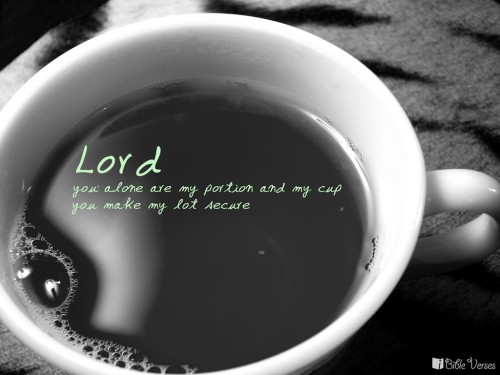
portion and cup

Photo credit:  https://www.pintrest.com/pin/536632111820932245/

“O Lord, you are my portion and my cup; it is you who uphold my lot.  My boundaries enclose a pleasant land; indeed, I have a goodly heritage.”  (Psalm 16.5-6) 

At our Vestry Retreat this winter, we began to talk about the dream we have been tossing around since before my arrival.  Upon reflection of the demographics and needs in Williamsburg, the dream is that Hickory Neck offer a childcare program, adult daycare program, or a combined ministry of the two.  I have been excited about the idea ever since I first heard it articulated.

I had encountered the concept of intergenerational care online (see video here).  What I loved about the video was that the intergenerational care reminded me of what happens at church:  people from all generations finding comfort, care, and a sense of identity and purpose.  In our modern culture, intergenerational relationship is rare.  Families live far apart, people tend to be segregated by life stage, and we value self-sufficiency.  But what we forget in our modern culture is that our young and our old need each other – they teach each other, they bring each other renewed energy, and they help each other learn.  I have always loved that my children have lots of “grandmas and grandpas” at church.

If I had the option of putting my children in childcare that fosters such a rich environment, I would be thrilled.  Furthermore, I know that our geographic area could use more accessible childcare and senior daycare.  As the pieces came together, God seemed to be inviting Hickory Neck into a new phase of its ministry.  This winter, the Vestry agreed that we should start being stewards of this dream the Spirit had given us.  So, for the last month, the Vestry has been having conversations in the community.  The idea is to learn what services are already offered, whether our sense of the needs matches the actual needs, and what potential partners there may be in our community.  We are obviously in the very early stages of this walk, but it is an exciting time!

I hope you will join us this Sunday as we gather for our quarterly Rector’s Forum.  We will be talking about this vision, as well as the many other tremendous ministries of Hickory Neck.  We indeed are blessed by a goodly heritage at Hickory Neck.  I look forward to celebrating the ways that our Portion and our Cup are leading us!

Sermon – John 20.1-18, ED, YA, April 16, 2017

27 Thursday Apr 2017

Posted by jandrewsweckerly in Sermons, Uncategorized

≈ Leave a comment

Tags

affirmation, belonging, call, church, clarity, despair, Easter, Good Shepherd, grief, identity, Jesus, love, Mary, name, purpose, Sermon

Every generation has a baby name that is popular.  In my generation, that name was Jennifer.  As I was growing up, every grade had tons of Jennifers.  I became quite accustomed to the experience of eagerly looking up when someone called my name, only to be disappointed to see they were calling out to someone else.  The name was so common that by the time I got to college, I learned to ignore people calling out my name because more likely than not, they were not actually calling me.  They were calling one of the other twenty Jennifers nearby.  Although the practice helped me save face, the practice was a bit of a hindrance when someone actually was trying to get my attention.

The solution, of course, was a nickname – something to distinguish me from the sea of other Jennifers.  So in college, most of my buddies just started calling me “Andrews.”  It may sound silly, but having a name that was distinct, that when called, I knew I could answer, gave me a sense of belonging and identity.  When someone shouted, “Andrews” across the quad, I knew a friendly face would be looking for me when I raised my eyes.  Though seemingly simple, that nickname made me feel known, especially at a time when everyone is trying to figure out their new identity, where they belong, and who they will be.

I suspect that Mary was the common name in Jesus’ generation.  All we need to do is read through the New Testament to know that there are more Marys than we can count.  Sometimes I even have to look back when I come across a Mary to be sure I am thinking of the right one.  So when Jesus calls Mary Magdalene by name, I imagine there must have been some way she knows not only that this is Jesus, but also that he is talking to her.

Easter morning has been a rough morning for Mary.  She comes in the tomb before the first light of dawn has broken.  She is probably still a bit bleary eyed – that kind of haze one has in the days after a death of a beloved one.  She comes to halt before she gets all the way to the tomb though.  The stone that is supposed to be covering the tomb, protecting Jesus’ body, is gone.  Before even going in to assess the situation, Mary runs – runs hard to find the disciples, demanding that they get up and help her.  Two of them, the beloved disciple and Peter, sprint ahead of Mary.  She is too tired from her first run to keep up.  By the time she reaches the tomb, the two disciples are already stepping out of the tomb, Peter looking perplexed and the other disciple with an enigmatic smile.  And without so much as a word to her, they leave – just like they left Jesus on that fateful day.[i]  Mary, overcome with the memories of Jesus’ crucifixion and the continued emotion of this morning, breaks into tears.  When she finally checks inside the tomb herself, she not only sees two angels, she also has an encounter with a supposed gardener.  Frustrated by their insensitive questions, she exasperatedly asks the gardener to just tell her where the body is.

That is when the big news today happens.  The supposed gardener calls her by name.  Not the common name that everyone has.  The supposed gardener calls her by the name that only Jesus calls her.  The haze dissipates.  The tears halt.  The cloud of despair vanishes.  And she calls Jesus by the name that only a few call him, “Rabbouni!”  This is a tremendous moment in our text today.  In the flurry of running, and confusion, and questions, and tears, and despair, two people see each other crystal clearly.  Mary is called by her name – Jesus communicates to Mary that she is known, the she is beloved, that she has an identity and a purpose unique to her.  She is his sheep who knows and recognizes the voice of the shepherd – the Good Shepherd.[ii]  Her relief is palpable.  The return of her confidence is immediate.  Her sense of celebration is ready to explode!

When I was in high school, I had a summer where I attended both a short conference and then a long summer program.  Both were residential.  The conference was the Hugh O’Brian Youth Leadership conference, or HOBY for short.  I made a few fast friends, but was there just a few days.  A week or so later, I was off to a six-week residential program.  It was my first time staying away from home that long, and I was admittedly a bit nervous since no one else from my high school was going.  After I unloaded my bags, and was getting ready to say goodbye to my parents, someone behind my shouted, “Hey, HOBY!”  Without even looking at who it was, I knew I did not need to worry about belonging.  I was already known here.  I had a place here.  I could have a purpose for those six weeks.

We have all had those moments of clarity around identity, belonging, and purpose.  Whether we are returning to our home town after a long time away, whether we develop good friends at school or in a civic group, and whether that happens at a reunion, we all know the deep, profoundly affirming feeling that comes from being known.  For those of you with a church home, and especially for those of you who have found a home here at Hickory Neck, you most likely found that feeling here.  Perhaps the liturgy was what brought you a sense of identity – either the liturgy reminded you of a practice from your earlier life, or the liturgy offered something to you that you did not even know you were missing.  Perhaps a ministry at church brought you a sense of identity – those little sacred moments that come when you realize that you are actually really good at inspiring people to serve the world, making beautiful music, or teaching children about the love of God.  Or perhaps the community brought you a sense of identity – that first time when someone remembered your name or a part of your story, when someone came to you for expert advice, or when someone knew just by looking at you that you were hurting – and then offered to take you to lunch or coffee.  The church is a place where both Christ and the community call you by name.

Now I would love to tell you that the wonderfully affirming and life-giving feeling of being known is an end unto itself.  I would love to send you home on this beautiful Easter Day with simply a sense of love and affirmation.  And that is certainly part of the gift I am giving you today – to tell you that you can be known and loved here.  But something else happens to Mary at that tomb.  After that profound moment of affirmation, Jesus tells her to go and be a witness to the disciples.  Jesus always gives his beloved homework.  He is that teacher that even on a Friday will give you an assignment for the weekend!  But Mary does not see this as a burden.  Even though Jesus will not let her cling to him – cling to the way things used to be, Jesus’ affirmation this day propels her to go out and share the good news of the risen Lord with the disciples.  In this way, Jesus not only recognizes and honors her identity; Jesus also gives her purpose – a call.

That is your homework on this Easter Sunday.  I know you want to go eat those big Easter meals ,go find those Easter eggs, and find what Easter chocolate awaits at home.  But remember that while this place is a place that calls you by name and affirms your beautiful identity, this is also a place that commissions you to go out and share the good news.  That wonderful sense of affirmation is not for you to bottle up and keep for yourself.  That sense of affirmation is meant to embolden you to share that affirmation with others – to meet people where they are, to hear their stories, and to share how this day of resurrection, love, and affirmation is for them too.  In the same way that you have a vocation, a call on your life, you also are to affirm vocation and call in others.  So this week, as you bask in the warmth and beauty of this day, go out and share that good news with others.  Someone may be waiting for you to call them by name.  Amen.

[i] Richard B. Hays, “Do Not Cling to Me,” Christian Century, vol. 109, no. 10, March 18-25, 1992, 299.

[ii] Karoline M. Lewis, John:  Fortress Biblical Preaching Commentaries (Minneapolis:  Fortress Press, 2014), 241.

The Pilgrimage of Holy Week

13 Thursday Apr 2017

Posted by jandrewsweckerly in Uncategorized

≈ 1 Comment

Tags

Christ, church, God, Holy Week, Jesus, moments, pilgrimage, sacred, Savior, worship

17903433_10155696878822565_4685487522288081020_nIn Holy Week, I like to offer the parishes I serve a service for each night of the week.  It can be labor intensive, and people can feel overwhelmed by the idea of coming every night of a week for church (even if it is only once a year).  But, if you can make it through every night, you find yourself in the midst of a beautiful pilgrimage – an unfolding story and walk with our Savior, Jesus Christ.  This year, we are only three days in, but each night has given me little “God moments.”

On Holy Monday, my heart was warmed that our community was gathering “virtually” to celebrate compline (evening prayers).  We have been doing it all Lent, but it was a wonderful way to close my evening in my pajamas, knowing that others were on Facebook, praying together with our Curate.  On Holy Tuesday, as I sat in the silence of our Taize service, I was watching the flames of the many lit candles flicker.  Since I knew people had lit the candles with prayer intentions, I imagined each of those flames as a prayer, symbolizing the cares and concerns of each person in the room.  As our silence extended, I imagined the flames represented the prayers and concerns around the world, remembering how our Coptic Christian brothers and sisters must be hurting this week.  It was a powerful, transfixing image.  Then last night, on Holy Wednesday, during our healing prayers, two things happened.  First, my daughter came forward for prayers by me.  Her request was humbling, and the privilege of affirming her and praying with her in that space was incredible.  Second, another local pastor laid hands on me and prayed just the prayer I needed this week.  It was all I could do to hold back the tears.

So, I do not know what the next three days, the Triduum, hold.  But I can promise you there will be many more sacred moments.  If you have a church home, I encourage you to take advantage of their offerings for the rest of the week.  If you do not have a church home, and live in the Williamsburg area, know that you are most welcome.  You can find all our information on our website.  A continued blessed Holy Week for you.  As you ponder your own connection to church, I offer you this video as inspiration for your Holy Week pilgrimage to Lent.  Peace!

On Remembering Roots…

29 Wednesday Mar 2017

Posted by jandrewsweckerly in Uncategorized

≈ Leave a comment

Tags

Campus Ministry, Christ, church, college, community, disciple, discipleship, faithful, formation, fun, Jesus, leadership, love

842x347-WELS-CampusMinistry

Photo credit:  https://wels.net/serving-you/christian-life/campus-ministry/

Last night, as a member of our Diocesan College Ministry Commission, I visited Canterbury at William & Mary.  We had some time with both the students involved in the Episcopal Campus ministry and with the Campus Minister.  It is a vibrant ministry, with a lot of passion and enthusiasm around service, worship, and discipleship.  Canterbury is a place where they can ask questions of their faith, become leaders, serve their community, and forge deep friendships.  They are doing the work began in their baptism, continued in their confirmation, and now affirmed as adults.

As I listened to the students and Campus Minister, I was flooded with a host of memories from my own experience in Campus Ministry at Duke.  Although I was involved in the Wesley Fellowship, the models are quite similar.  Wesley was the place where I came into my own faith, where I engaged my intellect in partnership with professors at the Divinity School, where I first discovered the power of mission trips, and ultimately, where I began to feel a sense of call to ordained ministry.  Wesley created disciples – encouraging us to find a local church community, fostering a personal spirituality, developing deep Christian friendships, and exploring the implications of my faith.  Most of my friends from Wesley took a year or more to volunteer or live in intentional Christian community.  Today, most of the alumni I know are clergy, lay leaders, non-profit workers, social services providers, and are raising up a new generation of faithful disciples.

When I was in college, I thought Wesley was doing something revolutionary.  The community certainly articulated its faith a little differently than my home churches had.  But more than that, we created an intimate, trusting, challenging space that fed me and informed my life path.  As I thought about that experience and the experience of the Canterbury students at Williams & Mary, campus ministry does exactly what Church does – or should do.  We are forming people into faithful disciples, who want to learn and grow in their faith, who want to find ways to serve God and live out their baptismal covenant, who want to develop the deep bonds of Christian community, and who want to have some fun while they are at it!

As a pastor, I often get caught up in the programmatic and administrative work of Church.  I want to create a community that offers the things necessary to produce faithful disciples.  What last night reminded me of is that I need to remember to look around and enjoy what we are creating too.  If you have been looking for a community that can help you find meaning and purpose, can help you grow in unexpected ways, can help you connect with others on the spiritual journey, and can embolden you to live a life full of the love of Christ, come join us at Hickory Neck.  And if you are already a member, invite a friend into this rich experience.  There is good news to share!

Sermon – Matthew 4.1-11, Genesis 2.15-17, 3.1-7, L1, YA, March 5, 2017

08 Wednesday Mar 2017

Posted by jandrewsweckerly in Sermons, Uncategorized

≈ Leave a comment

Tags

church, corrupt, disciplines, doubt, evil, God, goodness, identity, insecurity, Jesus, Lent, question, relationship, repentance, Satan, Sermon, sin, temptation, trust

On this first Sunday in Lent, I usually like to talk about Lenten disciplines.  The season of Lent is one of the few times in the Church that we take a hard look at our faith life and then actually commit to doing something tangible to strengthen our walk with Christ.  When I hear about your disciplines, I get some clue as to what feeds each of you spiritually – whether you long to connect with Holy Scripture, or hope to deepen your prayer life; whether you know that denial of certain parts of your life will create a needed discomfort or disruption, or instead find taking up something to create needed transformation; whether you are motivated by something fun and engaging (like Lent Madness), or you prefer something more philosophical (like our Lenten study group focusing on the spirituality of the Eucharist).  Lenten disciplines also give me a tiny clue about what sinful behaviors have been pulling you away from God.  As we prayed the Great Litany today, there were countless options:  pride, vainglory, hypocrisy, envy, hatred, malice, desires of the flesh, and hardness of heart.  Or, perhaps you are inspired to help one of those we prayed for in the Litany:  the lonely, the sick, the homeless, the imprisoned, broken families, the oppressed, or those suffering injustice.  There really is no wrong way to approach Lenten disciplines – that we are taking them on demonstrates a commitment to enriching our faith and growing closer to God.

Given the beginning of those practices, the text of Jesus’ temptation every year on this first Sunday in Lent has always seemed most appropriate.  How better to encourage us to engage in repentance and reformation than to remember that Jesus too was tempted – tempted to ease the discomfort of hunger, tempted to test God’s loyalty and support, and tempted to take on power – even if ill-gotten – for the greater good?  And even better that this year in Lent, we get that powerful lesson from Hebrew Scriptures of Adam and Eve’s temptation – the temptation to eat beautiful fruit, to learn what God knows but won’t tell us, to take control of our destiny.  And all of those temptations would be plenty.  But what has been striking me more powerfully this year has been what is at the root of the temptations of Satan.  You see, in all of those tests for Jesus, and even in the simple offering of forbidden fruit, Satan does something even more insidious.  Through his temptations, Satan works to undermine our relationship with God – to sow the seed of mistrust that promises to unravel the very foundation of our faith.

We can talk all we want about deepening our faith, working on our sinful behaviors, or becoming better Christians in Lent.  But much scarier to talk about is the power of evil to undo our faith altogether.  Many of us know the darkness of this power from Satan.  If we have not had a spiritual identity crisis in our lives, someone we know has.  Enough people around us die, enough suffering happens in the world, enough pain comes our way that slowly we begin to wonder if God cares at all.  We watch what Christians do to one another or how they fail to care for one another, we see the misdeeds of the Church, or the Church’s clergy disappoint us, and slowly, slowly, we begin to doubt God is even present.  As I have been watching the news, as our country becomes more deeply divided, as suffering seems to be epidemic, and as we dehumanize one another, sometimes institutionalizing that dehumanization, I see the power of evil planting seed after seed of mistrust.  Who hasn’t asked, “Where is God?” in the last year?  Who hasn’t thought, “Maybe I should stop trusting God, and start taking care of things myself.”?  Who hasn’t wondered if God is slipping into irrelevance as the world falls apart around us?

As I have pondered the temptations of Adam, Eve, and Jesus, the power of evil to corrupt has been much more powerful, potent, and pressing this year.  The “crafts and assaults of the devil” and the desire to “beat down Satan under our feet”[i] we heard in the Great Litany are much more powerful in our current climate.  I am much less worried about Adam and Eve’s original sin than I am worried about their original insecurity.  The serpent comes along and sews mistrust among Adam and Eve.  He starts out with a simple question, “Did God really say…”  And so begins the serpent’s assault on their relationship with God – misrepresenting and undermining God’s instructions, suggesting God is keeping something from them.  And as scholar David Lose suggests, once this primary relationship is undermined, Adam and Eve are “susceptible to the temptation to forge their identity on their own, independent on their relationship with God, and so take and eat the forbidden fruit… [They] forget whose they are and so lose themselves in the temptation to secure their identity on their own.”[ii]  Though Adam and Eve’s sin is grave, how the serpent gets them there is much scarier to me.

Satan attempts to do the very same thing with Jesus.  “The devil also tries to undermine Jesus’ relationship with God by suggesting [the relationship] is not secure, that he should test [the relationship] by throwing himself off the mountain, or that he should go his own way by creating food for himself, or that he should seek the protection and patronage of the devil rather than trust God’s provision.”[iii]  Satan is good!  He even tries to twist Jesus’ use of scripture to convince Jesus of God’s unworthiness of trust.  What is frightening about Satan’s tactics is that he is not just about tempting us to do bad things.  He is meddling in our relationship with God, sewing distrust, confusion, questioning our identity as beloved children of God.  And that kind of meddling leads to much worse problems than poor behavior.  Satan tries to upend who we are.

Last week, we baptized two members into the household of faith.  We talked about how baptism marks for us who and whose we are.  We gave thanks for the reminder and celebrated as a community.  We were not unlike Adam and Eve, who upon their creation, God says it is very good.  We were not unlike Jesus, who at his own baptism, which occurs immediately before his temptation today, God says, “This is my beloved, with whom I am well pleased.”  But Satan takes goodness and blessedness, and tries to taint that goodness and blessedness with doubt, mistrust, and insecurity.  He tries to confuse us, making us forget who and whose we are.

Several years ago, the movie The Help debuted.  In the film, there is a maid who cares for a child who gets a lot of verbal abuse from her mother.  In several key scenes, the maid takes the child aside and teaches the child a mantra of sorts.  In her rough grammar, she reminds the child, “You is smart, you is kind, you is important.”  Eventually the maid is fired, and the audience is left hoping that the mantra she taught the child will remind her that no matter what verbal abuse she receives, she can remember who she is – smart, kind, and important.

We do not always have caretakers in our lives who will instill in us a mantra that holds us in the face of adversity.  But we do have a church.  We have a church that will tell us we are made in the image of God, that our very creation is rooted in goodness, and that we are beloved children of God.  When we begin to be assaulted by the power of evil, which would rather us question our identity, the church reminds of us of our baptismal covenant, our identity-making set of promises, which tells us we are enough, there is plenty to go around, and we need not live in fear.  While the forces of evil will try to isolate us and send us into questions of identity, the church comes together every week to remind us that we are beloved children of God – a people of value, worth, and purpose.[iv]

I do not know what spiritual discipline you are taking up for Lent this year.  But if you do nothing else this Lent, come to church.  Come gather with the community that reminds you who and whose you are.  Come be with a people who are also assaulted by the doubts, questions, and fears of the day, but who ground themselves in their identity, and find meaning, encouragement, and purpose in this place.  Come.  Together, we will stamp down Satan under our feet as we shine light on our God who redeems, reveres, and renews us.  Amen.

[i] BCP, 151-152.

[ii] David Lose, “Lent 1A:  Identity as Gift and Promise,” February 28, 2017, as found at http://www.davidlose.net/2017/02/lent-1-a-identity-as-gift-and-promise/ on March 2, 2017.

[iii] Lose.

[iv] Lose.

On Cuisine and Community…

15 Wednesday Feb 2017

Posted by jandrewsweckerly in Uncategorized

≈ 3 Comments

Tags

church, comfort, comfort food, communion, community, cuisine, Eucharist, feast, fellowship, food, God, journey, recipe, strength, sustenance

mac-and-cheese

Photo credit:  whoneedsacape.com/2016/10/italian-mac-cheese/

This weekend, I made a family recipe from my husband’s grandfather.  Though Grandpa Gray is no longer with us, somehow, making this recipe for the first time in a long while flooded me with all kinds of memories.  You see, Italian Mac was the family’s favorite dish – the ultimate comfort food.  One year, I finally asked for the recipe and stayed with Grandpa Gray in the kitchen while he made it.  Now, as I look at the words of the recipe, I can hear his beautiful voice in the words.  As I crush the herbs as he instructed, I can imagine his worn hands doing the same thing.  As our house fills with the aromas of Italian Mac and garlic bread, I can remember the smell of his house.  As I sip the red wine that the recipe suggests I pair with the meal, I can recall the comforting sound of his laughter.

Food has a special power.  Whenever I have been on mission trips, food has created intimate connection.  In Honduras, we all took turns helping the women of the village cook for our team.  After ten minutes of attempting to grind corn, we were all laughing at how much stronger the women were than the men who were lifting bricks to build the church.  On my second visit to Costa Rica, I wanted to learn how to make the beans and rice we ate regularly.  The women were surprised that I was willing to get up early with them and learn.  After that morning, our relationship shifted.  In Myanmar, giggles and laughter ensued as we tried new foods and our hosts appreciated our boldness.

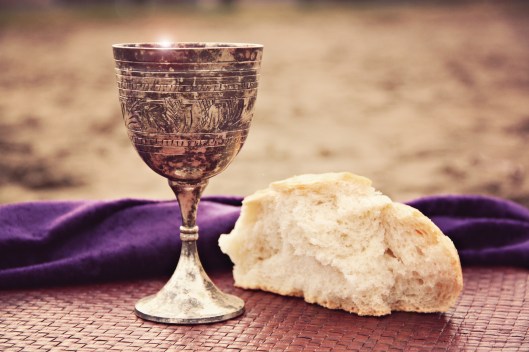
The same is true of the Eucharist.  I have been in churches that use grape juice and a small cube of pasty, crunchy “bread.”  I remember the splendor of the sweet Hawaiian bread used at another church.  I remember the first time I had real wine at communion, and the way that it burned down my throat, lighting a new fire in me.  Whether baked bread, bland wafers, or store-purchased pita bread, each texture and flavor imprints in my mind the church, the community, the spiritual place where I was at the time.  Even this weekend, at my goddaughter’s baptism, my own daughter commented on the “yucky” communion bread they had.  I would have just said it was dense, but that dense texture will linger in my mind as my reminder of our celebration.

Holy Eucharist is the comfort food of Church.  That is why I love being a part of a sacramental church that has Eucharist every Sunday.  But the Church offers other comfort foods as well.  The pancakes we eat every Shrove Tuesday remind me of years of fellowship and laughter – with communities all over the East Coast.  The Brunswick Stew of the Fall Festival at Hickory Neck will always remind me of warmth and community.  There are those dishes at every potluck that you search for, knowing the comfort it will bring.  And of course, there is the Sunday morning coffee – a staple of hospitality and grace.  If you have been missing a sense of community and comfort, I hope you will make your way to Church this week and join us in the feast that not only comforts us, but also strengthens us for the journey.  God has given us great work to do – but God has also given us the sustenance we need for the road ahead.

lords-supper-church-stock-photos

Photo credit:  stthomasnorwalk.com/religious-ed/sacraments/Eucharist

Sermon – Isaiah 58.1-12, EP5, YA, February 5, 2017

08 Wednesday Feb 2017

Posted by jandrewsweckerly in Sermons, Uncategorized

≈ Leave a comment

Tags

church, fast, fasting, God, Isaiah, love, need, outreach, relationship, Sermon, serve, worship

In about three and half weeks we will gather in the Historic Chapel for Ash Wednesday services.  In the liturgy for Ash Wednesday, the priest invites us into the “observance of a holy Lent, by self-examination and repentance; by prayer, fasting, and self-denial; and by reading and meditating on God’s holy Word.”  I don’t know about you, but this invitation always makes me a little nervous.  The truth is, I am terrible at fasting.  I have often blamed the issue on low blood-sugar.  But really, I just hate the way not eating makes me feel.  I get cranky, I cannot focus on work, and I just want to crawl into bed.  And what makes fasting worse is that we get scriptural passages that warn us about grimacing while fasting – that we should go so far as to put oil on our faces so that we look shiny and happy during our fasting.

Knowing my utter sense of failure at my inability to engage in the most holy of spiritual practices, I confess that I was secretly pleased to read our text from Isaiah today.  The people of Israel have become quite good at fasting and pious worship.  We are told that day after day the Israelites come to God in worship, delighting to know more about God, and fasting like righteous followers of God.  They even bow down and lie in sackcloth and ashes.  They are the epitome of penitential Lenten worshippers.  Except for one small, teeny, tiny problem.  Despite their devotional fasting and their fervent prayers, God is angry with the Israelites.  You see, while the Israelites are piously engaging in reverent, penitential worship, their hired hands are working under their oppressive orders.  While they have been perfecting reverential bows, there are hungry, homeless, naked, impoverished peoples just outside their doors.  Oblivious, the Israelites complain to God, “Why do we fast, but you do not see?  Why humble ourselves, but you do not notice?”  God’s response is a brutal question:  Why are you here?

In polite Episcopal circles, we do not often ask that question:  Why are you here?  We might ask a visitor a much softer version of that question, “What brings you to Hickory Neck?”  But we almost never ask a regular or long-time church member, “Why are you here?”  I think part of why we do not ask someone else that question is because we are afraid someone will ask us that question.  We are afraid to be asked that question because the question feels like a trick.  If I say I am here because I want peace or comfort, does that make me a passive, self-serving Christian?  If I say I am here because I enjoy the community, does that mean my church is more like a country club than a church?  If I admit that I do not know why I am in church this morning other than a strange longing somewhere deep inside me, does that mean that my worship is superficial or doomed for ambiguity?

The scary part about our anxiety around that question, “Why are you here today,” is that God has a very clear response before we or the Israelites can even answer the question.  God says that if we do not come to worship to be changed, we are doing something wrong.  As one scholar argues, Isaiah’s words today tell us that, “Worship without justice has no value in the eyes of God.”[i]   For Isaiah, a gap has formed between the faithful’s seeking God and God’s ways and their actual way of life.  What Isaiah wants the people to know is that fasting, prayer, and worship are all well and good, but without some connection to the other 167 hours of their week, their worship, their fasting, their relationship with God is hollow.  Now, God is not telling us that worship is inherently bad or self-serving.  As another scholar points out, “worship is the most important thing we do together.  It is the place that forms us into the people of God.  It is the place where we inhale God’s love and grace, so that,” and here comes the important part, “so that we can be sent forth to exhale God’s love and grace in a broken world in need of redemption.”[ii]

One of the things that attracted me to Hickory Neck was the wide variety in styles of worship.  On any given Sunday, I can pray the Prayer of Humble Access in the midst of a quiet Rite I liturgy; I can belt out a praise song that is so familiar I don’t need to look at the words; I can chant the Eucharistic Prayer while the Choral Scholars respond with beautiful, precise, haunting harmonies; or I can sing a version of the Lord’s Prayer that my seven-year old daughter has learned by memory.  I love the variety of expressions of worship here, and love our unique gift that is rare in most parishes.  But variety can be dangerous.  Variety means bringing together people who don’t necessarily revel in the differences.  There will be people who only come to our early service because they find music to be a distraction.  There will be people who only come to the late service because anything other than traditional Anglican music interferes with their worship.  And there will be people who only like the middle service because they can let their hair down and be themselves.  Slowly, what is meant to be the gift of variety becomes a competition for the best – the most holy, most reverent, most relatable, most “of God.”  But what all that comparison leads to is not deeper relationship with God.  That comparison leads us to focus on the worship as an end unto itself, instead of as a means “right relationship.”[iii]

In order to get to the point of fasting or worship, God tells the Israelites to redefine fasting.  Instead of abstaining from food or drink, the fast God desires, “is outreach to those in need, which involves not only feeding the hungry, clothing the naked, and caring for one’s own, but also addressing the attitudes and structures responsible for injustices.”[iv]  In the Episcopal Church, we have codified this redefinition of fasting in our dismissal.  We take all of our prayers, all of learning, all of our confessions, and all of our feasting and we say, “Go in peace, to love and serve the Lord.”  In other words, we give ourselves the beauty of worship, and then remind ourselves of the point of that worship – right relationship with God and our neighbor.  I have often thought the church needs the words of the dismissal painted above the Narthex door, so that as each of us departs this space, we can jump up and slap the words – much life a sports team entering the arena who slaps a slogan or the team name.  Go in peace to love and serve the Lord.

Now some of you may be thinking about this radical redefinition of fasting and this question of why we are here in worship, and be wondering, “Can’t I just give up some food and call it a day?!?  Can’t I just sit in worship and not worry about why I am here?!?”  You may know well that righting relationships with God and neighbor is a lot harder than a day’s worth of sacrificing food or just showing up on Sunday.  But before you get too anxious, listen again to Isaiah’s words about what happens when we enter the kind of fast God prefers, “The Lord will guide you continually, and satisfy your needs in parched places, and make your bones strong; and you shall be like a watered garden, like a spring of water, whose waters never fail.  Your ancient ruins shall be rebuilt; you shall raise up the foundations of many generations; you shall be called the repairer of the breach, the restorer of streets to live in.”  God’s work is never too difficult – exhaling God’s love and grace in a broken world in need of redemption is as easy as breathing in the love and grace we inhale every Sunday.  The promise of God’s blessing is waiting – we just need to breathe.  Amen.

[i] Carol J. Dempsey, “Theological Perspective,” Feasting on the Word, Yr. A, Vol. 1 (Louisville:  Westminster John Knox Press, 2010), 314.

[ii] Andrew Foster Connors, “Pastoral Perspective,” Feasting on the Word, Yr. A, Vol. 1 (Louisville:  Westminster John Knox Press, 2010), 316.

[iii] Dempsey, 316.

[iv] Dempsey, 316.

Come and See!

11 Wednesday Jan 2017

Posted by jandrewsweckerly in Uncategorized

≈ Leave a comment

Tags

church, come, community, connection, gospel, internet, isolation, Jesus, physical, prayer, see, snow, virtual

This past weekend, Williamsburg was hit with over a foot of snow.  Living in an area without many plows, and serving in a church without a Rectory on the campus, I knew that Sunday services at Hickory Neck would be nearly impossible.  Our parking lot did not get plowed until early Monday morning, and many of our parishioners live on rural roads.  With great disappointment, I cancelled all Sunday services.  But then my husband turned to me with a twinkle in his eye and said, “You should lead Morning Prayer on Facebook Live!”

That night I put together a video to tell people what we were going to do and where they should go to join me in worship.  And on Sunday morning, at 10:00 am, I went live.  By the time we had finished, there were over 60 views.  By the time we got to the end of the day, there were over 300 views.  By Tuesday night, there were over 700 views.  The positive feedback poured in – from our parishioners, from their neighbors, and from dozens of people who were snowed in all up and down the Atlantic coast.

As I have thought about the experience, I realized what a gift technology can be.  Isolated in homes, people were able to come together and pray the same prayers, hear the same readings, confess our sins, lift up our intercessions and thanksgivings, and give glory to God.  So often we talk about the challenge of the church is being tied to the walls of the physical building, not taking the Gospel out in the world.  Our experience on Facebook felt like a little way of getting ourselves out in the world, and sharing the beauty of worship in virtual community.

Of course, I don’t think church can always be expressed in virtual ways.  Being physically present with one another allows us to engage all our senses, to read the body language of someone who is suffering or experiencing joy, and to engage in the holy meal that brings us together despite our divisions.  But the experience certainly made me realize that we can supplement that communal physical experience with communal virtual experiences.  And once you show your neighbor that cool video from your church, then, like Jesus in our Gospel lesson this coming Sunday, you can say, “Come and see!”[i]

come-see

Photo credit:  https://www.queertheology.com/john-1-29-42


[i] John 1.39.

On Sushi and Other Adventures…

05 Thursday Jan 2017

Posted by jandrewsweckerly in Uncategorized

≈ 1 Comment

Tags

adventure, church, commit, experiment, food, God, new, try, variety

sushi-roll

Photo credit:  www.lifehack.org/articles/lifestyle/kitchen-hack-five-minute-maki-sushi-rolls.html

My husband and I have very different experiences of food.  I like to try new things and am constantly surprised but what things I discover and grow to love.  He is much less experimental and is easily turned off by new smells or flavors.  I love a variety of foods, and he is what I would call, “picky.”  Our differences have certainly made shared meals difficult.  I have learned to use meals with friends or colleagues as my time to play with food.  And I have also learned what common foods we like and can share on a weekly basis.

When we had children, I was desperate to instill in them a love of the varieties of food – not because I think my husband’s preferences are bad necessarily, but more because I want them to be willing to try new things.  That has meant introducing things to the kids at an early age, treating new foods like a fun experiment, and learning how to use “thank you, please” bites (a practice in which the child has to try at least one solid bite of a new food – every time it is served).  The experiment has taken time.  Things I introduced early did not go so well.  But over time, my oldest has become more and more interested in new tastes and textures.

This week, on a mommy-daughter date, I decided to try sushi again with my oldest.  She tried it once before (in a gracious, “thank you, please” bite), but I figured it had been a year or two and we could try again.  I got a sampling of sushi, and she bravely tried every kind.  She had miso soup for the first time, and proclaimed she loved it (I waited to tell her what the green stuff (seaweed) and white stuff (tofu) was until after she ate it first).  She also tried some noodles as a backup plan.   As we were wrapping up our fun lunch, my daughter said to me, “Mommy, I like trying new foods.”

I was thinking about her adventurous spirit and realized we could all use a little more willingness to try new things.  Your thing might not be food, but there might be other areas of life that you have been avoiding out of a sense of fear or trepidation.  Maybe it’s a new clothing style, a fun recreational activity, or a book.  Maybe it is a new form of prayer, an outreach opportunity, or a new style of worship or liturgical music.  As I look back at these first nine months at Hickory Neck, I realize we have both been doing a lot of experimenting – I have been trying new things and so has the parish.  Some of the changes we have loved, some have been a bit awkward, and some did not work at all.  But knowing that we are committed to the adventure has made the trying of things less intimidating – and I think more exciting!  We are probably not going to like everything we try, but a good, “thank you, please” bite won’t hurt.  Here’s to more adventures, Hickory Neck – with God, with one another, and with the world!

On Traditions and Routine…

08 Thursday Dec 2016

Posted by jandrewsweckerly in Uncategorized

≈ Leave a comment

Tags

Advent, church, comfort, identity, liturgy, power, routine, tradition

1st-candle

Photo credit:  https://scpeanutgallery.com/2013/12/01/1st-sunday-in-advent-isaiah-21-5-psalm-122-romans-1311-14-matthew-2436-44-suddenly-out-of-zion/

As I began personal preparations for Advent this year, I began to wonder if a change was in order.  The last few years, our family has used the same Advent calendar.  It has wonderful daily devotions, and fun, pop-out depictions to coordinate with each day.  It has suggested ways to pray as a family and how to make Advent through Epiphany Day meaningful.  But I wondered if my family was boring of the same old tradition, so I started to think about alternatives.  Right as I prepared to place my order, I mentioned something about the order to my husband.  My seven-year old immediately chimed in, “We’re getting the same calendar, right?!?  I want to do the devotions.”  Shocked by her commitment, I went back to the old order, and ordered a new calendar right away.

Just this past weekend we purchased our annual live tree.  Though I knew I had a day or two to let the tree settle, my husband was anxious for me to get the lights and ornaments on and to unpack our Christmas decorations.  I, on the other hand, was not as enthusiastic about the work it would entail.  As soon as my daughter heard that I would be unpacking ornaments, she begged to help, even though it was a school night.  So, we turned on the Christmas music and got to work.  Her enthusiasm was contagious.  As she unpacked various ornaments, she would declare, with glee, “I remember this one!!!”  She eagerly reminded me of how we strategically place delicate ornaments up high, out of reach of her younger sister.  She also worked to place all the ornaments that make noise down low so her sister could enjoy them too.  As I watched her revel in reliving Christmases of years past, I was flooded with memories of a similar routine with my own mother.

My interactions with my daughter this year have reminded me of why being a part of a liturgical church is so special.  Though “routine,” or tradition, may sound boring to some, the routine of liturgy is a tremendous source of comfort and belonging to those who participate.  Every Advent we hear of Isaiah, John the Baptist, and Mary the Mother of God.  Every Christmas we retell the Lukan nativity narrative.  Year after year, the pattern of the liturgical calendar, the repeating of holy scripture, and the weekly practice of Eucharist are our routine – our tradition.  Though we always want to keep church fresh and relevant, the routine is what grounds us.  The routine brings us comfort.  The routine gives us a sense of identity.

I am especially grateful for that grounding in identity this year.  In a year of political upheaval, of community and country divisions, and of raised awareness to the phobias and “isms” of our time, I am grateful for a liturgical pattern that reminds me of who I am, what is important, and what brings us peace.  Though I am always excited to try new experiments, I am reminded this Advent of the power of tradition – and it is anything but routine!

← Older posts
Newer posts →

Recent Posts

  • On Sharing the Love…
  • Sermon – Micah 6.1-8, Matthew 5.1-12, EP4, YA, January 30, 2026
  • On Justice, Kindness, Humility, and the Messy Middle…
  • Feast of the Rev. Dr. Martin Luther King, Jr., January 18, 2026
  • On Peace, Love, and Conduits…

Archives

  • February 2026
  • January 2026
  • December 2025
  • November 2025
  • October 2025
  • September 2025
  • August 2025
  • July 2025
  • June 2025
  • March 2025
  • February 2025
  • December 2024
  • November 2024
  • October 2024
  • September 2024
  • August 2024
  • July 2024
  • June 2024
  • May 2024
  • March 2024
  • February 2024
  • January 2024
  • December 2023
  • November 2023
  • October 2023
  • September 2023
  • August 2023
  • July 2023
  • June 2023
  • May 2023
  • March 2023
  • February 2023
  • January 2023
  • December 2022
  • November 2022
  • October 2022
  • June 2022
  • May 2022
  • January 2022
  • December 2021
  • November 2021
  • October 2021
  • September 2021
  • August 2021
  • June 2021
  • May 2021
  • April 2021
  • March 2021
  • February 2021
  • January 2021
  • December 2020
  • November 2020
  • October 2020
  • September 2020
  • August 2020
  • July 2020
  • June 2020
  • May 2020
  • April 2020
  • March 2020
  • February 2020
  • January 2020
  • December 2019
  • November 2019
  • October 2019
  • September 2019
  • August 2019
  • July 2019
  • June 2019
  • May 2019
  • April 2019
  • March 2019
  • February 2019
  • January 2019
  • December 2018
  • November 2018
  • October 2018
  • September 2018
  • August 2018
  • July 2018
  • June 2018
  • May 2018
  • April 2018
  • March 2018
  • February 2018
  • January 2018
  • December 2017
  • November 2017
  • October 2017
  • September 2017
  • August 2017
  • July 2017
  • June 2017
  • May 2017
  • April 2017
  • March 2017
  • February 2017
  • January 2017
  • December 2016
  • November 2016
  • October 2016
  • September 2016
  • August 2016
  • July 2016
  • June 2016
  • May 2016
  • April 2016
  • March 2016
  • February 2016
  • January 2016
  • December 2015
  • November 2015
  • October 2015
  • September 2015
  • August 2015
  • July 2015
  • June 2015
  • May 2015
  • April 2015
  • March 2015
  • February 2015
  • January 2015
  • December 2014
  • November 2014
  • October 2014
  • September 2014
  • August 2014
  • July 2014
  • June 2014
  • April 2014
  • March 2014
  • February 2014
  • January 2014
  • December 2013
  • November 2013
  • October 2013
  • September 2013
  • August 2013
  • July 2013
  • June 2013
  • May 2013
  • April 2013
  • March 2013
  • February 2013
  • January 2013
  • December 2012
  • November 2012
  • October 2012
  • September 2012

Categories

  • reflection
  • Sermons
  • Uncategorized

Meta

  • Create account
  • Log in
  • Entries feed
  • Comments feed
  • WordPress.com

Blog at WordPress.com.

  • Subscribe Subscribed
    • Seeking and Serving
    • Join 395 other subscribers
    • Already have a WordPress.com account? Log in now.
    • Seeking and Serving
    • Subscribe Subscribed
    • Sign up
    • Log in
    • Report this content
    • View site in Reader
    • Manage subscriptions
    • Collapse this bar
 

Loading Comments...