• About

Seeking and Serving

~ seek and serve Christ in all persons

Seeking and Serving

Tag Archives: pledge

Sermon – Mark 10.17-31, P23, YB, October 13, 2024

13 Wednesday Nov 2024

Posted by jandrewsweckerly in Sermons

≈ Leave a comment

Tags

earn, faithful, giving, God, instrument, Jesus, love, matters, measure, money, pledge, relationship, stewardship, trust, ultimate

As we kickoff stewardship season today, I know what you must be thinking, “Wow!  Jennifer went all-in on scripture this week – she’s really trying to get us to make a big pledge this year!”  And while I would love for you to make a generous pledge this year, you know from how much I complain about the assigned lectionary over the course of the year that I had no part in choosing today’s gospel.  And, if I’m really being honest, if I could choose a passage to kickoff stewardship season, I would not have chosen this text from Mark. 

“Why?” you might ask.  Mark’s story about the wealthy man seems like the perfect tee up for stewardship.  The sermon simply could be, “You heard the words from Jesus directly – sell what you own and give the money away – preferably to your favorite local church.”  But I would not have chosen this text or that sermon – not because this text is so extreme (trust me, I am not asking you to sell everything you own), but because this text goes deeper than money.  Jesus in this text is not just challenging us to be generous givers, Jesus is asking us even bigger questions about salvation and the very nature of our relationship with God.

This story is repeated in all three gospels.  In Luke’s gospel, the man is described as a “ruler,” and in Matthew he is described as “young.”  “But for Mark he is just a regular guy, although with ‘great possessions.’”[i]  In other words, this guy is just like you and me.  Just like you and me, he is trying so very hard to live a faithful life.  Just like you and me, he is already doing the basics – loving his neighbor by following those ten commandments about how we treat one another.  And just like you and me, he is faithfully striving to live a better life – he has sought out this Jesus to learn more and to discover how to order his life so that he can be in right relationship with God.  Jesus gives him, and us, an answer – the way to right that relationship with God – to follow those ten commandments that tell us to both love neighbor and love God – is to right our relationship with money. 

As one scholar explains, “The problem is not wealth per se but our attitude toward [wealth].  As we accumulate riches, we are tempted to trust in our possession and our powers of acquiring them, rather than in God, for our ultimate security and comfort.  Even honestly acquired and generously shared wealth can thus lead to pride.  That is why it is easier for a camel to go through the eye of a needle than for a rich person to enter the kingdom of God.  It is hard to let go of the immediate basis of our security and comfort – and the more we have, the harder [letting go] gets.”[ii]  And so Jesus gives us today the ultimate spiritual discipline – to untangle our relationship with money from our relationship with God:  to see our material blessings not as a badge of honor for righteous living or hard work, but as a tool for sharing the love of Christ – an instrument to demonstrate our love of God through how we use money.

Now, I do not know what your relationship with your wealth is.  Growing up, our family did not have very much of it.  We had what we needed, but some of what we needed was gifted by a neighbor dropping off a basket of produce or a bag of hand-me-down clothing.  I knew if I wanted to go to college, I was going to need to earn some scholarships and financial aid.  The challenge with that kind of upbringing is that, as you come into your own, you realize you are now responsible for ensuring you have enough wealth not to need those gifts from neighbors and institutions.  You have to earn that wealth.  And the danger in knowing your earning of wealth is dependent upon your own blood, sweat, and tears is that you begin to think of everything you have as earned by yourself as opposed to being gifted by God – as though the gifts and talents you have were not gifted by God and enable you to then earn the wealth you need to purchase the rewards for your hard work.  And when we read stories like today’s gospel, we start to get a pit in our stomach – that small, nagging, gnawing feeling that we too might walk away grieving if Jesus were to tell us our relationship with money was interfering with our relationship with God.

That small, nagging, gnawing feeling is what leads the disciples to ask, “Who, then, has any chance at all?”  And here is where the grace comes.  Jesus basically says, “No chance at all if you think you can pull it off by yourself.  Every chance in the world if you let God do it.”[iii]  In other words, we can right our relationship with wealth, we can become peoples of generous giving only through God.  Now Jesus is not saying giving generously will not be hard.  What Jesus is saying is, “You can do hard things.” 

Last fall, one of our families had a long conversation during stewardship season.  As a couple, they handle finances independently in some areas and together in others.  Their giving to church was one of those in the areas they handled independently from one another.  After hearing a testimony from a fellow parishioner, they sat down to look at the numbers – and realized their giving didn’t reflect their theology of money.  And so, they decided to make some changes – to right-size their household budget to reflect the deep relationship with God they knew they had but that they weren’t reconciling within their wallets.  That kind of reconciling work was not easy – but their relationship with God and their membership in a faith community helped them know they could do hard things.

 This year, we have already been talking about ultimate things – about measuring what matters in our lives.  You have heard stories from parishioners about what this community means to them, and how they have come to understand that intimate relationship between their relationship with God and their relationship with their wealth.  Even talking about that small, nagging, gnawing feeling was hard for many of them.  But each one of them knew they could do the hard thing because Jesus enabled them to do so.  They knew, through God, all things were possible.  Their testimonies, Jesus’ words today, and our own desires for greater intimacy with God are the tools that enable us to do hard things:  to examine our relationship with wealth, to examine our relationship with God, and to examine our fears and feelings that hold us back from the freedom that comes from trusting in God and not in our own bootstraps.  Jesus is very plain today.  You cannot pull off right relationship by yourself.  But with God – with God, all things are possible.  Thanks be to God!  Amen.


[i] David B. Howell, “Pastoral Perspective,” Feasting on the Word, Yr. B, vol. 4 (Louisville: Westminster John Knox Press, 2009), 164.

[ii] James J. Thompson, “Theological Perspective,” Feasting on the Word, Yr. B, vol. 4 (Louisville: Westminster John Knox Press, 2009), 166.

[iii] Mark 10.27 as quoted in The Message paraphrase (Eugene H. Patterson, The Message: The Bible in Contemporary Language (Colorado Springs:  NavPress, 2002).

On Shining Our Light…

23 Wednesday Oct 2019

Posted by jandrewsweckerly in Uncategorized

≈ Leave a comment

Tags

abundance, anxiety, church, community, giving, Jesus, joy, light, money, nervous, passionate, pledge, relationship, shine, stewardship

711x400-FiC-LetYourLightShine

Photo credit:  https://wels.net/let-your-light-shine-3/

A couple of weeks ago, Hickory Neck had a wonderful guest preacher who talked to us about stewardship.  He led with a participatory set of questions.  The first was, “What is your reaction when I tell you today is a Stewardship Sunday?”  The responses ranged from “anxiety,” “nervousness,” “dread,” and “frustration” (though some people studiously responded, “gratitude”).  The next question was, “How do you think your rector feels about Stewardship Sundays?”  The responses were fairly similar, and the preacher surmised that stewardship is something rectors dread too because so much of what they can do is based on what parishioners are willing to give.

The funny thing is though, as I sat there listening to the preacher’s question about my own feelings, my initial response about how I, as rector, felt about stewardship season was “joy.”  I know what you are thinking, “Come on, Jennifer, we know you get stressed out about money as much as we do!”  And there is probably a latent sense of anxiety or at least uncertainty.  But mostly I feel joy.  I love talking about stewardship because to me, talking about stewardship is a lot like evangelism.  Both involve talking about something you love and inviting people into that passion.  And I absolutely love and am passionate about the community of Hickory Neck and the powerful ministry we are doing.  I see every day what a powerful place this is for people, and what an incredible impact it is making on their lives.  So, asking people to financially support this place is really just a matter of inviting people to affirm that goodness in their life – to give with the same abundance that is experienced within this community.

The other reason I feel joy in talking about stewardship is because talking about our financial giving is what people do when they are in relationship with one another – they talk about what it is important to them, and what effects their everyday lives.  Money is one of those things that is at the very heart of our lives – we need it, we use it, and we often wish we had more.  Jesus even talked about money perhaps more than any other issue in his ministry.  But the reason many of us get uncomfortable talking about money is because money feels personal and intimate.  But being in authentic relationship means sharing things that are personal and intimate.  With whom else can you talk about money if not with those to whom you are closest, who support you in your darkest moments, and who love you unconditionally?

The last couple of months I have run into many colleagues and long-time friends, and invariably they ask me how things are going at Hickory Neck.  I have noticed when I answer that inquiry, my body has a visceral response.  I immediately and unconsciously smile and let out a sigh of satisfaction before I launch into what I love about our community and the work we are doing together.  As you are working on your pledge cards this week, I hope you can first think about what those things are at Hickory Neck that give you joy, that make you excited to be here, investing your time and energy.  Then I hope you can allow your financial pledge to be a testimony to that joy.  Come, shine your light with me!tens-shining-our-light-horiz

On Light, Community, and Being All In…

02 Wednesday Oct 2019

Posted by jandrewsweckerly in Uncategorized

≈ Leave a comment

Tags

community, gift, give, harness, idea, Jesus, light, loving, loving kindness, ministry, neighbor, pledge, power, shining, stewardship, together, transform

70161290_10158145043567565_8013087704956796928_n

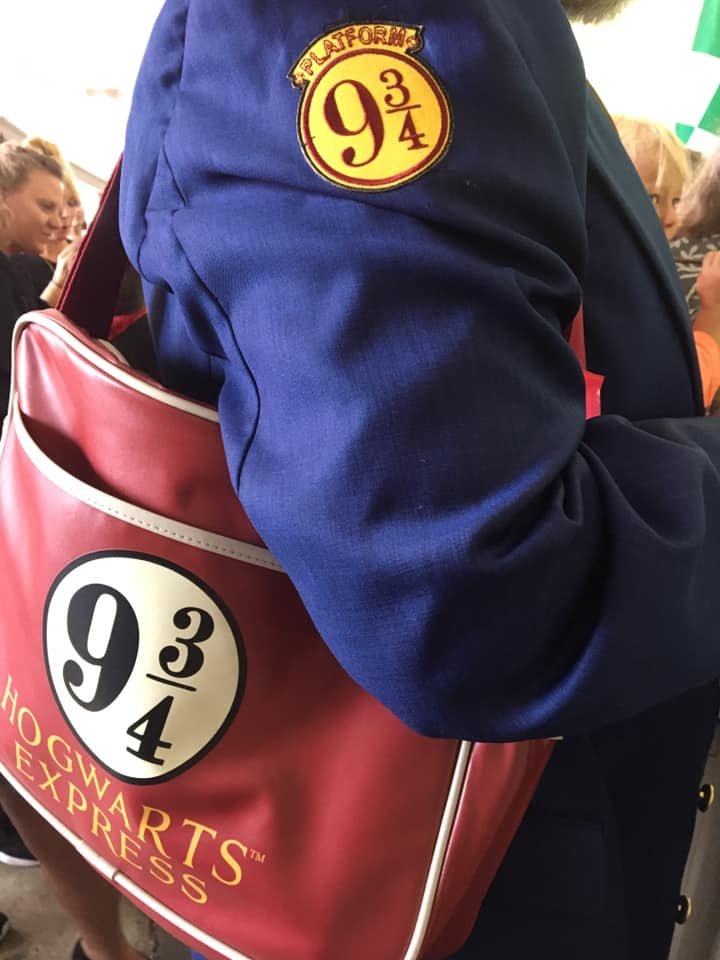
Photo credit:  Jennifer Andrews-Weckerly; resuse with permission

This past weekend, our family traveled to Staunton, Virginia, for their annual Queen City Mischief and Magic weekend – a weekend to celebrate all things Harry Potter.  We had a great time discovering what houses we were sorted into, observing how to duel with wands, and learning dances for the next Yule Ball.  The kids busied themselves collecting trading cards from costumed characters and from local establishments.  The whole downtown area shut down and found creative ways to channel the world of Harry Potter – from the local train station taking on the persona of Platform 9 ¾, to a photography business creating keepsake photos, to a toy store changing out their stock with Potter toys, games, and books, to the local university offering lectures related to themes from the series, to the local spirits store selling “butter beer.”  For those who love the Harry Potter books and movies, it is a great fun-filled weekend.

As we drove home, I realized what amazed me most about the weekend was not the characters, the paraphernalia, or the crowds.  What amazed me was how a few years ago this small town had a crazy idea to convert the town to this magical place – and everyone bought into the idea.  Staunton does not have some significant tie to JK Rowling or the filming of the movies.  They are just a small town in the middle of the state who decided to do something – and the whole town was all in.  I do not know the history of that idea, or how many people said, “but we’ve never done anything like this,” along the way, or how they figured out the logistics and convinced people to get on board.  But what I can tell you is after two years of attending the festival, the whole town is not just grudgingly on board, but wholeheartedly comes together to welcome people to their town that might not otherwise ever step onto their streets.

I know Staunton converts itself for just three days.  But the more I thought about the event, the more I wondered what kind of power our community might be able to harness for good.  I have certainly seen hints of that kind of energy with the WMBGkind movement in Williamsburg – a community of people committed to being a community of kindness as their dominant identity.  I think that is why I have always thought WMBGkind and the faith community can be such great partners.  Though we use religious language, the end result is the same.  We want our community to be a community that lives Christ-like lives of loving-kindness.  In that way, no matter what our denominational or faith differences are, we can step out of our day-to-day operations and be a part of something much bigger – of a people all united around mission of loving neighbor as ourselves.

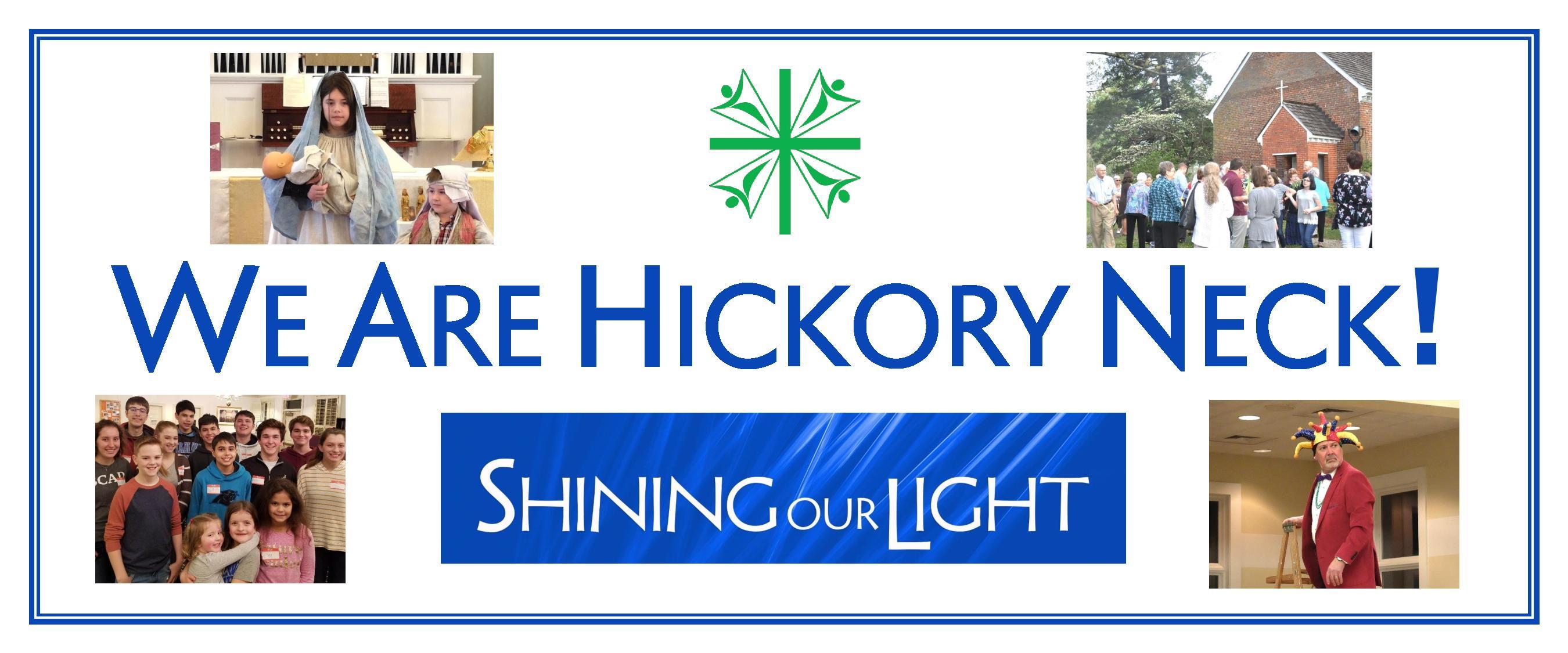
This week, Hickory Neck kicked off its stewardship campaign, “Shining our Light.”  What I love about the campaign is the campaign reminds us to look at how much light we are gifted with (in worship, in learning, and in play), and then to gift that light the community around us – to shine our lights, rallying the entire community to live life differently.  That is a cause I am happy to pledge our financial giving to; that is a cause I am excited to pledge our time and talent to as well.  This month, as we pray about our own stewardship, I encourage you to think about how your giving not only supports the ministry of Hickory Neck, but might just have the power to transform our community into something much bigger than ourselves.  I am all in.  Won’t you join me?

71757278_2601111433278434_853371931125088256_o

Photo credit:  https://www.facebook.com/Hickory.Neck/photos/p.2601111426611768/2601111426611768/?type=1&theater

On Being Blessed to Belong…

24 Wednesday Oct 2018

Posted by jandrewsweckerly in Uncategorized

≈ Leave a comment

Tags

belong, belonging, blessed, Christ, church, commitment, delight, fellowship, Holy Spirit, joy, love, pledge, stewardship

Family-Gathering-Main

Photo credit:  https://www.silversneakers.com/blog/activities-for-seniors/

A couple of Sundays ago, something magical happened at our 11:15 service.  As we transitioned from adult formation to setting up for our last service, every time I turned around, someone special had arrived.  First it was an older couple who have limited their driving.  Their daughter was in town and brought them to church.  You should have seen their faces light up as one parishioner after another rejoiced in seeing them back in church.  Then there was the graduate student who we see occasionally, but whose studies keep him super busy.  I was delighted to see him again, and I think he was delighted to be recognized and warmly greeted.  Then there was the couple who have both had health issues.  I noticed early into the service they had quietly sneaked into the back row of the church, and when our eyes met, we both lit up with smiles.  And none of that accounts for those who had returned after vacations, visiting family members of our Choral Scholars, and our regulars who were equally happy to experience the sense of reunion that Sunday.

That overwhelming sense of joy and reunion is at the heart of what has been our stewardship season this fall called, “Blessed to Belong.”  In a world that can feel stressful, isolating, challenging, or discouraging, having a place where you can experience blessing and belonging is a priceless gift.  That sense of belonging creates a sense of protection, comfort, encouragement, and hope.  That sense of belonging creates so much joy you want to share the joy with others.  That sense of belonging is one known through the love of Christ and the fellowship of the Holy Spirit.  Though belonging can connote exclusivity, instead, at church, belonging begets belonging.  The bubbling sense of delight we experience at Hickory Neck cannot help but be shared.

This Sunday, we will gather in our financial pledges for the 2019 budget year.  Even our ingathering is a festive demonstration of belonging, as the community organically rises from their seats and joins the throngs showing their commitment to the work and ministry of Hickory Neck.  The procession in our way of saying, “Yes, I want to belong here, and have my belonging mean something.”  I cannot wait to join you all as we shuffle our way to the altar, blessing our commitment to Christ and Christ’s church, and hugging each other along the way.  Oh Lord, I want to be in that number!  When the saints go marching in!

Sermon – Habakkuk 1.1-4; 2.1-4, P26, YC, October 30, 2016

02 Wednesday Nov 2016

Posted by jandrewsweckerly in Sermons, Uncategorized

≈ Leave a comment

Tags

anger, argue, bold, celebration, cry, dreams, God, Habakkuk, joy, lament, listen, plain, pledge, Sermon, stewardship, vigil, vision, watch, write

I don’t know about you, but there are times when I have to tune out from the world.  I binge watch HGTV or find a mindless comedy and I just zone out.  In part, I do this because my psyche, my spirit, my soul feels overwhelmed.  I cannot listen to one more story of natural disaster – of floods, of famine, of destruction.  I cannot learn of one more part of the world where humanity seems lost – of genocide, of systemic violence against women, of the taking of land from its rightful owners.  And lately, I cannot absorb one more barb by a political campaign – of slander, of innuendo, of plain meanness.  And if I am not trying to hide from the world around us, sometimes I find I need to hide from the world right in front of us – from awful diagnoses, to life lost, to relationships broken.

While one common response is to relieve tension through mindless activity, the other alternative is to do what Habakkuk does today:  cry out to God.  “How long, O LORD, must I call for help, but you do not listen?”  The reading from Habakkuk today starts with what is called a lament – something commonly seen in the psalms,[i] but known by us all because at some point in our lives, we have all cried out a lament to God.  In this particular lament, Habakkuk is angry with God because the world is crumbling around him.  Violence is on every side and those supposed to enforce justice are perverting justice.  You can hear the sense of betrayal in Habakkuk’s voice – as if God has abandoned him and the rest of God’s people.  And so, Habakkuk does what God’s people have done from the days of Abraham – he argues with God.[ii]  He demands a response.  He calls God to task – demanding that God not let this ungodly world continue on its ungodly path.

If you are ever in a crisis, one of the things you will learn about me is what I love about our God:  God can take our anger, our righteous indignation, our arguments.  Our people have been engaging this way with God from the beginning – not victim to an all-powerful God who demands our obedience, but in relationship with a God who can handle all of our “stuff.”  Lord knows God has gotten an earful from me over the years – every time a child is lost, fellow citizens die from senseless violence, or life just seemed too much to bear – God has heard from me.  Sometimes I cry out in a lament, sometimes I cannot even find the words I am so angry.  I learned a long time ago that the good news is God can take it.

After his lament, Habakkuk does something that is quite familiar to me as a parent of young children.  Habakkuk stomps his feet, crosses his arms, and stares in silent indignation, daring God to respond.  Of course, one could certainly label this as the conclusion of Habakkuk’s temper tantrum.  But an alternative may be to see something else in what Habakkuk is doing.  In the face of great sorrow, anger, and despair, Habakkuk does not flee.  Though he feels abandoned, he does not abandon God.  Instead, he demands God’s presence and will not be satisfied until he hears a word from God.  And so he waits.  He waits, and watches.  He keeps vigil, listening for God to speak.

Several years ago, Hickory Neck was thriving and heading toward what looked like a tremendous time of growth and change.  The community rallied around creating this new worship space to house the community that was bursting at the seams.  We even have plans for how to expand this building into phases two and three when we expected we would be bursting at the seams again.  But a few years ago, we hit a bit of snag.  Our pastor became ill and eventually took a new call.  Though we had an interim priest, we had interims without the interim.  I would not say that things ever got so rough that we called out in lament to God like Habakkuk.  But we did take a play out of Habakkuk’s book:  we stood in wait, keeping vigil, listening for God to speak a new word to us.

And slowly, God did just that.  God began to speak.  God began to whisper new dreams, new visions.  We began to dream about mission trips, increased local outreach, repurposing building or building new spaces to house ministries for the growing population of both retirees and young families in our area, and meaningful worship and growth.  God began to open our hearts to what new clergy might join us, and what new visions we might build together.  We began to do what God tells Habakkuk to do today.  When God finally speaks to Habakkuk, God says, “Write the vision; make it plain on tablets, so that a runner may read it.”  Now there is a little scholarly debate[iii] about what the vision is God is communicating – one of promise or one of condemnation – one to be rejoiced or one to be feared[iv] – but the clarity is what strikes me.  Write the vision; make it plain.

A little under a year ago, your Vestry engaged in just that kind of work.  They looked at the state of Hickory Neck, they talked about their dreams for Hickory Neck, they looked at the finances, and then the wrote a vision.  They knew what everyone here knows:  that Hickory Neck is a special place that has been challenged to grow in new and exciting ways.  We have all experienced the power of worship in this place, the transformative nature of formation and prayer in this place, the radical commitment to hospitality in this place, and the passion for Christ’s call to love our neighbors in this place.  And so, the Vestry did what may feel a little like that line from a Field of Dreams, declaring “If we build it, they will come.”  But the Vestry did not just wait for “them” to come.  They soberly looked at finances and decided they would not only fund a rector, but also a curate.  They named their vision to make our buildings not just useful to us, but useful to our communities:  through Winter Shelter and outside guests, but maybe eventually to a preschool or day center for seniors.  The Vestry committed to not just waiting for “them” to come, but employing tools to invite, welcome, and connect seekers into our community.  They wrote the vision and they made it plain.

When I first came on board with Hickory Neck in April, the Vestry began to ask me under what vision we were going to operate.  What I told them is what I will tell you:  we are already operating under a vision.  Now, there are certainly dreams I have for where we will be 5 to 10 to 15 years from now, but for today, for next year, we already have a vision.  Now, being pragmatists, the Vestry wanted me to make it plainer.  And so, we worked in reverse.  We sat down and we mapped out the entire calendar from August to August.  We wrote down everything we normally do and everything we hope to do.  And then we stepped back and said, “Is this us?  Does our calendar reflect who we are and our vision for this place?”  You see, our calendar was just a tool to mark our values and vision.

We have been engaging in that same conversation in our homes, in small groups, and as a community these last four weeks.  As we laid out a vision of being a community that lives generously, we took stock not of our calendars, but of our checkbooks.  We sat down and looked at where our money was going and whether that cash flow reflected our values and vision.  For the Vestry, our budget involves some commitments that are hefty, but reflect a vision of who we want to be.  Each Vestry member went home and engaged in a similar exercise at home, looking to see if their budgets reflected a vision of who they want to be as individuals.

The Vestry and Stewardship Committee have written a vision and made it plain.  Instead of scaling back and being tentative, we have committed to being a parish who boldly is ready to seek and serve Christ in all persons and to share the Good News of God in Christ.  As the Prayer Book says in the Catechism, our vision is to restore all people to unity with God and each other in Christ, as we pray and worship, proclaim the Gospel, and promote justice, peace, and love.[v]  Those are bold promises that will require all of us to succeed.  Today, we are talking about how our treasure is needed to bring that vision to fruition; in January, we will also talk about how our time and talent will bring that vision to fruition.  But because our vision is living generously, this is not a call to sacrifice and struggle.  No, this vision is an occasion for celebration and joy.  I look forward to marking that celebration and joy with you today as we bless our commitments to live generously, eagerly helping Hickory Neck to shine its light on the hill for all to see.  Amen.

[i] Bryan Spinks, “Theological Perspective,” Feasting on the Word, Yr. C, Vol. 4 (Louisville: Westminster John Knox Press, 2010), 242, 244.

[ii] Theodore Hiebert, “Habakkuk,” Neil M. Alexander, ed., The New Interpreter’s Bible, vol. 7 (Nashville:  Abingdon Press, 1996), 632.

[iii] Karl Jacobson, “Commentary on Habakkuk 1:1-4, 2:1-4,” November 3, 2013, as found at http://www.workingpreacher.org/preaching.aspx?commentary_id=1875 on October 26, 2016.

[iv] Corrine L. Carvalho, “Exegetical Perspective,” Feasting on the Word, Yr. C, Vol. 4 (Louisville: Westminster John Knox Press, 2010), 247.

[v] BCP, 855.

Getting Real and Giving Generously…

26 Wednesday Oct 2016

Posted by jandrewsweckerly in Uncategorized

≈ Leave a comment

Tags

budget, church, giving, journey, Living Generously, ministry, money, motivation, passion, pledge, real, resources

budget

Photo credit:  www.associationserviceswa.com/2016/08/value-of-a-well-prepared-budget/

The year after I graduated from college, I volunteered fulltime through the AmeriCorps program at a Food Bank in North Carolina.  In addition to working in the warehouse and monitoring agencies, my fellow volunteers and I also had monthly classes on a variety of topics.  My favorite was a budgeting class.  Though most of us were scraping by our living stipend, we still had income and expenses like everyone else.   Our homework was to track our expenses and income for a month and then come back to class to talk about what we noticed.  After that month, I realized that I had picked up a terrible habit.  I had worked very hard to save money during that year.  As a reward for saving money, every week I would treat myself to something small.  But when I did the math, I realized the amount I had saved was much less than the amount with which I was treating myself.  The realization was shocking and wildly disappointing.

On Sunday, we are submitting our pledge commitments for the coming year at Hickory Neck.  Part of our Living Generously campaign has been talking about the powerful ministries at Hickory Neck that mean so much to us.  We have read parishioner reflections, biblical reflections from national church leaders, and a great narrative budget that helps us see how our finances function.  My husband and I are inspired and expectant about the future of Hickory Neck, and we are overjoyed to join the pledging effort to support our ministry.

Inspiration has not been a problem.  In fact, my husband and I talked about how we want to increase our pledge this year.  But as we looked at the numbers, we realized in order to align our budget with our passion, we were going to have to adjust some things.  For us, that means at least a few less meals out each month.  It also may mean being a bit more discerning about wants versus needs.  It will certainly mean keeping an eye on making sure that we are able to keep our pledge next year by saving the amount needed for our increase and not “treating” ourselves disproportionally to our increased pledge.

As the Vestry talked about Stewardship, the Vestry all realized our church giving was motivated by different things.  For some of us, understanding the mission of the church and how our pledge would be used was critical.  For others of us, we needed our giving to be rooted in a theological or spiritual understanding of resources and our stewardship of those resources.  While for others of us, our giving was more motivated by looking around us, taking stock of all the things we like about church, and calculating how much those things cost.  My hope is that our campaign has addressed all of those approaches and that our journey through stewardship season has inspired and rooted you.  I look forward to hearing your story of our journey together and kicking off another great year!tens2016logo7x12webonly

On Living Generously…

12 Wednesday Oct 2016

Posted by jandrewsweckerly in Uncategorized

≈ Leave a comment

Tags

abundance, commitment, conversation, discernment, generosity, God, journey, Living Generously, persistence, pilgrimage, pledge, scarcity, steward, stewardship

tens2016logo7x12webonly

Photo credit:  www.tens.org

This past Sunday we kicked off our Fall Stewardship Season, “Living Generously.”  I talked about the campaign in my sermon, but we also have many invitations into this time of discernment for our parishioners.  We each received a packet of information about the ways we can support the life and ministry of Hickory Neck.  We have reflections written by national and parish-level leaders that invite us to consider their experiences around stewardship.  And we are having conversations with each other about how pledging works for each of us.

Just last night, the Vestry took on one of those conversations.  We looked at the gospel lesson for this coming Sunday (Luke 18.1-8) and talked about the challenge of persistence when it comes to stewardship.  We realized that no matter what financial situation or phase of life we are in, living generously does not come naturally or easily, but takes intentionality and persistent commitment.  In our small group, we had a person with young children – including some in childcare, a person with teens approaching college, a person who is thinking about retirement but has taken in an aging parent, and a person in retirement on a fixed income.  Despite those differences, we all have to be intentional with our commitment to stewardship because we all have commitments that can distract us from generosity and tempt us into scarcity.

There was something powerful about talking about hard keeping our commitment to stewardship is with other parishioners.  Too often we take those pledge cards home and embark on a discernment process that is very individualized.  Certainly, we all need time with our God on our own to fortify ourselves to being generous stewards.  But we also need companions on the journey – fellow parishioners who can say, “Yes, it is hard living generously!”  We need those fellow pilgrims because they also remind us of why we keep at it.  These are the same people who will remind you why you are grateful.  After the Vestry talked about the challenges of living generously, then we talked about the benefits.  Stories started pouring in about what we each get out of Church.  We talked about the ways that Hickory Neck feeds us and brings us joy.  We talked about the ways that, throughout life, God has been so faithful to us, and what an honor it is to be able to harness some of that generosity in our own lives.

On Sunday, I encouraged us to spend some time at home in discernment about our stewardship of God’s abundance.  This week, I also want to encourage us to spend some time in discernment with each other.  Share those challenges to being a steward; but also share those blessings of being a steward.  Those conversations may feed the conversation you have at home and will certainly renew your spirit.  Join us as we embark on this journey toward living generously together!

Sermon – Luke 17.11-19, P23, YC, October 9, 2016

12 Wednesday Oct 2016

Posted by jandrewsweckerly in Sermons, Uncategorized

≈ 1 Comment

Tags

church, compliment, duty, generously, giving, grateful, gratitude, guilt, Jesus, joy, leper, living, obligation, pledge, practice, praise, Sermon, stewardship, Thanksgiving, transformation, turning

I once knew a man who was impossible to compliment.  Whether you wanted to compliment a job well done or good deed, his response was always the same, “It’s not me.  All the glory goes to God.”  His response always left me feeling like I just offered a present that was rejected.  Of course, I totally agreed with what he was saying – none of us is able to do good without the God who empowers us to do so.  And truly, Jesus was not that great at accepting compliments either, especially if you recall all the times he asked people to keep a healing secret or to just go back to work.  But upon receiving a compliment, a simple, “Thank you,” would not have hurt this man.  After a while, I just stopped trying to praise his work or good deeds.

I think that is why I relate to the nine lepers who do not return to Jesus to give him thanks and praise.  There were ten lepers originally – nine who were Jewish and one who was a Samaritan.  We are not sure why the ten are together – the Jews and the Samaritans were enemies and rarely spent time together.[i]  We are told at the beginning of the text that Jesus was passing through a borderland between Samaria and Galilee, so there is a possibility that then ten men banded together through their disease instead of culture.  You see, both Samaritans and those of Galilee would have been seen as impure due to their leprosy.  Being exiled to the borders of their land, they may have found more in common than divided them.  And so, as a group, they shout out to Jesus for healing – careful not to approach him, of course, which would have been improper in their condition.  Respecting their distance, Jesus does not insist they come forward, but instead tells them to go to the priest to show themselves to be healed.  Along the way, they are healed, but they still would have needed to show a priest in order to be restored to their families and friends.[ii]

The Samaritan among them returns and gives praise to God, but the others do not.  We do not know how their journey unfolds.  Presumably they are faithfully doing what Jesus told them to do – going to the priest for restoration.  Perhaps they give praise to God once the priest restores them.  Perhaps they give praise when they are reunited with their families.  Maybe they even show their praise through helping lepers later.  But that is all supposition.  All we get today is Jesus’ criticism of the nine because they neglect to turn and give God praise and thanksgiving.

I have been reflecting on Jesus’ words this week, and what rubs me the wrong way may be the same thing that rubbed me the wrong way when that man I knew always refused praise.  In both cases, whether Jesus, or the man I knew, there is both implicit and explicit criticism of my own practice of gratitude and thanksgiving.  What irritated me about the man’s responses to me was that they made me feel guilty – that perhaps I was not grateful enough to God for the goodness in my life.  The same thing irritates me about Jesus this week – his judgment of the nine makes me feel guilty about the ways I have walked away healed and not given praise to God.

This week we are kicking off our stewardship season in a campaign called, “Living Generously.”  After the service, you will be receiving a packet of information about how you can support the ministry of Hickory Neck, and a pledge card that we will collect in a celebratory ingathering in just four weeks.  Most preachers would have read the text today and thought, “Yes!  The perfect Stewardship text!”  But the more I sat with Jesus’ words, the more I realized that his words actually bring up feelings of dread rather than joy.  Most people associate stewardship with the same sense of guilt that this reading brings up.  We feel guilted into showing gratitude, and so we guiltily look at our budgets and see if we can increase our pledge this year.

The first time I experienced the concept of pledging was when I started regularly attending an Episcopal Church.  In the churches where I grew up, you never had to tell anyone what you were going to give.  The preacher might have talked about a tithe – ten percent of your income.  But the preacher never wanted you to say exactly what you were going to give.  So when the warden of this church started explaining how he wanted us to pledge, I was aghast.  I remember thinking, “That’s private!  I don’t have to tell you how much I am going to give!”  Now, I knew we would probably tithe that year, but the idea of telling someone else about my giving seemed to go against every cultural norm I knew.  Fortunately, I stayed to hear the rest of the warden’s talk.  He explained that the way the church formed the church’s budget was through the knowledge of what income they could expect.  The Vestry would adjust expenses accordingly and try to get the budget balanced.  My outrage faded as I realized how responsible that model seemed.  Thus began my adult journey into pledging.

But that journey into pledging experienced a transformation about eight years later.  We were at a new church, and the priest asked to hold our pledge cards until a particular Sunday.  We did and the funniest thing happened.  In the middle of the service, a banner appeared.  The banner was processed down the aisle, joyful music started playing, and people started following the banner forward.  We placed our pledge in a basket, and I felt something stirring in me.  The priest blessed the pile of pledge cards, and something about stewardship turned in my heart – the pledging, the monthly giving was no longer an obligation or burden – something to be guilted into.  My pledge was a joyful sign of gratitude – a sign blessed by God and affirmed by the community.  And I have to say – it felt good!

In the gospel lesson today, the text says that the Samaritan turns back to Jesus.  That word for turns back is more than just a physical description – the action of turning back is a sign of deep transformation – a reorienting of the Samaritan’s life from duty to gratitude.[iii]  I do not think Jesus was looking for a guilty admission of thanks from the other nine lepers.  What Jesus is looking for is a transformation of the heart – a turning of one’s life away from obligation and duty to joyful gratitude and thanksgiving.

I was reading this week about a woman with an interesting habit.  Whenever someone asked her how she is – that basic question we always ask and anticipate the answer being, “Fine,” – instead she would say, “I’m grateful.”  No matter what is on her plate – stress at work or school, an illness that kept plaguing her, strife at home – her response is always the same, “I’m grateful.”[iv]  As I thought about her response this week, I realized that her response is probably one that took willful practice.  I am sure there were weeks when she really felt grateful.  But there were also probably weeks when she had to say she felt grateful even if she was not sure what there was to be grateful about.  But slowly, slowly, I imagine the practice cultivated a spirit of gratitude.  A practice like that can do exactly what Jesus wants for us all – a turning of the heart to praise and thanksgiving.  I know I will never be able to shift toward the kind of response that the man I knew always gave, rejecting praise altogether.  But learning to say, “I’m grateful,” might be a way for me to get a little closer to the same sentiment.

What that woman is doing, what Jesus is encouraging, and even what our Stewardship campaign is inviting is not a sense of guilt or burden, but a genuine invitation into a life that turns our heart to gratitude and transforms the way we see the world.  Now that does not mean that every time you write the check to fulfill your pledge you will part from that treasure with a joyful heart.  But that practice is a small invitation, every time, for us to turn our hearts and to see not only the God from whom all blessings flow, but to even see the blessings in the first place.  Jesus is not mad at those lepers because they are ungrateful – he is sad for them because they have denied themselves the gift of transformation.  That is the gift that he and the Church offer us every week – the gift of a transformed heart that can change everything.  For that, I’m grateful.  Amen.

[i] Audrey West, “Commentary on Luke 17.11-19,” October 9, 2016, as found at https://www.workingpreacher.org/preaching.aspx?commentary_id=3029 on October 5, 2016.

[ii] Oliver Larry Yarbrough, “Exegetical Perspective,” Feasting on the Word, Yr. C, Vol. 4 (Louisville: Westminster John Knox Press, 2010), 169.

[iii] Margit Ernst-Habib, “Theological Perspective,” Feasting on the Word, Yr. C, Vol. 4 (Louisville: Westminster John Knox Press, 2010), 166.

[iv] David Lose, “Pentecost 21C:  Gratitude and Grace,” October 3, 2016, as found at http://www.davidlose.net/2016/10/pentecost-21-c-gratitude-and-grace/ on October 5, 2016.

Finding our way through priorities…

05 Wednesday Nov 2014

Posted by jandrewsweckerly in Uncategorized

≈ Leave a comment

Tags

blessed, church, fair share, gift, God, pledge, resources, stewardship, walking the way

This year, St. Margaret’s has been Walking the Way through our Stewardship Season, praying on what giving means to us, why we give, and how our giving shapes our relationship with God and our church.  Below is a guest post from parishioner Kimberly Irvine on why she is pledging this year, and how the Holy Spirit is moving in her on her Walk.  I hope you enjoy her words.

Writing this blog post was not an easy exercise for me.  My desire to find the exact words to express to you why stewardship and pledging are vital to our church, was keeping from saying what is my heart.

The fact is I’m truly grateful to God for allowing me to be part of this community of faith.  St. Margaret’s has always been for me, a place filled with faith, joy, and love.  I believe in the good work our church is doing. I see God’s love at work in our church all the time.

Part of me is also worried because the church budget is projecting that in 2015 our church will be operating at a deficit again.  The funds our church raises through pledges, and other fund raising activities, will not generate enough revenue to cover the operating expenses of our church.  This surprises me because as a parish, I believe we are all very blessed, we are generous when asked to support special initiatives, and we share a common desire to be part of this extraordinary community.

Courtesy of http://imgarcade.com/1/christian-stewardship-clip-art/

Courtesy of http://imgarcade.com/1/christian-stewardship-clip-art/

Learning of the church’s deficit, also makes me begin to question whether or not I’m giving my fair share to our church.  God has given generously to me; am I giving back as generously as I should?  This is not an easy question to answer. We all worry about money.  We need to pay our mortgages, and other bills.  We also want to go on vacations and have nice things.  I’m remembering part of sermon we heard earlier this month, where we were reminded that all we have comes from God.  Everything we have is not ours; it is all God’s, and we must give back to God what is God’s.  Can we prioritize and give to God first?

Since I believe strongly in the mission and vision of our church, I feel responsible to use the resources God has given me to financially support the church.   I make a financial commitment to St. Margaret’s because I really want our church to thrive and grow.  I want to see the good work of our church continue to expand in our community and the world.  This year I plan to increase my pledge, and try to be more intentional about giving to God first.  I pray that all parishioners of St. Margaret’s can make similar commitments in support of our church.

We are united in faith; let’s also be united in contributing financially to our church.

I found this prayer from this year’s stewardship bulletin very meaningful:

Gracious God, giver of all we have and hold; grant the people of this church a deep and abiding awareness that all things come from you – our health, our incomes, our jobs, our talents and our generous impulse.  Send your Holy Spirit to help us as we swim against the rising tides of materialism, envy, individualism and greed I our culture. When we are tempted to think of money as a private matter, remind us that you have asked for part of what we are given, to be returned to you as a symbol of our awareness that you give all we have. And finally, assist us as we help each other to embrace the grace of giving, for you are the lover of our souls and call us to nothing less than transformation in Jesus Christ our Lord. Amen.

Respectfully submitted by Kim Irvine

Gratitude adjustment…

10 Thursday Oct 2013

Posted by jandrewsweckerly in Uncategorized

≈ Leave a comment

Tags

discipline, God, gratitude, journey, pledge, prayer, stewardship

Courtesy of http://www.budaao.com/daily-life/add-a-daily-dose-of-gratitude/

Courtesy of http://www.budaao.com/daily-life/add-a-daily-dose-of-gratitude/

This Sunday, we kick off our Stewardship Season.  Our Stewardship Committee has been working hard, reading some great work, exploring some creative ways of expressing our needs, and prayerfully taking steps toward this kickoff.  In the coming weeks, my weekly reflection will be replaced by guest posts from our parishioners, reflecting on how they hope to flourish in faith this Stewardship Season.

The more and more we have prepared for this time, the more and more I have been pondering the practice of gratitude.  I have been thinking about how dominated my prayer is by intercessions and how few thanksgivings I have been offering to God.  I have noticed how grudgingly I write that hefty pledge payment each month – praying that we can still make our other bills instead of thanking God for the gifts with which we have been blessed.  I have been listening to my responses to that age-old question, “How are you?” and been a bit disappointed about how consistently I manage to fit in some complaint about my life.  As I run from one thing to the next, I have found myself more burdened by life than rejoicing in life as a gift.

So I have decided to use Stewardship Season as a mini-Lenten experience.  As we encourage parishioners to prayerfully consider their financial giving, I will be prayerfully implementing gratitude back into my life.  I am committing myself to infusing gratitude into my relationship with God, my relationships with others, and my relationship with myself.  I figure that if I can focus on that work, the conversation I have with my family about our financial pledge might just take on a different tenor.  I am also excited to see what other surprises God has in store for my mini-Lenten Stewardship experience.  I am looking forward to the journey, and hope you will consider yourself duly invited to join me.

← Older posts

Recent Posts

  • On the Myth and Magic of Advent…
  • On Risking Failure and Facing Fear…
  • Sermon – Luke 23.33-43, P29, YC, November 23, 2025
  • On Inhabiting Gratitude…
  • Sermon – Luke 20.27-38, P27, YC, November 9, 2025

Archives

  • December 2025
  • November 2025
  • October 2025
  • September 2025
  • August 2025
  • July 2025
  • June 2025
  • March 2025
  • February 2025
  • December 2024
  • November 2024
  • October 2024
  • September 2024
  • August 2024
  • July 2024
  • June 2024
  • May 2024
  • March 2024
  • February 2024
  • January 2024
  • December 2023
  • November 2023
  • October 2023
  • September 2023
  • August 2023
  • July 2023
  • June 2023
  • May 2023
  • March 2023
  • February 2023
  • January 2023
  • December 2022
  • November 2022
  • October 2022
  • June 2022
  • May 2022
  • January 2022
  • December 2021
  • November 2021
  • October 2021
  • September 2021
  • August 2021
  • June 2021
  • May 2021
  • April 2021
  • March 2021
  • February 2021
  • January 2021
  • December 2020
  • November 2020
  • October 2020
  • September 2020
  • August 2020
  • July 2020
  • June 2020
  • May 2020
  • April 2020
  • March 2020
  • February 2020
  • January 2020
  • December 2019
  • November 2019
  • October 2019
  • September 2019
  • August 2019
  • July 2019
  • June 2019
  • May 2019
  • April 2019
  • March 2019
  • February 2019
  • January 2019
  • December 2018
  • November 2018
  • October 2018
  • September 2018
  • August 2018
  • July 2018
  • June 2018
  • May 2018
  • April 2018
  • March 2018
  • February 2018
  • January 2018
  • December 2017
  • November 2017
  • October 2017
  • September 2017
  • August 2017
  • July 2017
  • June 2017
  • May 2017
  • April 2017
  • March 2017
  • February 2017
  • January 2017
  • December 2016
  • November 2016
  • October 2016
  • September 2016
  • August 2016
  • July 2016
  • June 2016
  • May 2016
  • April 2016
  • March 2016
  • February 2016
  • January 2016
  • December 2015
  • November 2015
  • October 2015
  • September 2015
  • August 2015
  • July 2015
  • June 2015
  • May 2015
  • April 2015
  • March 2015
  • February 2015
  • January 2015
  • December 2014
  • November 2014
  • October 2014
  • September 2014
  • August 2014
  • July 2014
  • June 2014
  • April 2014
  • March 2014
  • February 2014
  • January 2014
  • December 2013
  • November 2013
  • October 2013
  • September 2013
  • August 2013
  • July 2013
  • June 2013
  • May 2013
  • April 2013
  • March 2013
  • February 2013
  • January 2013
  • December 2012
  • November 2012
  • October 2012
  • September 2012

Categories

  • reflection
  • Sermons
  • Uncategorized

Meta

  • Create account
  • Log in
  • Entries feed
  • Comments feed
  • WordPress.com

Blog at WordPress.com.

  • Subscribe Subscribed
    • Seeking and Serving
    • Join 394 other subscribers
    • Already have a WordPress.com account? Log in now.
    • Seeking and Serving
    • Subscribe Subscribed
    • Sign up
    • Log in
    • Report this content
    • View site in Reader
    • Manage subscriptions
    • Collapse this bar
 

Loading Comments...