• About

Seeking and Serving

~ seek and serve Christ in all persons

Seeking and Serving

Tag Archives: Holy Spirit

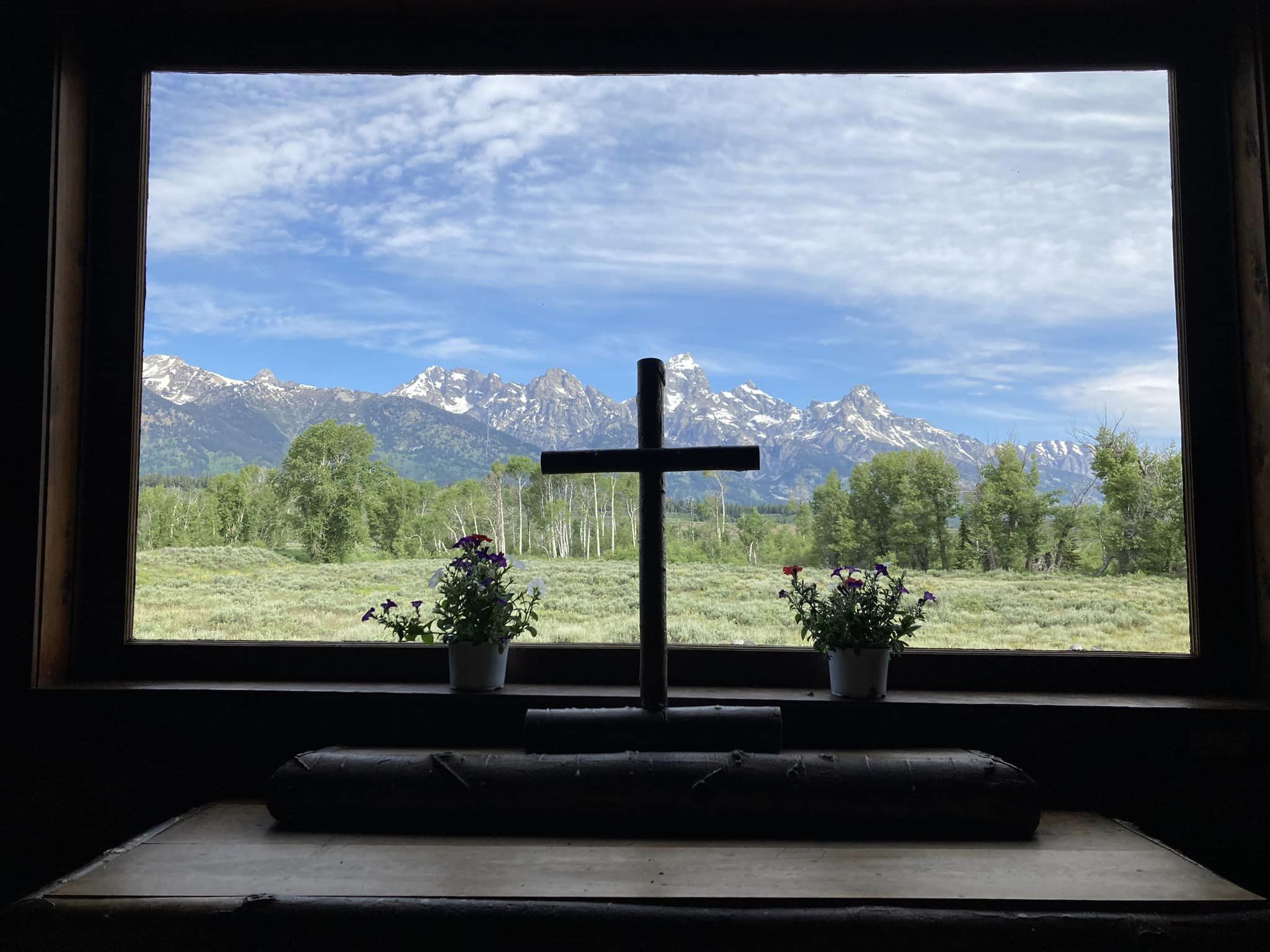
Sabbatical Journey…on Burdens and Blessings

20 Tuesday Jun 2023

Posted by jandrewsweckerly in reflection

≈ Leave a comment

Tags

blessing, burden, gifts, God, Holy Spirit, injustice, journey, plan, renew, restore, sabbatical, sideways, travel, weary

My husband is a master planner, especially when it comes to travel.  So, when we embarked on this sabbatical adventure, I had no worries because I knew he had planned the trip, down to which rest areas we should use.  You might imagine that kind of exacting detail would translate to rigidity – someone who can become rattled when things do not go as planned.  But that is not the case with my husband.  In addition to being a master planner, he is also absolutely the person you want in the room when things go sideways.  He is able to quickly shift, make alterations, and carry things forward seamlessly.

Today, just day three of our twenty-one-day adventure, those skills came in very handy.  The first hiccup happened when our lunch plans got altered.  Our lunch date got called away (welcome to the life of a priest-parent!).  I was super sad about missing our visit but know all too well that things happen.  But when you travel with my super husband, all is not lost.  During lunch, my husband coordinated Plan B, and off we went to the Oklahoma City National Memorial.  I had only seen the site in pictures, but pictures cannot capture the power of seeing all those names, retelling the tragic story to our kids, noting small chairs for the children in daycare who died that day, and even worse, the one chair that indicated the death of a pregnant woman, with the unborn named child on her chair.  It was a powerful moment of sobriety and a reminder to all of us how much we need to savor one another.

Fast forward to our final destination.  We were all tired and a bit weary.  When we stopped at our hotel to check in, we figured the water gushing from a ceiling down the hall was a bad sign.  Sure enough, the hotel’s water had been shut down, with no estimated fix schedule.  Before we even got through the line to cancel our registration, my husband was already booking an alternative hotel on his phone, and then calling customer service to make sure our prior booking wouldn’t charge our card.  Our frazzled, anxious little family was on our way to a new hotel less than a block away within the half-hour.

It had been a heavy day.  We began the day with conversations about the Trail of Tears, why there are so many reservations in Oklahoma, and what we can do as consumers to support the economy of indigenous Americans.  We talked about Juneteenth, and wondered about our experiences in Little Rock and how much more work we have to do.  We recalled mass violence and the death penalty as we walked through the vivid artistry of the Oklahoma City National Memorial.  And we dealt with our own travel hiccups.  Needless to say, as walked in 100-degree weather to an impromptu dinner, we were all a bit worse for the wear.

And then I saw it.  A beautiful, unusual flower lining the road of our walk.  It seemed silly to stop and take a picture of the flowers (or at least, so my then cranky family told me), but I knew this was the Holy Spirit’s way of telling me to look around at the blessings of the day:  to remember the constant invitation to think about injustice in all its forms and how we can be agents of change; to remember that even when things do not go your way, sometimes equally wonderful things happen; to remember that even in the midst of sweaty, weary, whiny messes, God uses the gifts of all of us (problem-solving husbands, caring strangers, and even nature herself) to renew and restore us.  What blessings has the Holy Spirit been trying to show you today?

Photo credit: Jennifer Andrews-Weckerly (reuse with permission)

Sermon – Acts 1.6-14, E7, YA, May 21, 2023

30 Tuesday May 2023

Posted by jandrewsweckerly in Sermons

≈ Leave a comment

Tags

absence, anxiety, apostles, Ascension, experience, focus, God, Holy Spirit, intimacy, Jesus, presence, sabbatical, Sermon, staring, temptation

One of my favorite videos on YouTube is an experiment by the group called SoulPancake.  They asked six pairs of individuals, in various stages of relationship (from total strangers to a couple who has been married 55 years) to sit in two chairs facing one another, and without speaking, look into one another’s eyes for four minutes.  At first the couples are a bit uncomfortable – initially unsettled by the forced silence, but ultimately jarred by what they quickly realize is deep intimacy.  Slowly over the four minutes the couples settle in, their faces transforming from discomfort to curious to deep connection.  You can almost see the sparks of love emerging in their eyes, tension draining from their bodies, and invariably smiles of appreciation spreading across their mouths.[i] 

When Willie James Jennings writes about the ascension of Jesus, one his primary concerns is that in focusing on the heavens, where Jesus used to be, the disciples will forget to focus on one another, on the stranger in need of witness, and on the presence of God.  Jennings worries that the disciples are looking “into the heavens concerned by absence rather than looking forward to see presence.”[ii]  The text from the Acts of the Apostles tells us of the last earthly day of Jesus’ post-resurrection life.  Jesus gives the disciples a commission and is lifted up into the clouds and whisked away.  The text tells us the disciples do exactly what you might imagine – they stand there, staring at the heavens.  I imagine that standing and staring had several iterations:  there was likely the stunned awe of the moment; there may have been some not wanting to leave for fear of missing what might happen next; there may be some immediate second guessing about what this all means; there may be some Peter-esque desire to preserve the sacred location of the profound moment; there may be a sense deep grief, or conversely a sense of profound joy.  Whatever those disciples are doing, they are not at all doing they are supposed to do.  Hence the men in white robes asking their very basic question, “Why do you stand looking up toward heaven?”

You and I are about to engage in the profound and infrequent journey of sabbatical.  The temptations in this time are many.  For either of us, we could easily see this as twelve weeks of frozen time – where we will each gaze upon God, and then simply pick up where we left off in August.  For either of us, we could be prepared to happily engage in sabbatical activities, absorbed in our own mountaintop experiences, forgetting the journey of the other.  For either of us, we could be guided by fear, burying our talent like in the parable in Matthew – just hoping not to risk doing sabbatical the “wrong way” instead of investing our talents to see what return we gain. 

But there is danger in looking up in the heavens into absence as opposed to looking forward to presence.  Alan Hirsch tells us, “the biggest blockage to the next experience of God is often the last experience of God, because we get locked into it.”[iii]  [repeat]  What those men in white knew was that if the disciples stood there lost in themselves or even in the ascended Jesus, they would never get their next experience of God – they would get so locked into the mountaintop experience of Jesus’ ascension, that they would never make their way to the next experience of God – in their case the great gift of the Holy Spirit on Pentecost.

That is our invitation today.  As we stand on the precipice of sabbatical, maybe as we are still reveling in the memory of an outstanding parish-wide retreat this weekend, or wondering what sabbatical activities we want to try, or even feeling a bit of anxiety about what is next, a great whispering is happening nearby, “why are you standing looking up toward heaven?”  Our invitation instead is to resist letting our next experience of God be our last experience of God.  Our invitation is to gather in these next weeks in prayer and community, knowing that the Holy Spirit will do a new thing in all of us.  Our invitation is to walk down the mountain and into the valley of witnessing the gospel of Jesus, looking forward not only for the presence of God, but gazing deeply into the eyes of others.[iv]  This time of sabbatical is not a time to marked by absence, but instead is a time looking forward to see presence.  We can only see that presence if we pull our eyes from heaven and gaze into the sacred we find in one another.  The next experience of God promises to be greater still than our last experience of God.  I can’t wait to hear all about your next experience.  Amen.


[i] Georgia Koch, “How To Connect With Anyone,” SoulPancake, February 12, 2015, as found at https://www.youtube.com/watch?v=Xm-T3HCa618 on May 20, 2023.

[ii] Willie James Jennings, Acts:  Belief:  A Theological Commentary on the Bible (Louisville:  Westminster John Knox Press, 2017), 19-20.

[iii]  Alan Hirsch and Rob Kelly, Metanoia: How God Radically Transforms People, Churches, and Organizations From the Inside Out (Cody, Wyoming:  100 Movements Publishing, 2023).

[iv] John S. McClure, “Homiletical Perspective,” Feasting on the Word, Yr. A, Vol. 2 (Louisville:  Westminster John Knox Press, 2010), 525.

On Stories and Invitation…

11 Wednesday Jan 2023

Posted by jandrewsweckerly in reflection

≈ 1 Comment

Tags

church, faith, Harry Potter, Holy Spirit, invitation, journey, joy, meaning, sharing, story, storytelling

Photo credit: https://www.npr.org/2020/10/15/923962314/good-conversations-take-time-and-attention-heres-how-to-have-better-ones

Last night, my younger daughter and I started reading the first book in the Harry Potter series.  I love the series, although I found it later in life.  I never read them as a young adult.  I started them the summer I was serving as a chaplain in a hospital in my early thirties because I needed something to read that was not overly taxing on my emotionally drained self.  Later, I read them while breastfeeding my first child (I spent a lot of time on a pump!), and then again with my first child when she was old enough.  I could not wait to start the series again with my younger child.

But what has surprised me in restarting this adventure is this is not the first attempt.  Normally an avid reader, I thought my daughter would be excited about reading them with me.  And, given my super enthusiasm for the books (and her knowledge that her older sister and I enjoyed them so much), I thought she would be equally enthusiastic.  But every time I mentioned starting them, even making a point at age eight to tell her I though she was finally old enough to enjoy the privilege, she was only lukewarm about the experience.  We even tried this fall to start them, and she just was not that excited.  With a new set of books all her own being gifted at Christmas, I am hoping this is the attempt that will stick!

I have been thinking how much her journey with Harry Potter might be like others’ experiences with churchgoers who just know that you will love their church.  I recognize I cannot speak with authority about never being raised in the Church – although my faith journey has taken me through multiple denominations, I have never not felt a draw to the Church.  But having ministered to many people who are new to the Church or who are simply Church curious from a very guarded distance, I sense that even our most enthusiastic descriptions are not always compelling to someone who has never been a part of Church culture. 

Many people who have seen the Church decline over the years perhaps feel this is an inevitable reality.  I disagree.  I believe the power of shared stories, including shared stories of faith, remains important.  I am not at all advocating for pressured pitches that many of us have been scarred by (I grew up in a very conservative area and was asked if I was saved more times that I can count).  But being willing to share your faith story is as vital as being able to share about the most amazing food you ever tasted:  it’s an exchange in joy, an exchange in life, and exchange in meaning.  The other person may not be moved to start attending your church, but they might just be intrigued enough to keep listening.  Convincing people to come to our church is not our work.  Our work is simply to share our faith journey joy and invite others to come and see.  The rest is the work of the Holy Spirit and will come (or not!) in its own time. 

On Ghosts, Goblins, and Community…

03 Thursday Nov 2022

Posted by jandrewsweckerly in reflection

≈ Leave a comment

Tags

affirming, busy, care, community, Halloween, Holy Spirit, hospitality, parenting, sacred, secular, stranger

Photo Credit: https://windows10spotlight.com/images/cd4207053ac7aaa6212c99ef8a230cfb

Sometimes, when parenting children, you tend to operate in a haze.  In trying to harmonize work, family life, and everything else, you can become partially present in the parenting moment.  Halloween can be one of those instances.  In the rush of everyday responsibilities, you need to decorate the house, sweep off the driveway, purchase and prep candy for distribution, ensure your kids have all the costume parts they need (sometimes mending, gluing, pinning them at the last minute, or figuring out how to do their makeup), oh, and find that trick-or-treat bag they want from last year.  There is coordinating with other parents so your kid can walk with their friends, the needed photos, and the constant reminders to say “trick or treat!” and “thank you!” 

Fortunately, the Holy Spirit is always at work, giving us moments of the sacred in even the most hectic secular experiences.  This Monday, I was in that Halloween haze myself, trying to send off my older child, praying she made good choices, and accompanying my younger child, soaking up the chance to enjoy the night with her.  As we made our way from house to house, the sacred was slowly revealed.  I noticed as parents walked with their children, they connected more meaningfully than in our quick hellos at the bus stop and coordinating texts for playdates.  As homeowners emerged from their homes, I watched older adults light up with the chance to interact with children, I saw parents of older children wistfully watch the littles as their older children were too far past this precious time, and I noticed singletons relishing a chance for social interaction.  I was in the midst of community at its finest:  strangers extending hospitality, cross-generation lovingkindness, and deeply felt smiles. 

I know Halloween has pagan roots, and the Church, as it always does, worked to Christianize the day of All Hollows Eve.  We even have some neighbors who do not participate in the ritual of trick-or-treating out of Christian protest.  But when you strip away all the scary characters, fear-inducing movies, and sacrilegious legends, what remains is one of the best of examples of genuine Christian community.  Somehow, political differences fade, generational biases are set aside, and interpersonal anxieties ease, and what remains is an activity that allows for humble, gracious, affirming hospitality and care.

I wonder how we might foster those same sorts of conditions in our Church communities.  My church’s mission is focused on intergenerational ministry.  Sundays often demonstrate those values as intergenerational ministry blooms.  But the experience of trick-or-treating this year has me wondering what more we can do to create space where strangers can enjoy loving, affirming moments of intimacy and care with neighbors.  My prayer is the Holy Spirit works through our busy hazes to reveals those opportunities for all of us.

Sermon – 2 Thessalonians 1.1-4, 11-12, P26, YC, October 30, 2022

03 Thursday Nov 2022

Posted by jandrewsweckerly in Sermons

≈ Leave a comment

Tags

affliction, boast, challenges, church, community, God, Holy Spirit, Jesus Christ, love, ministry, opportunities, persecution, Sermon, suffering, thankful, thanks, unity

I spent the last week at Princeton Theological Seminary, concluding an Executive Leadership certificate program called Iron Sharpening Iron.  For the past two years, the clergy participants and I have journeyed together, all facing the unique challenges of this liminal time for the Church, but also all hopeful that God is doing a new thing in the Church.  In the spirit of camaraderie that has developed over that time, we found ourselves asking each other this week, “So, how are you really doing?  How is your church?”  This is the kind of setting where clergy feel comfortable enough to let down their guard and share life with an honesty that we might not in other settings.  And I confess to you, every time that question was asked of me, and I took a moment to really think about the question, the answer was the same, “Things are actually really good.”  In truth, I think I was just as surprised by my answer as every other clergy person was.  I had no reason in that space to posture or try to make myself or our ministry look good, especially since most of the participants were not even Episcopalians.  I just knew when pondering how we are really doing, at the core of all that has happened in the last two to three years, we at Hickory Neck are doing really well.

I suppose I could have talked about how many of our longtime parishioners and many of our new members are online participants exclusively.  I suppose I could have talked about how many ministries are having shortages of volunteers, causing us to rethink what is possible because we cannot sustain the volunteer leadership.  Or I suppose I could have talked about how we stepped out on faith by hiring two part-time clergy associates this year, knowing that our financial giving would need to grow to support the programmatic needs of our growing church.  But those are realities I do not see as challenges; instead, I see them as opportunities to be the Church in new and creative ways as invited by the Holy Spirit.  Certainly, I want our in-person attendance in worship to grow – but I want our online ministry to grow and thrive concurrently.  Certainly, I would love some of our ministries to return to how we experienced them pre-pandemic – but I also see sacred invitations into new forms of ministry that may mean letting go of other forms.  Certainly, I want to be fiscally judicious within our budget – but I also want to create enough space in our budget to grow ministries that matter and make an impact both inside these walls and outside these walls. 

Perhaps what I mean is I look at Hickory Neck the same way that Paul, Silvanus, and Timothy look at their church in Thessalonians.  The writer of second Thessalonians, which some debate could be Paul or someone within the Pauline community, is writing to a community of believers facing persecution and afflictions.  The text is not clear what those persecutions and afflictions are, but we know the church of the Thessalonians is suffering.  In those days, persecutions and afflictions were often seen as signs of the end times, likely leading to a great deal of fear and anxiety.[i]  And so, we hear this letter meant to commend, encourage, and thank the community, and help them interpret meaning in the midst of suffering.  But the writer does not have to struggle too much to find that encouragement because what the writer has seen about this church is that they have developed an uncommon unity and love for one another.[ii]  And that gift of unity and love is a gift to be celebrated and honored.  That gift is something for which to give thanks.

And that is what we are doing today on this In-Gathering Sunday.  We are giving thanks for the ways in which Hickory Neck has experienced uncommon unity and love for one another, especially as we emerge from what has been a tumultuous couple of years in our community and the world.  We are giving thanks for the ways in which God has sustained us through afflictions and persecutions.  We are giving thanks for the bountiful abundance in our lives, when the world around us would want us to see scarcity, and we are returning that abundance in the form of our time, talent, and treasure.  And, so, friends, as we give thanks, I read to you our letter from second Thessalonians, paraphrased for today:

To the church of Hickory Neck:  Grace to you and peace from God our Father and the Lord Jesus Christ.  I must always give thanks to God for you, brothers and sisters, as is right, because your faith is growing abundantly, and the love of everyone of you for one another is increasing.  Therefore, I myself boast of you among the churches of God for your steadfastness and faith during all your persecutions and the afflictions that you are enduring…To this end, I always pray for you, asking that our God will make you worthy of God’s call and will fulfil by God’s power every good resolve and work of faith, so that the name of our Lord Jesus may be glorified in you, and you in him, according to the grace of our God and the Lord Jesus Christ.  Amen.


[i] Guy D. Nave, Jr. “Exegetical Perspective,” Feasting on the Word, Yr. C, Vol. 4 (Louisville:  Westminster John Knox Press, 2010), 257.

[ii] Robert E. Dunham, “Homiletical Perspective,” Feasting on the Word, Yr. C, Vol. 4 (Louisville:  Westminster John Knox Press, 2010), 257.

Sermon – John 16.12-15, TS, YC, June 12, 2022

05 Wednesday Oct 2022

Posted by jandrewsweckerly in Sermons

≈ Leave a comment

Tags

answers, comfort, God, Holy Spirit, Jesus, preaching, revelation, scripture, Sermon, spiritual journey, Trinity, Trinity Sunday

When I was in seminary, I audited a class entitled, “Living Biblically:  Money, Sex, Power, Violence, and The Meaning of Life,” – perhaps the best title for a class ever.  The class spent the quarter studying Jesus’ words and actions for some clues.  Sadly, I did not leave the class with all the answers.  But the one thing that stuck with me from the class was this:  when looking for answers to “What would Jesus do?” you have to look at not only what Jesus says, but also what he does.  That may obvious, but what we slowly began to realize is that what Jesus says and what Jesus does are often opposites.  So, if you look at what Jesus says, you find some pretty harsh words about how to live life and who is to be judged.  But if you look at what Jesus does, you find him living a much more permissive and forgiving way.  We came to see Jesus as one with high standards, but a low threshold for forgiveness and grace. 

That is why I find our gospel lesson today so comforting.  Our lesson from John is part of Jesus’ Farewell Discourse – his last words during that Last Supper.  After a long discourse, Jesus finally utters these words today, “I still have many things to say to you, but you cannot bear them now.”  You can almost hear the frustration in his voice, as if he is saying, “I wish I could explain everything to you now fully, but I just can’t.”  Despite the sense of incompletion, Jesus promises something better than they could possibly imagine:  the Holy Spirit.  All of the things that they cannot understand now, all of the things Jesus cannot say, will be revealed to them through the Holy Spirit in the years to come.  Though Jesus will be physically absent from them, Jesus will be continually present with them through the Holy Spirit, revealing truth and perhaps even revealing what would Jesus do. 

What I find comforting about this passage is not simply the promise of God’s presence; what I find comforting is that truth is not locked away in some book or some person from two thousand years ago.  Truth is accessible here and now through the Holy Spirit.  We call our scriptures the Living Word because the Holy Spirit enlivens the Word and speaks truth to us, even today.  This is also why we still have the community of faith– because the Holy Spirit creates for us fresh encounters with the revelation of Jesus.[i]  Jesus knew that our changing circumstances would bring new questions and challenges that would require us to think afresh, perhaps even questions about money, sex, power, violence, and the meaning of life, and Jesus promises the Holy Spirit will help us. 

On this Trinity Sunday, I am grateful that we get this passage.  Although we just had a festive celebration of Pentecost with our festive red, the Church is not always great about talking about the Holy Spirit.  We have no problem with the Trinitarian combination “Father, Son, and Holy Spirit,” but the last “person” in that combination is a bit illusive for us.  I think the challenge is that we are a little bit afraid of the Holy Spirit.  We are afraid someone is going to start acting strangely and then claim they are slain in the Spirit.  We are afraid that “the movement of the Holy Spirit” is just code for the movement a particular person or group wants.  We are afraid our worship will become some seventies, hippie version of God to whom we cannot relate.  I know we are afraid, or at least uncomfortable, because I cannot remember the last Episcopalian who began a prayer addressing the Holy Spirit as opposed to God or Jesus.

But this is how I know that the Holy Spirit is still present among us, guiding us to all truth.  One of the primary areas I see the movement of the Holy Spirit is in the practice of preaching.  I always say somewhere between the preacher and the congregation is the Holy Spirit.  Preaching does not work without the Holy Spirit.  I cannot tell you the number of times I have sat down after preaching a sermon and thought the sermon was probably the worst I have ever preached.  But without fail, the sermons I think are the worst often receive positive feedback.  I also cannot tell you the number of times I have gotten into the pulpit with a specific message in mind, only to have a parishioner tell me later about how something I said was so meaningful to them – only I swear I never said what they think I said.  Somehow the Holy Spirit helps the preacher to glean truth, and the Holy Spirit helps the congregation to glean truth.  Those truths may not be the same truths, but they are truths that lead us closer to God – which is what Jesus promises in our gospel lesson.

Of course, revelation does not only come through preaching.  Revelation comes throughout our lives together.  The revelation of the Holy Spirit comes in that friend, coworker, or schoolmate who says something so profound that their words stick with you for weeks, and leads you into deeper prayer.  The revelation of the Holy Spirit comes in Bible Study or in an outreach activity when some experience leaves you with a profound sense of the holy in your life.  The revelation of the Holy Spirit comes in the mouths of our children, who say the most sacred and surprising things that open up new truth in unexpected ways. 

This is why we dedicate an entire Sunday to celebrating the Trinity.  Without the Father, Son, and the Holy Spirit, we would not experience our spiritual journey in the same way.  Perhaps we are not truly comfortable labeling the Holy Spirit in our lives or praying to the Holy Spirit, but that does not mean that the Holy Spirit is not present in our journey – making that journey possible in the first place.  We take today to celebrate the mysterious nature of all three persons who make up the one substance of the Trinity[ii] because only through this relational nature of the Trinity is our faith enlivened and truth revealed.  So today, your invitation is to figure out your invitation.  Perhaps your invitation is to pray with a person of the Trinity that you have been avoiding for a while.  Perhaps your invitation is to listen for the ways that the Holy Spirit is revealing truth to you.  Or perhaps your invitation is to see the movement of the Holy Spirit through others this week.  On this Trinity Sunday, there is no way of avoiding invitation.  The question is which invitation is for you?  Amen.


[i] Eugene C. Bay, “Pastoral Perspective,” Feasting on the Word, Yr. C, Vol. 3 (Louisville: Westminster John Knox Press, 2010), 46.

[ii] Philip Turner, “Theological Perspective,” Feasting on the Word, Yr. C, Vol. 3 (Louisville: Westminster John Knox Press, 2010), 44.


Sermon – Acts 2.1-21, PT, YC, June 5, 2022

05 Wednesday Oct 2022

Posted by jandrewsweckerly in Sermons

≈ Leave a comment

Tags

hearing, Holy Spirit, languages, light, listen, love, noise, Pentecost, people, Sermon, speak

At Hickory Neck, one of our core values is creativity.  We have an openness to experimentation that has served us well throughout this pandemic.  You might have noticed our Acts reading today was a little different – allowing us to sample the idea of what it might have been like to hear the chorus of languages on that famous Pentecost Day.  In the past, we experimented a little differently – with all the languages at one time, so that a cacophony of noise filled this space.  I LOVED the experience every year.  However, some found the cacophony to be more an experience of noise as opposed to joyful noise.  So, we experimented again this year with another way to stimulate our imagination about this significant day in the life of the Church.

As I have been thinking about our experimentation with hearing today, I stumbled on the work of theologian Willie James Jennings.  Jennings argues about Pentecost, “…we must see more than a miracle of hearing.  …The miracles are not merely in ears.  They are also in mouths and in bodies.”[i]  Jennings argues that just as important as everyone hearing in their own tongues at Pentecost was the miracle of speaking in tongues.  Now I do not know how to recreate our Acts readings by randomly choosing five of you to spontaneously speak another language.  We’ll have to experiment with that next year.  But I am intrigued by why Jennings thinks the speaking is just as important as the hearing.  Jennings argues that when you can speak in the language of another group of people, you can “speak a people.”  He says, “God speaks people, fluently.  And God, with all the urgency that is with the Holy Spirit, wants the disciples of his only begotten Son to speak people fluently too.  This is the beginning of a revolution that the Spirit performs.”[ii]

During a year of volunteer AmeriCorps service, you learn to live a little differently.  I stayed in a campus ministry building on campus for free in exchange for cleaning and locking up the building every night.  I lived on a shoestring budget and managed to get by with support.  One day, I was sitting on the loading dock of the Food Bank where I was working next to older teenager, Jayden.  We had just done a lot of work with fresh produce.  He lived in a group home that was a frequent shopper at the Food Bank.  Together, we sat on the dock, sweaty and exhausted.  As our conversation meandered, we began to talk about our homes – him in the group home and me in the home that was also a job.  When I explained my arrangement to him (which I had admittedly resented sometimes – I mean who likes cleaning toilets and pest control?), he looked dreamily out into the sky in front of us and sighed, “I hope I can find a place like that someday.”  Now, Jayden did not speak a foreign language.  The Holy Spirit did not make another language burst out of my mouth.  But Jayden and I were from very different worlds – me a recent college graduate and him unsure of his fate after he aged out of the group home.  But sitting on that loading dock, the Holy Spirit allowed me to “speak a people” – to break down the walls of language so that we could sit as equals and ponder the wonder of God and express our deepest desires with vulnerability. 

Pentecost is an invitation for the Church to learn to speak a people.  Now that does not mean you need to go sign up for foreign language class – though that certainly would not hurt.  And that does not mean you need to go volunteer for a year – though that would not hurt either.  But what speaking a people means is finding ways to meet people where they are, hear their stories in their own “language,” and share the love of God that you have received so abundantly.  Speaking a people may also mean that you do not use your mouth as much as your body to show forth love and light. 

And just in case you are hearing this invitation today and thinking, “That sounds like the work preachers should be doing, or evangelicals are better at doing,” remember what happened at that festival of Pentecost.  The text tells us, “All of them were filled with the Holy Spirit and began to speak in other languages, as the Spirit gave them ability.”  As scholar Karoline Lewis reminds us, the text says “all” of them.  Not some of them.  All of them were filled with the Holy Spirit.  Just like John the Baptist was filled with the Holy Spirit, and Mary was filled with the Spirit, and Elizabeth, and Zechariah, and Simeon.  All of them were filled.[iii]  And just in case you find yourself saying, “But those were famous people, a long, long time ago.  How can I do that?”  The answer is right there in verse four.  “All of them were filled with the Holy Spirit and began to speak in other languages, as the Spirit gave them ability.”  The Spirit will give you the ability to speak a people.  The Spirit will give you the ability to listen deeply and speak meaningfully.  The Spirit will make a way for those powerful, vulnerable moments of truth and love.  So, when you hear that dismissal today, “Let us go forth into the world, rejoicing in the power of the Spirit, alleluia, alleluia,” your answer can be an emphatic, “Thanks be to God, alleluia, alleluia!”  Amen.


[i] Willie James Jennings, Acts, Belief:  A Theological Commentary on the Bible (Louisville:  Westminster John Knox Press, 2017), 29.

[ii] Jennings, 30.

[iii] Karoline Lewis, Sermon Brainwave:  #847: Day of Pentecost (C) – June 5, 2022, May 29, 2022, as found at https://www.workingpreacher.org/podcasts/847-day-of-pentecost-c-june-5-2022 on June 2, 2022.

Sermon – John 13.31-35, Acts 11.1-18, E5, YC, May 15, 2022

25 Wednesday May 2022

Posted by jandrewsweckerly in Sermons

≈ Leave a comment

Tags

baptism, belonging, challenging, Christian, communion, Episcopal Church, evangelism, General Convention, Holy Eucharist, Holy Spirit, hospitality, identity, Jesus, love, membership, Peter

Every three years, the entire Episcopal Church gathers for what is called General Convention.  Eight lay and ordained people from every diocese in the Episcopal Church and all the bishops gather in two houses to pass legislation that will govern the whole of the church.  Issues range widely, from authorizing new liturgies, to promoting social justice issues, to human resources issues for clergy and lay staff, to who will guide and govern the church.  One topic that is coming around again this year is whether the Episcopal Church should remove the baptism requirement for the reception of Holy Eucharist.  Even though practices range pretty widely, technically the canons of the Episcopal Church reserve communion for those who have been baptized.  The issue is highly contested, has been written about widely, and I could spend a whole hour teaching on this topic.  At the heart of the debate are issues of belonging, identity, hospitality, and evangelism.

 As I have watched some of the initial debate heat up in the Episcopal Church, I marvel at how, as much as the Church has changed over the years, much remains the same.  After Jesus’ ascension, and as the disciples and apostles began to spread the Good News far and wide, Peter and the other disciples begin to debate the issue of membership – whether uncircumcised Gentiles could become full members of the body of Christ without being circumcised.  In our reading from the Acts of the Apostles, we hear the story of how the apostles call Peter in and question his fellowship with uncircumcised Gentiles.  Peter launches into a story about a vision he had and what God said to him about “membership” in the body of Christ.  After hearing Peter’s testimony, there is silence.  The weight of such a change hovers in the silence – issues of belonging, identity, hospitality, and evangelism hanging in the air.

So much about this story today is human.  Time and time again, from the beginning of time, we have debated who is in and who is out.  There are benign ways and malicious ways of defining those boundaries, but ultimately those boundaries help us know who we are so we understand who we are not.  We agree to a set of behaviors and activities every time we reaffirm our baptisms.  Clubs and civic groups have criteria for admitting members.  Colleges have criteria for who can be a student, and what can get you expelled.  Even retirement communities have rules about what age you can be before you can move into the community.  But the malicious ones are trickier.  Redlining is a practice that has kept people of certain races and ethnicities from owning homes in certain areas.  Women are unable to serve as ministers in certain faith traditions.  LGBTQ identifying individuals were denied the same spousal rights and parenting rights as straight individuals.  The question becomes how do we define who we are and what we are about without harming or maligning others?

Some have argued Jesus gives us the answer in John’s gospel today.  Jesus says, “I give you a new commandment, that you love one another.  Just as I have loved you, you also should love one another.  By this everyone will know that you are my disciples, if you have love for one another.”  The instructions sound simple enough.  Our Presiding Bishop preaches nothing but the gospel of love.  But the instruction to love one another so people will know we are disciples does not make the issue of membership simple.  I love my Jewish and Muslim brothers and sisters but that does not make them Christian any more than their love of me makes me Jewish or Muslim.  I remember in seminary an interfaith dialogue between our Episcopal Dean and a Muslim leader in the community.  When they were establishing the ground rules for the conversation, the Muslim leader said, “We both enter into this conversation with deep respect for one another.  But for either of us to say that we are not trying to recruit the other would be a lie.  Of course I want you to become a Muslim:  I would not be a good Muslim if I did not think being a Muslim was the right path.  The same is true for you.  If you are not trying to convert me, I would wonder about the ferocity of your faith.”

What the texts do today is invite us into a challenging space.  By telling us to love one another, Jesus is not telling us that love denies who we are.  Likewise, by the disciples arguing about who can be Christians and who cannot, and coming to a conclusion that the Holy Spirit is doing something new does not mean that the disciples are diminishing their identity or the identity of the community.  Peter does not water down the gospel.  He simply invites the disciples to reconsider who could ascribe to that gospel.  What these two texts do together is remind us that loving one another means both holding fast to the gospel, while trusting the Holy Spirit enlivens the gospel.  The two texts together remind us that loving one another means we can be both generous and orthodox.  The two texts together remind us that loving one another means we can say yes and no, and find a gracious gray area where love abides.  What Jesus simply asks is that in the silence of the question – the silence that stood between Peter and the disciples before they made a decision – we allow love to do love’s work, so that our discernment of the Spirit can flourish.  Amen.

Sermon – Luke 1:39-55, A4, YC, December 19, 2021

22 Wednesday Dec 2021

Posted by jandrewsweckerly in Sermons

≈ Leave a comment

Tags

blessing, community, connection, Elizabeth, God, Holy Spirit, isolation, Mary, mirror, pregnant, prophecy, Sermon, The Visitation

A couple of years ago, I had the occasion to take a long walk with a mentor and friend.  I do not really remember what we talked about, except that our conversation was mostly about life, family, and vocation.  I remember she said something to me that was so profound, her words took my breath away and I stuttered in my steps.  But the funny thing was, she did not say anything new.  In fact, her words started with that classic line, “So what I hear you saying is…”  She simply reflected my own words back to me in a way I couldn’t hear them myself.  She held up a mirror to me and in that mirror I saw my truth in a way I could not have seen alone.

Although much of this day liturgically is about Mary, I find myself strangely drawn to Elizabeth this year.  We know a few things about Elizabeth.  She was a descendent of Aaron, which means her lineage is part of the priestly line in Judaism.  Her husband, Zechariah, is also a priest, but more of an ordinary village priest, not one of the priests based in Jerusalem.[i]  Elizabeth is a part of Aaron’s priestly line in her own right.  We also know when Elizabeth’s husband is told she will bear a child, he does not initially believe – and because of that is struck mute for the duration of Elizabeth’s pregnancy.  On the other hand, Elizabeth responds to her pregnancy with a profession of God’s favor for her.  And because Zechariah is mute, Elizabeth does the blessing and prophesying when Mary shows up.  As scholars Levine and Witherington tell us, “Elizabeth’s cry is both exultation and prophecy: ‘Blessed are you among women.’”[ii]

Sometimes I think we get lost in the reality of these two pregnancies and do not hear all of what is being said.  There have been countless artistic renderings of these two pregnant women.  And of course, the identity of who is in these wombs is important to the message of the Luke’s gospel.  But sometimes I think the presence of pregnant bellies is distraction to the other thing Elizabeth is preaching.  Pregnant bellies are at times a source of grief for those who long to carry a child but cannot; are at times a source of lost identity – because all people and artists see are the growing bellies and not the person carrying the child; and are at times a source of oppression and loss of power – especially for those, like Elizabeth who have been barren, and those like Mary who are pregnant way before societal expectations dictate. 

But here’s what we miss when our minds only see pregnant bellies.  As scholars point out, “Mary is blessed not simply because she is pregnant with an extraordinary child; Mary herself is blessed, and so she is more than simply a womb…Mary is blessed not simply because she conceived, but because she ‘believed’ – she trusted – that the ancient prophesies would be fulfilled.”[iii]  Elizabeth does what my mentor did so many years ago, and holds up a mirror to Mary.  Sure, Elizabeth confirms the words of the Angel Gabriel[iv], and prophesies Mary’s child will be, but she also looks deeply at Mary and says, “Look.  Look what you did.  You said yes.  You believed this tremendously impossible thing God told you and you said yes.  Blessed are you for your willingness to believe and say yes.”

What I love about The Visitation is the way we have access to Elizabeth’s here at Hickory Neck every Sunday.  I think one of the things we missed when we shut down churches during the pandemic was that reality – having access to an Elizabeth each week who somehow could see you, could reflect back what you shared in time after church over coffee or breakfast, or who had the ability to name faith in you – those times when you believed and trusted in God, even if in the moment, you had very little trust.  That is the gift of church every week – gathering with a group of people who you may not otherwise encounter in the world out there, getting to know their stories, and sharing the truth of God’s sacred activity in each other’s lives.  That is what Mary and Elizabeth give to each other: “…community and connection.”  As one scholar explains, “God removes their isolation and helps them to understand themselves more fully as part of something larger than their individual destinies.  Together they are known more fully, and begin to see more clearly, than they do as individuals.”[v]  Certainly we can experience faith alone – yes, even on the golf course occasionally.  And we can definitely experience church online, sharing our comments, prayers, and praises in the comments (something we do not even always even do in church).  But we also distinctly experience the incarnate God through other incarnate people – those people made in the image of God, whom the Holy Spirit uses to speak truth, and through whose bodies we witness truth, grace, and love.  May we all know Elizabeth’s this week as we walk toward the manger in awe and wonder and trust.  Amen.


[i] Amy-Jill Levine and Ben Witherington, III, The Gospel of Luke: New Cambridge Bible Commentary (Cambridge:  Cambridge University Press, 2018), 26.

[ii] Levine and Witherington, 38.

[iii] Levine and Witherington, 38-39.

[iv] Stephen A. Cooper, “Exegetical Perspective,” Feasting on the Word, Year C, Vol. 1  (Louisville: Westminster John Knox Press, 2009), 93.

[v] Michael S. Bennett, “Pastoral Perspective,” Feasting on the Word, Year C, Vol. 1  (Louisville: Westminster John Knox Press, 2009), 94.

Sermon – Genesis 3.8-15, Mark 3.20-35, P5, YB, June 6, 2021

16 Wednesday Jun 2021

Posted by jandrewsweckerly in Sermons

≈ Leave a comment

Tags

anxiety, belonging, discomfort, evil, God, goodness, Holy Spirit, Jesus, listen, relationship, relax, restless, Sermon, sinfulness, summer, The Fall

Last week we talked about the long journey we had made in the liturgical year that helped us get to Trinity Sunday.  After Trinity Sunday, we enter into the next long journey of what we call “ordinary time,” that time that stretches through summer and the fall when we settle into the stories about the life and ministry of Jesus.  In some ways, what happens in the Church is like what happens in the summer – we kick off our shoes, pull up a refreshing beverage, and settle into a good summer read.  The shift should be a palpable sigh of relief as we ease into the familiar stories we love.

Except, nothing about scripture lessons today is remotely relaxing – in fact, our Old Testament and Gospel texts do quite the opposite, making us tense with discomfort and anxiety.  We start with the story in Genesis, traditionally call the story of the fall.  Adam and Eve have already consumed the fruit from the forbidden tree, and today we hear the story of their being “caught.”  Right away, God knows something is amiss, and how do Adam and Eve respond?  In a comical exercise of finger pointing.  Adam blames both Eve and God:  Eve because she “made” Adam eat the fruit and God because God gave Eve to him in the first place.  Eve blames the serpent, recognizing she was tricked.  The curses from God fly:  on the serpent, on the land, and later in Genesis, on the man and woman and their habitation.  Historically, this text has been used to subjugate women, but most theologians know this story impacts all kinds of theological concepts – from our sinful nature, free will, promises of salvation, and the covenant.[i]  But you do not have to be a theologian to read this text and know that the finger pointing of humans when caught in sinfulness is not going to lead to goodness.

Then we get this strange story about Jesus in Mark’s gospel.  Jesus is simply sitting among the people and his disciples when things go crazy.  The scribes come and begin to proclaim that Jesus is possessed by Satan, and anything seemingly good Jesus is doing is rooted in evil.  Then Jesus’ own family assume he has had a mental breakdown and they come to restrain Jesus.  The people who should know and love Jesus best and the people who should be able to recognize the power of the Holy Spirit try to cast him out.  In response, Jesus rejects them all.  Instead, he professes to have no family except those who gather around him and do the will of God.  Jesus does not actually define what the will of God is, so we should be careful not to project our own notions of doing justice or serving those in need.  For now, being a part of the family of Jesus seems to involve sitting around.  As scholar Matt Skinner says, “The way into kinship—belonging—with Jesus is sticking around. It’s to acknowledge that you’ve been caught up into a new reality—this transformational alternate reality called ‘the kingdom of God’—and to hold on for the ride. That’s probably not the entirety of what it means to do or to accomplish or to commit to ‘the will of God,’ but it seems to be the biggest part, as far as Mark is concerned.”[ii]

Perhaps that is our invitation this summer too.  We are still invited to kick off our shoes, sit at Jesus’ feet, and pull up a good book.  But instead of rereading a comforting story, this may need to be a summer of reading the stories that ask us hard questions: of whether we are in right relationship with God or hiding who we really are; whether we are insisting on our own will or way instead of the way of Jesus; whether we are too restless to slow down and simply sit with the Holy Spirit.  In the flurry of regathering, of finally getting to experience some familiar practices like sitting in chairs [pews] we have missed, using our voices to sing [speak] among others, and seeing familiar friends and meeting new ones, we can miss why we love this community so much in the first place.  We can forget that Hickory Neck is a place we like to come because we are a community who does not let each other hide, who challenges one another to follow the way of love, who will remind us to slow down and listen for the soft voice of God.  Who we are and what this community does is the reason why we will continue to livestream services – so those who still need to be at home can be a part of us too, so those who are tending to life’s daily commitments can come back to the video for a good word, and so those who are longing for something more in life can get to know this Jesus – who redefines who is in and out – and sit at his feet with us.  Our experience this summer might not be one you were hoping for after a long, hard fifteen months – but I suspect this summer will be even better than you could have imagined.  Amen.


[i][i] James O. Duke, “Theological Perspective,” Feasting on the Word, Year B, Vol. 3 (Louisville: Westminster John Knox Press, 2009), 98.

[ii] Matt Skinner, “Stick Around,” May 30, 2021, as found at https://www.workingpreacher.org/dear-working-preacher/stick-around on June 4, 2021.

← Older posts
Newer posts →

Recent Posts

  • On Redefining Community…
  • On Parenting, Milestones, and Community…
  • Sermon – Acts 2.42-47, E4, YA, April 26, 2026
  • On Seasons of Discernment…
  • Sermon – Luke 24.13-35, E3, YA, April 19, 2026

Archives

  • May 2026
  • April 2026
  • February 2026
  • January 2026
  • December 2025
  • November 2025
  • October 2025
  • September 2025
  • August 2025
  • July 2025
  • June 2025
  • March 2025
  • February 2025
  • December 2024
  • November 2024
  • October 2024
  • September 2024
  • August 2024
  • July 2024
  • June 2024
  • May 2024
  • March 2024
  • February 2024
  • January 2024
  • December 2023
  • November 2023
  • October 2023
  • September 2023
  • August 2023
  • July 2023
  • June 2023
  • May 2023
  • March 2023
  • February 2023
  • January 2023
  • December 2022
  • November 2022
  • October 2022
  • June 2022
  • May 2022
  • January 2022
  • December 2021
  • November 2021
  • October 2021
  • September 2021
  • August 2021
  • June 2021
  • May 2021
  • April 2021
  • March 2021
  • February 2021
  • January 2021
  • December 2020
  • November 2020
  • October 2020
  • September 2020
  • August 2020
  • July 2020
  • June 2020
  • May 2020
  • April 2020
  • March 2020
  • February 2020
  • January 2020
  • December 2019
  • November 2019
  • October 2019
  • September 2019
  • August 2019
  • July 2019
  • June 2019
  • May 2019
  • April 2019
  • March 2019
  • February 2019
  • January 2019
  • December 2018
  • November 2018
  • October 2018
  • September 2018
  • August 2018
  • July 2018
  • June 2018
  • May 2018
  • April 2018
  • March 2018
  • February 2018
  • January 2018
  • December 2017
  • November 2017
  • October 2017
  • September 2017
  • August 2017
  • July 2017
  • June 2017
  • May 2017
  • April 2017
  • March 2017
  • February 2017
  • January 2017
  • December 2016
  • November 2016
  • October 2016
  • September 2016
  • August 2016
  • July 2016
  • June 2016
  • May 2016
  • April 2016
  • March 2016
  • February 2016
  • January 2016
  • December 2015
  • November 2015
  • October 2015
  • September 2015
  • August 2015
  • July 2015
  • June 2015
  • May 2015
  • April 2015
  • March 2015
  • February 2015
  • January 2015
  • December 2014
  • November 2014
  • October 2014
  • September 2014
  • August 2014
  • July 2014
  • June 2014
  • April 2014
  • March 2014
  • February 2014
  • January 2014
  • December 2013
  • November 2013
  • October 2013
  • September 2013
  • August 2013
  • July 2013
  • June 2013
  • May 2013
  • April 2013
  • March 2013
  • February 2013
  • January 2013
  • December 2012
  • November 2012
  • October 2012
  • September 2012

Categories

  • reflection
  • Sermons
  • Uncategorized

Meta

  • Create account
  • Log in
  • Entries feed
  • Comments feed
  • WordPress.com

Blog at WordPress.com.

  • Subscribe Subscribed
    • Seeking and Serving
    • Join 391 other subscribers
    • Already have a WordPress.com account? Log in now.
    • Seeking and Serving
    • Subscribe Subscribed
    • Sign up
    • Log in
    • Report this content
    • View site in Reader
    • Manage subscriptions
    • Collapse this bar

Loading Comments...