• About

Seeking and Serving

~ seek and serve Christ in all persons

Seeking and Serving

Tag Archives: hope

Sermon – Job 14.1-14, HS, YB, April 3, 2021

28 Wednesday Apr 2021

Posted by jandrewsweckerly in Sermons

≈ Leave a comment

Tags

Christian, church, community, disciples, drama, faith, Holy Saturday, hope, Jesus, Job, liturgy, pandemic, preparation, quiet, redemption, Savior, Sermon, silence, sorrow

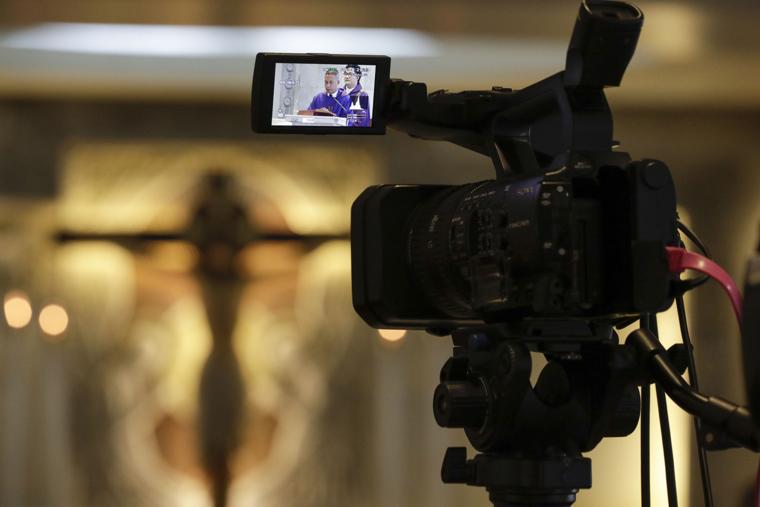
Up until last year, I had not remembered that there was a liturgy in our Prayer Book for Holy Saturday.  I had always thought it was Maundy Thursday, Good Friday, Easter Vigil on Saturday night (which is basically just Easter), and then Easter Sunday.  But when the pandemic hit last year, we realized doing a virtual Easter Vigil just would not work – there is so much reading, singing, doing things by candlelight, and the drama of being huddled together that we had to let the Liturgy wait until we could gather again.  So instead, we turned to this tiny liturgy, whose entire content is listed on one page of the Book of Prayer Book.

Still in a pandemic a year later, I found myself curious about this liturgy we are entering once again.  The truth is, the earliest accounts of Holy Week observances had no liturgies for Holy Saturday, with the exception of private use of the daily office.[i]  Instead, this day has simply been known as the “quietest day of the Christian year.”[ii]  That the church has not always gathered on Holy Saturday and that Christians might see this day as a day of quiet makes a lot of sense.  The Church says so much this week – from our waving of palms last Sunday, to our gathering around the upper room table to wash feet and share bread, to devastating betrayals of Jesus, to the vivid walk toward the cross, to the finality of the closed tomb.  We almost need a day of quiet to let the drama sink in and wrap our heads around what this week means.

But I suspect if your life is anything like mine or most Americans, we are not sitting quietly in our homes from 3:00 pm on Friday until Easter morning.  Instead, we are filling the time with preparations – tending to all the things we did not do while we were attending church this week:  dying eggs, entertaining children, stuffing Easter baskets, prepping Easter day meals, cleaning the house, or just having fun.  There is nothing inherently wrong about those things, but this year, of all years, I am grateful for a Holy Saturday liturgy.  With this last year of suffering through a pandemic and reflecting on our broken humanity’s inability to eliminate racism or mend civil discourse, even with the rise of vaccines, I find our country is in a Holy Saturday kind of time.  We have been through a tumultuous experience and are not yet healed. 

That is why I like having Job as a companion today.  Job’s words are stark.  As Job sits in the ashes of his sorrows, having lost his children, his livelihood, and his support system, he describes the brutality of life.  He talks about how trees have hope – even when cut down, they can sprout again, and new life can be born out of death.  But not so with humans, he argues.  No, when their bodies lay in the ground, there is nothing but death.  Job captures the essence of this day.  There is a similar finality at the door of Jesus’ tomb this day.  All the hopes and dreams, all the joys and blessings, all the promises of new life are sealed away in a tomb.  And after such a violent death and the threat for those who followed Jesus, there is no wonder why the Church has considered this a quiet day.  Unlike the quiet waiting of Advent, when the church is brimming with expectation and bustling around in preparation for Christ’s birth, today is a day of silence devoid of restorative peacefulness.  As one scholar says, “The waiting of Advent is like having warm bread in the oven.  By contrast, the air of Holy Saturday smells more like stale smoke, as though something essential was burned the day before.”[iii]  As our lives are not yet pandemic free, and as threats of spikes in cases emerge, we know that kind of waiting all too well.

And yet, in the very last verse of today’s reading, the despondent Job says something totally counter to everything else he has said.  “If mortals die, will they live again?” Job asks.  For someone who has boldly proclaimed the finality of human death, his question is a question that only a person of faith can ask – a question that reveals the tiniest bit of hope still left in Job.  Job communicates in this question a truth we people of faith hold dear:  no matter how bad the suffering, no matter how prevalent the experience of dread and doom, no matter how deep the failures of humanity seem to run, there is always hope.  The disciples and community surrounding Jesus Christ do not know that hope yet.  But as followers of Christ 2000 years later, we now stake our entire identity on the risen savior. 

So yes, receive the gift of stale smoke this day.  Sit in ashes with Job and mourn all in your life that feels dead.  Take time in this busyness of life for some uneasy silence.  Name all those who have been lost due to disease and violence.  But keep asking the questions.  Hold on to the hope, however infinitesimally small that God can indeed redeem us – us as individuals, us as country, us as Church.  Holding the two in tension is difficult – we want to rush to Easter and forget all that has happened.  But letting the power of all that has happened speak to us today will allow us to know the astounding power of resurrection much more deeply tomorrow.  Job, Jesus, and this faith community here will pull up a chair and sit with you by the ashes until we can reap with tears of joy tomorrow.  Amen.


[i] William Joseph Danaher, Jr., “Theological Perspective,” Feasting on the Word, Yr. B, Vol. 2 (Louisville:  Westminster John Knox Press, 2008), 310.

[ii] Christina Braudaway-Bauman, “Pastoral Perspective,” Feasting on the Word, Yr. B, Vol. 2 (Louisville:  Westminster John Knox Press, 2008), 312.

[iii] Braudaway-Bauman, 312
Sermon – Jeremiah 31.31-34, L5, YB, March 21, 2021

24 Wednesday Mar 2021

Posted by jandrewsweckerly in Sermons

≈ Leave a comment

Tags

abundant, comfort, covenant, exile, faith, God, hope, Jeremiah, Jesus, Lent, love, lovingkindness, pandemic, ruin, Sermon

I do not know about you, but I entered Lent this year already done.  We talked about this reality five weeks ago, back on Ash Wednesday, when I told you that it was okay if you did not give up something this Lent – because we have already given up so much in the last year.  We have already fasted what feels like twenty Lents during this pandemic.  And then this week happened.  We started out with the words of the Vatican, declaring that although our LGBTQ brothers and sisters were still to be loved and welcomed in Church, their “sinfulness” would not be blessed within the covenant of marriage by the Roman Catholic Church.  I cannot tell you the pain and suffering those words created this week for so many who live in faithful, loving relationships and marriages.  Then, just a few days ago, a man in Atlanta murdered people of Asian descent, sparking off conversations about the rise of hate crimes against Asian Americans since this pandemic began.  Our own Sacred Ground circle, the group studying the institution of racism in our country – not just towards blacks, but towards indigenous Americans, Latinos, and Asians – just finished its ten weeks of work; and yet within the same week we are talking about racism yet again.  And then this week, as administered vaccines slowly rise in James City County, I see people becoming lax about masking and social distancing, some folks in public spaces barely covering their faces.  Even the test positivity rate – the one whose decrease has allowed us to enact regathering plans – is creeping slowly toward the numbers that will shut us back down again. 

That is why I found myself gravitating to Jeremiah this week.  Part of the attraction is the good news of the text, but a larger part of my attraction is empathizing with the Israelites.  Jeremiah writes in a time of desperation for the people of God. The Babylonians have razed the temple and carried King Zedekiah off in chains.  Effectively, the Babylonians have “destroyed the twin symbols of God’s covenantal fidelity.”[i]  Sometimes we talk about the exile so much that I think we forget the heart-wrenching experience of exile.  Being taken from homes and forced to live in a foreign land is certainly awful enough.  But the things that were taken – the land of promise, the temple for God’s dwelling, the king offered for comfort to God’s people – are all taken, leaving not just lives in ruin, but faith in question. 

But today, in the midst of the physical, emotional, and spiritual devastation, Jeremiah says God will make a new covenant.  God knows the people cannot stop breaking the old covenant, and so God promises to “forgive their iniquity and remember their sin no more.”  Instead of making the people responsible for the maintenance of the covenant, God goes a step further and writes the law in their hearts, embodies God’s way within the people.  The words of Jeremiah in the section called “the Book of Comfort,”[ii] and this new covenant by God, show a God whose abundance knows no limits.  God offers this new covenant to a people who surely do not deserve another covenant.  God has offered prophets and sages, has called the people to repentance, has threatened and cajoled, and yet still the people cannot keep the basic tenants of the covenant established in those ten commandments.  But instead of abandoning the people to exile, God offers reconciliation and restoration yet again.  And because God knows we have no power in ourselves to help ourselves, God basically says, “Here.  Let me help you.  Let me write these laws in your hearts so that you do not have to achieve your way into favor with me, but you will simply live faithfully, living the covenant with your bodies and minds.”  And when even that does not seem to work, God sends God’s only son.  God never gives up on us or our relationship with God.  Even all these years after Christ’s resurrection, God is still finding new ways to make our covenant work.  

That is where I find hope this week.  Despite how broken we may feel because of this pandemic, despite how our nation seems incapable of not harming one another due to the color of our skin, despite the ways we seek to limit God’s love and abundance, God is relentless with God’s lovingkindness.  In Jeremiah’s text, when the Israelites have hit rock bottom, God turns not to vengeance or even a notion of just desserts.  God picks up the covenant of love, not relying on our hard work to be faithful, but declaring how God will simply put God’s law within us, will write God’s law of love on our hearts, will be our God and we will be God’s people.  In essence, nothing we can do will drive God from us.  And that, my friends, is good news indeed.  God sees us in all our fullness – light and shadow alike – and loves us anyway.  In this continued time of strain and strife, in this long night of COVID, God gives us good news.  As one scholar affirms, “God will bring newness out of destruction.  God will bring hope where there is no hope.  God will bring life out of death.  God will make a way where there is no way.”[iii]  Thanks be to God!


[i] Richard Floyd, “Pastoral Perspective,” Feasting on the Word, Year B, Vol. 2 (Louisville:  Westminster John Knox Press, 2008), 122.

[ii] Jon L. Berquist, “Exegetical Perspective,” Feasting on the Word, Year B, Vol. 2 (Louisville:  Westminster John Knox Press, 2008), 123.

[iii] Floyd, 124.

Sermon – Luke 23.18-26, People of the Cross, March 3, 2021

17 Wednesday Mar 2021

Posted by jandrewsweckerly in Sermons

≈ Leave a comment

Tags

autonomous, cross, dependence, discipleship, hope, Jesus, love, need, pandemic, Sermon, Simon of Cyrene, Stations of the Cross, transformation, vaccines, vulnerability

This sermon was preached at New Zion Baptist Church, Williamsburg, Virginia, as part of the Upper James City County Lenten Ecumenical worship series. The series was entitled, “People of the Cross,” a journey with the characters of the Stations of the Cross.

As we approach the one-year anniversary of this pandemic, we have begun to fall into some dangerous patterns.  The more time we safely spend in isolation from others, the more the notion sneaks into our psyche that we do not need others – that we are solitary actors in the world.  The more safety measures become recommendations as opposed to mandates, we begin to think we have power over our destiny – freedom to wear a mask or not, freedom to spend time with people when we want, freedom to take a vaccine or not.  The more time we spend not gathering in our worship spaces, away from our communities of faith, the more distant we can begin to feel from God, slowly no longer watching those digital offerings or joining those Zooms because we are just tired of everything.

Sometimes I wonder if Simon of Cyrene was a man who thought of himself in similar ways.  Now, we have to remember where we are in Jesus’ story.  Jesus has already been betrayed by Judas, arrested in Gethsemane, been shuffled around by religious and secular authorities, undergone trial with Pilate, been sentenced to death, and is heading toward Calvary with a cross.  This is the point in Jesus’ story where we meet Simon of Cyrene.  We know very little about Simon.  He is only mentioned in the three synoptic gospels of Matthew, Mark, and Luke, and even in those gospels, his story is told in just a verse.  Matthew says, “As they went out, they came upon a man from Cyrene named Simon; they compelled this man to carry [Jesus’] cross.”  Mark says, “They compelled a passer-by, who was coming in from the country, to carry [Jesus’] cross; it was Simon of Cyrene, the father of Alexander and Rufus.”  And finally, Luke, who we heard tonight, says, “As they led [Jesus] away, they seized a man, Simon of Cyrene, who was coming from the country, and they laid the cross on him, and made him carry it behind Jesus.” 

That is all we have.  One verse from each synoptic gospel.  We learn a few things though.  Simon was not from Jerusalem – he was coming in from the country.  Simone of Cyrene was a father of at least two sons.  And we know he did not volunteer for the job of helping Jesus.  He did not have compassion, see a man struggling, and offer to help.  He did not see the incorruption of the state and fight back or bravely step in to mitigate the injustice.  All we know is he was compelled or seized and put to work.  And Luke adds that he carried the cross behind Jesus.  The rest of the story we just do not know.

But here is what we do know.  We know the times where we have collided with Jesus, sometimes against our will or even our knowing.  The phone call from the needy friend when you just need some alone time.  The homeless person, who seems slightly unstable, who you know is going to ask you for something, even if they just start with conversation.  That person being bullied on the playground or in the board room, that if you stand up for them, the bullies may turn their evil on you.  The pastor who asks you to take leadership on a new ministry when you are already feeling overwhelmed.       

Author and Dominican brother, Timothy Radcliffe, reminds us that we Americans have a strange relationship with “the ideal of a self-sufficient person who does not need anyone else.   We should stand on our own feet.   It is humiliating to need others, especially strangers.”[i]  That very kind of thinking is what has led us to where we are in this pandemic – where my behavior, my choices, my agency to mask, socially distance, and vaccinate are my own, made in a bubble of self-sufficiency.  But in the heart of Simon of Cyrene’s experience with Jesus, we see how our own American ideals crumble.  We are not wholly autonomous peoples of self-sufficiency and self-actualization.  We are people who need each other.  Jesus shows us in this strange, forced encounter with Simon that vulnerability is not a burden to be scorned, but the place where holiness is encountered – where we see God.

Of course, Jesus taught us this lesson before.  In Matthew’s gospel, Jesus told his followers that when they see a stranger, the least of these, and see they are hungry and give them food, they are thirsty and give them something to drink, when they welcomed a stranger, they clothed the naked, and took care of the sick, and visited the prisoner, they did these things to Jesus.  We know our wearing of masks is not for our own protection, but for the protection of others.  We know in our keeping distant from our loved ones, including from our beloved churches, we are protecting others.  When we get vaccines, we do not take them for ourselves, but for the power of herd immunization to stop the ravaging of our whole country. 

Julian of Norwich, the Middle Ages mystic, once wrote, “If I look at myself alone, I am nothing.  But when I think of myself and all my fellow-Christians joined together in love, I have hope.  For in this joining lies the life of all who shall be saved.”[ii]  Simon of Cyrene may not have wanted to be a part of Jesus’ story.  We may not want to be a part of the work of saving one another, this community, the commonwealth, or even this country.  And yet, here we are, a pandemic having stripped us of all notions of our self-sufficiency and self-actualization, being forced to look at each other in vulnerability and mutual dependence. 

We may not choose this reality, this time, this country in all its sinfulness, but this is where God has placed us.  But just like Simon of Cyrene, even in those times when we are forced into encounters with the holy One, our lives can be changed.  Several scholars have argued that Simon of Cyrene, in this forced encounter, in being forced to carry a stranger’s cross, becomes a disciple of that same stranger.  Pastor Patrick J. Willson argues, “Simon follows Jesus carrying the cross, thus becoming an icon of Christian discipleship. Luke’s vision is not that of an imitatio Christi; only Jesus is crucified. Simon follows the way Jesus has walked bearing the weight of the cross.  Jesus going before him makes discipleship possible.”[iii]

That is our invitation through Simon of Cyrene.  Simon’s story – his one moment with Jesus, his one verse in the entire canon of scripture – offers a powerful invitation to, even in this moment, take our cross of discipleship and follow Jesus.  We do not have to go with an eager spirit.  We may not even go willingly.  But the promise of going is radical transformation:  transformation from a people whose primary concern is for self to a people who know we will encounter Jesus when we finally realize that only when we look at ourselves as joined with fellow-Christians in love can we look to the world in hope.  Jesus humbled himself, making himself vulnerable enough to walk to Calvary and die on a cross for us.  Our invitation is to walk humbly behind and allow the weight of the cross to transform us into people of love and hope.  Amen.


[i] Timothy Radcliffe, Stations of the Cross (Collegeville:  Liturgical Press, 2014), 30.

[ii] Julian of Norwich, Stations of the Cross:  A Devotion Using The Revelations of Divine Love of Julian of Norwich (Norwich:  The Friends of Julian of Norwich, 1998), 13.

[iii] Patrick J. Willson, “Homiletical Perspective,” Feasting on the Word, Yr. C, Pt. 1, Additional Essays (Louisville:  Westminster John Knox Press, 2013), 4.

On Hope, Sobriety, and Better Angels…

20 Wednesday Jan 2021

Posted by jandrewsweckerly in reflection

≈ Leave a comment

Tags

baptismal covenant, better angels, dignity, God, grace, hope, Inauguration, nation, prayer, president, sober

Photo credit: https://www.juneauempire.com/life/living-growing-the-better-angels-of-our-nature/

We are not enemies, but friends. We must not be enemies. Though passion may have strained it must not break our bonds of affection. The mystic chords of memory, stretching from every battlefield and patriot grave to every living heart and hearthstone all over this broad land, will yet swell the chorus of the Union, when again touched, as surely they will be, by the better angels of our nature.  ~Abraham Lincoln, Inaugural Address, March 4, 1861

This morning, as we await the inauguration of our next President, I find myself equally sober and hopeful.  I am sober today because I am still reeling from the attempted insurrection in our Capitol Building just weeks ago.  That event signaled to me how much damage has been done to the fabric of our nation – how divided we have become, how hateful we have become, and how far we have strayed from our baptismal promise to respect the dignity of every human being.  I am sober because I know simply changing Presidents will not magically solve the division that took many years of cultivation.  We have much truth telling and healing to do. 

But my sobriety is balanced with hope.  Again, I have this hope not because I think our President Elect is the Messiah – we already have one of those!  But I am hopeful because being hopeful is the nature of being made in the image of God.  I am hopeful we will find our way back to our baptismal identity, of seeking and serving Christ in all persons, and striving for justice and peace among all people.  I know we have a long way to go.  Our black brothers and sisters have shown us this year how far we have to go in the movement toward respecting the dignity of every human being.  But somehow, seemingly impossibly, I am hopeful.

I was reminded today of the quote above from Abraham Lincoln’s first inaugural address, given on the brink of Civil War.  He had no idea what the future held and how our nation almost fell apart – and the very long road it would take (and is still taking) to recover.  But even then, on the cusp of some of our darkest times as a nation, Lincoln was convinced that we had better angels of our nature.  Perhaps that is where my hope comes from today too.  I am convinced that we have better angels still, and that, with God’s grace, we will be touched again by the better angels of our nature.  That is my prayer for all of us today!

On New Year Hope…

06 Wednesday Jan 2021

Posted by jandrewsweckerly in Uncategorized

≈ Leave a comment

Tags

breathe, change, community, fortitude, goodness, Holy Spirit, hope, invitation, New Year, pandemic

Photo credit: https://www.health.harvard.edu/blog/hope-and-caution-during-infertility-treatment-2019102818130

I remember when the year 1999 rolled over into 2000.  It was a time a great hubbub.  There was a sense of enormity about the transition.  Prince’s song 1999 experienced a revival, most of the world was worried about the ability of our technology to transition to Y2K, and many feared there would be some sort of cosmological event.  As the minutes rolled down to seconds, there was a collective intake of breath that we held until the clocks moved to midnight.  In the end, the transition was fairly uneventful.  Technology kept functioning, no big events happened, and most of us realized it was just another New Year’s. 

I have felt a similar incongruence this New Year’s.  Having had such a tumultuous year – between the pandemic, civil unrest, and political upheaval – I think many of us had begun to believe that once we turned the calendar from 2020 to 2021, things would be better.  The virus spread would slow as vaccines were promisingly being rolled out and we would finally be able to turn our energy from crisis mode to dealing with long-term issues like race.  And we might even begin to see some political stability.  If we could just get 2020 to close, all would be well. 

But these first days of 2021 have felt a little like the first days of 2000.  Not much has changed.  Instead of feeling like the change in calendar year has made everything better, we are left with the reality that we are still in the same situation.  In fact, things are going to get worse before they get better, which is almost incomprehensible.    

As that reality has sunken in these last few days, I see two invitations before us.  The first invitation is to take a deep, steadying breath.  This is not a loud, exasperated sigh, but a calming, strengthening breath – a breathing in of the Holy Spirit as we face the continuation of this season.  The second invitation is to take a moment to reflect on all the coping mechanisms we have developed in these last ten months – whether it has been operating in a new way (like livestreaming worship, zooming formation, or drive-thru connection events), whether it has been making space for community when we feel isolated (like sending mail, emails, and texts to fellow parishioners, hosting far-flung friends on Zoom calls just for fun, or taking socially distanced walks with others), or whether it has been discovering pleasant surprises (like the new people who have connected to your community even when your doors are closed, the hilarity that can ensue with virtual Epiphany pageants, or the blessings of a property that can lead to things like an outdoor labyrinth).  I know these last months have felt overwhelmingly disastrous at times.  But taking some breaths and looking at the goodness that has happened in the mess is what is giving me hope and fortitude for this next year.  My prayer is that you might find that same hope today too!

On Hope and Confidence…

22 Wednesday Jul 2020

Posted by jandrewsweckerly in Uncategorized

≈ Leave a comment

Tags

church, college, confidence, decline, Episcopal Church, future, hope, Jesus, leadership, living, mainline church, youth

hook-hope

Photo credit:  https://www.cmalliance.org/hope/

One of the things I have loved about my church has been the Choral Scholars we employ at our 11:15 am service on Sundays.  The eight singers are college students from William & Mary.  They come from all sorts of backgrounds – some grew up singing in their hometown Episcopal Churches, some are Southern Baptists, and a few have even been Jewish.  I have always enjoyed watching their journey through college, but I especially became appreciative of that relationship when this pandemic shut down our church.  Two Choral Scholars immediately became part of our four-person team livestreaming services every week, helping keep music at the center of our digital worship.

I was not sure what to expect, however, once the semester was over in June.  We managed to recruit two other students:  one, an out-of-state college student who grew up in our church and is home for the summer, and another who is also from William & Mary, but has never sung with our Scholars.  As each week has passed, I have slowly learned about their faith journeys and experiences.  And this Sunday, when our Music Director was on vacation, the substitute she procured is an organ student from William & Mary who sings at another local church during the school year, and who led a choral evensong with a campus group at our church last year.

As we sang and played together on Sunday, I had an epiphany.  I realized I was the oldest person in the room by several years.  After years and years of talking about the so-called decline of the mainline church, hearing myriad, often contradictory, reasons why the next generation is not coming to church (for more about this topic, check out this video by Dean Ian Markham), here I was a part of a worship leadership team primarily led by people in their very early twenties.  And they were not just playing supporting roles, like greeting people at the door or handing out bulletins.  They were in charge of the entire musical offering.  They were equals in leadership, and they were doing it with confidence and beauty.

In a few months, one of the high school students I mentored in my curacy will be ordained a priest.  Listening to her hopes for the ways the Episcopal Church can speak afresh to this world, wondering about the future lay leadership of our pre-med summer singer, and imagining the bi-vocational life our substitute organist who hopes to play on Sundays after college graduation while having a weekday career, gives me hope for the future of our Church.  Yes, our Church will continue to evolve and change, living online, living in cafes and bars, living in soup kitchens and childcare centers – but living and thriving.  Our Episcopal liturgies, our openness to the intellect, and our graceful blessing of all walks of life are the things that attract the young (and more seasoned!) people who are leading us today, and they are the strengths that give me hope for the Church of the future.  I have often resisted the doom and gloom of the predictions of the decline of the Church, but have been unsure how to legitimize my hunch.  This week I am grateful for the young people in my life who have given me some language and some confidence that Jesus is not done with us yet.  I hope you can feel that hope today too.

Sermon – Luke 24.13-35, Acts 2.14a, 36-41, E3, YA, April 26, 2020

30 Thursday Apr 2020

Posted by jandrewsweckerly in Sermons, Uncategorized

≈ Leave a comment

Tags

church, crisis, disciples, Easter, Emmaus, faith, hope, human, Jesus, lost, love, pandemic, resurrection, Sermon, vulnerable, weakness

To say we have been operating in crisis mode here at Hickory Neck would be an understatement.  We went from normal operations, to heavy restrictions for gathering and receiving communion, to entirely closing our buildings, to moving all worship online, to virtual learning, fellowship, and pastoral care.  All of those changes happened rapidly, and with an eye to whatever was next.  Once we figured out some semblance of a new rhythm and “normal,” Holy Week came, and we had to figure out how to make our most sacred week of the Church Year meaningful despite our inability to gather physically.  Baptisms and confirmations have been postponed, our Bishop’s visit has been delayed, and farewells and celebrations have been canceled.  And yet, here we are, about half-way through a stay-at-home order, with infection and death rates at astronomical levels, and the Church finds herself in the third week of Easter, still proclaiming her alleluias.

I am not sure I could pull myself together and proclaim those alleluias without the lessons from Holy Scripture we have been journeying with these last Sundays.  In a normal Eastertide, we are more carefree, reveling in Easter joy, making bold proclamations about resurrection and eternal life, and listening to the early Easter stories like the walk to Emmaus with a sense of endearment – as if saying, “Bless their hearts!” as the early Christians try to figure out what in the world is going on after Jesus’ resurrection.  But this is not a normal Eastertide.  In fact, Biblical scholar Matt Skinner refers to this time as “Pandemic Easter.”[i]  For the first time in perhaps most of our lives, we can more deeply empathize with the disciples during these early days of resurrection.  The modern Church has used Eastertide as a bold proclamation of the meaning of Jesus’ death and resurrection.  But the first disciples of Christ are not boldly doing anything.  In fact, they are bereft, confused, scared, given glimpses of hope followed by bouts of despair and doubt.  They are not sure what to believe, even having seen the risen Jesus themselves.  Even those who receive the teaching from the disciples in our Acts lesson are overcome with emotion and can only ask, “Brothers, what should we do?”

Somehow, living in Pandemic Easter has made our Eastertide lessons much more powerfully relatable.  I do not know if I am ready to boldly proclaim, “The Lord is Risen Indeed.”  But I am willing to say to fellow Christians, and to God, “What should we do?”  I am willing to talk with a fellow person of faith, or even a person of no faith, walking with them (either metaphorically or at least at a distance of six feet) as we make our way through this mess.  Those disciples on the walk to Emmaus look different to me this year.  Those two people who thought they knew what they believed, who are confused by testimony of Jesus’ resurrection, who walk away from the protective hideout with fellow disciples, are trying to make sense of life, death, and Jesus.  They are not people to be pitied or seen as adorably unsure of their faith.  They are us.  They are people in a life-altering crisis, trying to make sense of death and defeat, wondering where hope may be, and a bit lost.

And here comes the best part.  Now, I have always thought the best parts of this story are where Jesus teaches the disciples unawares, shares a meal with them, or their hearts becoming strangely warmed, allowing them to become the second set of witnesses after the women at the tomb.  But in Pandemic Easter, the best part of this story might just be what happens on the walk to Emmaus.  Jesus invites these two followers to talk about what has happened to them.  He literally walks with them as they share their shock, their grief, their sadness.  Perhaps in Easters past, I thought Jesus was being coy or trying to trick the disciples in some way.  But in Pandemic Easter, I think Jesus is doing what we all need:  Jesus listens, he lets the disciples share their reality, he makes space for the human response to a new normal.    Jesus makes space for questions like, “What should we do?”

I don’t know about you, but the very real, vulnerable, human interactions between Jesus and the disciples in Scripture today has been a tremendous balm to me.  More than perhaps any year, the Church is not telling us how to embrace and proclaim a certain and sure faith.  Today the Church is simply inviting us to hover in the actual experience of Easter – days of confusion, sadness, fear, and grief.  We are able to tarry there because Scripture reminds us today that Jesus walks with us.  When we cannot yet understand, when we perhaps cannot even believe, Jesus walks with us on the journey.  Jesus listens to our real human response to crisis and walks with us.  Someday – maybe today, maybe in a week or month, or maybe in a year, we will be able to hear Jesus’ teaching and understand, and our hearts will be strangely warmed with conviction.  Until then, Jesus walks with us where we are, acknowledging the fullness of our weakness, and staying with us and loving us through it all.  Thanks be to God.

[i] Matt Skinner, “The Road to Emmaus Feels Longer This Year,” April 19, 2020, as found at http://www.workingpreacher.org/craft.aspx?post=5428 on April 24, 2020.

Sermon – John 20.1-18, ED, YA, April 12, 2020

23 Thursday Apr 2020

Posted by jandrewsweckerly in Sermons, Uncategorized

≈ Leave a comment

Tags

alleluia, Coronavirus, death, disciples, dread, Easter, eternal life, hope, Jesus, promise, Sermon, worship

I have to confess to you, I have been dreading preaching this Easter.  My dread has not been because I do not think we need some joy.  Lord knows, we could use all the joy we can get!  But there is something that feels off or forced about saying, “The Lord is risen indeed!” or singing “The strife is oe’r” or even, “Jesus Christ is risen today!” because, well, the strife is not over.  Death rates are on the rise, cases of Coronavirus are expected to surge here soon, our overburdened medical professionals and essential works are already strained with anxiety, and we have at least two more months to go in our stay-at-home order in the Commonwealth.  This strife is far from over.

Knowing how hard this day would be, and longing to be authentic about where we are, I went back to where we always go – back to the text – back to Holy Scripture.  Songs and Prayer Book aside, John’s gospel has been especially comforting to me this year. The comfort from John has not been because John’s gospel demonstrates a people ready to celebrate today.  Quite the opposite, three of Jesus’ closest disciples – Mary Magdalene, Peter, and the beloved disciple – have encounters with the risen Lord that are almost comically human.  On the promise of good news, Peter and the beloved disciples race, one beating the other but not going fully in the empty tomb; the other going in but not saying anything; neither understanding what is going on; and both just leaving – just going home without a word to one another or to Mary Magdalene.   Then there is Mary Magdalene, who in shock, runs to the disciples; when left alone a second time, she weeps; angels try to comfort her; Jesus himself speaks to her and she does not immediately recognize him; when she does finally recognize her beloved teacher, she is not allowed to touch him; and finally, finally, she shares her testimony – not what it all means (because I am not sure she knows) – but what she saw.   Nowhere in John’s gospel does Jesus say, “The strife is over” or “Alleluia, the Lord is risen indeed!”  Instead, Jesus seems to be saying, “Hey…calm down…relax…I know you – you are mine.  This is a good thing.   I cannot comfort you in the way you want, because I am not done yet, and some even more amazing things are coming.”

Today’s message from Jesus is certainly good news – but mostly Jesus is promising good news still coming – the promise of eternal life once Christ ascends to the Father in fifty days from now.  Somehow, all of that “stuff” today in our gospel lesson has been oddly comforting.  Disciples running around, not understanding what is happening, going back home without a word, desperate attempts to control the situation, and soothing, knowing words from Jesus despite our lack of understanding has been supremely comforting to me today.  John’s gospel today is not a fait accompli.  John’s gospel is a promise:  a promise of hope that everything will be okay.  And like every promise in a crisis – whether a crisis of health or a crisis of faith – the promise is not the announcement of something being done or accomplished, but a gift of hope that goodness is coming.

And for me, that is what I need today.  Not a worship service that declaratively says, “The strife is oe’r,” but one that gently and comfortingly says, “The strife will be oe’r.”  Not a worship service that says, “The Lord is risen indeed,” but “The Lord’s rising today is a promise for you going forward.”  Our service today is not a service trying to force you to put on fancy clothes (because I imagine some of you are still in pajamas watching from home) or trying to force you into some false happiness.  Our service today is about hope, a quiet confidence, a gentle reminder as Christ calls you by name, that death does not have the final say; that Christ is walking with us through this pandemic, and will be with us to restore us when we emerge on the other end.  We do not know what that other end looks like; but we hear today that Jesus is with us in the midst of this, calling us by name, giving us hope for tomorrow.  The return of our alleluias today is not a naïve proclamation that everything will be okay.  The return of our alleluias today is an invitation to reclaim the hope that can only come from the risen Lord, that can sustain us in our grief, hold us in our confusion and doubt, and embolden us to honestly witness even in our uncertainty.  The church says with us or for us today, “The Lord is risen indeed,” until we can believe those words with conviction for ourselves.  Thanks be to God.

On Holy Week, Distance, and Hope…

08 Wednesday Apr 2020

Posted by jandrewsweckerly in Uncategorized

≈ Leave a comment

Tags

church, community, Coronavirus, creativity, different, digital, grace, grief, Holy Spirit, Holy Week, hope, intimate, physical, sacrament, technology, tradition

Digital Holy Week

Photo credit:  https://www.brownsvilleherald.com/news/business/the-latest-holy-week-ceremonies-closed-to-public-over-virus/image_b2f632ed-6243-5410-accd-34ccf4865671.html

I remember the first time I was a Rector and planning Holy Week.  I was debating about whether to use the reserve sacrament on Good Friday or not.  I spoke to a priest colleague, and he shared the philosophy of the Rector under which he was serving:  on Good Friday, not even the consolation of the Holy Meal is available to us.

When our staff at Hickory Neck first started talking about Holy Week, we were faced with a stark reality:  there was no way for us to celebrate Holy Week the way we traditionally do.  Sure, we could use technology, and sure, we could try to do parts of what we normally do, but so much of Holy Week is physical and intimate – from waving palms, to washing feet, to kissing crosses, to huddling together around a fire, to having water sprinkled around, to gathering close in the dark, to finally gathering in a huge celebration with large crowds, Easter egg hunts, pictures with friends, and brass instruments.  There just is not a way to create that same feel digitally.  And so, Holy Week would need to be different.

For those of you who know me, you know Holy Week is superlatively special to me – it is my favorite week of the year.  So, for a moment, I grieved that loss, adding it to the long list of things I am grieving during this pandemic.  But then I took a deep breath, made room for Holy Spirit as I relaxed my grip on what I falsely imagined was under my control, and let the creativity flow.  Before I knew it, we were trying evensong for Maundy Thursday – a service we experienced daily on a recent pilgrimage in England.  We were creating a simple, powerful Good Friday liturgy.  And, I was trying for the first time a liturgy I had barely noticed in the Prayer Book – a Holy Saturday liturgy.

Holy Week and Easter will not be the same this year.  But, in all honesty, nothing is the same in this season of life.  If our lives are so distinctly different these days, it makes sense that our liturgies would be different too, as liturgies reflect the life of the people.  Somehow, creating this alternative Holy Week has felt like the Church settling in alongside the community and walking in step with them (from a safe distance, of course!).  Somehow, recognizing grief, discomfort, and sadness has made room for creativity, hope, and grace.  Somehow, experiencing a daily life much more in line with the journey of Holy Week is making Holy Week viscerally palpable, and ultimately healing, life-giving, and strengthening.  We still have a long way to go with this virus and its impact, but I am especially grateful for the gift of Holy Week this year.

Sermon – Matthew 26.14- 27.66, PS, YA, April 5, 2020

08 Wednesday Apr 2020

Posted by jandrewsweckerly in Sermons, Uncategorized

≈ Leave a comment

Tags

afraid, angry, anxious, change, Coronavirus, disciples, God, grief, hope, Jesus, Lent, Lord, Palm Sunday, promise, rollercoaster, Sermon, turbulent, victory, walk

There is a meme that has been circulating that reads, “This Lent is the Lent-iest Lent I’ve ever Lented.”  Of course, the grammar is intentionally ridiculous, but the meme had the effect of making me want to laugh and cry all at the same time.  Lent is usually when we craft a time of sacrifice and abstinence – a time of purposeful withdrawal from comfort to help us ascetically come closer to God.  But this Lent, we have not needed to craft anything.  Comfort has been ripped away from us, our footing has been upended, and a sense of being bereft has swept over us as our governments have attempted to force us to respect the dignity of every human being through stay at home orders with punitive consequences.  In other words, that daily devotional I started reading in the first week of Lent is buried under a pile of crisis management paperwork.

Because this has been a “Lent-y” Lent, the emotional rollercoaster of Palm Sunday is much more relatable than in most years.  We started out our service singing loud hosanas, feeling the high of the promise of the arrival of a savior-king, and we end with a reading where disciples have deserted and betrayed, the faithful have condemned out of fear and resentment, the leadership have mocked and brutalized, the Chosen One of Israel lies dead in a tomb while the remaining faithful women linger at a distance, fearfully mourning Christ’s death.  In this “Lent-iest Lent we’ve ever Lented,” we are no stranger to the feeling of going from confident security and relative prosperity, to sober, fearful waiting and looking at the tomb that is sealed with finality.  As death and the threat of infection hang around us, we do not need to contrive a sense of deep mournfulness and communal culpability.  We do not need to imagine the feeling of Christ’s death.  From singing hosanas to shouting “Let him be crucified,” we are living the narrative of Palm Sunday today.

Though I would never wish our current reality on us, and though I wish we were having a more man-made experience of Lent, I must confess the confluence of this time with this virus feels appropriate.  We do not have to imagine the grief of sitting by the cross mourning the reality of death – we are already sitting by the cross mourning.  We do not have to imagine being forced from the crowd to take up a stranger’s cross in a violent, turbulent moment – we are already in a turbulent moment in the company of strangers.  We do not have to imagine what feels like the extinguishing of hope and victory – we are already in the midst of clouded hope and unseen victory.

I suppose that is where I find hope today.  We do not need to imagine today.  We are the disciples, afraid and unworthy.  We are the mourning women, anxious and bereft.  We are the religious leaders, angry and discouraged.  None of that may sound hopeful.  But I see hope all around.  I see hope in governor’s wives who can see and speak to truth, warning us and helping us see.  I see hope in disciples who can see their own unfaithfulness and mourn with honesty.  I see hope in Jews who risk reputation and sacrifice personal wealth to properly bury the Christ.  I see hope in a Messiah who wanted to escape certain and necessary death, but dies with dignity and faithfulness to save us.  Though today is a sober day, today is also a day of promise.  The hosannas we say are not in vain.  The songs we sing are not in vain.  The prayers we pray are not in vain.  I have hope that we will come through this unique Lent a changed people – a people more humble about our frailty, a people more sober about the importance of community, a people more astounded by the blessing of a savior.  Even in our physical separation, we walk this holiest of weeks together, we mourn and comfort together, and we hold out hope together.  Today, we walk in the light of the Lord.  Amen.

← Older posts
Newer posts →

Recent Posts

  • On Change and Bread…
  • Sermon – Exodus 14.19-31, P19, YA, September 13, 2026
  • On Realizing Dreams…
  • On Seeing the Kingdom…
  • Sermon – Exodus 3.1-15, P17, YA, August 30, 2026

Archives

  • September 2026
  • August 2026
  • July 2026
  • June 2026
  • May 2026
  • April 2026
  • February 2026
  • January 2026
  • December 2025
  • November 2025
  • October 2025
  • September 2025
  • August 2025
  • July 2025
  • June 2025
  • March 2025
  • February 2025
  • December 2024
  • November 2024
  • October 2024
  • September 2024
  • August 2024
  • July 2024
  • June 2024
  • May 2024
  • March 2024
  • February 2024
  • January 2024
  • December 2023
  • November 2023
  • October 2023
  • September 2023
  • August 2023
  • July 2023
  • June 2023
  • May 2023
  • March 2023
  • February 2023
  • January 2023
  • December 2022
  • November 2022
  • October 2022
  • June 2022
  • May 2022
  • January 2022
  • December 2021
  • November 2021
  • October 2021
  • September 2021
  • August 2021
  • June 2021
  • May 2021
  • April 2021
  • March 2021
  • February 2021
  • January 2021
  • December 2020
  • November 2020
  • October 2020
  • September 2020
  • August 2020
  • July 2020
  • June 2020
  • May 2020
  • April 2020
  • March 2020
  • February 2020
  • January 2020
  • December 2019
  • November 2019
  • October 2019
  • September 2019
  • August 2019
  • July 2019
  • June 2019
  • May 2019
  • April 2019
  • March 2019
  • February 2019
  • January 2019
  • December 2018
  • November 2018
  • October 2018
  • September 2018
  • August 2018
  • July 2018
  • June 2018
  • May 2018
  • April 2018
  • March 2018
  • February 2018
  • January 2018
  • December 2017
  • November 2017
  • October 2017
  • September 2017
  • August 2017
  • July 2017
  • June 2017
  • May 2017
  • April 2017
  • March 2017
  • February 2017
  • January 2017
  • December 2016
  • November 2016
  • October 2016
  • September 2016
  • August 2016
  • July 2016
  • June 2016
  • May 2016
  • April 2016
  • March 2016
  • February 2016
  • January 2016
  • December 2015
  • November 2015
  • October 2015
  • September 2015
  • August 2015
  • July 2015
  • June 2015
  • May 2015
  • April 2015
  • March 2015
  • February 2015
  • January 2015
  • December 2014
  • November 2014
  • October 2014
  • September 2014
  • August 2014
  • July 2014
  • June 2014
  • April 2014
  • March 2014
  • February 2014
  • January 2014
  • December 2013
  • November 2013
  • October 2013
  • September 2013
  • August 2013
  • July 2013
  • June 2013
  • May 2013
  • April 2013
  • March 2013
  • February 2013
  • January 2013
  • December 2012
  • November 2012
  • October 2012
  • September 2012

Categories

  • reflection
  • Sermons
  • Uncategorized

Meta

  • Create account
  • Log in
  • Entries feed
  • Comments feed
  • WordPress.com

Blog at WordPress.com.

  • Subscribe Subscribed
    Seeking and Serving
    Join 397 other subscribers

    Have a WordPress.com account? Log in now.

  • Seeking and Serving
    View site in Reader
    Manage subscriptionsSign upLog in
    Report this content
    Collapse this bar
Loading Comments...