• About

Seeking and Serving

~ seek and serve Christ in all persons

Seeking and Serving

Tag Archives: journey

On Cuisine and Community…

15 Wednesday Feb 2017

Posted by jandrewsweckerly in Uncategorized

≈ 3 Comments

Tags

church, comfort, comfort food, communion, community, cuisine, Eucharist, feast, fellowship, food, God, journey, recipe, strength, sustenance

mac-and-cheese

Photo credit:  whoneedsacape.com/2016/10/italian-mac-cheese/

This weekend, I made a family recipe from my husband’s grandfather.  Though Grandpa Gray is no longer with us, somehow, making this recipe for the first time in a long while flooded me with all kinds of memories.  You see, Italian Mac was the family’s favorite dish – the ultimate comfort food.  One year, I finally asked for the recipe and stayed with Grandpa Gray in the kitchen while he made it.  Now, as I look at the words of the recipe, I can hear his beautiful voice in the words.  As I crush the herbs as he instructed, I can imagine his worn hands doing the same thing.  As our house fills with the aromas of Italian Mac and garlic bread, I can remember the smell of his house.  As I sip the red wine that the recipe suggests I pair with the meal, I can recall the comforting sound of his laughter.

Food has a special power.  Whenever I have been on mission trips, food has created intimate connection.  In Honduras, we all took turns helping the women of the village cook for our team.  After ten minutes of attempting to grind corn, we were all laughing at how much stronger the women were than the men who were lifting bricks to build the church.  On my second visit to Costa Rica, I wanted to learn how to make the beans and rice we ate regularly.  The women were surprised that I was willing to get up early with them and learn.  After that morning, our relationship shifted.  In Myanmar, giggles and laughter ensued as we tried new foods and our hosts appreciated our boldness.

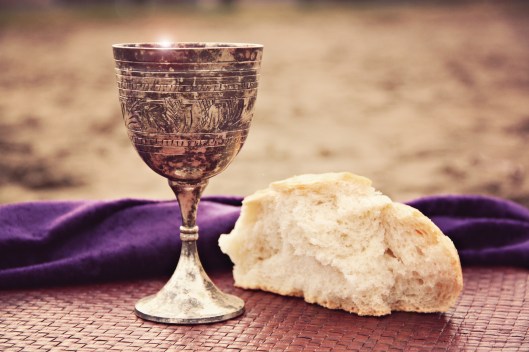
The same is true of the Eucharist.  I have been in churches that use grape juice and a small cube of pasty, crunchy “bread.”  I remember the splendor of the sweet Hawaiian bread used at another church.  I remember the first time I had real wine at communion, and the way that it burned down my throat, lighting a new fire in me.  Whether baked bread, bland wafers, or store-purchased pita bread, each texture and flavor imprints in my mind the church, the community, the spiritual place where I was at the time.  Even this weekend, at my goddaughter’s baptism, my own daughter commented on the “yucky” communion bread they had.  I would have just said it was dense, but that dense texture will linger in my mind as my reminder of our celebration.

Holy Eucharist is the comfort food of Church.  That is why I love being a part of a sacramental church that has Eucharist every Sunday.  But the Church offers other comfort foods as well.  The pancakes we eat every Shrove Tuesday remind me of years of fellowship and laughter – with communities all over the East Coast.  The Brunswick Stew of the Fall Festival at Hickory Neck will always remind me of warmth and community.  There are those dishes at every potluck that you search for, knowing the comfort it will bring.  And of course, there is the Sunday morning coffee – a staple of hospitality and grace.  If you have been missing a sense of community and comfort, I hope you will make your way to Church this week and join us in the feast that not only comforts us, but also strengthens us for the journey.  God has given us great work to do – but God has also given us the sustenance we need for the road ahead.

lords-supper-church-stock-photos

Photo credit:  stthomasnorwalk.com/religious-ed/sacraments/Eucharist

Getting Real and Giving Generously…

26 Wednesday Oct 2016

Posted by jandrewsweckerly in Uncategorized

≈ Leave a comment

Tags

budget, church, giving, journey, Living Generously, ministry, money, motivation, passion, pledge, real, resources

budget

Photo credit:  www.associationserviceswa.com/2016/08/value-of-a-well-prepared-budget/

The year after I graduated from college, I volunteered fulltime through the AmeriCorps program at a Food Bank in North Carolina.  In addition to working in the warehouse and monitoring agencies, my fellow volunteers and I also had monthly classes on a variety of topics.  My favorite was a budgeting class.  Though most of us were scraping by our living stipend, we still had income and expenses like everyone else.   Our homework was to track our expenses and income for a month and then come back to class to talk about what we noticed.  After that month, I realized that I had picked up a terrible habit.  I had worked very hard to save money during that year.  As a reward for saving money, every week I would treat myself to something small.  But when I did the math, I realized the amount I had saved was much less than the amount with which I was treating myself.  The realization was shocking and wildly disappointing.

On Sunday, we are submitting our pledge commitments for the coming year at Hickory Neck.  Part of our Living Generously campaign has been talking about the powerful ministries at Hickory Neck that mean so much to us.  We have read parishioner reflections, biblical reflections from national church leaders, and a great narrative budget that helps us see how our finances function.  My husband and I are inspired and expectant about the future of Hickory Neck, and we are overjoyed to join the pledging effort to support our ministry.

Inspiration has not been a problem.  In fact, my husband and I talked about how we want to increase our pledge this year.  But as we looked at the numbers, we realized in order to align our budget with our passion, we were going to have to adjust some things.  For us, that means at least a few less meals out each month.  It also may mean being a bit more discerning about wants versus needs.  It will certainly mean keeping an eye on making sure that we are able to keep our pledge next year by saving the amount needed for our increase and not “treating” ourselves disproportionally to our increased pledge.

As the Vestry talked about Stewardship, the Vestry all realized our church giving was motivated by different things.  For some of us, understanding the mission of the church and how our pledge would be used was critical.  For others of us, we needed our giving to be rooted in a theological or spiritual understanding of resources and our stewardship of those resources.  While for others of us, our giving was more motivated by looking around us, taking stock of all the things we like about church, and calculating how much those things cost.  My hope is that our campaign has addressed all of those approaches and that our journey through stewardship season has inspired and rooted you.  I look forward to hearing your story of our journey together and kicking off another great year!tens2016logo7x12webonly

On Living Generously…

12 Wednesday Oct 2016

Posted by jandrewsweckerly in Uncategorized

≈ Leave a comment

Tags

abundance, commitment, conversation, discernment, generosity, God, journey, Living Generously, persistence, pilgrimage, pledge, scarcity, steward, stewardship

tens2016logo7x12webonly

Photo credit:  www.tens.org

This past Sunday we kicked off our Fall Stewardship Season, “Living Generously.”  I talked about the campaign in my sermon, but we also have many invitations into this time of discernment for our parishioners.  We each received a packet of information about the ways we can support the life and ministry of Hickory Neck.  We have reflections written by national and parish-level leaders that invite us to consider their experiences around stewardship.  And we are having conversations with each other about how pledging works for each of us.

Just last night, the Vestry took on one of those conversations.  We looked at the gospel lesson for this coming Sunday (Luke 18.1-8) and talked about the challenge of persistence when it comes to stewardship.  We realized that no matter what financial situation or phase of life we are in, living generously does not come naturally or easily, but takes intentionality and persistent commitment.  In our small group, we had a person with young children – including some in childcare, a person with teens approaching college, a person who is thinking about retirement but has taken in an aging parent, and a person in retirement on a fixed income.  Despite those differences, we all have to be intentional with our commitment to stewardship because we all have commitments that can distract us from generosity and tempt us into scarcity.

There was something powerful about talking about hard keeping our commitment to stewardship is with other parishioners.  Too often we take those pledge cards home and embark on a discernment process that is very individualized.  Certainly, we all need time with our God on our own to fortify ourselves to being generous stewards.  But we also need companions on the journey – fellow parishioners who can say, “Yes, it is hard living generously!”  We need those fellow pilgrims because they also remind us of why we keep at it.  These are the same people who will remind you why you are grateful.  After the Vestry talked about the challenges of living generously, then we talked about the benefits.  Stories started pouring in about what we each get out of Church.  We talked about the ways that Hickory Neck feeds us and brings us joy.  We talked about the ways that, throughout life, God has been so faithful to us, and what an honor it is to be able to harness some of that generosity in our own lives.

On Sunday, I encouraged us to spend some time at home in discernment about our stewardship of God’s abundance.  This week, I also want to encourage us to spend some time in discernment with each other.  Share those challenges to being a steward; but also share those blessings of being a steward.  Those conversations may feed the conversation you have at home and will certainly renew your spirit.  Join us as we embark on this journey toward living generously together!

On Collars, Conversations, and Confessions…

14 Wednesday Sep 2016

Posted by jandrewsweckerly in Uncategorized

≈ Leave a comment

Tags

Christ, clergy, collar, conversation, faith, journey, pastor, prayer, priest, stranger

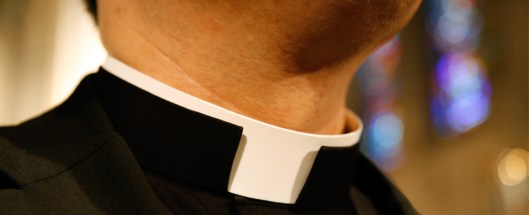
Last week, I stopped by a local doughnut shop to pick up treats for some of our church volunteers.  The staff needed to make a fresh pot of coffee, so I had to wait by the counter.  After a couple of minutes, the woman who had been helping me approached me and said, “Okay, settle a bet for us.  Are you a nun or a pastor?”

anglican-collar

Photo credit:  https://blackandwhiteandlivingincolor.com/2014/01/16/coffeehouse-musings-why-i-wear-my-anglican-collar-sometimes/

I get questions about my collar all the time.  Most people are not as courageous and will simply stare – usually with a furrowed brow of confusion.  Others will only confess that they always wondered what that “thing” was I wore when we finally get around to talking about our jobs.  Sometimes people will ask if the Roman Catholic Church started ordaining women (trust me – you would know if they had!).  Of course, my favorite experiences have been when I have been both in a collar and pregnant.  That really confuses people!

Once I finally confessed I was a “pastor” to the doughnut shop, one of the women working the drive-through said, “Oh good!  Can you pray for us?”  We had a great conversation after that, and I promised to keep them in my prayers for the rest of the day as I departed.  But as I left, I realized two things.  First, being a priest in my community is a tremendous blessing.  It allows me to have deep, intimate conversations with people a lot more quickly than you would with most strangers.  It allows me to not only be a pastor with my own parishioners, but everywhere I go in my collar.  It allows me to stretch the reach of the Church beyond the walls of our church.

But what I also realized when I left that shop is that talking about the need for prayer probably would not have happened had I not had on my collar.  I am constantly inviting my parishioners to have faith conversations outside the context of our community, but that day I realized how challenging that invitation can be.  A clergy collar is like an automatic ice breaker – it is an invitation for you to say, “Oh good!  Can you pray for us?!?”  But how do we break the ice without such tools?  How can I let the grocery clerk, the delivery man, or the construction worker know that I want to pray for them too – even when I am in my sweats?  How do we get beyond the perfunctory greetings and start having real conversations?  This week, I invite us all to consider how we might start such a journey toward authentic, meaningful conversations about the intersection of our individual journeys and the presence of Christ in our lives.  Know that I will be praying for us both as we figure it out!

On change…

20 Wednesday Apr 2016

Posted by jandrewsweckerly in Uncategorized

≈ Leave a comment

Tags

change, control, crib, decision, encouraging, exciting, God, journey, power, trust

A baby crying it out.

Photo credit:  www.slate.com/articles/double_x/the_kids/2013/07/clinical_lactation_jumps_on_the_dr_sears_bandwagon_to_say_sleep_training.html

Once upon a time, I had a parishioner complain to me, “I knew you were going to change things.  I just didn’t know it was going to be all at once!”  At the time, her complaint seemed unwarranted to me.  I did not feel that the changes were all at once at all.  In fact, I was careful not to change things all at once, but made changes slowly and methodically.  Though we talked through her concerns, I remember thinking flippantly that no one really likes change and perhaps that was the real source of her complaint.

This week, I have a lot more sympathy for that parishioner.  My family’s life has been upended by change.  Most of the change has been good – new jobs, new schools, and a new home.  There has been a flurry of activity, and the excitement of a move has carried us through.  Of course, I had forgotten how hard and time-consuming unpacking can be.  I also totally forgot that our young children would be having their own reactions to the move.  But we hit a breaking point Sunday night.  Our two-year-old decided it would be a great time to finally figure out how to get out of her crib.  So for about two hours we went back and forth trying to figure out ways to cajole her into going to sleep.  Of course, the developmental milestone of getting out of one’s crib was to be expected.  But that change on top of everything else made me want to cry, “I knew things were going to change.  But does it have to be all at once?!?”

The truth is, I do not think that the pace of change really matters.  I think what really matters is who gets to make the decision about the change.  When we are making changes ourselves or when we have control over the decision among a group, change does not feel so unsettling.  By having decision-making authority, we feel some modicum of control over the situation.  But when someone else is making decisions that impact us and that change what we are used to, we feel powerless, even if the change is for the better.

Having had the experience with my two-year-old, I am reminded of my need to be sensitive to others’ feelings about change and control as I begin a new pastoral relationship at Hickory Neck Episcopal Church.  Knowing how it feels to have everything changing at once, I will try to be more intentional about communicating, educating, and getting buy-in.  Change is most certainly coming – for me and for the community.  My hope is that we can love one another through the change and trust God and one another in the process.  There will be times when change feels like it is happening all at once.  But there will also be moments when we look back and say, “I guess that wasn’t so bad!  In fact, it was really good.”  Here’s to an exciting, supportive, and encouraging journey!

Sermon – Luke 24.1-12, ED, YC, March 27, 2016

29 Tuesday Mar 2016

Posted by jandrewsweckerly in Sermons, Uncategorized

≈ Leave a comment

Tags

church, disciples, Easter, Episcopal, imperfect, Jesus, Joanna, journey, Mary, Mary Magdalene, Peter, saved, Sermon, share, story, testimony

Where I grew up, the practice of sharing a “testimony” was commonplace.  In fact, many of my friends had no problem asking what my testimony was.  Usually what someone meant when they asked, “What’s your testimony?” was they wanted to know the story of when you were “saved.”  Now, just because I grew up in the culture did not mean that I felt comfortable with that question.  In fact, I can tell you that the question usually led me to lots of stammers and fidgeting.  Once I actually asked, “What exactly do you mean when you say ‘saved’?”  But the answer made me even more uncomfortable.  The basic assumption seemed to be that being “saved” was like having an epiphany moment – a moment of clarity when you heard the voice of God, and you made an active decision to accept Jesus as your “personal Lord and Savior.”

So you can imagine how profoundly grateful I was to stumble into the Episcopal Church as an adult and find that no one ever asked me about my testimony or being saved.  In fact, I am not even sure most Episcopalians have that kind of language around their faith.  If you asked an Episcopalian when they were saved, they might tell you about a near miss with a car or a time when doctors had to administer CPR.  Once I realized most Episcopalians were not going to demand to hear my testimony of how I came to accept Jesus as my personal Lord and Savior, I realized I might have actually found my people.

Of course, I am not sure either tradition really has it right.  In fact, I think the two cultures represent two extremes – the culture I grew up in believed being saved and being able to retell the story was crucial to membership; and the culture I chose to stay in believed that asking anyone about their faith life was way too personal of a conversation that should be avoided at all costs – we are just glad you are here.  Of course, I lean toward the Episcopal extreme, but I do see some of the dangers of our extreme.  You see, in our efforts to be polite and unobtrusive, we forget something very important about testimonies:  testimonies help us grow together.

Perhaps I should back up and talk about what testimonies are.[i]  Now, my childhood friends would define a testimony as the story of how you were saved.  I would actually describe a testimony as the story of how you came to know Jesus – whether you came to know Jesus through all the Sunday School stories you learned, whether you found the church as an adult and slowly felt yourself more and more drawn in by the story of Jesus, or whether you are still figuring out your journey and you are not really sure what you are doing but you know you want to be here.  The cool thing about a testimony is that there is no right or wrong testimony.  Your testimony is unique to you, and your testimony is not only good, but is compelling.

That is what I love about our gospel lesson today.  Today’s story sets the stage for a lot of testimonies.  On this day three women go to the tomb to tend to Jesus’ body and instead have an incredible experience.  On this day the disciples listen to some crazy story by the women of their group – believing that clearly the women are either seeing things, are suffering from sleep-deprivation, or are just out of their minds with grief.  On this day, Peter cannot resist the temptation to check out the scene in the tomb himself – and he is rewarded by being amazed at what he sees.

But those are just the facts of the story as we read them.  Those details are not their testimonies.  No, I imagine the testimonies are quite different.  I imagine Mary Magdalene, Joanna, and Mary the mother of James’ testimony would go something like this, “You are right.  Sometimes people will think you are crazy when you tell your story.  I remember back when Jesus first died, we had this amazing encounter at his tomb.  We were overwhelmed and overjoyed, but do you think the men would believe us?  They eventually came around, but those first few weeks were hard.”

I imagine the disciples’ testimony came from a different angle.  Their testimony might have gone something like this, “I totally get what you mean.  The story really is crazy.  Even I, one of his closest disciples, did not believe the story when Mary Magdalene, Joanna, and Mary the mother of James told me.  In fact, I wondered if their grief had not left them mentally unstable.  But slowly my heart warmed.”

And I imagine Peter’s testimony was even more different.  “Trust me,” he might have said.  “I totally understand what you mean about not feeling worthy.  I felt like I behaved even worse that Judas.  I did not betray Jesus for money, but I did deny him three times in public.  When that cock crowed, my heart shattered.  I never thought God would forgive me.  But when I stood in that empty tomb, and remembered what Mary Magdalene, Joanna, and Mary the mother of James told me, a spark of hope lit in my heart.  Suddenly I understood that Jesus could redeem me – even me – the worst friend and disciple you could be.”

Testimonies are not stories about how pious we are.  Testimonies do not fit into a formula or even make us look particularly good.  Testimonies are stories – our stories – of how we have encountered God.  They are not meant to be perfect stories.  In fact, the more imperfect the story, the better, because testimonies are meant to be shared.  I do not know about you, but I find imperfect stories much more compelling than perfect ones.  When Mary Magdalene tells me people thought her story was crazy, I feel like I can be more honest about my own story – no matter how crazy my story may sound.  When Peter tells me about how unfaithful he was, I feel like I can be more honest about my own unfaithfulness.  When the disciples tell me how dismissive they were, I can be more honest about how I am not always a good listener for God.

On this Easter Sunday, the Church shares her testimony.   We wake up this morning as if from a bad dream.  Lingering in our subconscious are stories of betrayal, unfaithfulness, brutality, and death.  The sting of grief and the sobriety created from deep failure still tingles.  But on this day, something utterly unexpected, confusing, and amazing happens.   Jesus warned us this would happen, but we did not really understand him at the time.  But in the empty tomb hope bursts forward.  Our hearts are filled with joy at the possibility that Jesus’ death changes things.  In the coming weeks, we will hear the rest of the Church’s testimony about how, in fact, Jesus resurrection does change things – stories of eternal life, of the kingdom made present, of sins washed away, of forgiveness and a New Covenant.  The story is admittedly a bit crazy.  But the story, the Church’s testimony, is full of hope, love, and grace.

St. Margaret’s has its own unique testimony.  The St. Margaret’s testimony begins with the stale stench of cigarettes in the Plainview American Legion Hall and journeys through baptisms in a church that was still under construction.  The testimony is full of bowling leagues, choirs, progressive dinners, and youth groups.  The testimony is full of leaders – both lay and ordained – who shaped the different eras of our life together.  No single part of our story is perfect, and no single part of our story is without redemption.  And our testimony is still unfolding, year after year, even when some questioned whether we could keep going.

Our individual testimonies are the same.  Some of them are circuitous, as we took a winding path to get to know our Lord.  Some of them are strange, involving odd encounters and sacred moments.  Some of them have yet to be articulated or understood.  Whatever our testimony may be, our testimonies are not meant to be kept to ourselves.  They are meant to be shared.  Just like the Church models for us today as we shout our long awaited alleluias, we too are meant to share our imperfect, strange, quirky testimonies.  We share them with one another and out in the world because our stories have had a tremendous impact on our lives.  Those stories, in all their glorious imperfection, are also the stories that help us connect with others, to share the Good News, and to grow the body of faith.[ii]  My testimony will now include the stories of my time here at St. Margaret’s, as your testimony and the testimony of St. Margaret’s will also include parts of these last four-plus years.  The joy of this day, the comfort of the Church’s story, and the satisfaction of the Holy Meal are all meant to empower us to go out in the world and share our imperfect, beautiful testimonies.  The world is waiting – and Jesus goes with us.  A

[i] Martin E. Marty, “Theological Perspective,” Feasting on the Word, Year C, Vol. 2 (Louisville:  Westminster John Knox Press, 2009), 350.

[ii] Marty, 350.

The gift of presence…

17 Wednesday Feb 2016

Posted by jandrewsweckerly in Uncategorized

≈ Leave a comment

Tags

discipline, gift, journey, Lent, ministry, presence, transition

My six-year old is at the stage where she is becoming her own person.  She dresses herself, can mostly bathe herself, and can do quite a lot independently.  With that independence comes a lot of letting go on my part.  She only occasionally wants to hold my hand – she is too busy running ahead.  She no longer likes to snuggle for naps – in fact she refuses naps unless they accidently happen on road trips.  She usually gets annoyed when I tell her I love her – she insists she knows already.

One of those sweet practices that passed away over a year ago was rocking her to sleep at night in her rocking chair.  I even remember rocking her when I was pregnant with my almost two-year old.  But last night, out of the blue, she asked me to rock her.  I had a list a mile long of things I needed to attend to last night, and the awkwardness of rocking my lanky 45-inch child seemed challenging.  But those thoughts only took me a nanosecond to process.  “Sure!” I told her.  She somehow managed to curl her long body into my lap, resting her head on my chest.  Time stood still for a moment as we rocked.  I remembered how small her body had once been and I thought how incredible it was to have her back in my arms again.  What a gift from my child.

Last week I announced to my parish that I had accepted a call to another parish.  It has been a hard week, full of all sorts of reactions.  Though I am excited about where God is calling me, I am also quite sad to leave a group of people who have loved me like family.  It colors Lent for all of us, as we prepare to say goodbye on Easter Sunday.

Thinking about my experience with my daughter and all that is happening at St. Margaret’s, I decided that my Lenten discipline this year is to just be present:  be present to those who need to express their anger at my leaving; be present to those who want to express their anxiety and concern; and be present to those who want to take a quiet moment to reflect on the goodness and tenderness of these last years.  It may sound simple or ambiguous, but for me, that is the gift I can give St. Margaret’s as I take my leave – the gift of my presence.  Please know that I am here – to meet you where you are and walk with you during this Lenten journey.

presence

Photo credit:  https://shannanparker/wordpress.com/tag/truth

On Fault and Forgiveness…

12 Friday Feb 2016

Posted by jandrewsweckerly in Uncategorized

≈ Leave a comment

Tags

accident, blame, brokenness, fair, fault, forgiveness, heal, journey, Lent, Lord's Prayer, mend, prayer, relationship, work

forgiveness

Photo credit:  http://strocel.com/a-word-for-2014-forgiveness/

Several weeks ago I had a conversation with a friend about an automobile accident in which she was involved.  The accident was not her fault – in fact the other driver was being oblivious to those around him and plowed right into her.  My friend and the other driver waited for the police to arrive to complete a report.  That was when she learned about a law in New York of which neither of us were aware.  In New York, even if the accident is clearly one driver’s fault, both drivers are expected to contribute to a portion of the costs of repairs.  The non-fault driver must pay a small percentage even though the accident was in no way her fault.

As we talked about this law, we were initially outraged.  The law hardly seemed fair.  If someone side-swipes you, runs a stop sign, or hits you while distracted, why should you be responsible for someone else’s fault.  We hypothesized about whether there might have been some way for her to give the driver a wider berth to avoid the accident – basically being a better defensive driver.  But we both could imagine situations in which there is no way to see an accident coming.  To us, the law just did not seem fair.

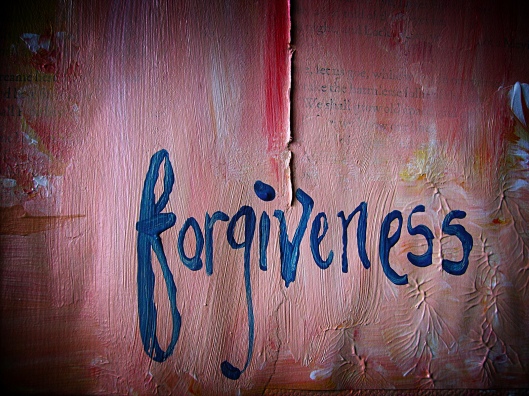
Today, as I was thinking about Lent and forgiveness, I was reminded of my friend’s accident.  The more I thought about New York’s rule, the more I realized that New York may be on to something.  You see, whenever we talk about forgiveness, we often think of ourselves needing to forgive someone else for something they have done to us.  Letting go of anger is an important step toward meaningful forgiveness.  But solely focusing on the actions of the other lets us off the hook from thinking about the ways we may have contributed to problem that needs forgiving.  I am not suggesting that the blame is 50-50.  But the blame might be 90-10 or even 80-20.  Anyone who has been married or who has navigated close friendships or family relationships knows that even when we are totally in the right, there is always a little blame to be shared by all.

As we start our Lenten journey, I invite you to consider taking an inventory of those relationships in your life that need mending or healing.  As you prayerfully consider those relationships, review the ways in which you have participated in the relationship and what ways you might hold some of the fault for the brokenness of the relationship.  The work will not be easy – we like being right so much that we may not be able to really consider mending those relationships.  But as you journey through the complicated web of fault and forgiveness, consider praying the Lord’s Prayer again:  forgive us our trespasses as we forgive those who trespass against us.  My prayers are with you on the journey.

Sermon – 1 Kings 2.10-12; 3.3-14, P15, YB, August 16, 2015

09 Wednesday Sep 2015

Posted by jandrewsweckerly in Uncategorized

≈ Leave a comment

Tags

bad, baptism, baptismal covenant, God, good, journey, king, love, Sermon, shrewd, Solomon, wisdom, wise

Let me tell you a story that a friend of mine once told me.  Once upon a time, there was a wise prince.  Following his father’s death, the prince became king, married a beautiful princess from a neighboring kingdom, and began to rule his people in a way that honored God.  One night, God came to the king in a dream, and told him he could have anything he wanted.  Being a humble man, the king did not ask for money, power, or a long life.  Instead, the king asked God to make him wise so that he could care for the people.  God was very pleased by this request, and God decided to grant the king wisdom.  And, as a reward for being so humble, God said the king could have wealth, honor, and long life too!  The king became known all over the land as a wise king.  People traveled far and wide to hear the king’s wisdom.  The king’s kingdom flourished, his rule becoming a Golden Age for the kingdom.  After forty years of peaceful success, the king handed over his throne to his son.[i]

The king in that story is a real king:  King Solomon from our Old Testament reading today.  As we baptize Kayla today, we wish the same things for her that King Solomon has.  We pray that she might be wise in her decisions, that she might have a close relationship with God, and that she might honor others.  And to help her become those things, we as a community pledge to support her, and we promise to try to do those things too.  On this special day, we look to the future with hope and optimism, praying that God will make Kayla as wise as Solomon.

But, we have to be careful.  You see, once upon a time there was also a shrewd prince.  When the prince’s father died, the prince ordered that his older brother be killed so that he could become king instead.  As he began his rule as king, he killed many more people out of revenge for the way they treated his father.  Then he set out to build a kingdom of riches, power, and honor.  But this king was greedy.  He wanted so many things that he made the people suffer.  He made the people pay taxes, and forced them to build lavish homes and temples.  He collected 700 wives and 300 concubines.  Many of the women worshiped foreign gods, and so the king started to worship those gods too.  He was not loyal to the God we know.  By the time he died, the people were very angry, and they revolted when the king’s son tried to take over.  A big war broke out, the kingdom divided in two, and the world fell into chaos.[ii]

Here’s the funny thing about the bad king.  That bad king is Solomon too.  Isn’t that weird?  We often remember all the good stuff about Solomon – and there is a lot of good stuff.  But there is a lot of bad stuff about Solomon too.[iii]  In fact, we skipped that part in our reading in church today.[iv]   The same king who humbly asks for wisdom is the same king who gets greedy when good things happen to him.  The same king who wisely rules the land also forgets about loving the people he is ruling.

When we think about Kayla’s journey with God in the years to come, we want her to be like wise Solomon.  But the truth is Kayla, and the all the rest of us, are probably a mix of wise Solomon and naughty Solomon.  We are a mix of both because we all learn that we can never be perfect.  But the good news is that God loves us anyway.  When we baptize Kayla today, and we renew our baptismal covenant, we recognize that truth.  We pray that we all will be wise, and kind, and blessed.  And we recognize that we will have to work really hard to not be greedy, unkind, and separated from God.  But we also promise that we will take care of each other on the journey, helping each one of us find our way back to being good servants of God.

So how about we find another way to tell Solomon’s story?  “Once upon a time there was a king.  He had big dreams, as most of us do.  He had great faults, as most of us do.  He lived a life marked by success and failure, nobility and disgrace.  He loved God and he didn’t.  He pleased God and he didn’t.  He left a legacy that was neither perfect nor wretched, as most of us will.  But he was loved by God throughout, even when his foolish wisdom shattered God’s heart.  As we are.”[v]  Amen.

[i] Debie Thomas, “A King’s Tale,” Journey with Jesus, August 9, 2015, as found at http://www.journeywithjesus.net/essays/324-a-king-s-tale on August 12, 2015.

[ii] Thomas.

[iii] Cameron B.R. Howard, “Commentary on 1 Kings 2:10-12; 3:3-14,” August 19, 2012, as found at https://www.workingpreacher.org/preaching.aspx?commentary_id=1358 on August 12, 2015.

[iv] Andrew Nagy-Benson, “Exegetical Perspective,” Feasting on the Word, Supplemental Essays Yr. B, Batch 2 (Louisville:  Westminster John Knox Press, 2012), 2.

[v] Thomas

Always go to the baptism…

01 Wednesday Jul 2015

Posted by jandrewsweckerly in Uncategorized

≈ Leave a comment

Tags

baptism, bold, community, faith, funeral, Jesus, journey, life-giving, radical, transformation

Photo credit:  http://www.holyangelssturgis.org/sacraments/baptism/

Photo credit: http://www.holyangelssturgis.org/sacraments/baptism/

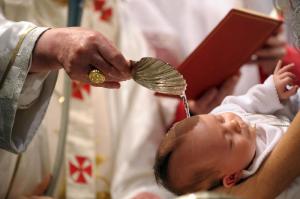
At St. Margaret’s we are in the middle of two big weeks.  This past Sunday we baptized twin girls and this coming Sunday we are baptizing another baby girl.  It is fairly rare for our parish to have back-to-back baptisms.  For the Altar Guild, that has meant that the same paraments can stay on the altar, the Pascal Candle can stay in the sanctuary, and flowers will be equally festive.  For the liturgical leaders it means that the occasionally used service is much more familiar as we head into this weekend – we should not need as much preparation and should be primed for who is holding what and when (it turns out there is a lot of choreography when it comes to liturgy!).  And for the parish, the liturgy will be very familiar and they will be ready for their big line, “We will!” when it is their turn to affirm that they will do all in their power to support these persons in their life in Christ.

But just because this coming Sunday feels familiar or even repetitive, nothing about it is rote.  That is the thing about baptisms:  although everything surrounding the day is the same, the experience is totally unique.  In the Episcopal Church, we only baptize once.  A baptism is a once-in-a-lifetime experience, something that is tremendously significant and special.  Nothing can invalidate our baptism.  Once we are welcomed into the household of God, nothing the person does can take away that status.  Baptism is a big deal.

I have often heard it said that you should never miss a funeral.  A funeral only happens once, and is something you can never recreate.  Though many of us fear what to say or do or how to approach the family, just being there becomes a blessing to the bereaved and to you.  It is a practice many have come to value:  always go to the funeral.  In fact, I began to embrace that mantra fully after seeing this story.

I think the same can be said of a baptism.  Though the liturgy is always the same, the liturgy says and does something very important.  It is not about the pretty dresses or handsome outfits.  It is about a sacred thing that happens.  It is about committing to a way of life – declaring the importance of faith in one’s life and agreeing to live in a certain way.  It is about renewing our own commitment to our baptismal covenant – something that, if done regularly, could probably help us change the world.  And it is about standing tall as a community, and taking ownership for the ways in which we form one another.  When we jubilantly say, “We will!”, our commitment is to being a community that lives life in a radically different way – in seeking Jesus, in serving Jesus, and in sharing Jesus.  When we stand at the font as a community we are claiming a radical identity that changes everything in our lives.  Something bold, invigorating, and life-giving happens at baptism.  You may think that if you have seen one baptism, you have seen them all.  On the contrary, I suggest that each one has a unique way of transforming us in Christ.  For the health of ourselves, the community, and the newly baptized, we need to be at the baptism as much as the family wants us to be there.  Always go to the baptism.  It will change your life.

← Older posts
Newer posts →

Recent Posts

  • On Change and Bread…
  • Sermon – Exodus 14.19-31, P19, YA, September 13, 2026
  • On Realizing Dreams…
  • On Seeing the Kingdom…
  • Sermon – Exodus 3.1-15, P17, YA, August 30, 2026

Archives

  • September 2026
  • August 2026
  • July 2026
  • June 2026
  • May 2026
  • April 2026
  • February 2026
  • January 2026
  • December 2025
  • November 2025
  • October 2025
  • September 2025
  • August 2025
  • July 2025
  • June 2025
  • March 2025
  • February 2025
  • December 2024
  • November 2024
  • October 2024
  • September 2024
  • August 2024
  • July 2024
  • June 2024
  • May 2024
  • March 2024
  • February 2024
  • January 2024
  • December 2023
  • November 2023
  • October 2023
  • September 2023
  • August 2023
  • July 2023
  • June 2023
  • May 2023
  • March 2023
  • February 2023
  • January 2023
  • December 2022
  • November 2022
  • October 2022
  • June 2022
  • May 2022
  • January 2022
  • December 2021
  • November 2021
  • October 2021
  • September 2021
  • August 2021
  • June 2021
  • May 2021
  • April 2021
  • March 2021
  • February 2021
  • January 2021
  • December 2020
  • November 2020
  • October 2020
  • September 2020
  • August 2020
  • July 2020
  • June 2020
  • May 2020
  • April 2020
  • March 2020
  • February 2020
  • January 2020
  • December 2019
  • November 2019
  • October 2019
  • September 2019
  • August 2019
  • July 2019
  • June 2019
  • May 2019
  • April 2019
  • March 2019
  • February 2019
  • January 2019
  • December 2018
  • November 2018
  • October 2018
  • September 2018
  • August 2018
  • July 2018
  • June 2018
  • May 2018
  • April 2018
  • March 2018
  • February 2018
  • January 2018
  • December 2017
  • November 2017
  • October 2017
  • September 2017
  • August 2017
  • July 2017
  • June 2017
  • May 2017
  • April 2017
  • March 2017
  • February 2017
  • January 2017
  • December 2016
  • November 2016
  • October 2016
  • September 2016
  • August 2016
  • July 2016
  • June 2016
  • May 2016
  • April 2016
  • March 2016
  • February 2016
  • January 2016
  • December 2015
  • November 2015
  • October 2015
  • September 2015
  • August 2015
  • July 2015
  • June 2015
  • May 2015
  • April 2015
  • March 2015
  • February 2015
  • January 2015
  • December 2014
  • November 2014
  • October 2014
  • September 2014
  • August 2014
  • July 2014
  • June 2014
  • April 2014
  • March 2014
  • February 2014
  • January 2014
  • December 2013
  • November 2013
  • October 2013
  • September 2013
  • August 2013
  • July 2013
  • June 2013
  • May 2013
  • April 2013
  • March 2013
  • February 2013
  • January 2013
  • December 2012
  • November 2012
  • October 2012
  • September 2012

Categories

  • reflection
  • Sermons
  • Uncategorized

Meta

  • Create account
  • Log in
  • Entries feed
  • Comments feed
  • WordPress.com

Blog at WordPress.com.

  • Subscribe Subscribed
    Seeking and Serving
    Join 397 other subscribers

    Have a WordPress.com account? Log in now.

  • Seeking and Serving
    View site in Reader
    Manage subscriptionsSign upLog in
    Report this content
    Collapse this bar
Loading Comments...