• About

Seeking and Serving

~ seek and serve Christ in all persons

Seeking and Serving

Tag Archives: passion

On Discernment and Community…

03 Wednesday Sep 2025

Posted by jandrewsweckerly in reflection

≈ Leave a comment

Tags

college, conversation, discernment, gifts, God, Job, joy, passion, satisfaction, vocation

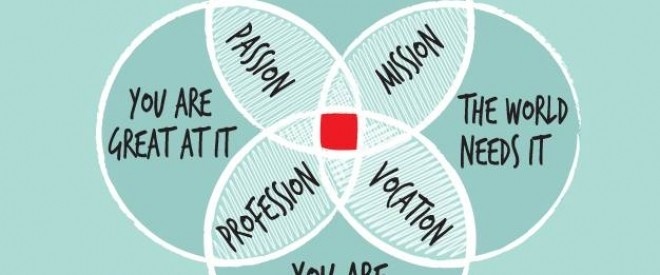
Photo credit: https://www.linkedin.com/pulse/what-vocation-well-its-job-career-willie-chain/

Our older daughter is starting up the college tour in earnest this school year, and with that search have come conversations about college that were not a part of the conversations I had at a similar age.  Given the astronomical increases in the cost of tuition relative to income, our conversations with our children now include considerations like return on investment, debt management, and employability – topics I never addressed with my parents because going to college, let alone a prestigious college, meant things would fall into place for you – even if you chose a non-traditional path.

I have found this conversation bleeding into other areas of my life too.  The owner of the body shop I recently used and I got into a conversation about how we are guiding our children vocationally.  He shared how there is even a debate in his own vocation about the value of expensive, time-consuming vo-tech schools versus real world experience.  Even NASA has been conducting research about its own young employees who go straight into vocational training versus a traditional four-year college experience – most making six figures in their early twenties.

Of course, all this analysis came to a screeching halt the moment my younger daughter joined me in picking up my car at the body shop.  She was admiring some paint samples when the owner explained to her that he had invented some of the colors himself – some of which have been used by international businesses.  She then asked him a question I had not thought to ask, “What’s the best car you ever worked on?”  It was a simple question, but what her question taught me was something much more basic about vocational discernment: What brings you joy and satisfaction?

That basic question has got me thinking this week about how we value each other.  In his letter to the Ephesians, Paul says that God granted that some are apostles, prophets, evangelists, pastors, and teachers (4.11).  Not only do we need to be helping our children discern what gifts God is nurturing in them, we need to do the good work of celebrating each other’s gifts.  I remember have a case of nerves in seminary about preaching a senior sermon.  Upon hearing I was nervous, a professor quoted to me from the song There is a balm in Gilead.  He recited, “Well, if you cannot preach like Peter, if you cannot pray like Paul, you can tell the love of Jesus, and say ‘He died for all.’”   

This week, I invite you to start looking at others with a different lens – searching for the unique gifts you see in others and celebrating those gifts with them.  Far too often we see the transactional nature of each other – the jobs we do or the roles we play and how those jobs and roles serve a purpose.  But I am much more interested in the vocations that are bringing others joy and satisfaction – a joy and satisfaction that can reinvigorate my own passion for the gifts God has given me.  I can’t wait to hear about the conversations you have this week!

Sermon – Mark 11.1-11, Mark 14.1-15.47, PS, YB, March 24, 2024

27 Wednesday Mar 2024

Posted by jandrewsweckerly in Sermons

≈ Leave a comment

Tags

God, Great Litany, Hosanna, Jesus, messiness, Palm Sunday, palms, passion, right, save, Sermon, sins

I don’t know if you remember, but back on the first Sunday of Lent about six weeks ago, we said a very long series of prayers at the beginning of the service called the Great Litany – or as my younger daughter calls them, “That time where you talked [sang] a really long time.”  Though I heard a few groans that morning when folks realized we would be praying for a long time, what I love about that Great Litany is that the litany somehow manages to encapsulate every single flaw in the human condition and the way those flaws pull us out of right relationship with God:  pride, hypocrisy, hatred, and envy; hardness of heart and sinful affections; oppression, violence, and war; and maybe the worst – dying suddenly and unprepared.

The list goes on and on, but what really gets me is how everything we started praying about in the beginning of Lent comes to the fore today in our liturgies.  I have always thought what the people do in the palm procession is where the people get things right and everything after in the Passion Narrative is where the people mess up.  But even in the Palm Narrative we mess up:  from pride in what feels like the Messiah coming to take down the powers that be, to a murderous desire to put down the oppressors that they assume Jesus will do when they shout, “Hosanna,” or “Save us,” as “Hosanna” is translated.[i]  And then we hear how the rest goes:  betrayal by loyal followers, to disciples too sleepy to keep vigil and pray, to abandoning Jesus, to mockery and violence, to conflict avoidance, hatred, and definitely a lot of hardness of heart. 

At the end of the Palm Narrative today, we are told that after the procession, Jesus goes into the temple in Jerusalem, and Jesus looks around at everything.  This may seem like a throwaway comment or a passing glance, but scholar Matt Skinner argues this is not a casual looking around at Jerusalem.  He says, “There is power in that glare.”  Jesus is setting his eyes and his heart to the work of provoking that he is about to do and he knows will lead to his death.[ii]  He is preparing for the holy, sacred work of resistance that will lead to both his demise, and ultimately to our redemption – our actual saving.  Maybe not the kind of saving we want, but the saving we need.

And that’s what brings me back to that long Great Litany from six weeks ago.  We did indeed confess a whole bunch of sins.  But you know what we also did?  We asked God to right things.  We prayed for grace to hear and receive God’s word, that God might empower us to go out in the world and share the Good News, that we might – in our several callings – serve the common good, that God might heal the brokenness in all of us and in the world.  This journey of Holy Week is not just about the despair and awfulness of our condition and the condition of the world.  This week, shockingly enough, is also about hope.  Frederick Buechner said of this day, “Despair and hope.  They travel the road to Jerusalem together, as together they travel every road we take — despair at what in our madness we are bringing down on our own heads and hope in him who travels the road with us and for us and who is the only one of us all who is not mad.”[iii] 

That is the messiness of us and of this most sacred week we now enter.  As scholar Debie Thomas writes, “I am known and held by a God who is too big for thin, one-dimensional truths — even my own, most cherished, one-dimensional truths.  I am held by a God who sticks with me even when I won’t stick with God.  A God who accepts my worship even when it is mingy, half-baked, and selfish.  A God who knows all the reasons my heart cries, ‘Save now!’ and carries those broken, strangled cries to the cross on my behalf. 

“Welcome to Holy Week.  Here we are, and here is our God.  Here are our hosannas, broken and earnest, hopeful and hungry.  Here is all that is unbearable, and all that promises to end in light brighter than we can imagine.  Blessed is the One who comes to die so that we will live.”[iv]  That journey starts today.  Your invitation is to join us everyday until we can shout our Easter praises.  Amen.       


[i]  John R. Donahue and Daniel J. Harrington, The Gospel of Mark:  Sacra Pagina (Collegeville, MN:  Liturgical Press, 2002), 322.

[ii]  Matt Skinner, as discussed in the podcast, “Sermon Brainwave:  #954: Palm/Passion Sunday – Mar. 24, 2024,” March 17, 2024, as found at https://www.workingpreacher.org/podcasts/954-palm-passion-sunday-mar-24-2024 on March 20, 2024.

[iii] As quoted by Debie Thomas, “Save Us, We Pray,” March 21, 2021, as found at https://www.journeywithjesus.net/essays/2958-save-us-we-pray on March 22, 2024.

[iv] Thomas.

On Festivals, Fitness, and Fun…

16 Wednesday Oct 2019

Posted by jandrewsweckerly in Uncategorized

≈ Leave a comment

Tags

church, community, faith, festival, fun, God, good, grace, joy, love, muscle memory, passion, spiritual

44247089_2050605094995740_7020791298546204672_n

Photo credit:  Charlie Bauer; permission required for reuse.

This week is one of my favorite weeks of the year.  This is the time when our church community transforms our property for our Annual Fall Festival.  Leading up to this week, there is a lot of organizing, delegating, preparing, and a fair amount of stress.  But this week, everything snaps into place.  The setup crew knows exactly what to breakdown and where it goes.  The Attic Treasures crew knows just what layout works and the room is magically converted to look like the same inviting space.  Later, our parking crew will come out and lay out where cars can park, tents will be erected, and all kinds of goods will be placed.  Having done the festival for nineteen years, we know the drill and seem to operate from muscle memory.

I love this week for several reasons.  One, I love seeing the community come together – both parishioners and neighbors alike, to make for a fun week of memories, laughter, and new experiences.  I love seeing people’s passion for helping others unfold in a way that is loving, affirming, and fun.  And I also love seeing people step up, taking on things that are a burden on their time, but doing so for the greater good.  The week truly is inspiring, and I love inviting the larger community into our joy.

This week – or perhaps next week after the dust has settled – I invite you to consider what other parts of your faith life might need to be flexed enough so that you have muscle memory around them as well.  Perhaps it is just making Sunday worship a part of your weekly experience with God – letting the routine of liturgy create a common pattern for you, while also seeing how the routine of liturgy creates surprising moments of grace and joy.  Maybe your muscle memory can form around inviting people to church.  I find the more I talk about a thing I am passionate about, the more talking about it becomes easy.  Or maybe your muscle memory will be around creating practices that feed your soul – our monthly book group, our yearly Women’s Retreat, a weekly Bible Study or Choir rehearsal.  If any of these practices create even a portion of the joy we experience during Fall Festival week, I expect you are in for a real treat.  I cannot wait to hear about it!


Flip-Flops and Fresh Looks…

29 Wednesday May 2019

Posted by jandrewsweckerly in Uncategorized

≈ Leave a comment

Tags

adventure, belonging, casual, church, communion, God, Jesus, mass, meaning, passion, purpose, routine, scripture, Sunday, table, worship

61146359_2375297735859806_6242277340265578496_n

Photo credit:  https://www.facebook.com/events/1137823373087599/

This Sunday, our church is trying something new called “Flip-Flop Mass.”  The concept began with the idea that we wanted to move our “Mass on the Grass” indoors because, let’s face it, even in early June, Virginia is hot and humid.  We also had some rearranging with musical leadership, and we wanted to keep the casual vibe of our outdoor service.  But as we shifted to the idea of an indoor casual mass, the ideas started flowing.  What if we totally rearranged the space?  What if we played with the liturgy and how we interact with Scripture?  What if we not only went casual, but we also went ancient?

What has resulted, after a ton of logistical plans, gathering different supplies, and coordinating with servers, is a worship service like that of the earliest church – an intimate meal around the table reminiscent of the meal between Jesus and his disciples.  I suspect the service will have its fumbles and things we did not anticipate, but I am also hopeful that the service will shift our routine just enough that we thoughtfully reflect on what it is we do on Sundays and what it all means.

Whatever style of church you prefer (and believe me, Hickory Neck manages to artfully offer lots of different styles), I encourage you to join us this Sunday for the adventure.  I suspect whatever you are used to or you prefer, this Sunday will give you the opportunity to engage just differently enough that you experience the elements of worship more powerfully:  the gathering of a community of strangers and friends, seeking a sense of belonging and meaning; a space to wrestle with Scripture, especially when Scripture is sometimes difficult to relate to modern-day life; a fresh way to experience God’s presence, using all of your senses; a place where you can find a renewed sense of purpose and passion for serving the world.  I don’t know about you, but I am thrilled to be invited to experience church with fresh eyes this weekend.

So, grab your flip-flops, grab a dish to share for lunch, grab a friend (or a stranger!), and come to church.  We’ll save you a seat at the table!

Sermon – John 18.1-19.42, GF, YC, April 19, 2019

01 Wednesday May 2019

Posted by jandrewsweckerly in Sermons, Uncategorized

≈ Leave a comment

Tags

broken, community, cross, darkness, disciple, find, God, Good Friday, humanity, identity, incomplete, Jesus, lost, passion, prayer, Sermon, sin

When I was in college, I would occasionally find myself sitting in the back of the enormous Chapel.  Sometimes I do not even remember actively choosing to go inside the Chapel.  Somehow my body seemed to know I needed something before my brain did.  The cavernous, quiet building rarely had large crowds.  Or maybe my late-night study sessions meant I was there after everyone had left.  Regardless, I would find myself on a hard, wooden pew, just sitting there.  I am not sure I was there praying necessarily.  At least not in the traditional sense.  More often I was sitting there in desperation.  Sometimes I was at the end of a semester, completely overwhelmed and feeling incapable.  Other times, I was feeling a deep sense of loneliness, despite being surround by tons of friends and classmates.  Other times, I simply felt lost, not sure about my purpose or what in the world God was doing with my life – if God was even there at all.  But mostly, when I sat on those pews, surrounded by magnificent beauty and architecture, I felt a profound hole in my heart.  That Chapel was sometimes the only place I could go and be honest about my profoundly weak humanity.

I think worshiping on Good Friday is a little bit like that.  Unlike other times of worship, we do not usually come to this service looking for praise and joyful singing.  Instead, this day is a day where we willingly come to acknowledge and honor those parts of our lives where we feel a profound sense of brokenness, sinfulness, and incompleteness.  We read Scripture that speaks to our deepest pain and suffering.  We say prayers that address the fullness of need for ourselves and the world.  And we venerate the cross – staring at the object that brings into sharp focus our weakness and humanity, and our need for something bigger than ourselves.

On a day like today, I am grateful for John’s Passion Narrative.  All the Passion Narratives from the gospels tell a similar story – the last moments of Jesus’ time with the disciples, his trial and crucifixion, and his death.  And despite the fact that the story in all four gospels is heart-wrenching, something about John’s version digs deeper – shines a light into those dark places we prefer to keep hidden from the light of day.  But in John’s gospel, there is nowhere to hide.  We experience a deep sense of being bereft of our own sinfulness as the sins of those in our narrative mirror our own.  These are not just the common, everyday sins of life.  The sins of the characters today are the sins of denying our very own identity.

Often when we talk about Judas, we think of his failure as a thing he did to Jesus.  But Judas’ sin goes deeper than betrayal of Jesus.  Judas denies his very discipleship.  After all those years of following Jesus, trusting the salvific work of the Christ, believing and proclaiming Jesus’ Messiahship, Judas denies his discipleship by no longer following and instead trying to control the work of God.  You see, Judas follows Jesus because he believes Jesus is starting a political revolution – is becoming the conquering Messiah.  Jesus is not living into that identity as much as Judas wants, so Judas gives Jesus a push.[i]  But when Judas brings all of those soldiers to the intimate place where he discovered his identity as a disciple, we see how deep Judas’ sinfulness goes.  The garden had been a home for the disciples – where they had gathered regularly, in intimate community.  To bring those soldiers there – to the place that defined his own discipleship – is the marker not of an indiscretion, but of a complete denial of who he is.  In John’s gospel, the last appearance of Judas is not of remorse, or suicide, or judgment of Judas.  John simply says, Judas stands “with them.”  With them is not just a physical location; with them is a theological one.  By seeking to control Jesus, by walking away from relationship with Christ, and by standing against Jesus in the very place of intimate identity-making, Judas takes a new identity.  He denies his discipleship, and instead stands with them.[ii]  And as much as we might want to judge Judas, we all know that there have been times when we were fed up with God, and decided to take matters into our own hands.  The more we think we know better, the further we step away from following Christ, denying our own identity in Christ.  The more we seek control, the further we step away from our intimate relationship with Jesus, and instead stand with someone or something else.

Peter denies his identity in a slightly different way.  When we read John’s gospel, we can easily conflate John’s version with the versions from Matthew, Mark, and Luke.  In those gospels, Peter is asked whether he knows Jesus.  His response is he does not know the man.  But in John’s gospel, the question to Peter is different.  He is not asked if he knows Jesus, but whether he is Jesus’ disciple.  To say, “I am not,” is not just a denial of knowledge.  Peter is denying his very identity.  As Karoline Lewis asserts, “In the Gospel of John…Peter’s denial is not of Jesus but of his own discipleship.  …To deny discipleship is to deny one’s relationship with Jesus and the intimacy that makes Jesus and his followers virtually inseparable.  Peter does not deny Jesus, but denies being a disciple.”[iii]  Because we live in a time when we are rarely asked about our identity as people of God, we think of ourselves as immune to Peter’s temptation or somehow incapable of such identity denial.  And in some ways, we may be right:  our denial of identity is not usually as straightforward as Peter’s.  But that doesn’t mean we do not regularly reject our identity.  In small, everyday ways, we find ourselves making accommodations that fracture our intimacy with Christ – decisions that we can rationalize at the time, but when we look back realize have become of slow pattern of denying whose we really are.  And before long, we get so far from discipleship that no one even knows we are Christ’s disciple.

But the denials of identity are not just limited to Christ’s disciples.  Even the religious authorities lose themselves in their attempt to squash the Jesus movement.  The leaders of the faith community are so convinced that Jesus is wrong, they negotiate with a secular leader to get what they want.  And when Pilate, who knows what they want is wrong, pushes them to recognize they are wrong, the religious authorities say something that seems innocuous enough.  But saying, “We have no king but the emperor,” is the ultimate denial of their identity as a people of God.  The people of faith, who were once freed from a king over them, who journeyed forty years, claiming God as their king, who have an everlasting covenant with God, deny the covenant to get what they want.  By claiming the emperor, they deny their very identity.  The people of God, who are about to prepare the Passover feast – the feast that celebrates their release from Pharaoh, “embrace a latter-day Pharaoh whose overthrow the Passover is intended to celebrate.”[iv]  Although we like to demonize the chief priests, we too have pledged loyalties to things other than God.  Perhaps not as dramatically as the religious authorities, but we have all known those moments when a declaration slipped out of our mouths that we later come to realize was denial of everything we claim to be.

On this most holy of days, we can journey so far into the darkness of humanity, of the ways we deny our very own identity, that we can walk out of this beautiful historic chapel feeling lost – having received no encouragement for our bereft hearts.  But I do not think the point of Good Friday is to walk with us into the darkness without giving us a sliver of light to hold onto in these next hours.  Though our reading ends with the finality of Jesus in a tomb, where we are better left is at the foot of the cross.  At the foot of the cross is where we find identity again.  At the foot of the cross, we find a new community being formed.  Jesus gives his mother to the beloved disciple; and to the beloved disciple, he gives his mother.  In other words, Jesus creates a community of mutual care – a new family, a place of forming identity in Christ, even as Christ is departing.[v]  The very reason we gather in community on Good Friday is because we need this group gathered here – this group gathered at the foot of the cross – to bring us back from the denials of our identity, and help us reclaim whose we are.  Today is certainly a day for claiming how deep our own betrayal of God is, but today is also a day of claiming a community who can help us walk back.

I think that was what I was doing all those years ago in college as I sat on those cold, hard pews of the Chapel.  I knew I was lost, that my angst was not just the anxiety of tests and deadlines, but was a much deeper angst about identity.  And although that Chapel was mostly empty, that Chapel reminded me of all the times I had gathered in sacred spaces with the community of the faithful.  Even when the Chapel was empty, the Chapel was somehow a reminder of the mothers and brothers who gathered with me at the foot of the cross.  The only difference today is you do not have to imagine a community gathered with you at the cross.  We are right here with you.  We are struggling right along with you on this journey called discipleship.  Together, starting at the foot of the cross, we will find our way.  Amen.

[i] Jim Green Somerville, “Pastoral Perspective,” Feasting on the Word, Yr. C, vol. 2 (Louisville:  Westminster John Knox Press, 2009),300, 302.

[ii] Karoline M. Lewis, John (Minneapolis:  Fortress Press, 2014), 218-219.

[iii] Lewis, 222.

[iv] C. Clifton Black, “Theological Perspective,” Feasting on the Word, Yr. C, vol. 2 (Louisville:  Westminster John Knox Press, 2009),303.

[v][v] Lewis, 229.

On Gifts and Giving…

23 Wednesday Jan 2019

Posted by jandrewsweckerly in Uncategorized

≈ Leave a comment

Tags

challenge, Christ, church, encounter, gifts, God, Holy Spirit, listen, ministry, new, passion, talent, time, volunteer

etno-garden-plitvice-lakes-team-building-ruke

Photo credit:  https://www.plitvice-etnogarden.com/team-building/

As every year of ordained ministry passes, I become more grateful for my work before ordination.  For about six years, I was the Director of Volunteer Services for a Habitat for Humanity affiliate in Delaware.  Coordinating over 2000 volunteers a year, a major part of my job was helping people find just the right volunteer position based on their gifts.  Most volunteers that came my way expected that volunteering at Habitat meant wielding a hammer.  And sometimes that was true.  But sometimes you were hanging drywall, or painting, or putting down flooring.  Sometimes you weren’t doing construction work at all.  Volunteers were needed in the office, partnering with families as they worked on their sweat equity hours and financial training classes, helping raise funds, and serving on the Board.  Sometimes the gifts of a person were a perfect match for what we needed, and sometimes volunteers wanted to try something totally out of their comfort zone.  Figuring that out took time, listening, and a little bit of experimenting.

The same is true in churches.  We all come to church with many gifts, and sometimes those gifts are just what is needed:  the elementary music teacher who takes on the pageant, the architect who takes on property management, the financial planner who serves on the endowment board.  But sometimes, church is where we want to find and use other gifts:  the engineer who is also great relating with kids, the military officer who is also great with technology, or the construction worker who is a fantastic listener and discernment partner.  And sometimes, the things we think we would never be able to do we discover we can do through service at church.

This week at Hickory Neck, we are spending some time discerning our gifts and how we might use them to build up the church.  For some, this is a time to renew our passion for a current ministry we serve, and rededicate ourselves to making that ministry more powerful.  For others, we need a break from serving in one capacity, and want to try something new.  For others, we have yet to commit to serving the church and are nervous to step forward.  What the church reminds us during this time of connection is each of us has gifts, and the church is better when we gift those talents and our time to the church.  The church knows that when we give of that time and talent, we get so much more back.  We learn, we grow, we make new friends, and we come closer to God.  Whether it’s picking up sticks on a cleanup day, making meals for the homebound or new parents, or editing a newsletter, in those activities we have holy encounters with Christ.

I cannot wait to hear how you will give of yourself this year at Hickory Neck.  I cannot wait to hear how you are challenging yourself, and listening to the whisper of the Holy Spirit.  I cannot wait to hear in the coming year the ways in which you bump into God, even in the most unlikely places.  When each of us tends to our gifts and our journey at Hickory Neck, the community as a whole benefits.  We all get a bit closer to God when we simply show up and use our gifts.  I look forward to hearing about your journey in time and talent this year!

On Responding to the Gospel…

03 Wednesday Oct 2018

Posted by jandrewsweckerly in Uncategorized

≈ Leave a comment

Tags

community, financial, giving, God, gospel, Jesus, ministry, passion, respond, Sermon, stewardship, talent, time, treasure

4rm9v5wz-1371530696

Photo credit:  http://theconversation.com/giving-the-gift-of-giving-why-children-should-be-taught-philanthropy-13991

This past Sunday we had a visitor at church from out of town.  We were kicking of stewardship season, a time when we talk about our financial giving to the church in preparation for the financial pledges we make for the coming year.  The visitor was an Episcopalian, and no stranger to stewardship in the church.  As he departed he said, “That was a good sermon, by the way…you know, for a stewardship sermon.”

I laughed heartily, and appreciated his honesty.  I suspect he has heard many a stewardship sermon.  As I thought about his feedback, I realized how separate “stewardship season” can feel from other times – how you can pinpoint a stewardship sermon from a regular sermon.  But the more I thought about it, the more I realized stewardship sermons should feel more like the norm than the exception of October every year.  Everything we do in church is tied to our financial giving.  Our financial giving is simply the “so what?” of every experience we have in church.

This month we are in the midst of stewardship parties, having engaging conversations about our experiences and dreams for Hickory Neck.  As a community, part of what we are hoping to help people realize is all that happens at Hickory Neck is tied to how we support our ministries with our treasure.  The dreams we have for the work God has given us to do need not only our time and talent – they need our treasure; and not just any treasure, but a treasure that says, “This community and this work is important to me – so important that I will put my resources back into our work to the glory of God.”

This Sunday, we have a fantastic guest preacher coming.  As I was preparing her for the services, I forewarned her that we would be in stewardship season, and she may want to consider that in her preparation.  She quickly responded, “Oh that’s okay.  Every sermon I preach is a stewardship sermon.  You can’t hear the Gospel without a response!”  I hope our guest preacher, our parties, our parishioner reflections, and the materials you have received are helping you consider how every week Jesus is asking for a response from you.  Our work this month is connecting our passion for this place with our financial support of this place.  I couldn’t be more excited to join you in that response!

Getting Real and Giving Generously…

26 Wednesday Oct 2016

Posted by jandrewsweckerly in Uncategorized

≈ Leave a comment

Tags

budget, church, giving, journey, Living Generously, ministry, money, motivation, passion, pledge, real, resources

budget

Photo credit:  www.associationserviceswa.com/2016/08/value-of-a-well-prepared-budget/

The year after I graduated from college, I volunteered fulltime through the AmeriCorps program at a Food Bank in North Carolina.  In addition to working in the warehouse and monitoring agencies, my fellow volunteers and I also had monthly classes on a variety of topics.  My favorite was a budgeting class.  Though most of us were scraping by our living stipend, we still had income and expenses like everyone else.   Our homework was to track our expenses and income for a month and then come back to class to talk about what we noticed.  After that month, I realized that I had picked up a terrible habit.  I had worked very hard to save money during that year.  As a reward for saving money, every week I would treat myself to something small.  But when I did the math, I realized the amount I had saved was much less than the amount with which I was treating myself.  The realization was shocking and wildly disappointing.

On Sunday, we are submitting our pledge commitments for the coming year at Hickory Neck.  Part of our Living Generously campaign has been talking about the powerful ministries at Hickory Neck that mean so much to us.  We have read parishioner reflections, biblical reflections from national church leaders, and a great narrative budget that helps us see how our finances function.  My husband and I are inspired and expectant about the future of Hickory Neck, and we are overjoyed to join the pledging effort to support our ministry.

Inspiration has not been a problem.  In fact, my husband and I talked about how we want to increase our pledge this year.  But as we looked at the numbers, we realized in order to align our budget with our passion, we were going to have to adjust some things.  For us, that means at least a few less meals out each month.  It also may mean being a bit more discerning about wants versus needs.  It will certainly mean keeping an eye on making sure that we are able to keep our pledge next year by saving the amount needed for our increase and not “treating” ourselves disproportionally to our increased pledge.

As the Vestry talked about Stewardship, the Vestry all realized our church giving was motivated by different things.  For some of us, understanding the mission of the church and how our pledge would be used was critical.  For others of us, we needed our giving to be rooted in a theological or spiritual understanding of resources and our stewardship of those resources.  While for others of us, our giving was more motivated by looking around us, taking stock of all the things we like about church, and calculating how much those things cost.  My hope is that our campaign has addressed all of those approaches and that our journey through stewardship season has inspired and rooted you.  I look forward to hearing your story of our journey together and kicking off another great year!tens2016logo7x12webonly

So Let Your Light Shine…

03 Wednesday Aug 2016

Posted by jandrewsweckerly in Uncategorized

≈ Leave a comment

Tags

Christ, church, glory, God, inspire, joy, light, passion, shine, transformation

Let-Your-Light-Shine-Banner

Photo credit:  embracingbeauty.com/2013/04/20/letting-our-light-shine-by-donating-w-champions-for-kids-mobilizingmillions-cbias/

These last few weeks, I have been visiting outreach ministries that our parish supports.  The ministries have varied widely – from a free health clinic, to a ministry aimed at keeping seniors independent as long as possible, to a multi-service agency that works in a particularly impoverished area of our community.  Visiting the agencies has given me a great deal of perspective on the larger Williamsburg community – the various ways that poverty can impact the lives of our neighbors.  Whether the challenge is housing, health care, food, clothing, transportation, or education, the needs vary wide.  Luckily, there are people who are passionate about each need, and are working hard to make life a little better for our neighbors.

Equally helpful to learning the statistics and needs of each agency has been watching the passion of our parishioners who are involved in the ministries.  At each agency, a parishioner has shared with me why they volunteer, what inspires them, and how important the ministry is to our community.  With each parishioner, I see a certain tenderness toward the clients and a passion about the issue.   The parishioner’s entire demeanor changes when they talk about the ministry – making the case even more compelling than the executive director of the agency can make it.

As I have watched the physical transformation of our parishioners as they tell me about their passion for outreach ministries, I realized that is the same transformation I hope to see when they tell their friends about Hickory Neck.  You see, just like outreach ministries give us a sense of purpose outside of ourselves, church should similarly give us a sense of purpose outside of ourselves.  At church, we find ourselves inspired by worshiping our God.  At church, we find ourselves renewed as we learn and grow in our faith journey.  At church, we find ourselves made whole as we laugh and rejoice together.  At church, we are changed, we change others, and we change our community beyond the church walls.

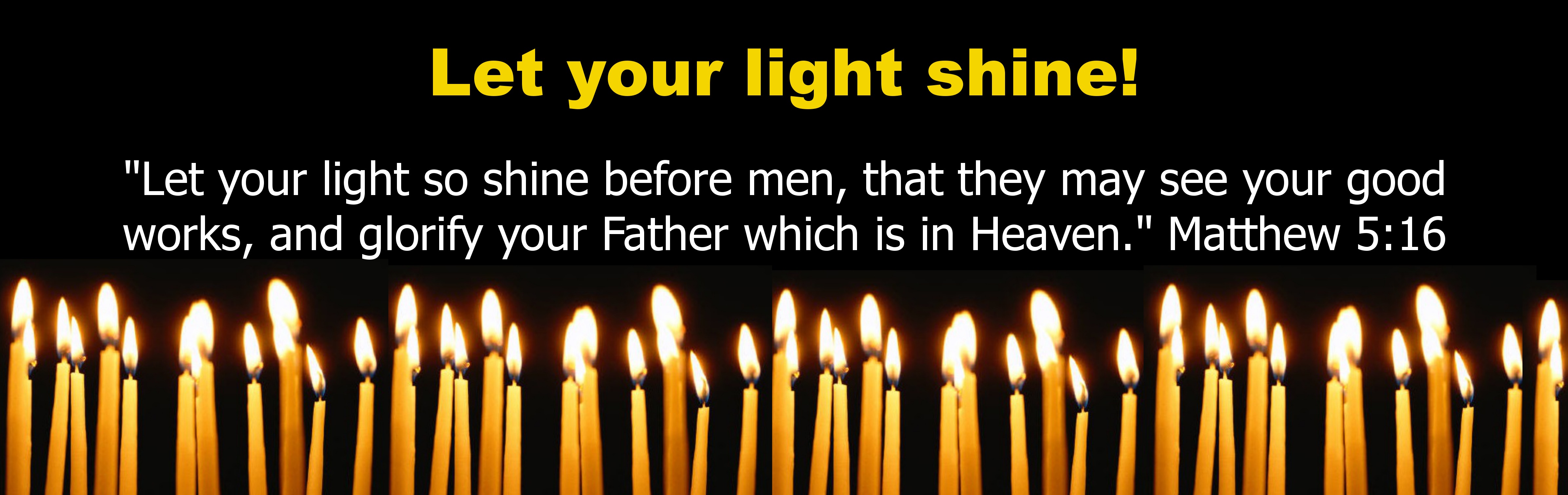
I saw that same transformation as I interviewed with the Search Committee and Vestry over six months ago.  I saw that transformation in our parishioners this summer when I asked each of you what brings you joy about Hickory Neck.  And today, I imagine each of you might feel that inner transformation, that deep sense of joy, if you were to think about why you love Hickory Neck.  My invitation for all of us in the coming weeks is to take ourselves to that deep, inner sense of meaning, purpose, and joy, and to start inviting your friends and neighbors into that same experience.  If you speak from the heart, letting your light and passion shine through you, I promise you will inspire others more than you know.  Just like I saw the bodily transformation when you talked about your passions for outreach, your neighbors will be equally drawn in by your passion for church.  As we look to kick off the program year, I look forward to hearing how our newcomers were inspired by the Christ light shining in you, and wanted to find out how to capture that same light.

Sermon – John 18-1-19.42, GF, YB, April 3, 2015

15 Wednesday Apr 2015

Posted by jandrewsweckerly in Uncategorized

≈ Leave a comment

Tags

denial, failings, Good Friday, Jesus, John, Mark, passion, Peter, Sermon, shame, steady, strong

This week we have heard two accounts of Jesus’ passion.  What I am drawn to in both accounts is Peter’s denial.  Both the gospel of Mark and the gospel of John detail Peter’s denial, but the denial of Peter is a bit different in Mark than in John.  On Palm Sunday, we heard Mark’s version.  In Mark, when the servant girl and others ask Peter if he is with Jesus, Peter three times denies Jesus, saying, “I do not know the Man.”  The denial is bitter to us, since we know that Peter not only knew him, but seemingly loved him intimately.  To proclaim that he did not know Jesus is akin to erasing Jesus’ presence in his life.  Peter’s denial of that intimate knowledge seems like the ultimate betrayal.

But then we read John’s passion narrative today.  Although Peter denies Jesus three times again, this time the denial is a little different.  This time, Peter is not asked whether he knows Jesus, but whether he is a disciple of Jesus.  To this question, Peter responds, “I am not.”  The denial in John’s gospel sounds less personal and less offensive.  Whereas in Mark, Peter’s denial feels more like a lie – to state that Peter did not know Jesus when in fact he did.  In John’s gospel, Peter’s denial feels more like a smoothing of the denial.  He does not deny that he knows Jesus, only that he is not a disciple of Jesus.  The trouble with this kind of denial – the denial of Peter’s discipleship –  is that in some ways this denial is much worse.  By denying his discipleship, Peter denies his relationship with Jesus – all that they have been through, all that he has professed, all that he has learned and grown to love.  Peter is denying how Jesus gave him his name, Peter.  He is denying the times that he professed his faith in Jesus – in fact the time that he said he would lay down his life for Jesus.  He is denying that intimate moment when Jesus washed his feet, and he longed for more – that his whole body be washed.  He is even denying how he passionately cut off a slave’s ear just to protect Jesus.  In John’s gospel, Peter not only denies Jesus, he denies an entire relationship.  He denies his discipleship.[i]

As I was thinking about Peter’s denial this week, I was reminded of popular movie.  Though the movie is a pretty cheesy romantic comedy, the movie Thirteen going on Thirty reminded me of Peter.  In the film, the main character, Jenna, is frustrated that her life has not turned out how she would like at age thirteen.  She is not popular, she is not a part of the cool crowd, and her best friend is a rather chubby, unattractive, but sweet boy named Matt.  And so, in order to reach what she thinks will give her the most happiness, she ends her lifelong friendship with her best friend, Matt, remakes her life, and when she magically wakes up at the age of thirty, she has everything she wants – friends, a job in fashion, an athlete boyfriend, trips around the world – basically the glamorous, comfortable life she always wanted.  All she had to do was deny her relationship with her best friend – even when that denial involved mocking him in front of others to gain status.

What makes that movie so relatable is that we all remember how monumental life seemed as a teenager.  One slight, one suggestion that we did not quite fit in could make our self-worth plummet.  Unable to see beyond what felt like ultimate importance at that age, we all said and did things that we look back upon now and feel shame for doing.  And although most of us would like to think we grow out of that undiscerning teenage phase, the truth is that we continue to struggle with those impulses into adulthood.  When put on the spot, we can waiver between the right thing to do and the most advantageous thing to do.  We can struggle with what our conscious would have us do and what we know will make us the most comfortable or safe.  When we are really honest with ourselves, we can admit that we are creatures who seek comfort.  We regularly choose the path of least resistance so that we can avoid conflict, keep the peace, or just remain in a comfort zone.  The phrase, “don’t rock the boat,” is a phrase that we use when we are encouraging people to just keep things as smooth as possible.  In fact, the only time we want to rock the boat is to toss over the person who is causing us discomfort, so that our boat can get back to smooth sailing – despite the cost.  That impulse is in every one of us, and controlling that impulse is more difficult than most of us like to admit.

That is why reading John’s version of Peter’s denial is so hard today.  Though we have heard the story a hundred times, there is some part of us that always hopes the story will end differently this year.  When we hear Peter answer the question about whether he is Jesus’ disciple, our heart breaks again when he says quite simply, “I am not.”  We mourn Peter’s response, not only because Peter’s response is a denial of all the goodness of his relationship with Jesus, but also because Peter’s denial reminds us of the times that we have denied Christ in our own lives.  We recall today the times when we have downplayed our faith to make others more comfortable; the times when we have avoided caring for the poor when we know that is what Jesus would have us do; the times when we have wrested control of our lives from God because we think that we know better; or maybe the times when we have simply stepped away from faith, or God, or Church because we just could not offer that part of ourselves anymore.

The good news is that in the face of denial, Jesus is ever strong when others cannot be.  When Peter is questioned, his response is, “I am not.”  When Jesus is questioned, his response is, “I am.”  When the crowds say they are looking for Jesus of Nazareth, Jesus says, “I am he.”  When they seemed stunned into silence, and Jesus again asks who they are looking for, Jesus says, “I told you that I am he.”  When Peter is faced with the heat of confrontation, he crumbles with an “I am not.”  But Jesus calmly, strongly, steadfastly faces the heat with, “I am.”  Of course, Jesus’ response is not just a response of strength.  His response is a claiming of the divine name.  Jesus takes the same name that God gives to Moses when God says, “I am who I am.”[ii]  Jesus is faithful, strong, and bold because Jesus is the one through whom God is revealed.  Though Peter is not, Jesus is.

In the midst of our failings, in the midst of our shame for the ways in which we deny and betray our Lord, Jesus’ words, “I am,” are what give us comfort today.  When we cannot be who we are called to be, when we fail in our discipleship, or when we deny our relationship and commitment to Jesus, Jesus firmly remains the great “I am.”  Jesus in John’s gospel steadily steps forward to his death, constantly in control of his death.  He carries his own cross, he dies with his mother and beloved disciple with him, and he determines when his mission is “finished.”[iii]  When we are weak, he is strong.  When we fail, he succeeds.  Jesus’ strength, his clarity in his identity, and his determined focus to the very end is our stronghold.  We will never be the as great as the great “I am.”  But by holding fast to Jesus this day – our strong, beloved, crucified Jesus – perhaps we too will be able to turn our “I am not,” into an “I am.”  And in the meantime, Jesus will lead the way.  Amen.

[i] The concept of the differences in John and Mark’s version of Peter’s denial presented by Karoline Lewis, in her Sermon Brainwave podcast at http://www.workingpreacher.org/brainwave.aspx?podcast_id=610 on March 27, 2015.

[ii] Guy D. Nave, Jr., “Exegetical Perspective,” Feasting on the Word, Yr. B, vol. 2 (Louisville:  Westminster John Knox Press, 2008), 305, 307.

[iii] Nave, 309.

← Older posts

Recent Posts

  • On the Myth and Magic of Advent…
  • On Risking Failure and Facing Fear…
  • Sermon – Luke 23.33-43, P29, YC, November 23, 2025
  • On Inhabiting Gratitude…
  • Sermon – Luke 20.27-38, P27, YC, November 9, 2025

Archives

  • December 2025
  • November 2025
  • October 2025
  • September 2025
  • August 2025
  • July 2025
  • June 2025
  • March 2025
  • February 2025
  • December 2024
  • November 2024
  • October 2024
  • September 2024
  • August 2024
  • July 2024
  • June 2024
  • May 2024
  • March 2024
  • February 2024
  • January 2024
  • December 2023
  • November 2023
  • October 2023
  • September 2023
  • August 2023
  • July 2023
  • June 2023
  • May 2023
  • March 2023
  • February 2023
  • January 2023
  • December 2022
  • November 2022
  • October 2022
  • June 2022
  • May 2022
  • January 2022
  • December 2021
  • November 2021
  • October 2021
  • September 2021
  • August 2021
  • June 2021
  • May 2021
  • April 2021
  • March 2021
  • February 2021
  • January 2021
  • December 2020
  • November 2020
  • October 2020
  • September 2020
  • August 2020
  • July 2020
  • June 2020
  • May 2020
  • April 2020
  • March 2020
  • February 2020
  • January 2020
  • December 2019
  • November 2019
  • October 2019
  • September 2019
  • August 2019
  • July 2019
  • June 2019
  • May 2019
  • April 2019
  • March 2019
  • February 2019
  • January 2019
  • December 2018
  • November 2018
  • October 2018
  • September 2018
  • August 2018
  • July 2018
  • June 2018
  • May 2018
  • April 2018
  • March 2018
  • February 2018
  • January 2018
  • December 2017
  • November 2017
  • October 2017
  • September 2017
  • August 2017
  • July 2017
  • June 2017
  • May 2017
  • April 2017
  • March 2017
  • February 2017
  • January 2017
  • December 2016
  • November 2016
  • October 2016
  • September 2016
  • August 2016
  • July 2016
  • June 2016
  • May 2016
  • April 2016
  • March 2016
  • February 2016
  • January 2016
  • December 2015
  • November 2015
  • October 2015
  • September 2015
  • August 2015
  • July 2015
  • June 2015
  • May 2015
  • April 2015
  • March 2015
  • February 2015
  • January 2015
  • December 2014
  • November 2014
  • October 2014
  • September 2014
  • August 2014
  • July 2014
  • June 2014
  • April 2014
  • March 2014
  • February 2014
  • January 2014
  • December 2013
  • November 2013
  • October 2013
  • September 2013
  • August 2013
  • July 2013
  • June 2013
  • May 2013
  • April 2013
  • March 2013
  • February 2013
  • January 2013
  • December 2012
  • November 2012
  • October 2012
  • September 2012

Categories

  • reflection
  • Sermons
  • Uncategorized

Meta

  • Create account
  • Log in
  • Entries feed
  • Comments feed
  • WordPress.com

Blog at WordPress.com.

  • Subscribe Subscribed
    • Seeking and Serving
    • Join 394 other subscribers
    • Already have a WordPress.com account? Log in now.
    • Seeking and Serving
    • Subscribe Subscribed
    • Sign up
    • Log in
    • Report this content
    • View site in Reader
    • Manage subscriptions
    • Collapse this bar
 

Loading Comments...