
• About

Seeking and Serving

~ seek and serve Christ in all persons

Seeking and Serving

Tag Archives: God

Sermon – Ephesians 4.1-16, P13, YB, August 1, 2021

25 Wednesday Aug 2021

Posted by jandrewsweckerly in Sermons

≈ Leave a comment

Tags

bishop, call, community, discernment, equip, exceptional, fear, gifts, God, good, ministry, Peter, preach, Sermon

In your senior year of seminary, you are given the privilege of preaching for the entire community.  I remember the week I was to preach, I was sitting at lunch with some classmates and a professor and I confessed to the table that I was a little nervous.  There is little worse than preaching to a room full of preachers; we tend to be a tough crowd.  But I will never forget what my professor said in response to my anxiety.  “Just remember what that old hymn says, Jennifer.  ‘If you cannot preach like Peter, if you cannot pray like Paul, you can tell the love of Jesus and say, “He died for all.”’”  At the time, I remember thinking how reassuring his words were – all that mattered was I preached the gospel. 

But sometime later, as I thought back to his comments, I had the distinct thought, “Wait a minute.  Was he saying I was not going to be as good a preacher as Peter?”  Suddenly I was confused by my professor’s words – was he trying to center me for preaching, or just trying to gently tell me not being a good preacher was okay.  I felt the emotional whiplash that seems to be a unique gift of Southerners – a little akin to a solid, “Bless your heart.”

What the words of that professor unearthed in me was a fear we all experience.  Our society tells us we need to be good at all the things – at being exceptional in our workplaces while also being an exceptional parent and spouse; at being a high-performing student and accomplished athlete (and musician, performer, and artist); at volunteering in so many places in retirement that we are working harder than we were working for compensation! 

But that is not what Paul, or the person writing in the name of Paul,[i] tells the Christian community.  Our epistle writer says, “The gifts he gave were that some would be apostles, some prophets, some evangelists, some pastors and teachers, to equip the saints for the work of ministry, for building up the body of Christ, until all of us come to the unity of the faith and of the knowledge of the Son of God, to maturity, to the measure of the full stature of Christ.”[ii]  Paul argues that mature Christians understand that they have been equipped with gifts for ministry.  However, as scholar Clark-Soles says, Christians “do not need to imagine themselves as pan-gifted, and there is no reason to compete with one another.  Our job is simply to recognize our particular gifts and use them for the development and augmentation of the body.”[iii] 

Nine months ago, I began to sense God was asking me to live into the maturity of my gifts – perhaps being called to serve as a bishop in the church in a land called Iowa.  The decision to be open to that process was not an easy one because my gifts have also been very much affirmed in this slice of heaven here called Hickory Neck.  A day after the election, with the news that I will in fact not be serving as a bishop, I find myself singing that old tune again, “If you cannot preach like Peter, if you cannot pray like Paul…” 

But this time, the recollection of that hymn does not sting in the same way the song stung in seminary.  Former bishop Porter Taylor says, “while the passage [in Ephesians] affirms the diversity of individual gifts, it asserts that these are always to be used for the good for the whole, ‘to equip the saints for ministry.’…To grow in one’s ministry, therefore, is to align oneself with God’s intentions, both individually and corporately…”[iv]  What Bishop Porter, the epistle to the Ephesians, and even the election yesterday remind us all of is that God equips each one of us here to the work of ministry – sometimes as preachers, sometimes as evangelists, sometimes as pastors, sometimes as teachers, sometimes as bishops – but always for the good of the whole and of the greater community.  Even though I was not elected yesterday, my hope is that the process was a good reminder for all of us that our work is to constantly be assessing what gifts God is giving us, how those gifts are evolving over time, and how we can use them for good.  Our one baptism is an invitation, whether we are Peters or Pauls, to share the love of Jesus.  The rest is in God’s hands.  Amen.


[i] Paul V. Marshall, “Pastoral Perspective,” Feasting on the Word, Year B, Vol. 3 (Louisville: Westminster John Knox Press, 2009), 304.

[ii] Ephesians 4.11-13.

[iii] Jaime Clark-Soles, “Exegetical Perspective,” Feasting on the Word, Year B, Vol. 3 (Louisville: Westminster John Knox Press, 2009), 305.

[iv] G. Porter Taylor, “Theological Perspective,” Feasting on the Word, Year B, Vol. 3 (Louisville: Westminster John Knox Press, 2009), 304.

Sermon – John 6.1-21, P12, YB, July 25, 2021

25 Wednesday Aug 2021

Posted by jandrewsweckerly in Sermons

≈ Leave a comment

Tags

abundance, body, bread, community, engagement, God, Jesus, miracles, need, panic, Sermon, theology of abundance, theology of scarcity

A few weeks ago, your Vestry engaged in a calendaring session – looking at the 2021-2022 calendar and deciding what events, programs, and services we want to offer.  This year’s calendaring session was a bit easier than last year’s, even though there is still some lingering lack of clarity about how much resumption of “normal” activities we should plan.  The most immediate concern was about our annual backpack and school supply drive.  We had not heard from our partner church with whom we have coordinated for years to support a local low-income-earning neighborhood.  We were not sure how we would coordinate assignments anyway since many people are still watching church from home, and not coming in for activities, and we were just not sure what people’s inertia would be like.  So, we hemmed and hawed and eventually landed on the idea of using Vacation Bible School as a forum for collecting backpack supplies for a different, smaller agency that could use our help.  The thought was we could at least help on a smaller scale with the outside help of Vacation Bible School attendees.

Then this week, the flood gates opened.  Our partnering church called and wants to do backpacks again for our immediate neighbors in need.  Suddenly there was a loaded silence among our community engagement leaders:  eyes widened as we processed the predicament.  We have certainly had support of the backpack ministry in the past and managed to cover the needs for our neighbors.  But, managing to collect supplies and backpacks for two communities?  Could we even accomplish that?  And what about our current COVID fog?  Half of our traditional donors are not attending in-person worship on Sundays.  We certainly cannot use Sundays as our main recruitment center.  Who is going to call all our previous donors and coordinate assignments?  Are people still going to be willing to give?  What if they aren’t?  Should we check the Community Engagement budget and the Rector’s Discretionary fund?  And if we use those funds, who will procure the supplies with the redirected funds?  The panic was palpable.  Obviously, we want to support both efforts.  But we are not even sure we can.

Jesus creates a similar panic in our gospel lesson today when he asks the disciples where they can buy bread for the approximately five thousand people who have been following Jesus.  Phillip pipes up first, explaining they would need six months of salary to buy that kind of bread – and even then, each person would only get a little.  Andrew starts to get creative by noticing a boy in the crowd has five barley loaves and two fishes.  But then he realizes how ridiculous the numbers sound:  how could five barley loaves and a couple of fish feed five thousand people.  Any outside-the-box thinking is immediately squashed as the disciples go silent with panic.  They are not unconcerned with the crowd but come on!  They do not have the kind of cash necessary to feed that many mouths.  And they are all for creative problem solving, but even this kid’s food won’t feed more than a few families.  Jesus is asking for the impossible.

 Whether we are talking about bread or backpacks, our gut reactions to extraordinary requests are often rooted in a theology of scarcity.[i]  Now I know how that sounds:  weighing the methods and means of an effort is not about scarcity; weighing the methods and means is good stewardship.  We have limited resources.  The need out in the world is astronomical.  If we try to help everyone, we will not get very far.  Besides, giving out bread or backpacks is just piecemeal work – that kind of work is about feeding people, not teaching them how to fish.  And we are not just worried about money:  we must be realistic about the amount of labor to accomplish tasks.  What others call a theology of scarcity seems like judicious stewardship to us.   

Unfortunately, Jesus has never been big on realistic, measured stewardship.  Where we see scarcity, Jesus sees abundance.  First, the text tells us there is much grass on which the people can sit – a detail unique to John’s gospel.[ii]  Second, unlike in the three other gospels, in John’s gospel, Jesus does not have the disciples do the work.  Jesus distributes the bread himself.  As Karoline Lewis notes, Jesus knows “Life cannot be abundant if it is not grounded in intimacy and relationship and security….Not only is Jesus the source of abundant life, but it is being in relationship with him that is also the source.”[iii]  Third, John’s gospel is all about abundance – and the disciples have already seen this witness.  They saw the theology of abundance from Jesus chapters before at a wedding in Cana – where Jesus did not just produce wine, but he produced barrels of wine – and not just any wine, but the best wine.  Even before that miracle in Cana, John’s gospel tells us that Jesus is the Word made flesh, from whom we experience grace upon grace.  And later, Jesus will tell the disciples about how the Father’s house has abundant dwelling places, and how Jesus himself will go ahead of them to prepare a place for them in that abundant place.[iv]  And just in case the disciples are not sure about the validity of such a theology of abundance after seeing twelve baskets of leftovers, later in our reading today, when the disciples are terrified in a boat on rocky waters, Jesus calmly says, “It is I, do not be afraid.”  But the actual Greek translation is not just “It is I,” but “It is I AM.”[v]  As in, all that you have seen, all the abundance you have witnessed is of God, of Yahweh, of the great I AM. 

The good news is that Jesus does not ask us to make abundance in the world.  In fact, as Debie Thomas explains, “Jesus’s feeding miracles are his self-revelations.  He gives bread because he is Bread.  He makes possible the gathering of the body so that we might become his body, the church.”[vi]  Our invitation is to do just that.  Whether we participate in the theology of abundance by adding some school supplies to our shopping list, whether we start looking for abundance when our gut instinct is to wisely worry about scare resources, or whether we participate in Jesus’ abundance by saying “yes,” to whatever new scary adventure Jesus invites us into, the miracles of Jesus are not just something to marvel at from a distance.  Our invitation is to become Jesus’ body, knowing full well that Jesus will give the bread because he is Bread.  Amen.


[i] H. Stephen Shoemaker, “Bread and Miracles,” Christian Century, July 5-12, 2000, vol. 117, no. 20, 715.

[ii] Karoline Lewis, John (Minneapolis:  Fortress Press, 2014), 83.

[iii] Lewis, 83.

[iv] Charles Hoffman, “More than Enough,” Christian Century, July 25, 2006, vol. 123, no. 15, 18.

[v] Lewis, 85.

[vi] Debie Thomas, “The Miracle of Gathering,” July 18, 2021, as found at https://www.journeywithjesus.net/lectionary-essays/current-essay?id=2944 on July 22, 2021.

Sermon – Ezekiel 2.1-5, Mark 6.1-13, P9, YB, July 4, 2021

25 Wednesday Aug 2021

Posted by jandrewsweckerly in Sermons

≈ Leave a comment

Tags

affection, God, Independence Day, love, neighbor, rebel, Sermon, witness

Every Sunday, before we hear the scripture lessons appointed for the day, we pray what is called the “Collect of the Day.”  This prayer is written to summarize the themes found in the readings.  I like to think of the collect as a preview of what is to come in the readings, almost a decoder I can use to understand the lessons. 

That is why today’s collect is so confusing to me.  If you remember, we prayed, “O God, you have taught us to keep all your commandments by loving you and our neighbor: Grant us the grace of your Holy Spirit, that we may be devoted to you with our whole heart, and united to one another with pure affection; through Jesus Christ our Lord…”[i]  Even though this collect is not the appointed one for the Fourth of July, the collect’s themes are already heading in the right direction.  What other message might we want to hear on this Independence Day but to love our neighbor, be devoted to God with our whole heart, and be united to one another with pure affection? 

But our collect today is a bit of red herring.  Instead of lessons about loving neighbors and being united in affection, we get the prophet Ezekiel being sent out to the stubborn, rebellious people of God who refuse to listen to God’s word.  Meanwhile, Jesus and his teaching is being so rejected in his hometown he cannot even perform the same wonders he has just performed in other towns.  Into that rejection, Jesus sends out his disciples, warning them of similar potential experiences as they go out to preach repentance, cast out demons, and heal those who are sick.  They too will face rejection, and they are to keep going as Jesus does, shaking the dust off their feet as a testimony against the rejection.

Our temptation in reading these texts today is to place ourselves in the shoes of Ezekiel or the disciples who will be rejected by many and will have to righteously carry on with the work of discipleship.  But today, our seemingly counterintuitive collect is pointing us another way.  Perhaps, as scholar Rolf Jacobson suggests, we are not the disciples today – perhaps we are those rejecting the disciples and the prophets.[ii]  We are the ones rebelling against God, refusing to hear God’s prophets even though we are fully aware of their prophet status.  We are the ones hearing a new message from Jesus and rejecting the word because we do not trust the legitimacy of the messenger – either because of his questionable parentage or because we are just suspicious of new things in general.  And we are especially the ones who are getting dust shaken on our welcome mat because we do not accept the preaching of strangers, even if they are healing our neighbors. 

Any of us who has walked around Colonial Williamsburg and found the men standing on step stools and shouting about condemnation and judgment is feeling a little leery about the implications of today’s readings.  I know I steer clear of them and usually whisper to my children about why their words are not words we believe about Jesus.  If I am the one of those rejecting God’s word in scripture today, does that mean I need to stop and engage the street preachers?  Maybe.  But more importantly, I need to be asking the question, where am I being stubborn, judgmental, and dismissive to the new things God is doing among us?  Where am I so stuck in my ways that I am unable to love my neighbor and be united with my neighbor in pure affection – especially my neighbor who is trying to get me to think in new ways about the love of God or the movement of the Spirit?

On this Independence Day, we remember how our beloved Hickory Neck refused to see a new way and closed our doors once the British lost the Revolutionary War.  On this Independence Day, we recall the over one hundred years we could not imagine a new way and had our buildings used as a school or a hospital instead of hearing a prophetic word about how we could be the church in the New World.  On this Independence Day, we honor what this last year has taught us about our complicity with institutional racism and the invitation to be the Church in the new digital world.  This time around, we have been a bit less stubborn and dismissive and have been willing to hear the words of people with whom we disagree or who are different from us.  We have embraced the work of loving God and our neighbor and being united to one another in pure affection – even when the outside world would try to divide us.  Our invitation this Independence Day is to keep accepting the invitation to be a people of love, united in pure affection, as our witness to a celebrating nation.  Amen.


[i] BCP, 230.

[ii] This idea proposed by Rolf Jacobson in the podcast, “Sermon Brainwave #791: 6th Sunday after Pentecost (Ord. 14B) – July 4, 2021,” as found at https://www.workingpreacher.org/podcasts/791-6th-sunday-after-pentecost-ord-14b-july-4-2021 on July 3, 2021.

Sermon – Job 38.1-11, Mark 4.35-41, P7, YB, June 20, 2021

25 Wednesday Aug 2021

Posted by jandrewsweckerly in Sermons

≈ Leave a comment

Tags

baptism, discipleship, faith, God, honest, Jesus, Job, journey, real, Sermon, suffering, support

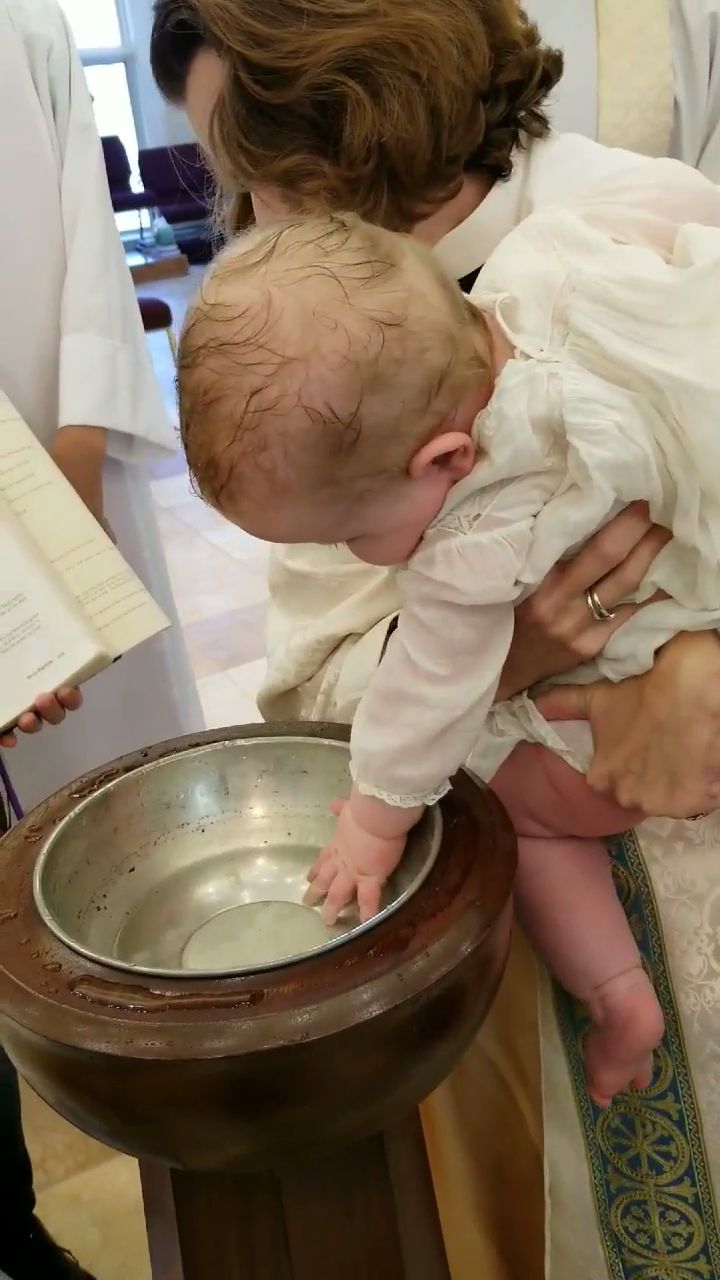
One of the disadvantages of being flexible about baptism dates is we follow the Revised Common Lectionary – assigned readings for each Sunday.  Sometimes the lessons work out, but today’s lessons are a little strange when we think about what baptizing little Nelly means.  We enter the book of Job today toward the end, when after almost forty chapters of lamenting to God about Job’s suffering, God finally answers Job.  And God’s answer is one of indignation –anger that Job would dare question God’s sovereignty and power.  Meanwhile, in the gospel lesson, we have this odd interaction, where Jesus clearly performs a miracle, but then scolds the disciples for lacking faith.

The lessons from Job and Mark can be read with the lens of shame.  Often when I teach about Job, I use Job as a model for what having an authentic relationship with God means – to bear one’s hurts and pain honestly to God is part of being faithful.  But the response of Yahweh today is a response of putting Job in his place, lest he think intimacy with the Lord means equality with the Lord.  Meanwhile, amid a violent storm, the disciples are terrified and cry out to Jesus.  And although Jesus cares for their needs, he also scolds the disciples for their lack of faith.  As the ambassador of love, this version of Jesus can make us uncomfortable – Jesus seems harsh, unforgiving, and judgmental.

So are these lessons a bust for a day like today?  I do not really think so.  One of the things we do in the baptism service is promise to raise Nelly in the life of faith.  We commit to forming her in a faith community, to teaching her about the love and life of Jesus, and to equipping her to own her faith as she matures.  She cannot make these commitments for herself, and so we – her family, her godparents, and her church community – promise to help her until she can choose her faith for herself. 

Given that reality, Job suddenly seems like the perfect lesson for today.  When I think to the Nelly who will experience all the pressures and anxieties of adolescence, the Nelly who will face all the doubts and questions of young adulthood, and the Nelly who will walk through grief and loss in her later adulthood, I want her to know about Job and his journey with God.  I want her to know she has an ancestor who lost everything, whose friends and family judged him, and who saw no hope for a long time.  I also want her to know that she can be honest and real with God, and that God will be honest and real with her – even when she needs to hear things she does not want to hear.  And I want her to know there is redemption promised – something we all learn later in Job’s story.

And if we are going to raise Nelly up in the life of faith, I also want her to know about the very real relationship between the disciples and Jesus.  The story we read today takes place before the disciples fully know who Jesus is.  Their confusion and fear are totally normal, even if Jesus is encouraging them to have more faith.  I love this text for today because the story gives Nelly permission to not have all the answers, to know she will have moments of question and doubt, and to understand that even if she has moments where she has no faith or is afraid, Jesus will calm the waters around her anyway. 

Today’s lessons are a blessing for Nelly and for all of us gathered here.  Although we might like to think today is about perfect pictures and white dresses, what today is really about is taking the first step in helping Nelly begin her own faith journey.  Our scripture lessons remind us that the journey will be full of lows and highs, of pain and joy, of doubt and faithfulness.  Our scripture lessons remind us that what we initiate today is a deep, intimate relationship with God the Father, Son, and Holy Spirit – one that is honest and real.  And our scripture lessons remind us we are not alone – we have a community of faith to support us, help us grow, and encourage us forward.  I cannot think of a better gift for Nelly – but I especially cannot think of a better gift for all of us!  Thanks be to God!  Amen.

On Baptisms, Babies, and Blessings…

16 Wednesday Jun 2021

Posted by jandrewsweckerly in reflection

≈ Leave a comment

Tags

absence, babies, baby, baptism, blessing, creation, family, God, loud, messy, mystery, pandemic, sacred, touch, vulnerability, wonder

Photo credit: Kim Edwards; reuse with permission only

I was never really a baby person:  I did not do much babysitting as an adolescent; except for my little brother, there were not a lot of babies around me growing up; and I was just never all that jazzed about babies.  They seemed delicate, loud, messy, and mysterious.  I never had maternal urges in early adulthood, and my friends found constant amusement in any scenario where the question arose about who should take care of a baby in a pinch – obviously, the baby should not come my way.  But the time my husband and I were engaged, we were not even sure we wanted to have children.

Then in my early thirties, a switch flipped and I realized, in fact, I did want children.  I still was not sure about other babies, but I was excited about my own.  But then a funny thing happened.  I was ordained a deacon when I was about seven months pregnant.  What I did not realize was once you are ordained, you handle babies a lot – in baptisms, in walking moms through pregnancies and births, and even in the receiving line at church.  Once I went through babyhood with my own daughter, and she was no longer at that lovely, innocent stage, I realized my vocation included mothering a lot of other babies.  It has become one of my favorite parts of ministry because it is a glimpse into the wonder and mystery of creation and the grandeur of our God.

So, you can imagine, when this pandemic hit, among the myriad reasons my heart hurt was not being able to interact with babies.  Our church had babies born during the pandemic and it killed me to not be able to welcome the baby at the hospital and give the baby and family their first blessing.  My heart ached to see baby photos on social media and know the babies were growing up without the church surrounding them in love.  But mostly, my arms palpably felt the absence of holding babies, swaying to keep them calm, and smelling their unique baby scent.

As we slowly come out of this pandemic, I am keenly aware of the privilege of holding babies again.  At a recent wedding I tentatively asked a guest, who I did not know, if they would like me to hold their baby to give them a break.  When they quickly passed me the baby, my face lit up.  Last Sunday, when I finally got to hold the baby we had prayed for all during her time in the womb, I was elated.   And as we approach two more baptisms this weekend, I could not be more excited to make those special connections – even though they are not really babies anymore!  One of the blessings of the rise in vaccinations is enjoying the sacred honor of touch, of experiencing vulnerability and innocence, and of redefining the boundaries of family.  This week I give thanks for the abundance of love and joy.  May you all find your own encounters with the holy this week!

Sermon – Genesis 3.8-15, Mark 3.20-35, P5, YB, June 6, 2021

16 Wednesday Jun 2021

Posted by jandrewsweckerly in Sermons

≈ Leave a comment

Tags

anxiety, belonging, discomfort, evil, God, goodness, Holy Spirit, Jesus, listen, relationship, relax, restless, Sermon, sinfulness, summer, The Fall

Last week we talked about the long journey we had made in the liturgical year that helped us get to Trinity Sunday.  After Trinity Sunday, we enter into the next long journey of what we call “ordinary time,” that time that stretches through summer and the fall when we settle into the stories about the life and ministry of Jesus.  In some ways, what happens in the Church is like what happens in the summer – we kick off our shoes, pull up a refreshing beverage, and settle into a good summer read.  The shift should be a palpable sigh of relief as we ease into the familiar stories we love.

Except, nothing about scripture lessons today is remotely relaxing – in fact, our Old Testament and Gospel texts do quite the opposite, making us tense with discomfort and anxiety.  We start with the story in Genesis, traditionally call the story of the fall.  Adam and Eve have already consumed the fruit from the forbidden tree, and today we hear the story of their being “caught.”  Right away, God knows something is amiss, and how do Adam and Eve respond?  In a comical exercise of finger pointing.  Adam blames both Eve and God:  Eve because she “made” Adam eat the fruit and God because God gave Eve to him in the first place.  Eve blames the serpent, recognizing she was tricked.  The curses from God fly:  on the serpent, on the land, and later in Genesis, on the man and woman and their habitation.  Historically, this text has been used to subjugate women, but most theologians know this story impacts all kinds of theological concepts – from our sinful nature, free will, promises of salvation, and the covenant.[i]  But you do not have to be a theologian to read this text and know that the finger pointing of humans when caught in sinfulness is not going to lead to goodness.

Then we get this strange story about Jesus in Mark’s gospel.  Jesus is simply sitting among the people and his disciples when things go crazy.  The scribes come and begin to proclaim that Jesus is possessed by Satan, and anything seemingly good Jesus is doing is rooted in evil.  Then Jesus’ own family assume he has had a mental breakdown and they come to restrain Jesus.  The people who should know and love Jesus best and the people who should be able to recognize the power of the Holy Spirit try to cast him out.  In response, Jesus rejects them all.  Instead, he professes to have no family except those who gather around him and do the will of God.  Jesus does not actually define what the will of God is, so we should be careful not to project our own notions of doing justice or serving those in need.  For now, being a part of the family of Jesus seems to involve sitting around.  As scholar Matt Skinner says, “The way into kinship—belonging—with Jesus is sticking around. It’s to acknowledge that you’ve been caught up into a new reality—this transformational alternate reality called ‘the kingdom of God’—and to hold on for the ride. That’s probably not the entirety of what it means to do or to accomplish or to commit to ‘the will of God,’ but it seems to be the biggest part, as far as Mark is concerned.”[ii]

Perhaps that is our invitation this summer too.  We are still invited to kick off our shoes, sit at Jesus’ feet, and pull up a good book.  But instead of rereading a comforting story, this may need to be a summer of reading the stories that ask us hard questions: of whether we are in right relationship with God or hiding who we really are; whether we are insisting on our own will or way instead of the way of Jesus; whether we are too restless to slow down and simply sit with the Holy Spirit.  In the flurry of regathering, of finally getting to experience some familiar practices like sitting in chairs [pews] we have missed, using our voices to sing [speak] among others, and seeing familiar friends and meeting new ones, we can miss why we love this community so much in the first place.  We can forget that Hickory Neck is a place we like to come because we are a community who does not let each other hide, who challenges one another to follow the way of love, who will remind us to slow down and listen for the soft voice of God.  Who we are and what this community does is the reason why we will continue to livestream services – so those who still need to be at home can be a part of us too, so those who are tending to life’s daily commitments can come back to the video for a good word, and so those who are longing for something more in life can get to know this Jesus – who redefines who is in and out – and sit at his feet with us.  Our experience this summer might not be one you were hoping for after a long, hard fifteen months – but I suspect this summer will be even better than you could have imagined.  Amen.


[i][i] James O. Duke, “Theological Perspective,” Feasting on the Word, Year B, Vol. 3 (Louisville: Westminster John Knox Press, 2009), 98.

[ii] Matt Skinner, “Stick Around,” May 30, 2021, as found at https://www.workingpreacher.org/dear-working-preacher/stick-around on June 4, 2021.

On Being Normal and Other Longings…

03 Thursday Jun 2021

Posted by jandrewsweckerly in reflection

≈ Leave a comment

Tags

church, community, connection, core, discipleship, God, goodness, happy, normal, pandemic, restrictions

Photo credit: https://avalonassnmgmt.com/2020/11/23/normal-is-overrated-for-now/

This Sunday, our parish is introducing two in-person worship services for the first time in fifteen months.  There is a lot about which to be excited!  We will be able to worship in our beloved Historic Chapel, which was not able to be used during most of the pandemic due to structural restrictions.  We will be able to sing congregationally, even if we have to keep our masks on for a little while longer.  We will be able to skip registration and check-in, we can sit wherever we want (you have no idea how hard such a simple thing has been for some of our parishioners!), and we can receive communion sitting right next to other people – some people we have loved and missed for a long time and some people who are completely new to us!  There are a few restrictions remaining, like masking, avoiding touch, and not being able to share a common cup, but we are okay with incremental change and so very happy for what we will get to experience this Sunday.

All that being said, you may have noticed I am being very careful to not say we are “going back to normal.”  Partially that is because we are not yet fully engaging in church as we once were.  And in some ways, there are permanent additions, such as livestreaming, that we never experienced pre-pandemic, that will be mainstays for us now. 

But the real reason I have avoided using the term “normal,” is because I don’t want us to go back to normal.  “Normal” in March 2020 meant a country deeply divided politically; neglecting, or downright oppressing, immigrants, the impoverished, women, and the LGBTQ community; and a deep unwillingness to talk about systemic racism.  Even our church was unwilling to fully embrace digital discipleship and evangelism.  I am not interested in returning to that kind of “normal.”

And so, although it may seem like semantics, we are introducing worship in a new way.  We are modeling all the goodness of things we once knew, and hopefully letting go of some of the things that needed to be let go.  We are holding fast to the things we loved during this pandemic – connecting to people who are far away, helping the less mobile feel a part of the community, and encouraging connection, even when the service times do not match your schedule.  And we are coming out on the other end as something different – with the same core values and passions – but expressed in a different way.  And for now, that, as God said in creation, is very good!

Sermon – Isaiah 6.1-8, TS, YB, May 30, 2021

03 Thursday Jun 2021

Posted by jandrewsweckerly in Sermons

≈ Leave a comment

Tags

call, doctrine, God, Here am I, holy, Holy Spirit, Isaiah, Jesus, send, Sermon, Trinity, Trinity Sunday, vocation

To understand the lessons we have heard today, we have to look at where we have been over the last liturgical year.  We started in Advent, anticipating the birth of the Messiah.  Then we journeyed through the actual birth narrative at Christmas, and continued to celebrate Christ’s identity as the Messiah throughout the season of Epiphany.  In Lent, we journeyed through the temptation of Christ, and narrated the reason for our need for a Messiah.  That journey continued through Holy Week as we walked through the crucifixion and death of Jesus, remembering how the story of Jesus is rooted in the historical salvation narrative from the beginning of creation, ending on the joyous resurrection of Jesus and the seven weeks of celebrating what the resurrection and ascension means for our everyday lives.  Last week, we welcomed the manifestation of the Holy Spirit among the disciples of Christ, that joyous, cacophonous celebration.  Finally, after that long journey we arrive at today, Trinity Sunday.

For many Trinity Sunday is one of the weirder Sundays of the Church.  Trinity Sunday is the only Sunday in our calendar year dedicated to a theological concept.  Furthermore, the theological concept is one of the hardest in our faith.  Whole gatherings, like the one in Nicea, have happened just to hash out what having a triune God means, people have been labeled as heretics when they do not get it quite right, and authors have spent myriad pages trying to explain a concept that sometimes feels beyond words.  And that does not even include the number of parents and Sunday School teachers who have tried to make the concept of the trinity understandable to our youngest members – because, quite frankly, the concept is hard even for us adults!  And yet, at the conclusion of the long journey in the liturgical calendar – from Advent and Christmas, Epiphany and Lent, all the way to Easter and Pentecost – the church stops today and designates a day to celebrate the triune nature of God.  

Part of why we honor the Trinity this day is to give meaning to this seven-month journey – to answer the “so what?” of all we have learned.  Into that question, we read Isaiah’s call narrative from chapter six of Isaiah.  Now some scholars argue we hear Isaiah’s call story today because this passage was used in the early Church’s development of the doctrine of the Trinity.[i]  For me, that is not the most important reason we hear this lesson today.  Certainly, I want us as faithful disciples to understand the doctrine of the Trinity because the doctrine is unique among other faiths to our understanding of God.  But I am always more concerned about what you do with understanding than that you simply attain the understanding.  That is why I like this very human story about a reaction to God.  In Isaiah’s story, he is confronted with appearance of God – the majesty of God alone would be enough, but the appearance of seraphs, these winged snake-like figures – and the earth-shattering noise[ii] of their “Qadosh, qadosh, qadosh…Holy, holy, holy,” and the appearance and smell of smoke leave Isaiah utterly awestruck and keenly aware of his unworthiness.  Into that posture, and into Isaiah’s forgiveness, Isaiah has no other response when God asks, “whom shall I send to go out for us?”  The answer is simple.  Send me.

That is the “so what?” of Trinity Sunday.  Telling Isaiah’s story today helps us see the cosmically important reason why our own call or vocation is so important – not just that we have a job or purpose – but that our job or purpose is in response to the awesomeness of the Holy, Undivided Trinity – the fearsome, incarnate, mysterious revelation of the Godhead – three in one and one in three.  Every Sunday we send each person here and those gathered around the world through their screens out into the world to do the work God has given us to do.  That instruction is a commissioning and a blessing.  But today, we also honor how that work is a response to the awesomeness of our God.  We take all those powerful, sacred, quiet ah-ha moments we have had with God, and we take all those proddings from the Holy Spirit when we have felt like our gifts can and are being used for a great purpose, and we respond in the words of that old hymn, “Holy, holy, holy!  Lord God Almighty!  God in three persons, blessed Trinity,” and we have no other words but, “Here am I; send me.”  Amen.


[i] Donald K. McKim, “Theological Perspective,” Feasting on the Word, Year B, Vol. 3 (Louisville: Westminster John Knox Press, 2009), 28.

[ii] Rolf Jacobson explains this understanding of the Hebrew words in the podcast, “SB607 – Holy Trinity,” May 19, 2018, found at https://www.workingpreacher.org/podcasts/sb607-holy-trinity, as found on May 27, 2021.

On Tiny Perfect Things…

26 Wednesday May 2021

Posted by jandrewsweckerly in reflection

≈ 1 Comment

Tags

blessing, Christ, God, grace, moment, pandemic, perfect, small, tiny

Photo credit: https://www.pinterest.com/pin/269441990176015475/

I just finished up a movie called The Map of Tiny Perfect Things.  The premise is much like Groundhog Day, where Bill Murray relives the same day over and over again.  But in this film, the two protagonists use their day of repetition to find tiny perfect things – an eagle grabbing a fish out of a lake, an elderly woman dancing about a game victory, a perfectly timed funny moment, a custodian sneaking on a piano, demonstrating his incredible hidden talent. 

These last weeks, I have been noticing a lot of tiny perfect things as we slowly make our way out of this pandemic:  a hug between vaccinated friends who haven’t seen, let alone touched, each other in over a year; watching kids play with bubbles, mastering not just blowing them, but popping them too; an outdoor wedding after a year of wondering if it would be possible with a long pandemic and the threat of unpredictable weather; being able to hold and bounce a baby after over a year of isolating newborns from all of us. 

We are approaching some of those tiny perfect things at our church as well.  Because we are loosening restrictions incrementally, we are not getting some magical “perfect” experience where everything “goes back to normal.”  But we are approaching a time where we can sit in pews that were off limits, where we can sing those songs and texts that have been spoken or been instrumental, where we can sit beside a friend whose physical presence we have missed, where we can receive the body and blood of Christ.  We still have to mask, and communion is being served in sealed plastic chalices – but there are tiny perfect things nonetheless. 

This week, I invite you to find your own tiny perfect things – tiny moments of grace.  Take a moment to watch children play in your neighborhood, see what wonders nature is up to, enjoy a bit of hearty laughter, or observe the way an older couple holds hands after what must be decades of marriage.  There is a lot of work to be done as Christ commissions us to go out in the world.  But what will sustain us in that work are the tiny perfect things that remind us of God’s blessing and grace that are there for us every day.  I cannot wait to hear what you find!

Sermon – Acts 1.15-17, 21-26, E7, YB, May 16, 2021

26 Wednesday May 2021

Posted by jandrewsweckerly in Sermons

≈ Leave a comment

Tags

apostles, bishop, discernment, disciples, election, Episcopal, God, goodness, grace, Holy Spirit, Jesus, prayer, Sermon, trust, will

I have sometimes daydreamed about the experience of liturgical freedom:  picking and choosing the scripture for a given Sunday (particularly when I need to address a specific issue), praying an extemporaneous prayer on a Sunday to address a certain topic in the church, or drafting our own liturgical experience to address a particular need.  However, as crazy as the idea may sound, I more often find freedom within our Episcopal constraints than within the endless possibilities of what could be. 

This past week was a classic example.  Last Sunday, totally unaware of the announcement I would be making on Tuesday, Bob preached about the invitation of the Resurrection being an invitation into discernment – discernment about what each of us needs to do to bring about the kingdom here on earth.  On Tuesday night, our regularly scheduled Discover Class topic, which was scheduled months ago, was focused on the structure and leadership model of the Episcopal Church, including who bishops are and how they are elected.  Then today, we get this lesson from the Acts of the Apostles in which Peter and the other apostles are attempting to replace the twelfth spot Judas left open through his death.  All that daydreaming about constructing our spiritual experiences went out the window this week when I remembered the Holy Spirit does a much better job at constructing those experiences than I ever could!

To say that this portion of the Acts of the Apostles is a divine gift is not necessarily because we happen to be talking about a bishop’s election this week just as the apostles are talking about an election of sorts.  In fact, what the apostles are doing is the opposite of an election.  No one asks Matthias or Justus to go through an interview process or offer their vision of leadership for the next decade.  Instead, their criteria are pretty simple.  First, the replacement should be someone who knows Jesus personally.  Second, they want to honor their ancestral roots in the twelve tribes of Israel – eleven apostles will not suffice.[i]  Third, their decision is rooted in prayer.  And finally, their decision is based on trust in the will of God.  Nowadays, we might think the casting of lots is a little too random and could lead to a poor appointment of leadership – I mean when was the last time we selected a Rector, Warden, or Committee Chair by flipping a coin?  But according to New Testament scholar Kathy Grieb, the casting of lots is “an ancient biblical practice for determining God’s will…”[ii]

Hearing about all the coincidences in our last week, from talking about discernment, to the structure of the Episcopal Church, to the selection of the last apostle, may be intriguing or even amusing, but may also leave you asking, “So, what?  What does all of this have to do with me or my experience of Hickory Neck, or even more broadly, with Jesus?”  As I have reflected on these coincidences – or as Carl Jung referred to them as instances of “synchronicity” or “meaningful coincidence”[iii] – I see an invitation for all of us from Peter.  First is an invitation to recall our identity.  We are a community whose historic identity has been about weathering change – whether it was the identity crisis created by the Revolutionary War, the replacement of a faith community by schools and hospitals for over a century, to reclaiming and expanding our land to become a church again, to surviving a global pandemic.  The possibility of a change in clergy – a very small possibility at that – does not alter the fact that we are a community rooted in Jesus’ love, shining our light on this Holy Hill for almost three centuries.  Second is an invitation into prayer:  prayer for the Hickory Neck Community, prayer for your Rector, and prayer for the Diocese of Iowa and the other candidates.  Our hurt, our frustration, our fear, and our joy can be left at the feet of Christ in prayer.  When given the space, prayer can do much more than we can imagine.  And finally, our invitation this week is to trust in God.  We may not always like what God does – I am pretty sure the apostles would much rather have not been trying to figure out a leadership model in Jesus’ absence.  But we do know that God is faithful, and, in time, God leads us to goodness and grace.  I do not know where the next couple of months will lead us.  But I do know if we can stay rooted in our identity, in prayer, and in our faith in God, we will come out stronger disciples for Jesus, strengthened to take on whatever “meaningful coincidences” the Holy Spirit throws our way.  Amen.


[i] Noel Leo Erskine, “Theological Perspective,” Feasting on the Word, Year B, Vol. 2 (Louisville: Westminster John Knox Press, 2008), 528.

[ii] A. Katherine Grieb, “Exegetical Perspective,” Feasting on the Word, Year B, Vol. 2 (Louisville: Westminster John Knox Press, 2008), 531.

[iii] Carl G. Jung, Synchronicity: An Acausal Connecting Principle (Princeton:  Princeton University Press, 2012), 44, as cited at https://artsofthought.com/2020/05/30/carl-jung-synchronicity/ on May 14, 2021.

← Older posts
Newer posts →

Recent Posts

  • On Politics, Football, and Love…
  • On Sharing the Love…
  • Sermon – Micah 6.1-8, Matthew 5.1-12, EP4, YA, January 30, 2026
  • On Justice, Kindness, Humility, and the Messy Middle…
  • Feast of the Rev. Dr. Martin Luther King, Jr., January 18, 2026

Archives

  • February 2026
  • January 2026
  • December 2025
  • November 2025
  • October 2025
  • September 2025
  • August 2025
  • July 2025
  • June 2025
  • March 2025
  • February 2025
  • December 2024
  • November 2024
  • October 2024
  • September 2024
  • August 2024
  • July 2024
  • June 2024
  • May 2024
  • March 2024
  • February 2024
  • January 2024
  • December 2023
  • November 2023
  • October 2023
  • September 2023
  • August 2023
  • July 2023
  • June 2023
  • May 2023
  • March 2023
  • February 2023
  • January 2023
  • December 2022
  • November 2022
  • October 2022
  • June 2022
  • May 2022
  • January 2022
  • December 2021
  • November 2021
  • October 2021
  • September 2021
  • August 2021
  • June 2021
  • May 2021
  • April 2021
  • March 2021
  • February 2021
  • January 2021
  • December 2020
  • November 2020
  • October 2020
  • September 2020
  • August 2020
  • July 2020
  • June 2020
  • May 2020
  • April 2020
  • March 2020
  • February 2020
  • January 2020
  • December 2019
  • November 2019
  • October 2019
  • September 2019
  • August 2019
  • July 2019
  • June 2019
  • May 2019
  • April 2019
  • March 2019
  • February 2019
  • January 2019
  • December 2018
  • November 2018
  • October 2018
  • September 2018
  • August 2018
  • July 2018
  • June 2018
  • May 2018
  • April 2018
  • March 2018
  • February 2018
  • January 2018
  • December 2017
  • November 2017
  • October 2017
  • September 2017
  • August 2017
  • July 2017
  • June 2017
  • May 2017
  • April 2017
  • March 2017
  • February 2017
  • January 2017
  • December 2016
  • November 2016
  • October 2016
  • September 2016
  • August 2016
  • July 2016
  • June 2016
  • May 2016
  • April 2016
  • March 2016
  • February 2016
  • January 2016
  • December 2015
  • November 2015
  • October 2015
  • September 2015
  • August 2015
  • July 2015
  • June 2015
  • May 2015
  • April 2015
  • March 2015
  • February 2015
  • January 2015
  • December 2014
  • November 2014
  • October 2014
  • September 2014
  • August 2014
  • July 2014
  • June 2014
  • April 2014
  • March 2014
  • February 2014
  • January 2014
  • December 2013
  • November 2013
  • October 2013
  • September 2013
  • August 2013
  • July 2013
  • June 2013
  • May 2013
  • April 2013
  • March 2013
  • February 2013
  • January 2013
  • December 2012
  • November 2012
  • October 2012
  • September 2012

Categories

  • reflection
  • Sermons
  • Uncategorized

Meta

  • Create account
  • Log in
  • Entries feed
  • Comments feed
  • WordPress.com

Blog at WordPress.com.

  • Subscribe Subscribed
    • Seeking and Serving
    • Join 395 other subscribers
    • Already have a WordPress.com account? Log in now.
    • Seeking and Serving
    • Subscribe Subscribed
    • Sign up
    • Log in
    • Report this content
    • View site in Reader
    • Manage subscriptions
    • Collapse this bar
 

Loading Comments...